


"A free school place does not cover the bus fare, the textbooks, the exam fees or the school trip."
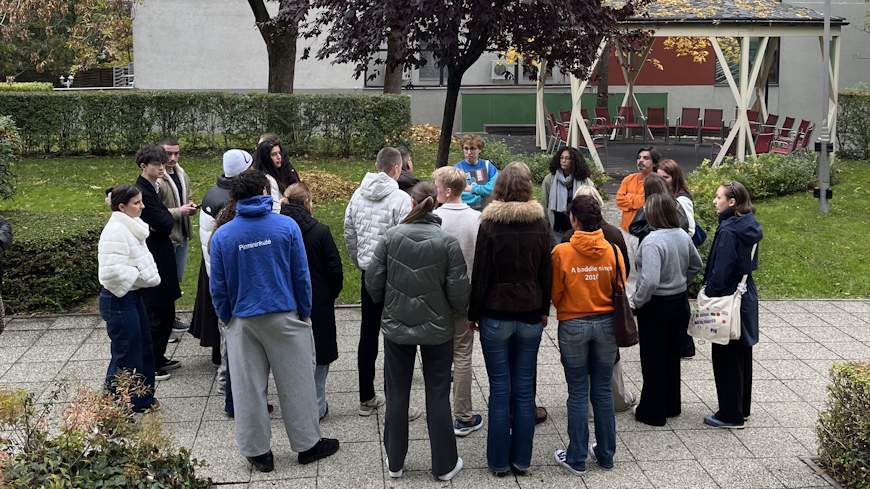
 From 2 to 6 November 2026, young people from the membership of the Organising Bureau of European School Student Unions (OBESSU) came together at the European Youth Centre Budapest to look at what happens after students start school: who stays in education and who is pushed out.
 The Study Session "Beyond Access: Rethinking Inclusion in Education", organised with the support of the Council of Europe Youth Department, focused on equal access to education and on educational poverty. Over five days, the 26 participants examined how socioeconomic inequalities, systemic discrimination and structural barriers limit access to quality education, and how these aspects impact the school experience of marginalised groups.
 "In today’s political climate, the right to education is vital. Students face a plethora of inequalities and disidvantages when accessing education, especially those from minority and marginalised groups. This event is centred around sharing best practices to help each union draft policy to solve these issues. The week has been filled with collaboration, information and productive dialogue."
 Participants explored how the Council of Europe's Enter! Recommendation and the European Social Charter relate to their own realities and to the challenges they face in accessing quality education. They also learnt the essentials of human rights-based advocacy, designed advocacy actions to carry out in their own settings and contributed to the "Toolkit for Advocacy on Equal Access to Quality Education", which will support their national advocacy.
Participants developed stronger competences to demand fairer, more inclusive education systems in their home countries.
Founded in Dublin in April 1975, OBESSU is the platform for cooperation among national school student unions and students in general secondary education, secondary vocational education and apprenticeship training across Europe.


.jpg/37d4177e-48d7-1e21-09d6-1e0bd27f534b?version=1.0)
.jpg/5ea337f8-ccce-9221-d582-c9ea4d695346?version=1.0)