


European Youth Centre Budapest
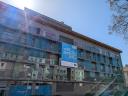
The Centre can also be used by Council of Europe directorates and external organisations for meetings, seminars and training courses, with accommodation and catering services available on the spot.
The EYCB enjoys diplomatic status under a seat agreement between the Council of Europe and the Hungarian State. The EYCB’s main partner ensuring the maintenance and periodic refurbishment of the centre’s building is the Ministry of Foreign Affairs and Trade.
 Rooms and facilities
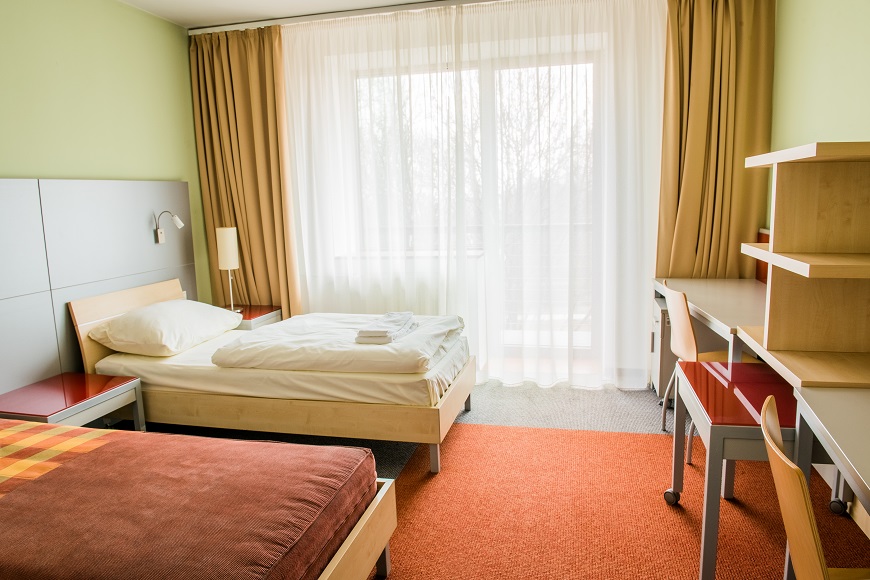
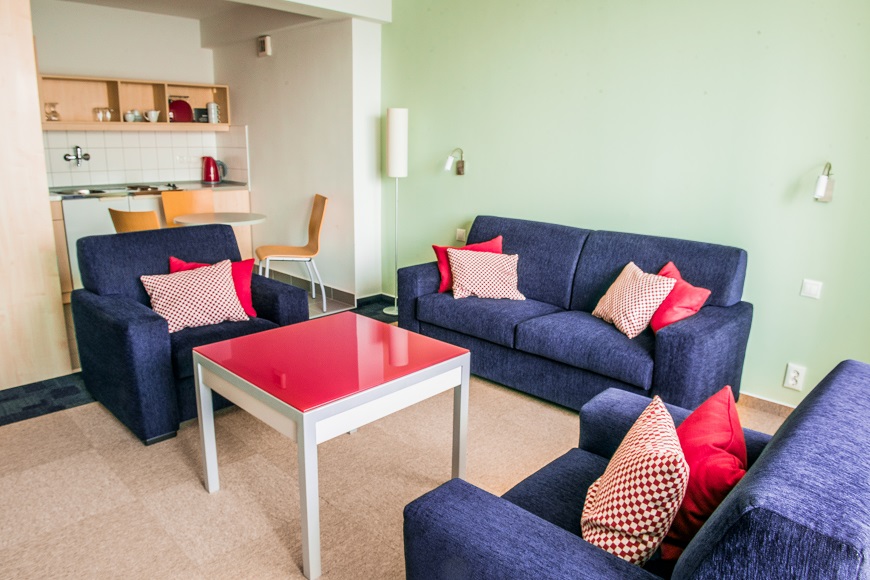
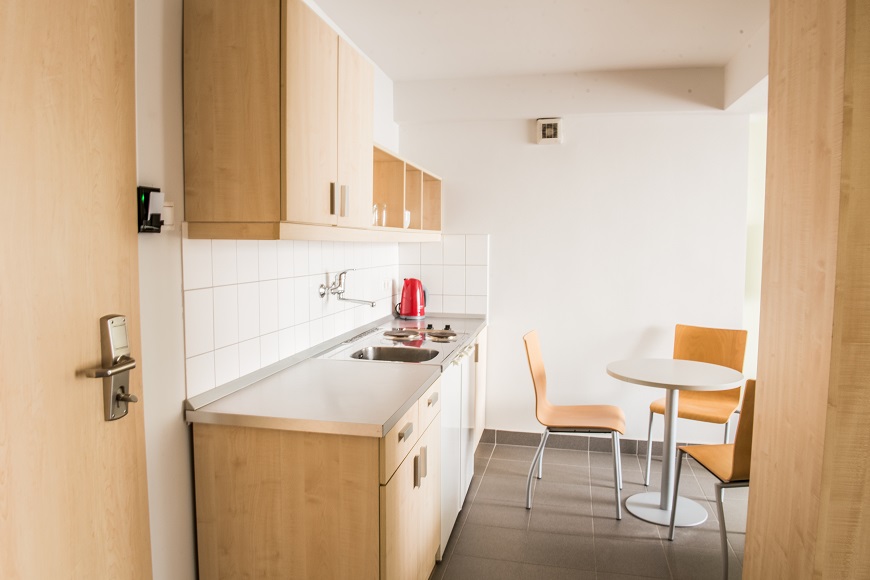
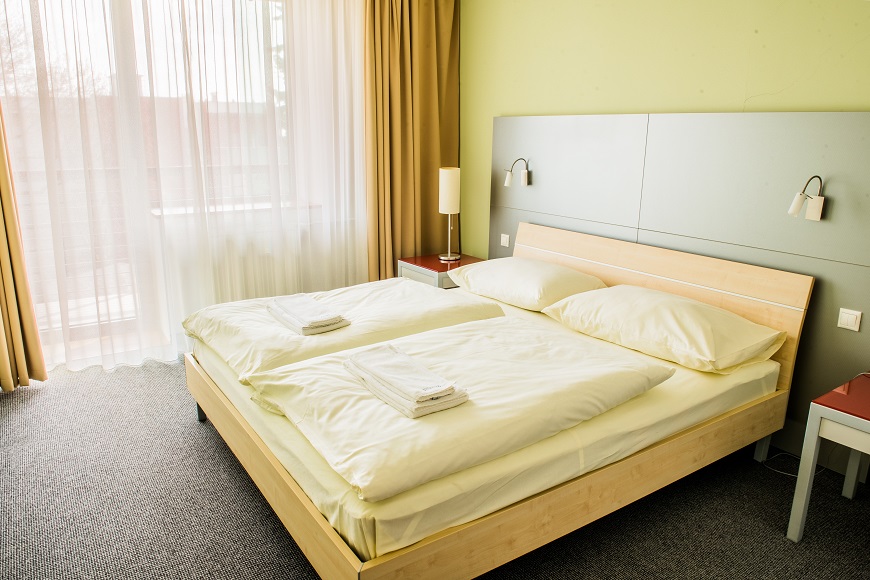
We can offer accommodation for 130 persons in spacious bedrooms with private bathroom and balcony. Facilities include 65 twin rooms, two apartments and three rooms adapted for wheelchair users, all equipped with telephones for internal calls,towels and hypoallergenic bedding, baby-cots available upon request.
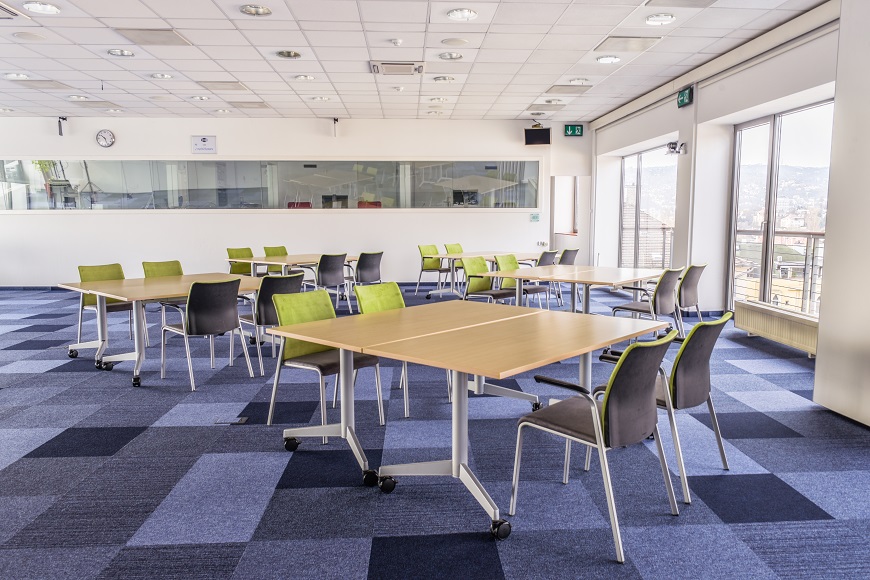
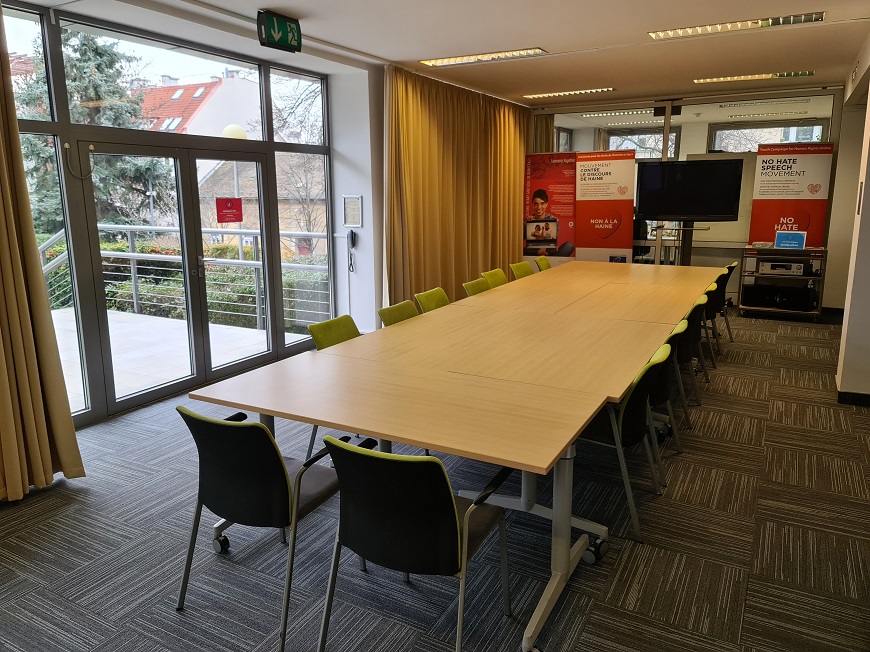
We have seven meeting rooms ( two of them equipped for simultaneous interpretation for up to four languages) with capacities from 10 – 200 persons, mobile furniture allowing for room arrangements according to the needs of the meeting, working areas for small groups, complete audio-visual conference facilities, extensive facilities for interactive educational activities, computer corner with permanent Internet access, technical assistance upon request, access control and possibility for security screening, limited private parking on request and a beautiful view over Budapest from the 4th floor conference area.


 The Peter Lauritzen Collection
This colle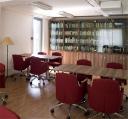
Accesibility information
Bedrooms for wheelchair users
Three bedrooms available
The European Youth Centre Budapest is accessible to wheelchair users and three bedrooms are adapted for visitors with physical disabilities.
Three bedrooms have been adapted for wheelchair users. The rooms are equipped with:
- a widened entrance door
- fittings (light switches, sockets) located at an accessible height
- lower-level storage shelves
- a handrail running the length of the bed on the wall, extra wide bed with double
- sliding bathroom access door
- adapted bathroom fitted with: lowered sink with hinged grab-rail, toilet with grab rails either side, wet room style shower with wrap around grab-rail and folding shower seat
Please note that the doors, both the entrance to the room and the bathroom, open manually.
The large conference rooms are equipped with an induction loop system for people with hearing aids.
The lift buttons are also labelled in Hungarian Braille. Rooms/venues are not, as yet, signed in Braille.
Please contact reception ([email protected]) if you have any questions about accessibility/facilities.
Moving around the building
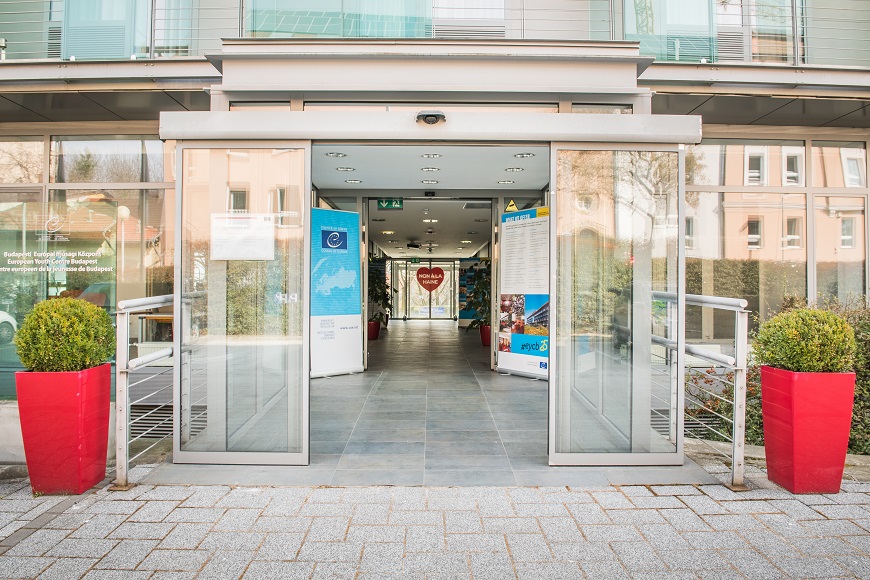
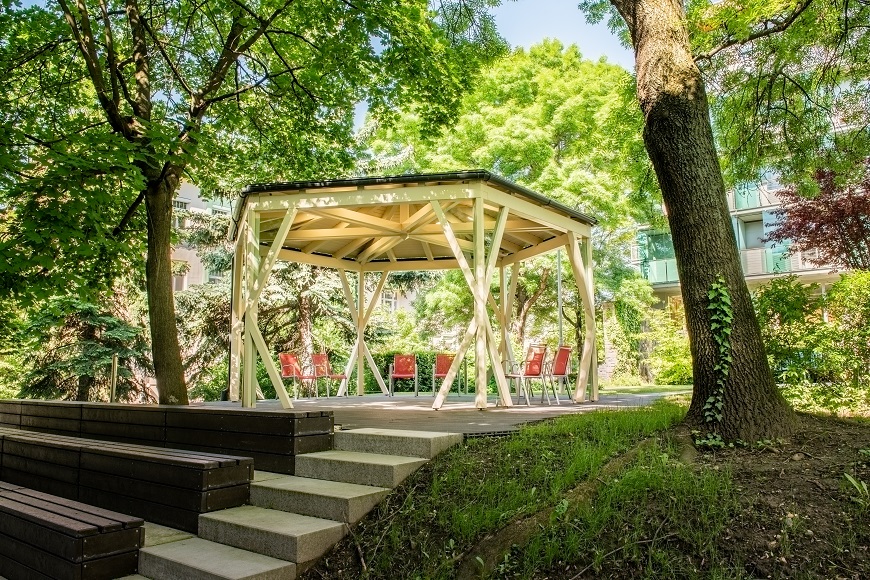
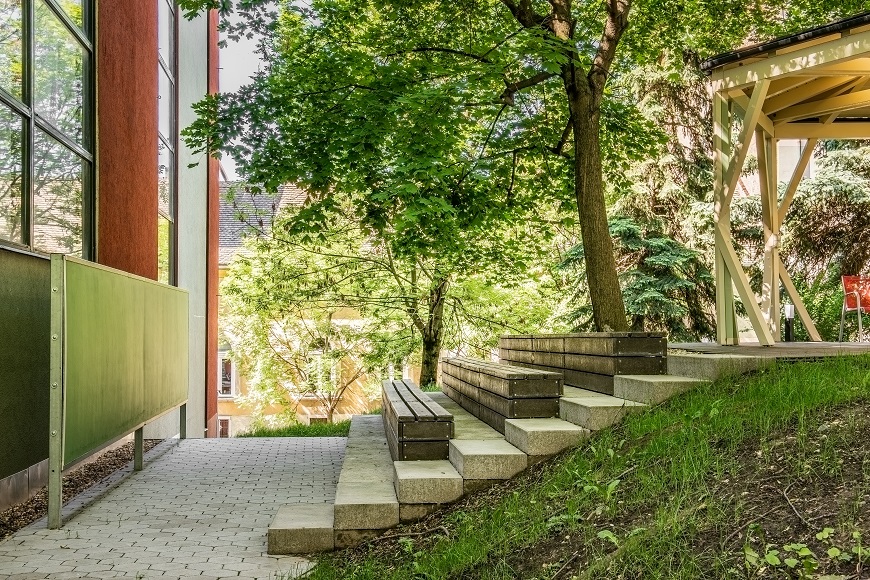
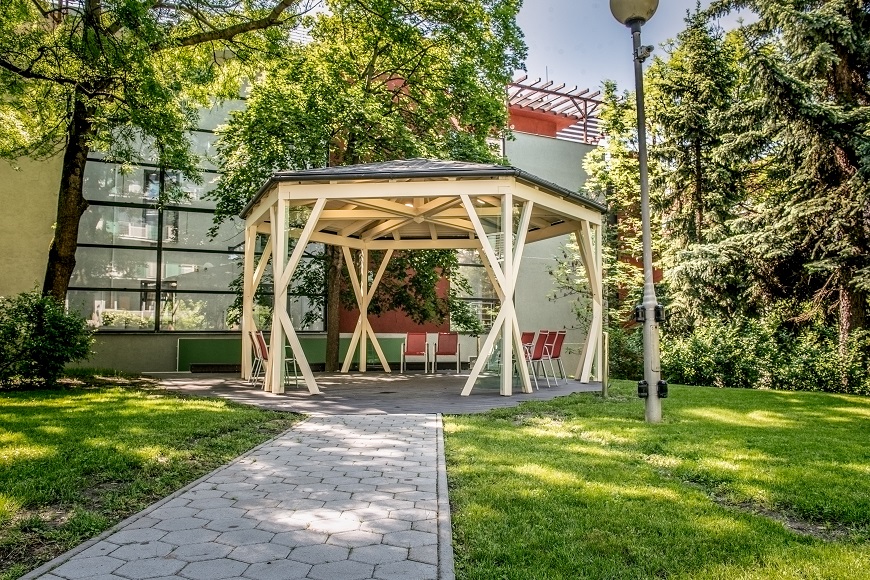
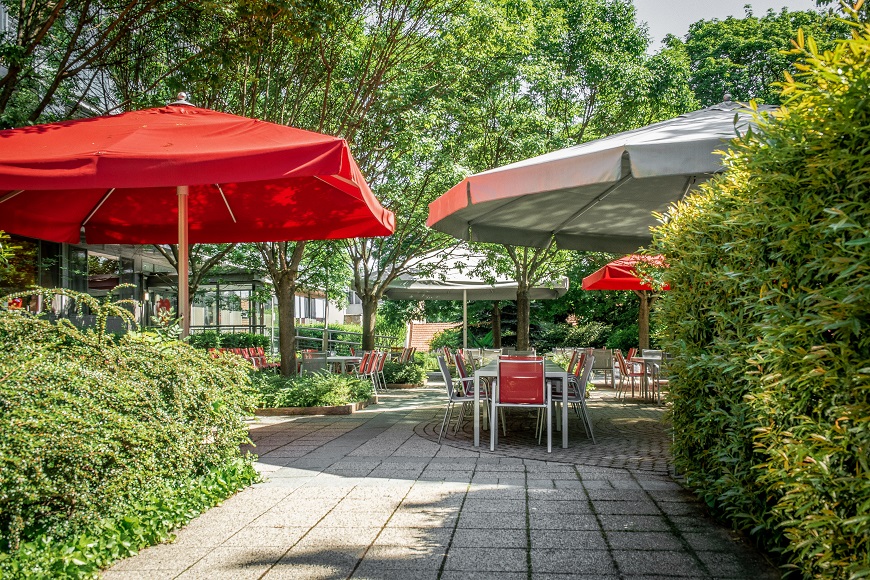
The front entrance has level-access and the ground-floor and mezzanine-level are connected via a wheelchair platform stair lift (during activities a ramp can be fitted over the stairs to facilitate frequent use). The garden is accessible via a sloping ramp. All floors are accessible via lift. Accessible toilet facilities can be found on the ground-floor mezzanine-level and the fourth floor, near the main meeting room.
Allergies
If you are allergic to any food items or ingredients and have not informed the EYCB in advance, please contact the Reception. After consultation, a special menu corresponding to your needs can be provided.
Further services
Services provided on request
- Audio-visual equipment:
- Two portable audio recorders, two digital cameras and two video cameras are at the disposal of groups.
- TV sets (with approximately 50 international channels) are available on the fourth floor and the ground floor.
- Interpretation equipment is available in selected meeting rooms (upon preliminary request)
- Room Sound Recording Service is available in selected meeting rooms (upon preliminary request)
- Live Video Streaming Service with recording in Room A (available upon preliminary request. For more information please contact the EYCB Secretariat.)
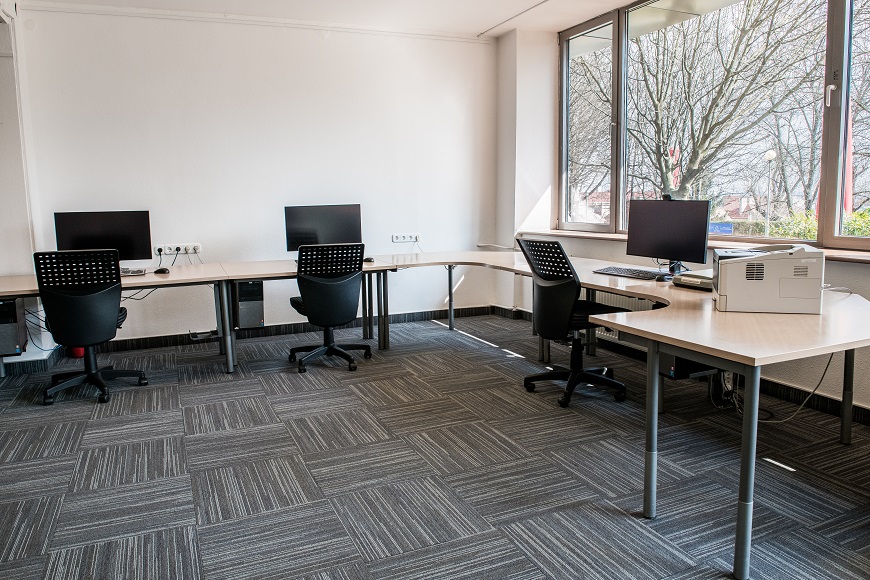
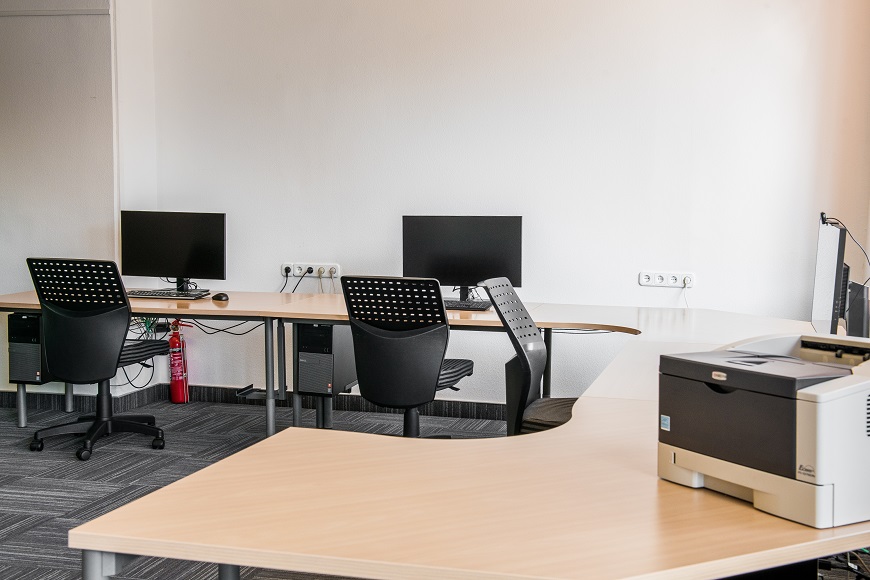
- Computers: The computer corner is located on the ground floor and equipped with 2 computers. The computers run Windows and the full Office suite (Word, Excel, Access, and Power Point). All computers have webcams and they are connected to a printer and scanner.
- Copying: A photocopier for the use of participants and organisers is located on the fourth floor. After switching on the machine, you have to type in a code in order to begin copying. Each group has a different code, allowing for copy charges by group.
- Club room: A fully equipped disco, including a bar, is available, to be run by the group. The manager of the restaurant is happy to provide you with the necessary beverages at agreed and reasonable prices.
- Drinks: At lunch and dinner-time coffee or tea and extra drinks can be bought in the restaurant. The restaurant manager will be happy to provide you with drinks for the discotheque and for social events on the fourth floor. Please give sufficient notice.
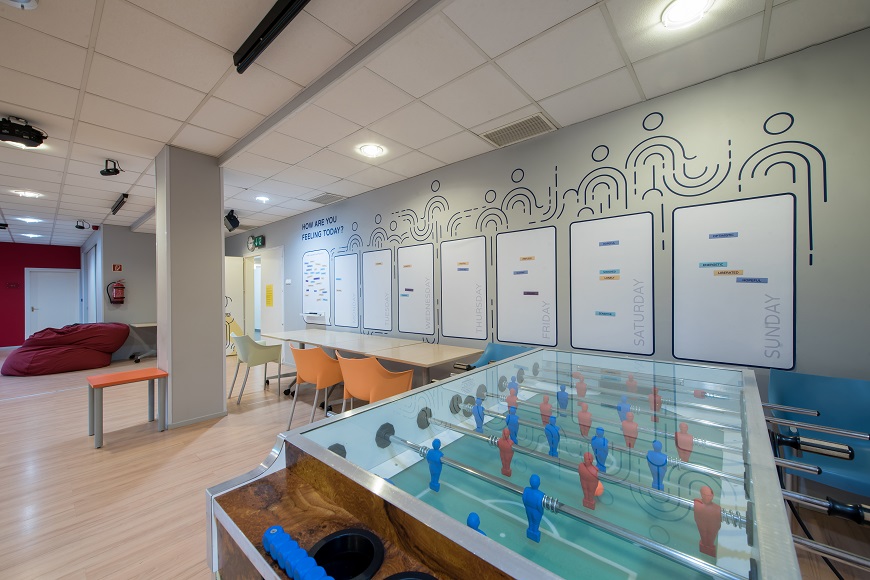
- Gym room: The gym is equipped with exercise bikes, treadmills, professional weightlifting equipment, gym mats, and Pilates and fitness balls. The gym also has a table for table tennis. Please note that the gym is available for use at each individual’s risk and responsibility.
- Laundry room: The self-service laundry room is in the basement and contains two washing machines and a tumble dryer which you are welcome to use without charge (washing powder provided). In this room you can also find an iron and an ironing board. The iron should only be used in the laundry room. Please do not take it to your room.
- Medical assistance: If you need medical assistance please contact Reception where you can get the necessary information. When visiting a doctor, always take your passport and insurance documents (if you have them) with you. Please note that the EYCB does not provide medical insurance.
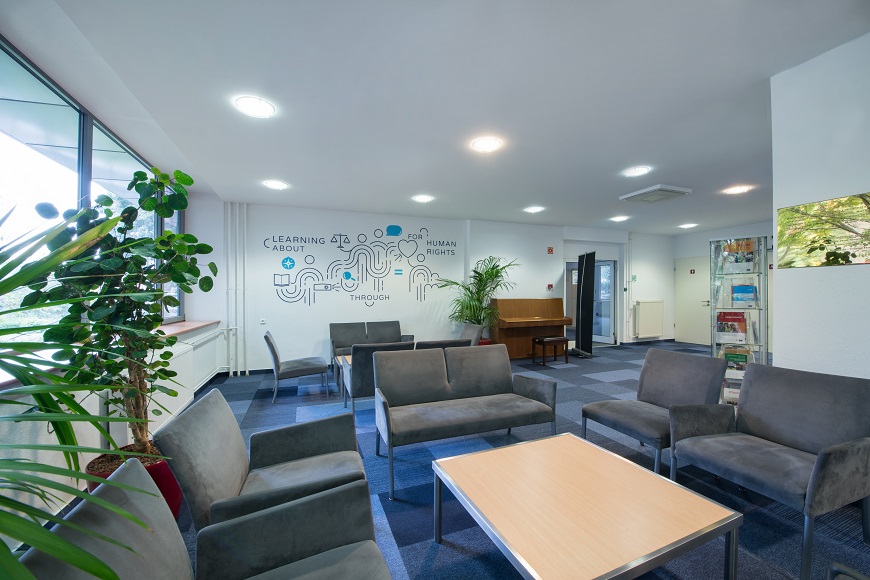
- Musical instruments: There is a piano in the lobby, and you can find an acoustic guitar and percussion instruments (drum, flute, pipe, tambourine, xylophone, rumba shaker) in the 4th floor lobby.
- Postal services: The nearest post office is at the foot of the hill, on Margit körút. There is a large post office open 7 am-9 pm. on Monday-Saturday and 10 am- 5 pm on Sunday at Nyugati train station.
- Reception from 8:00 a.m to 12:00 p.m ( midnight) throughout the year.
- Sauna: If you wish to use the sauna, please inform Reception one hour in advance. A minimum of two users is required before the heating is switched on. The sauna is free of charge.
Restaurant facilities
Opening hours:
|
Breakfast |
07.30-09.30 |
|
Lunch |
12.30-14.30 |
|
Dinner |
19.00-20.30 |
- Exceptions negotiable;
- pork-free food;
- vegetarian/vegan alternative is possible upon prior request;
Breakfast: is a self-service buffet
Lunch (self-service): includes a starter, a main course (vegetarian alternative available on request), salad buffet, dessert, a non-alcoholic drink and coffee.
Dinner (self-service): includes a starter, a main course (vegetarian alternative available on request), salad buffet, fresh fruit and a non-alcoholic drink or wine.
Coffee/tea breaks: possibility of refreshments upon request. In case more coffee consumed than the ordered amount, the final invoice will be prepared based on the actual consumption.
Meatless Mondays: Please note that there are no meat products served with any of our meals on Mondays in our restaurant. More information on Meatless Mondays
Ordering meals: Meals can only be provided if ordered at least seven working days in advance.
- Pre-arranged restaurant services can only be cancelled or modified in writing at least seven days in advance.
Receptions
The restaurant offers a diverse range of catering options. Receptions should be ordered at least seven days in advance, indicating the type you require, for example cocktail reception with finger food, cold buffet, hot/cold buffet, VIP reception, etc. The EYCB will prepare and send you a quote of the cost. The order will be valid once written confirmation of the quote has been accepted.
Useful info
- Administration offices: These can be found on the third floor. Office hours are from 9 am to 1 pm and from 2.30 pm to 6 pm on weekdays, during which time the staff there will be happy to help you.
- Banks/bankomats: There are several banks and Automatic Teller Machines quite close to the EYCB. You can find one if you go downhill from the Centre in any direction. They accept all major credit cards.
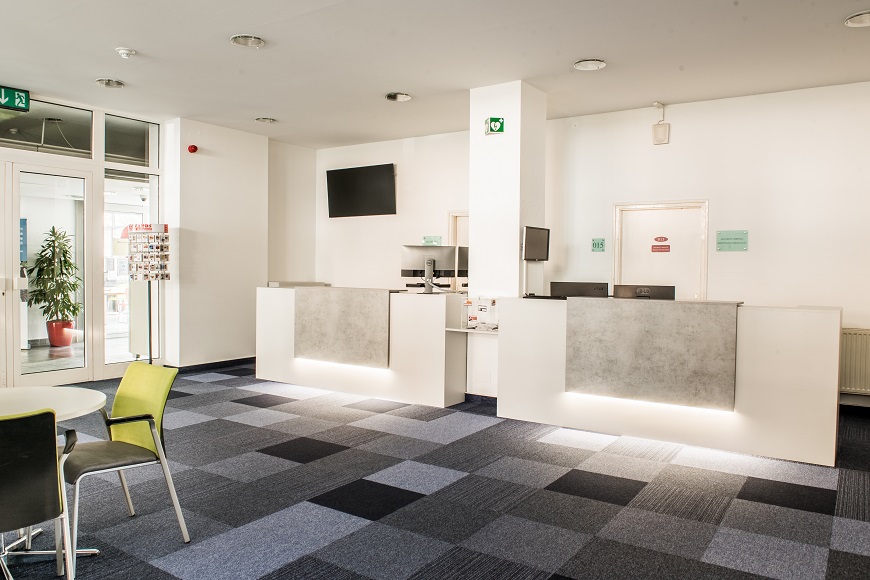
- Tourist info: You will find leaflets and brochures about Budapest and Hungary in several languages at Reception. You can also find city maps there.
- Changing money: When changing money in an exchange office anywhere in town, please verify the exchange and commission rates first! It is illegal and highly ill-advised to change money in the street!
- Coffee machine: There is a drinks machine on the ground floor where you can buy a large variety of hot and cold drinks. The prices are listed on the machine. Coffee and tea are available at the counter in the restaurant during meal hours.
- Public transport: In Budapest you cannot purchase tickets in public transport vehicles. You need to buy them in advance. You can do this at metro stations and at Reception in the EYCB. Single tickets are valid for one trip on one vehicle. It is also possible to buy one-day, three-day, weekly and multi-passes at the main metro stations. Ticket inspectors regularly check tickets so please remember to validate your ticket in advance by punching it in the machine on the bus/tram at the start of your journey or in the metro station before you board the train. Please be aware that the best ‘hunting ground’ for pick-pockets is on public transport. To find the best ways to get out into the city and back, please consult the maps and leaflets in the entrance area.
- Shopping: You can find several supermarkets and shops in the surrounding area. The usual opening hours of shops are from 10 am to 6 pm on weekdays, and from 9 am to 1 pm on Saturdays. The GRoby supermarket, with low prices and a large selection, is open daily to 9 pm. The big shopping centre ’Mammut’ closes at 9 pm Monday-Saturday and at 6 pm on Sunday. The large West-End City Centre shopping mall near the Western Railway Station is open daily until 11 pm, but not all the shops are open till that time. If you want to go to any of these, please ask the receptionist for directions.
- Smoking: The EYCB is a non-smoking building like all Council of Europe premises. Smoking is allowed outside and in the designated area beside the entrance. Please use the ashtrays provided. If ashtrays are missing, please inform Reception.
- Telephones: You can make internal calls on room phones and the Reception can put outside calls through to your room.
- Tourist dangers: Budapest is a beautiful place but it is also a big city where tourists can sometimes become victims of crime. Please be aware of the following:
- Pick-pockets operate particularly on public transport and in crowded places.
- You are legally obliged to carry some form of identification with you when leaving the EYC.
- Check the prices in bars and restaurants before making your order.
- Make sure you use one of the reliable taxi companies to avoid unnecessary expense.
- Valuables: Please note that the EYCB cannot take responsibility for valuables or personal belongings. A safe is available at the Reception where you can deposit valuables on request.
 Reservation and prices
Any organisation, association or institution planning international conferences or training courses and subscribing to the aims of the Council of Europe can book the European Youth Centre Budapest as the venue for its activities, use its facilities, and establish contact and co-operation with the Council of Europe.
The EYCB welcomes activities dealing with education and youth work, human rights, democracy and other areas related to the building of civil society. The Centre is particularly well equipped to host training and seminar activities which need facilities for interactive training methods, and conferences or meetings requiring interpretation.
 How to make a booking at the EYC Budapest
Please contact the EYCB secretariat to agree on a date for the activity.
You can give us a call on +361-438-1030, e-mail us at [email protected] , or fax us on +361-212-4076. Once the date is fixed with the EYCB, complete the booking form carefully and submit it to the EYCB secretariat.
On receipt of the booking form, the EYCB will send you confirmation of the booking with an estimate of the costs implied. Please sign it and return it to the EYCB secretariat.
Finally, a pro-forma invoice for 80% of the total cost will be sent to you. Please pay this amount upon receipt of the pro-forma invoice. This is considered as a deposit for the activity. If the final invoice is less than the deposit paid the balance will be refunded to the Organiser after the activity..
Pricelist 2026
Board and lodging
|
(price per person) |
Single room |
Double room |
Extras |
|
Night only |
€ 105,00 |
€ 59,00 |
|
|
Night & breakfast |
€ 116,50 |
€ 71,00 |
|
|
Breakfast only |
€ 12,00 |
||
|
Lunch or dinner* (normal or vegetarian) |
€ 22,00 |
||
|
Lunch or dinner* (vegan) |
€ 26,00 |
||
|
|
|
||
|
*Lunch ( self-service): consists of a starter, a main course (vegetarian alternative available on request), salad buffet, dessert, a non-alcoholic drink and coffee.
|
|||
Daily conference and reception services
|
per day |
|
|
Large meeting room (room A, room BC) |
€ 720,00 |
|
Middle size meeting room - 4th floor (room B, C, A1, A2) |
€ 400,00 |
|
Middle size meeting room - Ground floor and -1 (room E, Club) |
€ 260,00 |
|
Small meeting room - (room D, 301, Garden pavilion) |
€ 200,00 |
|
Interpretation facilities/ Technical assistance Interpretation facilities/ Technical assistance during weekends/public holidays KUDO videoconferencing platform services are available for additional cost. |
€ 140,00 € 290,00 |
|
|
|
Other services provided
|
Photocopy black & white |
€ 00,20 /copy |
|
Coffee/Tea breaks |
|
|
Option ’’A’’ Coffee / Tea |
€ 2,90 |
|
Option ’’B’’ Coffee / Tea / Biscuits |
€ 3,50 |
|
Option ’’C’’ Coffee / Tea / Biscuits / Mineral water / Soft drinks |
€ 5,50 |
|
|
|
 How to find your way to the European Youth Centre in Budapest?
Arriving by train
 Accessibility notice
Trains arriving / departing from Budapest are not level with the platform. There is a large gap between train and platform, and usually 2-4 steep steps to climb (with / without a hand-rail) once you have mounted the train. Mobile lifting devices are available, at all of Budapest’s three main railway stations, upon request. Passengers need to pre-book the usage of a mobile lifting device before 14:00 on a working day before their planned journey. For further information and the request form for the mobile lifting device, see: www.mav-start.hu/english/travel/handicapped_travel.php.
Arrival at Nyugati pu. (Western Railway Station)
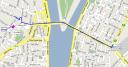
Take the bus number 91 or 291 just outside the train station. It will cross the Margit Bridge, and start its ascent up a hill. Get off the bus at the fourth stop called ‘Zivatar utca’, cross the road, walk on downhill until you find Zivatar Street on your right. The Centre is further up the street, to your left. Please note, the hill is on a steep incline and the pavement is not totally smooth.
You can consult the timetables of buses here.
Low-floor buses (i.e. buses with entrances / exits without any steps) equipped with a mechanical ramp run on both the 91 and 291 routes. Each low-floor bus can only accommodate 1 person using a wheelchair at a time. Low-floor buses are marked on the timetable by an underline. Buses without a low-floor usually have three large, and quite steep, steps to access the bus; there is a hand-rail and pole to assist passengers to climb the steps. As Budapest buses are often busy, getting a seat is not guaranteed. The rear areas of buses have wrap-around handrails. However, in the middle / front of buses, usually only one or two poles and bus hand-straps at about 200cm above the floor.
Budapest buses do not have auditory announcements or visual screens with information and details of the next stop.
Arrival at Keleti pu. (Eastern Railway Station) or Déli pu. (Southern Railway Station)
In both cases, take the metro (M2 red line) to "Deák tér" (junction of all three metro lines); change to the blue line of the metro (M3), go until the stop marked "Nyugati pu.", then proceed as in point A. above.
There are no lifts connecting the railway station / street-level and the metro platform. In either Keleti, Déli nor Nyugati pu. Metro stations. Keleti pu. only has partial escalator access; there is a short flight of stairs which connect the mezzanine-level to street-level. Déli pu. and Nyugati pu. have escalators all the way from the platform to the top / street-level. Both M2 and M3 have few hand-rails and hand-straps (about 200cm from the floor). As these are very busy lines, finding a seat is not guaranteed.
Metros announce the name of each metro-stop before arriving; the announcement is made approximately 30 seconds before arrival. Only a few metros, the new trains on M2, have visual screens with details of the next stop. However, the name of the metro stop is usually clearly visible upon pulling into the station.
Taking a taxi
The EYCB’s contractional partner is Főtaxi. You can order a Főtaxi taxi to any place in the town by calling them on the following number +36 1 222 2222 or via their app that you can download from their website. Please always specify at which exit of the railway station you are waiting at. There are many other companies, of which we recommend the following ones: 6x6 taxi and Tele 5 taxi.
Taxi fares:
All taxi companies in Budapest must provide their service on fixed fare from 1st of September 2013 (regulation 31/2013. IV. 18. by the local government of Budapest) as follows:
· Base fare: 1100 HUF
· Time-based fare unit/ min: 110 HUF / min
· Distance-based fare unit: 440 HUF / km
If you require an accessible taxi (because you are a wheelchair user), Meosz operates an accessible minibus service. All minibuses are equipped with either a lift or ramp and parking space for between 1 and 4 wheelchairs. Meosz minibuses need to be booked 2 weeks in adance, you can do this directly by contacting [email protected]. Főtaxi can accommodate people using a wheelchair who are able to transfer from the chair onto the seat independently; they can only carry folding wheelchairs.
Arriving by car
In case you have a GPS, please use the following coordinates:
Latitude and longitude: N 47° 30' 51.4759" , E 19° 1' 50.217"
Arriving from Széll Kálmán tér (former name: Moszkva tér) direction : Margit körút - right turn to Bakfark Bálint street - first left to Varsányi Irén street - sixth left to Horváth utca - left turn to Margit körút - first right to Keleti Károly street - right turn to Buday László street - left turn to Rózsahegy street - first right to Zivatar street.
There is one accessible parking bay at the EYCB, located directly opposite the main entrance and marked with a wheelchair sign.
Arriving by plane
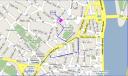
From the airport the easiest and fastest way by public transport is 100E Airport Express, taking you to Deák Ferenc tér (junction of three metro lines), the terminus. From Deak ter, take Metro line 2 (red line) to Széll Kálmán tér (3 stops). From Széll Kálmán tér, take tram 4 or tram 6 to “Mechwart liget” (2 stops), and from there you are at walking distance to the Centre. With heavy luggages you can take Bus 11 for one stop and get off at Füge utca.
In case you need cash for the minibus shuttle / taxi, you can change money in the arrival hall; you can consult the map of Budapest airport to locate the Exchange Office / ATMs. You may find it more advisable to withdraw money from the ATMs, as the exchange rate at the Exchange Office may not be very favorable.
Minibus Shuttle:
Minibus
The minibus service is provided by Minibud Airport Shuttle Services.
Please refer to their website for further information: https://www.minibud.hu/en
Meosz operates an accessible minibus shuttle service to and from the airport; all minibuses are equipped with either a lift or ramp and parking space for between 1 and 4 wheelchairs. Meosz minibuses need to be booked 2 weeks in advance, you can do this directly by contacting [email protected] or telephoning +36 61 250 9013.
Taxi
The only taxi company which is allowed to wait at the departure / arrival exits of the airport is Főtaxi. Főtaxi can accommodate people using a wheelchair who are able to transfer from the chair onto the seat independently; they can only carry folding wheelchairs.
Taxi fares:
All taxi companies in Budapest must provide their service on fixed fare from 1st of September 2013 (regulation 31/2013. IV. 18. by the local government of Budapest) as follows:
· Base fare: 1100 HUF
· Time-based fare unit/ min: 110 HUF / min
· Distance-based fare unit: 440 HUF / km


Presentation of the EYC Budapest.
Video on the accessibility of the EYC Budapest building.
Video on the accessibility of the EYC Budapest building.

.jpg/c6bf65a5-eb5a-5225-1167-648ff16fed37?version=1.0)
.jpg/6b5a773f-a28a-9a7a-56f3-38c3d4e7eef6?version=1.0)
.jpg/7004a2c4-ee1f-26d4-80a2-0de94ae9d156?version=1.0)
.jpg/becd7e89-359d-2b80-834b-f3611eab30ae?version=1.0)
.jpg/abf44c1c-0014-d5f9-ce21-ae692b989771?version=1.0)
.jpg/e09cea7f-b0eb-09d3-004a-20476c8e193f?version=1.0)
.jpg/1b86cadb-fcb6-b088-1827-5307e5a80db2?version=1.0)
.jpg/79670ac7-a59b-680c-0497-29d4ca720621?version=1.0)
.jpg/39c07ced-071a-6855-615b-ba421c9c13f7?version=1.0)
.jpg/71ea6336-e8f7-43ce-ff83-ef8c8aaa93fa?version=1.0)
.jpg/15dc1aae-93b8-d027-8275-efb265bc9ca8?version=1.0)
.jpg/a30e399e-abb9-ede4-171c-3f9eb39999c5?version=1.0)
.jpg/c512b720-82c8-6cb7-3112-0e612f4b10cc?version=1.0)
.jpg/04ab3e86-6ab1-18e7-75d2-07afd07981c7?version=1.0)
.jpg/08b79b30-90a4-0e5f-896e-c92c4082fe16?version=1.0)
.jpg/72766698-8df8-2c90-d250-9e68705ea212?version=1.0)
.jpg/7f7a6572-c88b-2bdb-7ed6-f4b9672fe5ba?version=1.0)

European Youth Centre Budapest
1024 Budapest,
Zivatar utca 1-3.
Hungary
If you wish to make a reservation, please contact the EYCB secretariat to agree on a date for the activity.
Secretariat
Phone: +36 1 438 10 30
 Contact form
Once the date is fixed with the EYCB, complete the booking form carefully and submit it to the EYCB secretariat.
The EYCB regularly welcomes groups and gives them a presentation of the Youth Department, its programmes and its activities, as well as documentation.
You may address your request to the EYCB secretariat, indicating the date/schedule you would like to visit, the number of people in your group, and if applicable the thematics of interest to you. We would appreciate if you would also mention the country(ies) you come from and the name of your organisation.