


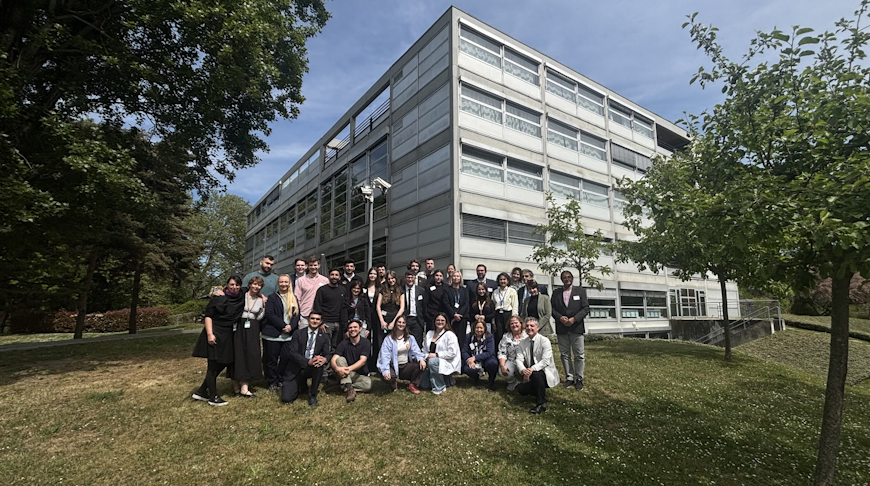
From 28 to 30 April, close to 30 representatives of various stakeholders involved in providing follow-up to the adoption of the European Charter on the Participation of Young People in Local and Regional Life, as a recommendation to Council of Europe member states (2026) and as a resolution (516, 2025), met at the European Youth Centre in Strasbourg, at the invitation of the Youth Department, in partnership with the Congress of Local and Regional Authorities.
 The meeting featured the active participation of elected and professional representatives from local and regional authorities, local youth councils, national youth services, international organisations working with youth participation at a local level, youth centres, as well as youth delegates to the Congress, elected representatives from the Advisory Council on Youth and the European Steering Committee for Youth.
 The rich and inspiring discussions will result in proposals for establishing a road map for implementing the charter, focusing mainly on building awareness, dissemination and advocacy towards duty bearers and right holders, identifying needs and actions in relation to capacity building, training opportunities and systematising educational resources to facilitate its implementation, and starting the process of reporting achievements and preparing the evaluation of the charter in five years.
 In his closing remarks after two and a half days of intensive work, Jorge Orlando Queiros, representing the European Steering Committee for Youth (CDEJ), captured the very essence of the meeting:
" the European Charter on the Participation of Young People in Local and Regional Life matters so much. It gives us a common language and a shared set of expectations for municipalities and regions, youth councils and civil society, and national authorities and European institutions to turn 'good intentions' into practical pathways: information that reaches young people, structures that include them, resources that support them and accountability that sustains change.... we worked on how to make to these intentions a reality: how to communicate the charter in plain language, how to translate and make it accessible, how to strengthen capacity through training and learning, how to update the tools used by educators and practitioners, and how to review progress in a way that supports improvement rather than paperwork. So let me end with a simple call to action: let's keep the Charter close to the ground. Take it home, put it on the table in your city hall, regional assembly, youth centre, school, and social networks. Ask: which commitments can we act on in the next six months?”


.jpeg/ebf67137-5699-e52d-6047-b733981e045d?version=1.0)
.jpeg/812a1558-6ff8-31b4-e366-c2b179ac4211?version=1.0)
.jpeg/ac502946-e94f-f0bd-2be4-f51885bf779b?version=1.0)
.jpeg/9a0a40f1-ad73-8918-331e-75ea3dcb2929?version=1.0)
.jpeg/e584411d-a892-e91a-3b75-37f7b75fb016?version=1.0)