


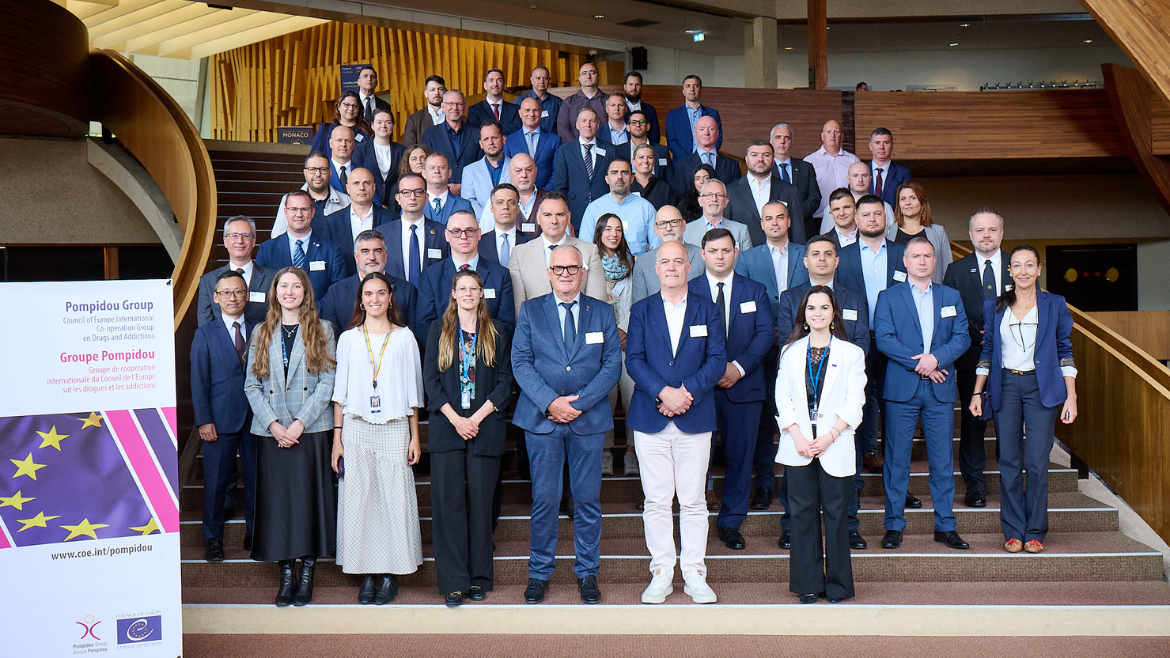




Le Groupe de coopération internationale du Conseil de l’Europe sur les drogues et les addictions (Groupe Pompidou) est une plateforme multilatérale de référence pour la coopération intergouvernementale, favorisant le dialogue ouvert et l’échange de bonnes pratiques. Il maintient une approche équilibrée entre la réduction de la demande — incluant la prévention, le traitement et la réduction des risques — et la réduction de l’offre, en promouvant l’élaboration de politiques fondées sur les droits humains et les données probantes.
Fondé en 1971 à l'initiative du président français Georges Pompidou, il a remporté plus de 50 ans de succès dans la promotion de la coopération en matière de politique des drogues, la lutte contre le trafic et l'amélioration de la prévention de la consommation de drogues et du traitement des troubles liés à l'utilisation de substances psychoactives.
Le Groupe défend les valeurs fondamentales du Conseil de l'Europe - droits humains, démocratie et primauté du droit - et s'efforce de trouver un équilibre entre les intérêts de la communauté dans son ensemble et la protection des droits fondamentaux de l'individu en relevant les défis de la consommation et du trafic illicite de drogues, ainsi que des nouvelles formes d'addictions.
Composé actuellement de 41 États membres, il encourage la coopération internationale, en offrant des connaissances et un soutien pour créer des politiques efficaces, durables et humaines en matière de drogues.

Deuxième réunion du Bureau des Correspondants permanents en 2026

Lignes directrices sur la criminalité organisée liée au trafic de drogue (OC-DT) (2026)
Version anglaise uniquement

Version anglaise uniquement

Trainer's manual on care and treatment of persons with substance use disorders in prisons (2025)
Version anglaise uniquement


 RESTEZ INFORMÉS


SUIVEZ-NOUS SUR LES RESEAUX SOCIAUX
 Groupe Pompidou


Santé

Direction des droits sociaux, de la santé et de l'environnement
Direction Générale Droits humains et Etat de droit