Le Conseil de l’Europe s’attache à autonomiser les jeunes, à soutenir leur participation constructive aux processus démocratiques, à les doter d’aptitudes et de connaissances pour favoriser des sociétés pacifiques et inclusives, et à assurer leur plein accès aux droits.
Depuis des décennies, les jeunes sont au cœur des activités du Conseil de l’Europe. Les structures décisionnelles du secteur jeunesse sont conçues pour garantir la prise en compte des besoins et des intérêts des jeunes dans les priorités de l’Organisation. Conformément à son mandat découlant du Sommet de Reykjavík de 2023, le Conseil de l’Europe ambitionne désormais de renforcer l’intégration d’une perspective pour la jeunesse dans tous ses domaines d’action.
Priorités du Conseil de l’Europe en matière de jeunesse
Revitaliser la démocratie pluraliste
- Aider les organisations de jeunesse à renforcer la démocratie participative, au sein de leurs propres cercles et dans la société en général.
- Faire en sorte que les processus d’élaboration des politiques et de gouvernance associent activement des groupes diversifiés de jeunes et leurs représentants.
- Soutenir les politiques de jeunesse et le travail de jeunesse qui suppriment les obstacles à la participation des jeunes.
- Adapter les institutions face aux nouvelles tendances qui façonnent la démocratie, comme les modalités de participation des jeunes, la digitalisation et la gouvernance internet
Accès des jeunes aux droits
- Promouvoir la pleine mise en œuvre des normes du Conseil de l’Europe concernant les droits des jeunes.
- Élargir la formation et les ressources des organisations de jeunesse et de leurs partenaires pour leur permettre de dispenser une éducation aux droits humains et de défendre l’accès aux droits.
- Renforcer les réponses institutionnelles face aux nouveaux problèmes rencontrés par les jeunes dans leur transition vers l’âge adulte, comme le changement climatique, l’intelligence artificielle, les espaces numériques, la mobilité accrue et les nouvelles formes d’emploi.
Vivre ensemble dans des sociétés pacifiques et inclusives
- Donner aux parties prenantes la capacité de construire des sociétés inclusives moyennant l’élaboration de politiques, de programmes et de projets qui s’ouvrent à la diversité et une action efficace pour assurer un suivi des discriminations, de la violence et de l’exclusion et lutter contre ces phénomènes.
- Donner à tous les jeunes – y compris ceux victimes de discrimination – la possibilité de participer activement à la vie démocratique.
- Souligner l’importance que revêtent l’unité européenne, la solidarité internationale, la paix, la diversité, le dialogue interculturel et intergénérationnel et la durabilité environnementale dans les politiques, les pratiques et la recherche dans le domaine de la jeunesse.
- Donner aux jeunes les compétences et le soutien dont ils ont besoin pour prévenir la violence, résoudre les conflits et promouvoir une culture de la paix, notamment par le biais de financements et du réseautage et en reconnaissant les diverses manières dont les jeunes s’organisent
Travail de jeunesse
- Promouvoir et renforcer le travail de jeunesse en l’inscrivant dans le cadre des politiques de jeunesse, notamment en faisant progresser le Programme de travail européen sur l’animation socio-éducative, en partenariat étroit avec l’Union européenne.
- Améliorer la qualité du travail de jeunesse, qu’il soit effectué par des bénévoles pour par des professionnels rémunérés.
- Rendre le travail de jeunesse et l’éducation non formelle plus accessibles et attractifs pour un plus grand nombre de jeunes.
Saskia Kluit (Pays-Bas, SOC), Présidente de la Commission des questions sociales, de la santé et du développement durable de l’APCE, a fait aujourd’hui la déclaration suivante...
Qui fait quoi pour la jeunesse au Conseil de l’Europe ?
Cogestion
LeConseil consultatif sur la jeunesse. Le Conseil consultatif se compose de trente représentants d’ONG et de réseaux de jeunesse. Il contribue à toutes les activités du secteur jeunesse et veille à ce que les jeunes soient associés à d’autres activités du Conseil de l’Europe.
LeComité directeur européen pour la jeunesse. Le Comité directeur rassemble des représentants des ministères de la Jeunesse des 50 États parties à la Convention culturelle européenne. Il promeut la coopération dans le domaine de la jeunesse et fournit un cadre pour les politiques nationales de jeunesse. Il fait partie du système de cogestion et de codécision avec le Conseil consultatif sur la jeunesse, avec qui il forme le Conseil mixte sur la jeunesse.
Instruments
LesCentres européens de la jeunesse de Strasbourg et Budapest. Les Centres européens de la jeunesse (CEJ) de Strasbourg (ouvert en 1972) et de Budapest (ouvert en 1995) sont des structures permanentes chargées de mettre en œuvre la politique du Conseil de l’Europe en matière de jeunesse. Ce sont des centres internationaux de formation et de réunion avec possibilité d’hébergement, qui accueillent la plupart des activités menées dans le secteur de la jeunesse. Plusieurs milliers de participants visitent chaque centre chaque année. Le personnel professionnel comprend une équipe de conseillers qui dispensent une aide pédagogique et technique pour préparer, mettre en œuvre et assurer le suivi des activités.
LeFonds européen pour la jeunesse.Avec un budget annuel de près de 4 millions d’euros, le Fonds européen pour la jeunesse (FEJ) apporte un soutien financier et éducatif pour les activités européennes de jeunesse organisées par des réseaux et des organisations non gouvernementales de jeunesse, telles que des réunions internationales de jeunes, des conférences, des campagnes, des stages, des séminaires ou des visites d’étude.
Le partenariat entre l’UE et le Conseil de l’Europe dans le domaine de la jeunesse est le fruit des relations étroites développées par le Conseil de l’Europe et la Commission européenne dans le domaine de la jeunesse depuis 1998. L’objectif général est de favoriser les synergies entre les activités menées par les deux institutions en faveur de la jeunesse. Les thèmes spécifiques sont la participation et la citoyenneté, l’inclusion sociale, la reconnaissance et la qualité du travail de jeunesse.
Zoom sur les travaux du Conseil de l’Europe concernant la jeunesse
Programme d’éducation aux droits humains
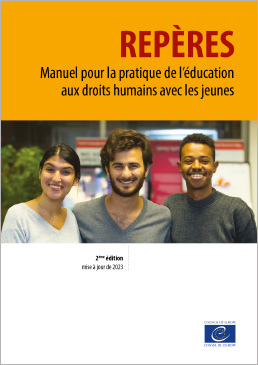
Le Programme de l’éducation aux droits de l’homme pour les jeunes a été lancé en 2000 afin d’intégrer les questions relatives aux droits humains dans le travail de jeunesse et les pratiques d’apprentissage non formel. Il s’est construit autour de Repères, le manuel pour la pratique de l’éducation aux droits humains avec les jeunes, qui propose des informations et des activités éducatives essentielles, accessibles et ludiques. C’est une contribution directe à la mission essentielle de l’Organisation qui est de promouvoir et de protéger les droits humains. Les activités menées dans ce cadre sont ancrées dans la Stratégie du Conseil de l’Europe pour le secteur jeunesse à l’horizon 2030, en favorisant l’accès des jeunes aux droits et en renforçant les capacités et les ressources des organisations de jeunesse et d’autres parties prenantes concernées pour dispenser une éducation aux droits humains.
Label de qualité pour les centres de la jeunesse
Le Label de qualité pour les Centres de la jeunesse vise à promouvoir les Centres européens de la jeunesse du Conseil de l’Europe en tant qu’instruments normatifs et exemples de bonnes pratiques en matière de politique de jeunesse. Pour l’heure, 14 centres de jeunesse en Europe détiennent le Label de qualité, qui atteste du respect des rigoureux critères fixés dans le cadre du projet. Ils représentent aussi les valeurs du Conseil de l’Europe dans leurs propres communautés.
Démocratie ici. Démocratie maintenant
Démocratie ici | Démocratie maintenant est un projet du Conseil de l’Europe coordonné par le Service de la jeunesse qui vise à revitaliser la démocratie en renforçant la confiance mutuelle entre les jeunes et les institutions et processus démocratiques.
Portfolio du Conseil de l’Europe sur le travail de jeunesse
Le Portfolio du Conseil de l’Europe sur le travail de jeunesse est un outil en ligne permettant aux personnes, équipes et organisations qui s’investissent dans le travail de jeunesse en Europe de comprendre leurs compétences et de les développer plus efficacement. Cet outil peut aussi être utile pour les formateurs, les responsables du travail de jeunesse, les personnes chargées de l’élaboration des politiques et plus généralement toute personne qui s’intéresse au développement qualitatif et à la reconnaissance du travail de jeunesse.
Bibliothèque vivante
Adapté et lancé sous la bannière du Conseil de l’Europe par le Centre européen de la jeunesse de Budapest, le concept de la Bibliothèque vivante vise à lutter contre les préjugés et la discrimination. Une Bibliothèque vivante fonctionne exactement comme une bibliothèque classique : les visiteurs peuvent feuilleter le catalogue des titres disponibles, choisir le livre qu’ils souhaitent lire et l’emprunter pour une durée limitée. Après l’avoir lu, ils doivent le rendre et peuvent en emprunter un autre s’ils le désirent. La seule différence est que, dans la Bibliothèque vivante, les livres sont des personnes et la lecture consiste en une conversation.
La jeunesse contre le discours de haine
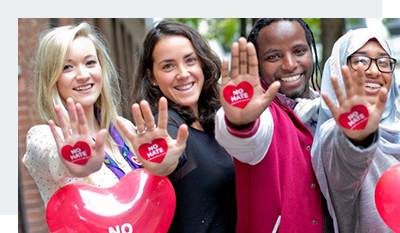
Le Mouvement contre le discours de haine est une campagne de jeunesse menée par le Service de la jeunesse du Conseil de l’Europe qui appelle les jeunes à se mobiliser pour lutter contre le discours de haine et promouvoir les droits de l’homme en ligne. Lancé en 2013, le mouvement est toujours actif dans 45 États membres du Conseil de l’Europe.