

|
Global Project on
Cybercrime (Phase 2): Activities
Germany
ratified the Additional Protocol on Xenophobia and Racism (10 June 2011,
Strasbourg)
[21 June 2011, Strasbourg]
Germany
conveyed to the Secretary General, the instrument of ratification of
Additional Protocol to the Convention on cybercrime, concerning the
criminalization of acts of a racist and xenophobic nature committed
through computer systems (CETS 189). The protocol shall enter into force
in respect of Germany on 1st October 2011.
Treaty
Office website
Current
status of signatures, ratifications and
accessions to the
Convention
United Kingdom ratified the
Convention on Cybercrime (25 May
2011, Strasbourg)
[12
June 2011, Strasbourg]
United Kingdom deposited the
instrument of ratification of
the Convention on Cybercrime (ETS
185) on 25 May 2011. The
Convention on Cybercrime will
enter into force as regards
United Kingdom on 1 September
2011.
31 States are now Parties to
the Convention.
Treaty
Office website
Current
status of signatures, ratifications and
accessions to the
Convention
CyberCrime@IPA Project : Regional
workshop on LEA/ISP cooperation
(Durres, Albania, 9-10 June
2011)
[12 June 2011, Strasbourg]
Representatives from law
enforcement agencies,
prosecution services and the
private sector met on 9-10 June,
2011 in Durres (Albania). They
discussed the guidelines for
cooperation between law
enforcement and internet service
providers against cybercrime,
adopted by the Octopus
Conference, Strasbourg, 1-2
April 2008. Law enforcement
experts from Germany, France and
Slovenia as well as
representatives from Microsoft
and the Association of the
German Internet Industry (ECO)
shared their experience.
The Memoranda of Understanding signed in 2010 between
LEA and ISP in Georgia as part of the Georgia cybercrime project
implemented by the Council of Europe served as an example of good
practice. At the end of the workshop several countries recommended that
similar agreements be concluded in their respective countries.

Agenda
List
of Participants
More
information on law enforcement and ISPs cooperation
Memorundum
of Understanding of Georgia
Finland
ratified the Additional Protocol on Xenophobia and Racism (20 May 2011,
Strasbourg)
[01 June 2011, Strasbourg]
The permanent representative of Finland to the Council of Europe
conveyed to the Secretary General, the instrument of ratification of
Additional Protocol to the Convention on cybercrime, concerning the
criminalization of acts of a racist and xenophobic nature committed
through computer systems (CETS 189). The protocol shall enter into force
in respect of Finland on 1st September 2011.
Treaty
Office website
Current
status of signatures, ratifications and
accessions to the Additional Protocol on
Xenophobia
and Racism
CyberCrime@EAP
Project : Launching
Conference
(Tallinn, Estonia, 30-31 May
2011)
[01 June 2011,
Strasbourg]
This new
project was launched through a
regional conference on effective
measures against cybercrime held
in Tallinn in cooperation with
the Ministry of Justice of
Estonia.
The meeting
was opened by the Minister of
Justice of Estonia, Mr. Kristen
Michal, who underlined the
importance of cyber-security and
the fight against cybercrime for
Estonia and its effort to
support counter-measures at the
international level.
The
conference discussed the
priorities of project countries
with regard to cybercrime and
electronic evidence. Most
project activities will be
regional. This is to reinforce
regional cooperation which is
considered essential given the
trans-national nature of
cybercrime. Regional cooperation
will furthermore help integrate
EaP countries into European and
international efforts against
cybercrime.
During the meeting, the
Steering Committee adopted the
workplan of the project and
agreed on implementation
modalities.
Agenda
List
of participants
Speech
of the Minister of Justice of
Estonia
CyberCrime@IPA Project:
Law enforcement training
strategy: Study visit to University College Dublin (23-27 May 2011, Dublin,
Ireland)
[01 June
2011, Strasbourg]
Cybercrime investigators and representatives of
law-enforcement training institutions from project areas met in Dublin to
initiate a cybercrime law enforcement training strategy.
The meeting was hosted by the Centre for Cybercrime
Investigation at University College Dublin (UCD) and resulted in the
following:
·
Creation of a regional working group for
law enforcement training
·
Draft strategy for law enforcement training
·
Application for ECTEG (European Cybercrime
Training and Education Group) training materials
·
Nominations for participants in the Master
of Sciences (MSc) programme in Forensic Computing and Cybercrime
Investigation offered by UCD.
Agenda
CyberCrime@IPA Project :
Regional Training Meeting on
International Judicial Cooperation (Dubrovnik, Croatia, 16-17 May 2011)
[22
May 2011, Strasbourg] Representatives of the Ministries of Justice,
prosecutors and police officers from the high tech crime units of the
project areas as well as experts from Romania and United Kingdom
attended the event.
The overall objective of the workshop was to discuss
good practices and address the difficulties encountered to cooperate at
the regional and international level in cybercrime investigations. How
to enhance such cooperation, improve the responsiveness of the 24/7
points of contact and the efficiency of MLA as well as how to ensure a
better cooperation between the high tech crime units were the key
questions addressed by the meeting.
During discussions the preparation of a manual on
international cooperation in cybercrime matters has been initiated and
the delegations made recommendations on the steps to be taken in order
to enhance international cooperation against cybercrime.

Agenda
List
of Participants
Presentations
CyberCrime@IPA
Project:
Regional Workshop on Judicial
Training (Ohrid, “the former Yugoslav Republic of Macedonia”, 11-12 May
2011)
[16
May 2011, Strasbourg] Representatives of the judicial training institutions,
judges, prosecutors and international experts met in Ohrid to discuss
judicial training strategies on cybercrime and electronic evidence.
The event received wide media coverage and benefited from
the participation of the Minister of Justice, Mr. Mihajlo Manevski.
"Computer crime is a type of organized crime with very serious consequences.
The increasing of cybercrime requires greater training but also the
implementation of the law" said Mr. Manevski.
On this occasion a regional working group was created to
develop - with the support of the project - training manuals for basic and
advanced training courses. Furthermore, the delegations made recommendations
on the steps to be taken to ensure sustainable judicial training in the
region on these issues.

Agenda
List
of Participants
Presentations
Press
release:
Time
Pacific regional workshop on
cybercrime
(Tonga, 27-29 April 2011)
[28 April 2011, Strasbourg]
On 27 April, Lord Tu’ivakano, Prime Minister of Tonga, opened the Pacific
regional workshop on cybercrime legislation in Nuku’alofa, Tonga. The event
is aimed at supporting 14 Pacific Island States in the strengthening of
legislation in line with the Budapest Convention on Cybercrime. It is
jointly organised by the Secretariat of the Pacific Community, the
Australian Attorney General’s Department and the Council of Europe. The
workshop follows the Tonga Declaration of 2010 where ICT Ministers of the
Pacifics agreed to put cybercrime legislation in place by 2015 and directed
their officials to cooperate with the Council of Europe and other
organisations in this respect.
Agenda
Outcomes
Press releases:
Tonga Government Portal -
Scoop World
On-line portal for Pacific ICT information
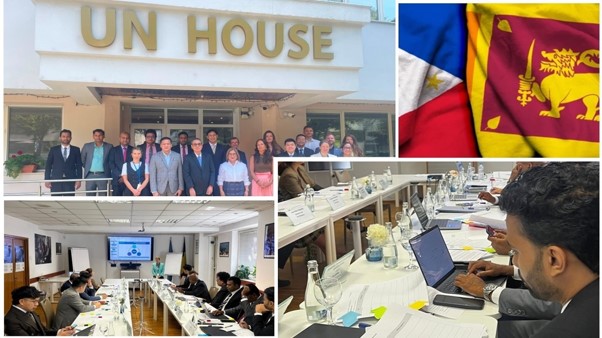
Cooperation against
cybercrime in South Asia
(5-6 April 2011, Colombo, Sri Lanka)
[15 April 2011, Strasbourg] An international workshop jointly
organised by ICTA of Sri Lanka and the Council of Europe helped reinforce
cooperation against cybercrime in South Asia.
The workshop, held in Colombo on 5 and 6 April 2011, allowed more than one
hundred public and private sector representatives from Bangladesh, India,
Maldives, Pakistan and Sri Lanka to exchange good practices and to define
steps torwards stronger legislation in line with the Budapest Convention on
Cybercrime, the strengthening of high-tech crime units and incident response
teams, as well as more effective interagency, public-private and
international cooperation.

Workshop report and conclusions
Presentations
Press releases: Daily
news -
The Island
CyberCrime@IPA Project:
Regional workshop on legislation (24-25 March 2011, Sarajevo, Bosnia and
Herzegovina)
[04
April 2011, Strasbourg]
The regional workshop organised
under CyberCrime@IPA project
gathered representatives of
ministries of justice,
prosecutors and judges dealing
with cybercrime cases.
The aim of the workshop was to
provide advice to project
countries/areas on the
strengthening of legislation and
follow up to the recommendations
of the cybercrime situation
report drafted under the
project.
During discussions international
experts provided advice on
developing comprehensive
legislation that includes
efficient and fast criminal
procedure measures and adequate
conditions and safeguards in
place.
The representatives of the
participating countries
presented their national
legislative approach and raised
the need for more consistent
training on electronic evidence
for judges and prosecutors
enabling them to deal with such
cases.
At the end of the workshop each
delegation provided information
on the current status of
criminal law reform and drafted
recommendations on possible
steps to be taken to strengthen
the legal framework on
cybercrime in their country.

Agenda
List
of Participants
Presentations
CyberCrime@IPA Project:
Regional Workshop on Criminal Money Flows on the Internet (17-18 March 2011,
Belgrade, Serbia)
[04 April 2011, Strasbourg]
The regional workshop
organised under CyberCrime@IPA
project gathered prosecutors,
judges, police officers and
representatives of financial
investigation units (FIUs).
Bodies responsible for the
recovery of criminal assets,
financial institutions and
internet service providers
(ISPs) also participated in the
workshop.
The workshop was aimed at
raising awareness of the need
for confiscating proceeds from
crime on the internet,
strengthening interagency and
public-private cooperation
against criminal money on the
internet and identifying
countermeasures and good
practices that could be
implemented in the project
countries and areas.
The participants of the workshop
recommended a number of specific
measures to be implemented in
their respective countries in
terms of criminal material and
procedural law, procedures for
mutual legal assistance, further
specialisation and training for
law enforcement and judiciary,
cooperation and exchange of
information with the private
sector, interagency and
international cooperation as
well as raising public
awareness.

Agenda
List
of Participants
Presentations
New project on cybercrime
in Eastern Europe
[25
March 2011, Strasbourg] The
European Union and the Council of Europe have launched a new joint project
on cooperation against cybercrime in Eastern Europe. The countries
participating in the project are Armenia, Azerbaijan, Belarus, Georgia,
Moldova and Ukraine.
The launching event will take place in Tallinn, Estonia, on 5-6 May 2011.
The funding for CyberCrime@EAP is provided by the EU
under the Council of Europe Eastern Partnership Facility that supports the
reform process in the six partner countries in four core fields. The project
started on 1 March 2011 with a duration of thirty months and a budget of
Euro 724,000.
Summary
Eastern
Partnership initiative
(media advisory)
Cybercrime resources available
in Albanian, Croatian, Bosnian,
Macedonian and Turkish
[8 March 2011,
Strasbourg]
The
concept paper for the training of judges and prosecutors in cybercrime and
electronic evidence
matters is now available in Albanian, Bosnian, Macedonian and Turkish. This
concept is aimed at helping judicial training institutions develop and
integrate such training in regular initial and in-service training. It will
furthermore facilitate networking among judges and prosecutors to enhance
their knowledge as well as consistent support to training initiatives by
interested partners.
Concept
Paper on cybercrime training for judges and prosecutors: click
here
The Guidelines for the cooperation
between law enforcement and internet service providers against cybercrime
were adopted by the global Conference "Cooperation against Cybercrime"
(Council of Europe) on 1-2 April 2008 to help law enforcement and service
providers to organise their cooperation while respecting each others' roles
and responsibilities as well as the rights of internet users.
Guidelines:
click here
The translations were realised
within the framework of the joint EU/CE regional project “Regional
Co-operation in Criminal Justice: Strengthening capacities in the fight
against cybercrime” (CyberCrime@IPA)
Both
documents will soon be available in Serbian.
CyberCrime@IPA Project
: Launching Conference (Istanbul, Turkey, 17-18 February 2011)
[23 Feb 2011,
Strasbourg]
The event was
organised under the CyberCrime@IPA joint regional project of the European
Union and the Council of Europe on cooperation against cybercrime under the
Instrument of Pre-Accession.
The conference
gathered decision makers and members of the project teams from the eight project
areas, representatives of partners in the project as well as experts from
Estonia, Georgia, the Netherlands, Portugal, United Kingdom, the
Organization for Security and Co-operation in Europe (OSCE), the German
Foundation for International Legal Cooperation (IRZ) and the private sector
(Microsoft).
The conference
resulted in the adoption of the project work plan and the finalisation of
the cybercrime situation report. Senior officials expressed strong
commitment towards domestic measures and regional cooperation against
cybercrime.

Agenda
List
of participant
Octopus conference on cybercrime 2011
: NEW DATES
[02 Feb 2011,
Strasbourg] The 2011 conference on cooperation against cybercrime is
finally scheduled for 21 to 23
November 2011 in Strasbourg.
Themes to include:
10th
anniversary of the Budapest
Convention: SWOT now?
CyberCrime strategies
Cybercrime
capacity building
Monitoring progress against cybercrime
FIGHTING CYBERCRIME AND CHILD PORNOGRAPHY ON THE INTERNET
Cooperation with the Internet Industry
[17-18 March 2011, Lisbon]
The Council of Europe will contribute to an event organised by the Academy of European Law, which is intended as a platform to debate and assess all legal measures to prevent and combat the production, processing, possession and distribution of child pornography material on the internet and to promote the effective investigation and prosecution of offences in this area of law.
The most recent European legal acts and complementary measures such as the 2007 Council of Europe Convention on the Protection of Children against Sexual Exploitation and Sexual Abuse (CETS No. 201) and the current EU proposal for a Directive on combating the sexual abuse, sexual exploitation of children and child pornography, repealing Framework Decision 2004/68/JHA, will be debated.
Link to the program and registration
Regional workshop on protecting children against sexual exploitation of children (Kyiv, 7-8 December 2010)
[16 Dec 2010,
Strasbourg]
This event was organised within the framework of the joint CoE/EU Project on Strengthening and Protecting Women's and Children's Rights in Ukraine (TRES) in cooperation with the CoE global Project on Cybercrime and with the support of Microsoft.
Officials responsible for law reform and investigators from Armenia, Azerbaijan, Belarus, Georgia, Moldova, Russian Federation and Ukraine participated in the event and shared their national experiences in fighting against online sexual abuse of children.
Public and private sector organisations and initiatives engaged in this field, such as the European Union, OECD, Interpol, ICMEC, ECPAT, eNACSO, La Strada and Microsoft promoted good practices and contributed to the discussion on strategies and policies to promote a safer Internet for children.
More information
New project on cybercrime in
South-Eastern Europe
[19 Oct 2010,
Strasbourg]
The European Union and the Council of Europe
have agreed to launch a new
joint project on cooperation
against cybercrime in
South-Eastern Europe. The
project will start on 1 November
2010 with a duration of two
years and a budget of Euro 2.8
million.
Summary
Cybercrime training for judges
and prosecutors in Malaysia
[18 Oct 2010,
Strasbourg] A cybercrime training
workshop for judges and
prosecutors will be held at the
Judicial and Legal Training
Institute at Bandar Baru Bangi,
Selangor, Malaysia from 25 to 29
October 2010. Council of Europe will
contribute this event through
the Global Project on
Cybercrime.
Training manual
Training concept for judges and
prosecutors
Prosecuting cybercrime - Seminar
in Indonesia
[23 Sep 2010,
Yogyakarta] An
international seminar on
prosecuting cybercrime and
collecting digital evidence was
organised in Yogyakarta,
Indonesia, on 23 September 2010
by the Directorate General of
Information and Communication
Technology. The Council of
Europe contributed to this
event. Discussions on draft laws
showed that Indonesia is
bringing its legislation in line
with the Budapest Convention on
Cybercrime.
Agenda
Internet Governance Forum,
Vilnius, Lithuania, 14-17
September 2010
[6 Sep 2010,
Strasbourg] The Council of Europe will
contribute to a range of
workshops and sessions at the
IGF in Vilnius. These include a
workshop to discuss the Budapest
Convention as a common basis for
joint action against cybercrime.
Workshop on Cybercrime: Common
standards and joint action
The CoE at the IGF
Site of the IGF
"Meeting the challenge of
cybercrime in Latin America" -
regional workshop in Mexico City
(26-27 August 2010)
[6 Sep 2010,
Strasbourg] The Council of National
Security of Mexico and the
Council of Europe organised
a regional workshop for
countries of Latin America that
are in the process of adopting
relevant legislation or are
considering accession to the
Budapest Convention on
Cybercrime.
Agenda
Presentations
Harmonising cybercrime
legislation in Northern Africa -
regional workshop (Rabat,
Morocco, 27-28 July 2010)
[23 July 2010,
Strasbourg] The
United Nations Commission For
Africa, Microsoft and the
Council of Europe will cooperate
in a regional workshop for
countries of Northern Africa
with the aim of promoting
harmonisation of cybercrime
legislation.
Draft outline
Working document
Voluntary contributions to the
Project on Cybercrime
[23 July 2010,
Strasbourg] The global Project on
Cybercrime depends on voluntary
funding. In July 2010, Monaco
and Microsoft announced
additional contributions to
allow this project to continue
making a global impact.
Strengthening cybercrime
legislation in Cambodia (Phnom
Penh, Cambodia, 13 July 2010)
[23 July 2010,
Strasbourg] The
Council of Europe supported the
Working Group responsible for
cybercrime legislation under the
Council of Ministers of Cambodia
in the organisation of a
national workshop. The event was
preceded by detailed discussions
on current and proposed
legislation on cybercrime.
Programme
Updated country profiles on
Germany and Portugal
[23 July 2010,
Strasbourg]
Additional country profiles are
now available for Germany and
Portugal. Profiles serve as
useful resources for countries
in the process of developing
legislation. Knowledge of the
legislation of other
jurisdictions furthermore
facilitates international
cooperation.
Country profile Germany in
English - in
German
Country profile
Portugal (bilingual)
Meeting of ICT ministers of the
Pacific region (Tonga, 16-17
June 2010)
[23 July 2010,
Strasbourg] The
Ministers and senior officials
responsible for information
technologies of the Pacific
Region meeting in Tonga agreed
to work with the Council of
Europe and other organisations
in the strengthening of
legislation and other measures
on cybercrime. The Council of
Europe through the Project on
Cybercrime had contributed a
discussion paper to this
meeting.
Agenda
Discussion paper
Project on Cybercrime in
Georgia: Closing Conference
(14 May 2010, Tbilisi)
[7 May 2010,
Strasbourg] The EU/COE Joint Project on
Cybercrime in Georgia, which has
been implemented between 1 June
2009 – 31 May 2010, was designed
to contribute to the security of
and confidence in information
and communication technologies
in Georgia by helping the
authorities develop a consistent
policy on cybercrime in view of
implementing the Convention on
Cybercrime (ETS 185).
In less than one year, with the
support of the Project
activities and benefited from
the strong commitment and
involvement of the Georgian
project counterparts (the
Ministry of Justice, Ministry of
Internal Affairs and other
national institutions), Georgia
has made important progress in
fighting cybercrime.
The Closing Conference
represented an opportunity for the
Project partners, the European
Union and the Council of Europe
to review the achievements of
the Project and its impact on
the fight against cybercrime in
Georgia.
Agenda
Experts'
presentations
List
of participants
Press
release of the Ministry of Justice of Georgia
(Georgian only)
Project
Summary
Project
Website
Project on Cybercrime in
Georgia: Regional Workshop on
Cybercrime (13 May 2010,
Tbilisi)
[7 May 2010,
Strasbourg] Taking into account the
transnational dimension of
cybercrime, the Regional
Workshop on Cybercrime was
intended to focus on
strengthening international
cooperation in cybercrime
investigations. Representatives
and experts on cybercrime from
Armenia, Azerbaijan, Estonia,
Georgia, Italy, Moldova, The
Netherlands, Norway, Romania,
Spain, Turkey, Ukraine and
United Kingdom as well as
Interpol and the private sector participated in the event
and shared best practices and
experiences.
The workshop particularly
focused on the:
- state and effectiveness of
cybercrime legislation
harmonised with international
standards;
- strengthening of skills of law
enforcement and criminal justice
authorities regarding the
investigation, prosecution and
adjudication of cybercrime;
- cooperation between law
enforcement and service
providers in such
investigations;
- enhancing international
cooperation on cybercrime.
Agenda
Experts'
presentations
List
of participants
Press
release of the Ministry of Justice of Georgia
(Georgian only)
Project on Cybercrime in
Georgia: “Train the Trainer”
course (13 May 2010, Tbilisi)
[7 May 2010,
Strasbourg] The Project supported the development of training
programmes on cybercrime and
electronic evidence for law
enforcement, judges and
prosecutors in Georgia. This
course contributed to the
reinforcement of Georgian
training capacities by “training
the trainers” in delivering such
courses. This was the second and
last module of the course which
started in March 2010.
Anti-Phishing Working Group: 4th Annual Counter-eCrime
Operations Summit (CeCOS) (11 - 13 May 2010, Sao
Paulo)
[12 April 2010, Strasbourg] This three-day Summit will focus on the
operational challenges and the development of
common resources for the first responders and
forensic professionals who protect consumers and
enterprises from the ecrime threat every day.
Presenters will proffer case studies of national
and regional economies under attack, narratives
of successful trans-national forensic
cooperation as well as models for cooperation
and unified response against ecrime and data
resources for forensic activities.
More
information on the 2010 CeCoS
Council of Europe at the
UN Crime Prevention Congress (12-19 April 2010,
Brazil)
[22 April 2010,
Strasbourg]
"The implementation of existing tools and
instruments, in particular the Budapest
Convention, is the most effective way to help
countries worldwide address cybercrime'' – this
was the main message successfully delivered at
the 12th United Nations Congress on Crime
Prevention and Criminal Justice.
Adopted on 19 April, the ''Salvador
Declaration'' confirms the need for a global
capacity building effort to strenghten the full
implementation of existing treaties and
standards – while continuing to study new
remedies.
Calling for an action plan, the Council of
Europe expressed its readiness to cooperate with
the UN Office on Drugs and Crime, the European
Union and others in reviewing needs, mobilising
resources and providing technical assistance.
Summary
of outcome regarding cybercrime
Contribution
of the Secretary General of the Council of
Europe to the UN Crime Congress:
English /
French
Salvador
Declaration
Speech
of Mr Philippe Boillat
Website
of the UN Crime Congress
Octopus Conference asks UN Crime Congress to
promote global action against Cybercrime based
on existing instruments
[1 April 2010,
Strasbourg] The
Octopus
Conference calls in its "Key Messages" for
the best possible use of already available
tools, instruments, good practices and
initiatives and in particular of the Budapest
Convention on Cybercrime which implementation
should be worldwide to sustain legislatives
reforms already underway.
The Conference recommends the launching by the
Council of Europe and the United Nations of a
global action plan to get a
clear picture of criminal justice capacities and
urgent needs, mobilise resources, provide
support and assess progress made.
The Conference was held on 23-25 March
2010 in Strasbourg and gathered more than 300
cybercrime experts representing countries from
all continents, international organisations and
the private sector to enhance their cooperation
against Cybercrime
Key
messages from the Octopus Conference
Contribution
of the Secretary General of the Council of Europe to
the UN Crime Congress:
English
/
French
Council
of Europe press release on Octopus call for a
worldwide implementation of the Budapest
Convention
Live
Webcast of the 12th UN Crime Congress
Reference to the Octopus Key Messages made by
the French Minister of Interior (31 March - 1
April 2010, Lille)
[1 April 2010,
Strasbourg] The "Key
Messages" of Octopus were reflected in the
speech delivered by the French Minister of
Interior, Mr Brice Hortefeux at the 4th
International Forum on Cybercriminality. This
Forum is organised by the French Gendarmerie on
31 March - 1 April 2010 in Lille.
Video
of the French Minister of Interior speech
More
information on the 4th International Forum on
Cybercriminality
Key
messages from the Octopus Conference
Website
of the Octopus Conference
"Key Messages from the Octopus Conference"
(23-25 March 2010)
[26 March 2010,
Strasbourg] The
"Key messages from the Octopus Conference"
adopted during the final plenary session of the
Conference are now available.
Key
messages from the Octopus Conference
Final
list of participants
Videos: Octopus Interface
Conference on Cooperation against Cybercrime
(23-25 March 2010, Strasbourg)
[24 March 2010,
Strasbourg] The
videos of the plenary sessions and some
workshops are available at:
Videos
of 23 March
-Morning Part 1:
Original Language /
English /
French
-Morning Part 2:
Original Language /
English /
French
-Afternoon Part 1:
Original Language /
English /
French
-Afternoon Part 2:
Original Language /
English /
French
Videos
of 24 March
-Morning Part 1:
Original Language /
English /
French
-Morning Part 2:
Original Language /
English /
French
-Afternoon Part 1:
Original Language /
English /
French
-Afternoon Part 2:
Original Language /
English /
French
Videos
of 25 March
-Morning Part 1:
Original language /
english /
french
-Morning Part 2:
Original language /
english /
french
Portugal ratified the Convention on Cybercrime and its
Additional Protocol on Xenophobia and Racism (24 March
2010, Strasbourg)
[24 March 2010,
Strasbourg] Portugal deposited the instrument of
ratification of the Convention on Cybercrime (ETS 185)
and its Additional Protocol concerning the
criminalisation of acts of racist and xenophobic nature
committed through computer systems (ETS 189) on 24 March
2010, during the Octopus Interface Conference. Both
treaties will enter into force in Portugal on 1 July
2010.
Treaty
Office website
Current
status of signatures, ratifications and
accessions to the Convention
Current
status of signatures, ratifications and
accessions to the Additional Protocol on
Xenophobia and Racism
Octopus Interface
Conference on Cooperation against Cybercrime
(23-25 March 2010, Strasbourg)

[17 March 2010,
Strasbourg] The
Octopus Interface Conference 2010 will take
place on 23-25 March 2010 in Strabourg. It will
be launched with a high-level panel on “Security
and fundamental rights – what rules for the
internet”. The conference will focus in
particular on the need for a global capacity
building effort to enable countries worldwide to
cope with crimes committed on the Internet.
More than 300 experts from all over the world,
representing governments, law enforcement
authorities, international organisations and the
Internet industry, will discuss:
- Security and privacy in cloud computing
- Effective measures against the sexual
exploitation and abuse of children on the
internet
- The Budapest Convention on Cybercrime as a
global framework
- Cybercrime training for judges and prosecutors
- Law enforcement responsibilities: the role of
high-tech crime units, CERTs/CSIRTs, ICANN,
registries and registrars
- Mapping networks against cybercrime
- Technical cooperation against cybercrime
The Conference
will take place in the Palais de l'Europe of the
Council of Europe in Strasbourg, France. For
those not able to participate there will be a
live webcast of plenary and some of the workshop
sessions at
http://tv.coe.int/webcast.
Programme
Octopus
Conference website
Special
file on the Octopus Conference
Thematic
file on cybercrime
Monaco, Estonia and Microsoft contribute to the
Global Project on Cybercrime (February - March
2010, Strasbourg)
[16 March 2010,
Strasbourg] Monaco and Estonia have become
new partners and joined the global effort
against cybercrime by making new voluntary
contributions to the Global Project on
Cybercrime.
Microsoft continues to provide a strong and
highly valuable support in the global
undertaking against cybercrime through new
funding provided to the Project.
Since its launching in March 2009, the Global
Project on Cybercrime (Phase 2) has been
co-funded by Romania, Monaco, Estonia, Microsoft
and McAfee.
Montenegro and Azerbaijan
ratified the Convention on
Cybercrime (March 2010,
Strasbourg)
[16 March 2010,
Strasbourg] Montenegro and
Azerbaijan deposited the
instrument of ratification of
the Convention on Cybercrime (ETS
185), respectively on 3 and 15
March 2010. The Convention on
Cybercrime will enter into force
as regards this two States on 1
July 2010.
28 States are now Parties to the
Convention.
Treaty
Office website
Current
status of signatures, ratifications and
accessions to the Convention
Cybercrime training in Pakistan (23-24 February
2010, Islamabad)
[24 February 2010,
Strasbourg]
The Federal Investigation
Agency (FIA), Microsoft and the Council of
Europe jointly organised two cybercrime training
sessions for law enforcement officers.
Furthermore, round table discussions were held
on institutionalising cybercrime training with FIA as well as judicial training with the
Federal Judicial Academy. In addition, an
exchange of views took place with the Pakistan
Information Security Assocation (PISA). These
events will also feed into ongoing legislative
reforms and help bring the legislation of
Pakistan further in line with the Budapest
Convention on Cybercrime.
7th Safer Internet Day (9 February 2010)
[20 January 2010,
Strasbourg]
Organised by INSAFE and
supported by the European Union through the Safer
Internet Programme, the main theme of this edition
will be personal image management online, with the
slogan "Think before you post!". The purpose is to
raise awareness among young people on the potential
consequences of their actions before posting photos.
The European Commission will organise an event
on “social networking, children and young people” at
the Parliament of the European Union in Strasbourg.
Speakers and panelists will also have the
opportunity to discuss these issues during a
dinner-debate organised by the Council of Europe on
8 February 2010.
 Website
of the Safer Internet Program
Website
of Insafe
OLAF Conference on seizure, confiscation and asset
recovery (4-6 February 2010, Milan)
[20 January 2010,
Strasbourg]
The OLAF conference will
address the issues of the European Union legislation
on seizure, confiscation and asset recovery and its
enforcement in the European countries. The Council
of Europe will contribute to discussion on the
implementation of the Convention on Cybercrime as
regards the seizure of computer data.
 Agenda
Pre-West African Internet Fraud Summit Workshop (2-3
February 2010, Nigeria)
[20 January 2010,
Strasbourg]
This workshop organised by EFCC and Microsoft with the support of UNODC (United
Nations Office on drugs and crime) is aimed at
gathering major international stakeholders who have
an interest and a crucial expertise in fighting
cybercrime and fraud in West Africa, and at
discussing the content, the goals and the structure
of the upcoming First West-African Internet Fraud
Summit, due to take place later in 2010.
Workshop on Cybercrime Legislation in ASEAN Member
States (26-28 January 2010, Manila)
[20 January 2010,
Strasbourg]
ASEAN, the European Commission and the
Council of Europe jointly organise this workshop
with the objective to support the strenghtening of
cybercrime legislation in ASEAN Member States in
line with European standards. The participants will
share experience and advice to reforms underway and
discuss measures to complementing legislation such
as training and cooperation with service providers.
Agenda
4th Council of Europe Data Protection Day (28
January 2010)
[20 January 2010,
Strasbourg]
The objective of the Data
Protection Day, that is celebrated since 2007 by the
Council of Europe is to raise awareness on data
protection and inform citizens of their rights and
of good practices.
The Vrije Universiteit Brussel in partnership with
public and private partners elaborated a booklet to
present the main activities planned all over Europe
on 28 January 2010 and will organise on 29-30
January 2010 in Brussels a conference on Computers,
Privacy & Data Protection.
Council
of Europe Data Protection Day website
Data
Protection Day Booklet
More
information on the
Computers, Privacy & Data Protection conference
Morocco: Regional Cybersecurity Conference (21-22
January 2010, Morocco)
[20 January 2010,
Strasbourg]
The Council of
Europe will participate in this conference on
“Cybersecurity and cyberconfidence: strategies,
awareness and capacity building” organised by the
Ministry of Industry, Trade and New Technologies of
Morocco and the Al Akhawayn University in Ifrane.
The participants will have the opportunity to share
experience and the latest knowledge in cyberthreats,
national cybersecurity policy and strategy.
Agenda
Sixth bi-annual meeting
of the OAS (Organisation of American States)- "REMJA"
(Meetings of Ministers of Justice or Other Ministers
or Attorneys General of the Americas) Working Group
on Cybercrime (21-22 January 2010, Washington D.C)
[20 January 2010,
Strasbourg]
The Working Group on Cybercrime is composed of
governmental experts with responsibilities in this
area or in the area of international cooperation for
investigation and prosecution of cybercrime in the
member states of the OAS. Every two years, the
working group convenes a meeting of experts from the
member states to consider and implement mandates
received from the REMJA, act as a framework to
facilitate information and experience sharing, and
consider and formulate recommendations for the REMJA
on matters related to cybercrime and electronic
evidence.
The objective of this meeting is to evaluate the
progress achieved and define new concrete
cooperation actions to prevent, investigate and
punish crimes committed through information systems
or against them. The Working Group on Cybercrime
will analyze the problems that have been detected,
the progress achieved in international cooperation
in this area, and will formulate recommendations on
new actions to be executed which will be considered
by the "REMJA" Meeting to be held in Brasilia,
Brazil, from February 24 to 26, 2010.
OAS
Secretariat's Department of Legal Cooperation's
website
Agenda
Registration for the
2010 Octopus
Interface Conference is open (23-25 March 2010, Strasbourg)
[13 January 2010,
Strasbourg]
Registration
forms are now available on the website of the 2010
Octopus Interface Conference to be held on 23-25
March 2010 in Strasbourg.
Website
of the 2010 Octopus Interface Conference
More resources available in non-official languages
[11 January 2010,
Strasbourg]
The Guidelines
for the cooperation between law enforcement and
internet service providers against cybercrime as
well as the concept paper on cybercrime training for judges
and prosecutors and the explanatory report to the
Convention on Cybercrime are now available in additional
non-official languages.
Guidelines
for LEA/ISP cooperation:
Arabic /
Georgian /
Spanish/
Portuguese
Concept
paper on cybercrime training for judges and
prosecutors:
Arabic /
Georgian /
Portuguese /
Spanish /
Russian
Explanatory
report to the Convention on Cybercrime (ETS 185):
Spanish
Guidelines for the cooperation between LEA and ISP
against cybercrime: reference in ECHR judgment
[18 December 2009,
Strasbourg]
The European Court of Human Rights
referred for the first time in the case of K.U v.
Finland to the Guidelines for the cooperation
between law enforcement and internet service
providers against cybercrime adopted at the Octopus
Conference on 1-2 April 2008.
The Guidelines are presented as relevant
international materials applying in this case
related to the protection of the right to respect
for private and family life (article 8 of the
European Convention for Human Rights)
Judgment
of the European Court of Human Rights
Training for judges on
cybercrime/electronic evidence, including online
child abuse (6-10 December 2009, Egypt)
[18 December 2009,
Strasbourg]
On 6-9 December
2009 a training workshop for judges on cybercrime
and child abuse was organised in Cairo by the
National Centre for Judicial Studiesin cooperation
with the Ministry of Communication and Information
Technology of Egypt, Microsoft, INHOPE, ICMEC and
the Council of Europe (same 2-day module delivered
consecutively to two groups of judges, a total of
187 judges from commercial courts).
The purpose of the workshop was to provide judges
with basic knowledge of what are cybercrime and
electronic evidence, how judges can deal with them,
what substantive and procedural laws as well as
technologies can be applied, and how urgent and
efficient measures as well as extensive
international co-operation can be taken. The
workshop placed particular emphasis on the
protection of children.
On 10 December 2009 a Round table discussion was
held to discuss further cooperation on training of
judges in cybercrime/electronic evidence, including
online child abuse between the National Centre for
Judicial Studies and the Council of Europe.
4th Annual Internet Governance Forum (15-18 November
2009, Sharm El Sheikh, Egypt)
[1 December 2009,
Strasbourg]
The fourth annual Internet
Governance Forum gathered over 1800 participants
from 112 countries.
The discussions examined:
- ways to improve Internet access by all and promote
local content and cultural diversity;
- ways to ensure the safety of the Internet and
fight cybercrime;
manage key Internet resources such as the root
server system, technical standards, interconnection
and telecommunications, the domain name system and
Internet protocol addresses.
The meeting also discussed new issues related to the
continued growth of social networks, and the ensuing
governance issues that are emerging, in particular,
the need for new approaches regarding privacy and
data protection, rules applicable to user-generated
content and copyrighted material, and issues of
freedom of expression and illegal content.
Parallel to the main sessions on these issues, more
than 100 workshops, best practice forums, dynamic
coalition meetings and open forums were held around
the broad themes of the main sessions and the
overall mandate of the IGF.
For further information:
CoE
contribution to the IGF:
"Internet - Creating opportunities for all"
CoE
press release
Website of the IGF
IGF site of the Council of Europe
CoE
special files on the IGF
Vietnam: Meeting on cybercrime and data protection
(18-19 November 2009, Hanoi)
[20 November 2009,
Strasbourg]
The Council of Europe contributed to
a regional colloquium on « les enjeux juridiques du
développement des technologies de l’information et
de la communication » organised by the Maison du
Droit Vietnamo-Francaise.
Participants from Vietnam, Cambodia, Laos and
Thailand discussed recent amendments to the Criminal
Code which define additional cyber-offences as well
as further reforms that are envisaged for 2010 and
2011 and that are to bring Vietnamese legislation in
line with the Convention on Cybercrime. The event
also created awareness of the need for data
protection standards such as those of the Council of
Europe’s Convention on the Protection of Personal
Data (CETS
108 and
181).
Under the Project on Cybercrime, the Council of
Europe had prepared an analysis of Vietnamese
legislation against the provisions of the Convention
on Cybercrime. This treaty is now also available in
Vietnamese language.
The
new Council of Europe newsletter on Cybercrime
[3 November 2009,
Strasbourg]
The Project on Cybercrime has
launched an e-newsletter to share information on the
activities carried out under the Council of Europe’s
cooperation activities against cybercrime.
If
you wish to subscribe, please send an email to
cybercrime@coe.int
Council of Europe at the Internet Governance Forum
(15-18 November 2009, Sharm El Sheikh)
[28 October 2009,
Strasbourg]
The Council of Europe will
co-organise a number of sessions at the forthcoming Internet Governance Forum
(IGF)
meeting related to cybercrime, including:
Workshop
93 on children
Best practice forum
87 on 2Centre
Main session on
security, openness and privacy
Workshop
179 on cybercrime training for judiciary
Workshop
257 on cloud computing
Best practice forum
68 on cybercrime legislation
Workshop
288 on child online safety indicators
For further information:
CoE
contribution to the IGF:
"Internet - Creating opportunities for all"
CoE
press release
Website of the IGF
IGF site of the Council of Europe
CoE
special files on the IGF
Data
protection: Public consultation on profiling
[19 October 2009,
Strasbourg] The Consultative
Committee on data protection of the Council of Europe is
preparing a recommendation on data protection in the
framework of profiling. Comments can be submitted by 30
October and a hearing is planned for 18 November 2009.
To
participate in the consultations
List of Council of Europe recommendations
Convention CETS 108 on data protection
Additional
Protocol CETS 181 on supervisory authorities and
transborder data flows
Report on cybercrime investigations and data protection
Anti-phishing education landing page of the APWG
[19 October 2009,
Strasbourg] The Phishing
Education Landing Page presented by the Anti-Phishing
Working Group at the Octopus Conference in March 2009 is
now online. It delivers online safety education to
consumers who have clicked on links in phishing mails by
redirecting them away from the URLs of decommissioned
phishing websites onward to a page of Internet security
and safety instruction hosted by the APWG.
Landing Page
White Paper
Regional workshop on cybercrime legislation (13-15
October 2009, Asunciòn, Paraguay)
[16 October 2009,
Strasbourg] The Council of Europe - through
the Project on Cybercrime - contributed to a regional
legislative workshop for representatives from Costa
Rica, Ecuador, Guatemala, Mexico, Paraguay, Peru,
Uruguay. It was held in Asunciòn, Paraguay, and
organised by the Organisation of American States and the
US Department of Justice.
OAS
file on the workshop
OAS
resources on cybercrime legislation
For
information on cybercrime legislation in Latin America:
www.ciberdelincuencia.org (Spanish only)
"Think Privacy" Campaign
(October 2009 - January 2010, Europe)
[16 October 2009,
Strasbourg]
The second edition of the "Think
Privacy" Campaign organised in view of Data Protection
Day celebrated every year on 28 January has been
launched on 15 October. It will engage young adults in a
European-wide multimedia competition, and raise
awareness of data protection and privacy amongst
citizens.
More
information on the
Campaign and Data Protection Day
More
information on the
Council of Europe Data Protection Day
Adoption of a Concept paper on
cybercrime training for judges and prosecutors
(September 2009, Strasbourg)
[12 October 2009,
Strasbourg]
The Lisbon Network
of the Council of Europe approved in
September 2009 the concept paper for the training of
judges and prosecutors in cybercrime and electronic
evidence matters. This concept is aimed at helping
judicial training institutions develop and integrate
such training in regular initial and in-service
training. It will furthermore facilitate networking
among judges and prosecutors to enhance their knowledge
as well as consistent support to training initiatives by
interested partners.
Following up on the
Octopus conference held
in March 2009, the concept was prepared as a joint
effort by a multi-stakeholder working group under the
Project on Cybercrime and the Lisbon Network of Judicial
Training Institutions.
Concept paper:
English /
French
New
typology exercise on
criminal
money flows on the internet:
methods, trends and
multi-stakeholder
counteraction
(September 2009, Strasbourg)
[12 October 2009,
Strasbourg]
On 24 September 2009, the
Council of Europe’s
Committee of Experts on the
Evaluation of Anti-Money
Laundering Measures and the
Financing of Terrorism (MONEYVAL)
decided to undertake a
typology exercise on
criminal money on the
internet. It will be carried
out between November 2009
and December 2010 and will
examine criminal money flows
and methods of money
laundering through
information and
communication technologies (ICT),
including the Internet. It
will furthermore document
good practices such as
multi-stakeholder action
aimed at the search and
confiscation of crime
proceeds and prevention.
The exercise will be led by
the Russian Federation and
the Council of Europe,
including the MONEYVAL
Secretariat, the Project on
Cybercrime and the MOLI-RU
Project against money
laundering and the financing
of terrorism in the Russian
Federation.
European Dialogue on Internet Governance (14-15
September 2009, Geneva)
[17 September 2009,
Strasbourg]
The European Dialogue on Internet Governance
included a workshop on cybercrime and cybersecurity.
For more information:
www.eurodig.org
Council
of Europe presentation on cybercrime, security and
privacy
Workshop on institutionalising cybercrime training for
judges and prosecutors (3-4 September 2009, Strasbourg)
[7 September 2009,
Strasbourg]
Representatives of training institutions, judges and
prosecutors from eleven countries, the private sector as
well as the European Judicial Training Network and the
Lisbon Network of the Council of Europe participated in
the event.
After a multi-stakeholder consultation process – for the
first time – a concept for the training of judges and
prosecutors in cybercrime and electronic evidence
matters was elaborated to help judicial training
institutions develop such programmes and to integrate
such training in regular initial and in-service
training.
“Electronic Newsletter on the Fight Against Cybercrime”
(ENAC)
[17 August 2009,
Strasbourg]
The second issue of ENAC, a Cybex initiative cofunded by
the European Commission’s Directorate General Freedom,
Security and Justice, is now published and available at:
http://www.cybex.es/e-newsletter/2009/indice_nl0908_en.html
Cybercrime training for judges and prosecutors (3-4
September 2009, Strasbourg)
[23 July 2009,
Strasbourg]
Representatives of training institutions from eleven
European countries as well as other stakeholders
convened in Strasbourg
to prepare the draft of a concept for the training of
judges and prosecutors in matters related to cybercrime
and electronic evidence. This follows a working group
meeting in Lisbon on 6 July 2009, and was organised by
the Project on Cybercrime in cooperation with the Lisbon
Network of judicial training institutions.
Agenda
Cooperation with Nigeria (30 July 2009, Abuja)
[23 July 2009,
Strasbourg]
The Office of the Attorney General of Nigeria organised
to discuss legislative developments and possible
accession of Nigeria to the Convention on Cybercrime.
Romania ratifies the Additional Protocol to the
Convention on Cybercrime (16 July 2009, Strasbourg)
[23 July 2009,
Strasbourg]
On 16 July 2009, Romania deposited the instrument of
ratification of the Additional Protocol to the
Convention on cybercrime, concerning the criminalisation
of acts of a racist and xenophobic nature committed
through computer systems (ETS 189).
For
more information:
Treaty Office
Cooperation with Morocco (14-15 July 2009, Rabat)
[23 July 2009,
Strasbourg]
On 14 and 15 July 2009, the Ministry of
Industry, Commerce and New Technologies of Morocco and
the Council of Europe organised a joint workshop on
cybercrime at the Institute of Judicial Studies in
Rabat. The workshop was followed by a series of
bi-lateral meetings to discuss the strengthening of
cybercrime legislation and the possible accession of
Morocco to the Convention on Cybercrime. This treaty is
one of several conventions that are under consideration
since Morocco was granted the “statut avancé” of
association with the European Union in October 2008.
Informal meeting on "The Future of Cybercrime and the
needs of training of judges and prosecutors on
Cybercrime" (6 July 2009, Lisbon)
[7 July 2009, Strasbourg]
In preparation of the workshop on
institutionalizing cybercrime training for judges and
prosecutors through the Lisbon Network, which will be
organised by the Council of Europe on 3-4 September 2009
in Strasbourg, an informal meeting on “The Future of
Cybercrime and the needs of training of judges and
prosecutors on Cybercrime” took place at the Centre for
Judicial Studies. The meeting promoted the exchange of
points of view and perspectives between a small number
of international experts, with the purpose to analyse
and debate the added value of the multidisciplinary
focus of the training of judges and prosecutors in
cybercrime matters.
Agenda
Resource of the Anti-Phishing Working Group
[19 May 2009, Strasbourg]
The Phishing Education Landing Pages project at the APWG
is now operational. This project had been presented at
the
Octopus conference in March 2009.
Project
homepage
Internet Governance Forum 2009 and the Convention on
Cybercrime (13 May 2009, Geneva)
[18 May 2009, Strasbourg]
In preparation of the Internet Governance Forum 2009,
Open
Consultations were held at the United Nations.
During an information session IGF stakeholders were
briefed on the latest developments regarding the
Convention on Cybercrime and the challenges ahead.
Council of Europe
presentation
ERA conference on an effective response to cybercrime
(14-15 May 2009, Trier)
[18 May 2009, Strasbourg]
The Council of Europe participated in a
conference on the criminal exploitation of new
technologies and effective responses to cybercrime
organised by the Academy of European Law (ERA) in
Germany.
Public presentation : "Protecting children using the
internet" (5 May 2009, Brussels)
[7 May 2009, Strasbourg]
The public presentation "Protecting children using the
internet" was held at the European Economic &
Social Committee (EESC) headquarters. It brought
together distinguished panellists and a wide range of
interested stakeholders, to present and discuss their
on-going work on this issue at various levels across and
beyond the EU.
Agenda:
English /
French
EESC website
Ukraine: workshop on LEA - ISP cooperation (29 April
2009, Kyiv)
[30 April 2009,
Strasbourg]
The Council of Europe organised a workshop to promote
stronger cooperation between law enforcement and
Internet service providers in Ukraine.
Agenda:
English /
Ukrainian
LEA-ISP guidelines:
English /
Ukrainian
Euronews report on the Octopus conference and child
sexual abuse and exploitation
[20 April 2009,
Strasbourg]
Report
India: Workshop on international police cooperation
against cybercrime (26 March 2009, New Dehli)
[27 March 2009,
Strasbourg]
The Central Bureau of Investigations of India and
the Council of Europe jointly organised a workshop on
international cooperation against cybercrime as well as
law enforcement - service provider cooperation.
Draft
agenda
Training seminar at the Centro de Estudos Judiciários,
Center for Judiciary Studies (20 March 2009, Lisbon)
[23 March 2009,
Strasbourg]
The Council of Europe - through the Project on
Cybercrime - supported a training seminar for judges and
prosecutors at the CEJ in Protugal.
Agenda:
English /
Portuguese
Global Octopus Interface conference on cooperation
against cybercrime (10-11 March 2009, Strasbourg)
[11 March 2009,
Strasbourg]
The 2009 conference focused on following crime
proceeds on the internet, criminalising child
pornography, training resources and the effectiveness of
international cooperation.
Romania, Microsoft, McAfee to co-fund the Project on
Cybercrime
[10 March 2009,
Strasbourg]
The Government of Romania, Microsoft and McAfee
have agreed to provide initial funding to permit the
launching of the Project on Cybercrime.
Project
summary

Germany ratifies Council of Europe Cybercrime Convention
(9 March 2009, Strasbourg)
[9 March 2009,
Strasbourg]
Germany ratified the Council of Europe Convention
on Cybercrime, the only legally-binding treaty existing
in this field.
Press
release
Workshop on cybercrime legislation of Indonesia (9 March
2009, Strasbourg)
[9 March 2009,
Strasbourg]
A delegation of experts of the Ministry of
Information and Communication Technology of Indonesia
visited Strasbourg for a detailed review of cybercrime
legislation in force and in preparation. Discussions
showed that laws adopted in 2008 brought Indonesian
legislation much closer to the Convention on Cybercrime,
and that the draft laws will help Indonesia fully meet
the requirements of the Convention.
|