Türkiye
 CULTURAL HERITAGE POLICY
The understanding of the protection of cultural heritage in Türkiye started with several official correspondence between central departments and provincial units concerning the “suspicious” excavating and appropriation activities in the late Ottoman period. The " Antiquities Regulation" (Asâr-ı Atîka Nizamnamesi) in 1869 is the first legal regulation in this matter. The legal framework was developed by regulations of 1874, 1884 and 1906, the latter being especially important as it recognized the archaeological and cultural objects as “state property” without any exception. The general character of these first regulations is a reaction of State institutions to the looting activity especially of archaeological findings. Thus, since the adoption of this regulation, Türkiye has been able to claim the ownership of any cultural property found, unearthed or produced in its territory.
The statutory conservation of cultural heritage of Türkiye is provided initially by the article number 63 of the 1982 Constitution and for this purpose supportive and promotive measures are taken.
 INSTITUTIONAL FRAMEWORK
The concept of cultural heritage is analyzed in two basic pillars. First one is cultural heritage in terms of moveable and immoveable elements. Second one is intangible cultural heritage (ICH). Legislatively, both of these areas are administered by Ministry of Culture and Tourism of Türkiye.
In Türkiye, the Ministry of Culture and Tourism is responsible for the management and conservation of cultural heritage. Law No. 2863 on the Conservation of Cultural and Natural Property also gives authority to the Presidency of Turkish Grand National Assembly, Ministry of Defense and Directorate General of Waqifs to carry out conservation work in their responsibility areas. Nevertheless, it also has to be noted that the Directorate General of Waqifs was given under the administration of Ministry of Culture and Tourism with a Presidential decree.
Ministry of Culture and Tourism is a public governmental authority, which is established:
- to conserve, maintain, promote and to prevent the demolition of cultural heritage values,
- to put all the values of the country that are convenient for touristic activities in good use to ensure their positive contribution to the national economy,
- to enable the development of tourism,
- to make guidance for public authorities related with culture and tourism issues,
- to develop communication and work in collaboration with local governments, non-governmental organizations and enhance public-private sector collaboration.

General Directorate of Cultural Assets and Museums
- Regional Council Directorates for the Conservation of Cultural Properties
- State Museums
- Laboratories of Restoration and Conservation
- Directorates of Survey and Monuments
- Conservation, Implementation and Inspection Offices in Governorships and Municipalities (KUDEB)
It is one of the directorates under the Ministry of Culture and Tourism with the mission and the authority of protection and conservation of movable and immovable cultural properties due Law No. 2863.
Main issues performed by the Directorate are as follows;
- Conservation and restoration of movable and immovable cultural assets
- Coordination of World Heritage issues
- Coordination of museology activities
- Giving excavation permits (for urban and archaeological sites)
- Producing landscaping projects for archaeological sites
- Coordination of site management issues
- Design and implementation of conservation development plans
- Preventing illicit trafficking in cultural property and ensuring its return and restitution.
- Organization of national and foreign exhibitions related with the cultural issues.
‘Protection of Cultural Assets and Regional Conservation Boards’ operate under the organization of General Directorate of Cultural Assets and Museums at the regional level. In this regard, there are 33 regional conservation boards that cover 81 provinces.
Civil Society Organizations were officially recognized as actors in conservation of cultural heritage by the paragraph added to the Article 3. of the Law No. 2863 by the Law No. 5226 which defined the Management Site and Plans.
Tangible heritage
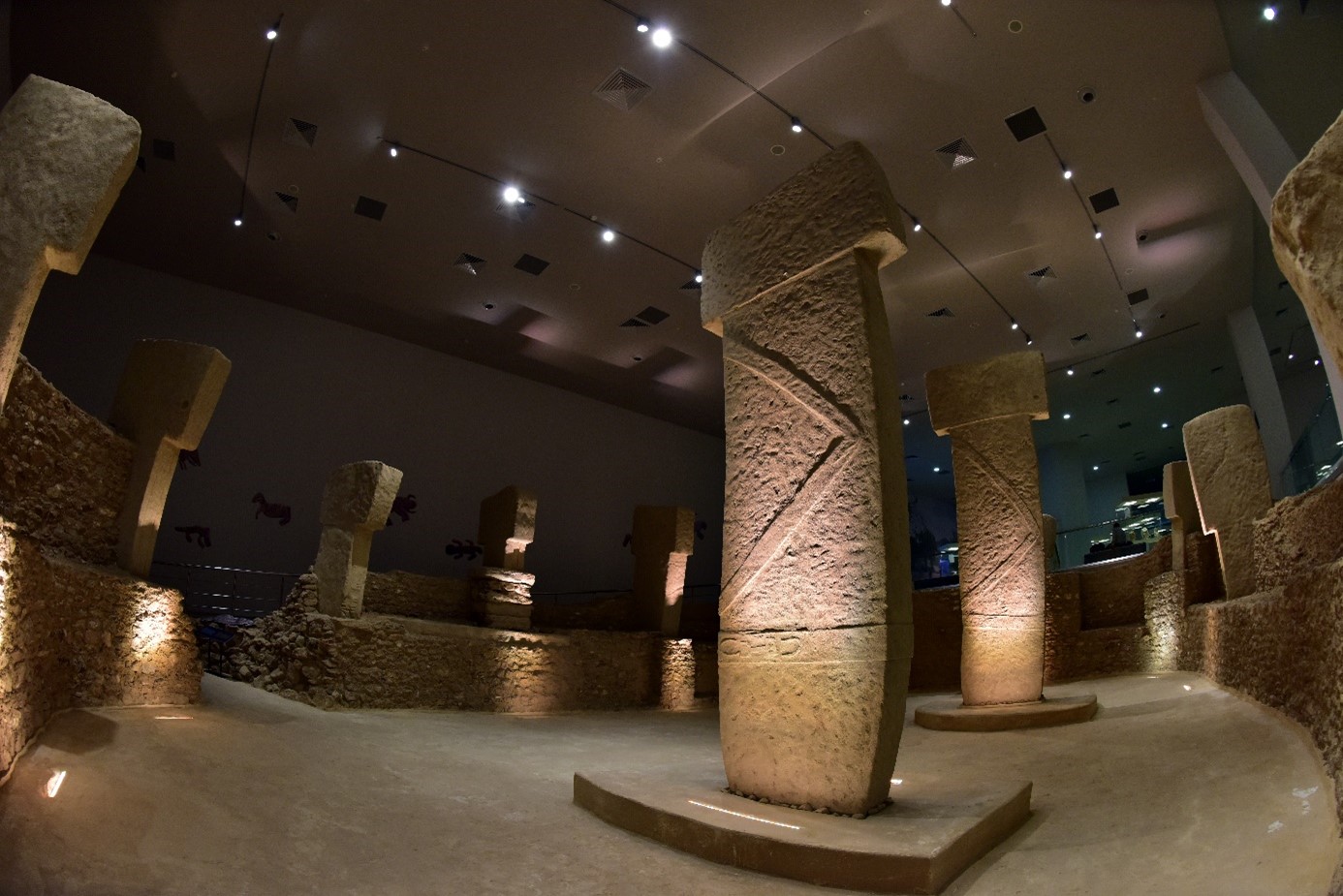
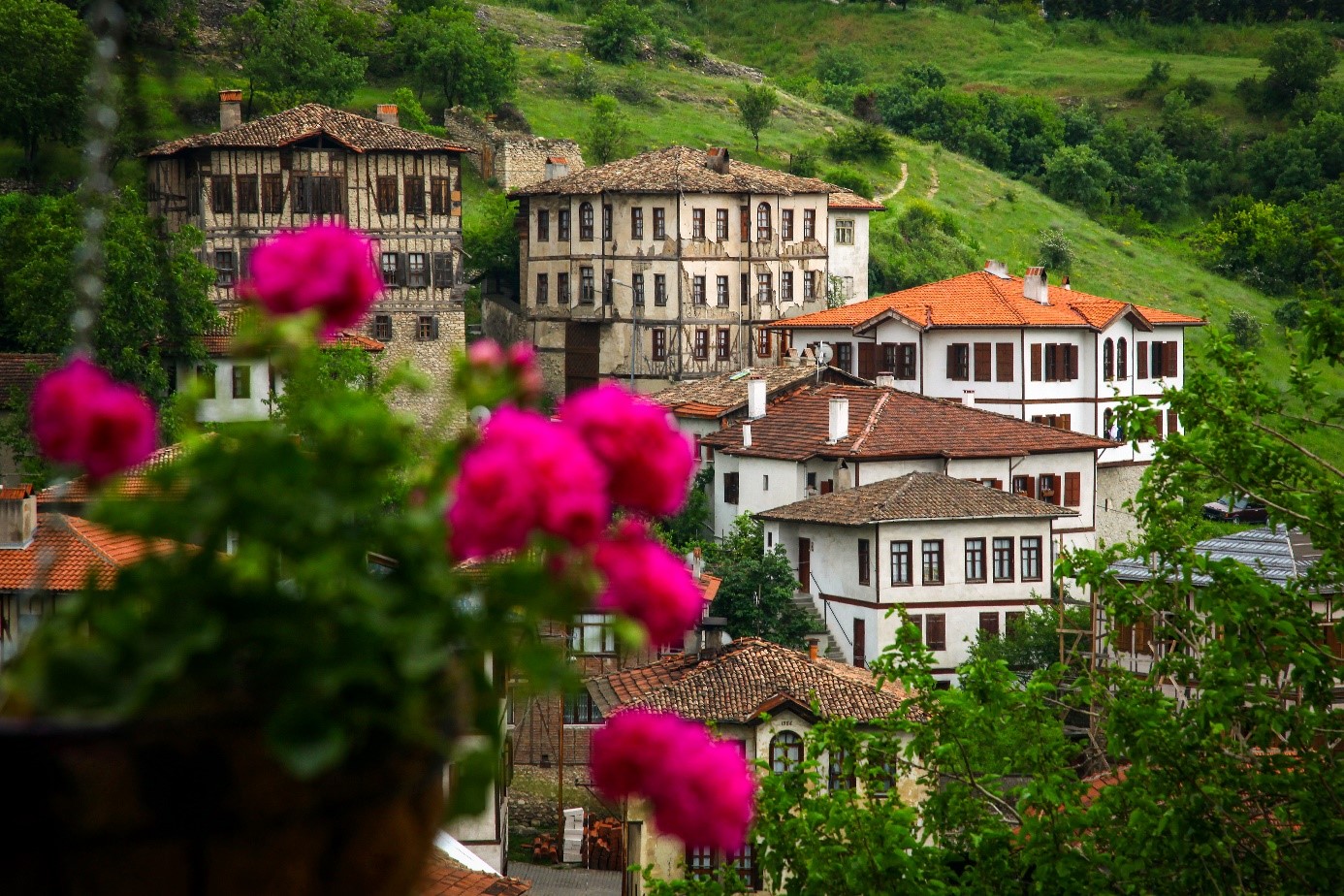
Due to their archaeological and/or urban archeological importance, there are more than 140,000 immovables registered under the name of cultural property in need of protection in Türkiye, the sites in the status of protected area and examples of civil architecture, religious, administrative, cultural, commercial, military structures, ruins etc. that need to be protected.
These immovables have been defined by the Law No. 2863 and the procedures and activities to be carried out regarding the immovable cultural properties that need to be protected are regulated with the same law, and the establishment and duties of the organization that will take the necessary principles and implementation decisions have been determined.
Museums are established on the pursuant to Presidential Decree Number 1 Concerning the Organization of Presidency and Law No. 2863 on the Conservation of Cultural and Natural Property. In this regard, as of 2025 the number of Museums affiliated to the Ministry is 218 and there are 146 archaeological sites within the scope of authority of Museum Directorates. Above mentioned Law also includes provisions for the classification, registration, acquisition, protection and preservation of movable cultural and natural property in need of protection. These activities are carried out by 123 Museum Directorates responsible for a total number of 3,370,881 movable cultural properties.
With the impact of technological developments, the importance of accessibility on virtual platforms in terms of museology is significant. Within this framework, “Virtual Museums” platform is developed in 2022 and it is in use since then. As of 2026, the number of Virtual Museums is 56. The total number of visitors of Virtual Museums is 28.006285.
The Directorate General of Living Heritage and Cultural Activities
The Directorate General of Living Heritage and Cultural Activities, operating under the Ministry of Culture and Tourism of Türkiye, is the executive body of the 2003 UNESCO Convention for the Safeguarding of the Intangible Cultural Heritage, to which Türkiye became a State Party in 2006. The General Directorate carries out studies to research, identify, document, safeguard, and transmit Türkiye’s intangible cultural heritage, while raising their awareness, visibility and recognition at both national and international levels.
In this context, the Directorate General coordinates national inventories, supports community-based safeguarding practices, and organizes large-scale cultural programs such as the Türkiye Culture Route Festivals and the Living Heritage Festivals, Living Heritage School which provide platforms for the presentation, transmission, and intergenerational continuity of living heritage. Through these festivals and related cultural activities, the Directorate General raises public awareness, encourages community participation, and contributes to the sustainable safeguarding of intangible cultural heritage.
Intangible heritage
Türkiye’s geography is one of the world’s oldest human habitats and it enjoys a unique cultural richness with its thousands of years of history. Türkiye’s cultural heritage landscape encompasses a wide range of intangible cultural heritage (ICH) elements that are practiced and sustained by communities as part of everyday life. Intangible cultural heritage in Türkiye includes social practices, rituals and festive events, oral expressions, traditional craftsmanship, and food-related practices, all of which contribute to social cohesion, cultural diversity and a sense of identity. These elements are approached as living heritage, maintained through community participation and intergenerational transmission. The diversity of practices across different communities reflects the dynamic nature of Türkiye’s ICH and forms the basis of national safeguarding policies, in line with the principles of the UNESCO Convention for the Safeguarding of the Intangible Cultural Heritage (2003).
The inventorying process is coordinated through Local Intangible Cultural Heritage Boards established in each province, which consist of representatives of concerned communities, local administrations, experts, relevant institutions and non-governmental organizations, ensuring a community-based approach to identification and documentation. There are 368 elements are inscribed in the National Inventory, while 100 individuals and 2 groups are proclaimed and registered under the Living Human Treasures system. Both inventories are updated on an annual basis and aim to safeguard intangible cultural heritage by raising awareness, ensuring viability and supporting its transmission to future generations.
After becoming State Party to the 2003 Convention, Türkiye established two national inventory systems as part of its safeguarding policies:
- Intangible Cultural Heritage National Inventory of Türkiye
- Living Human Treasures National Inventory of Türkiye
Türkiye currently has 32 elements inscribed on the UNESCO ICH Lists, which are listed belove:
- Arts of the Meddah, Public Storytellers (2008)
- Mevlevi Sema Ceremony (2008)
- Âşıklık (Minstrelsy) Tradition (2009)
- Nevruz (2009 Multinational element with Azerbaijan, India, Iran, Kyrgyzstan, Pakistan, Uzbekistan, Türkiye, in 2016 extended with Afghanistan, Iraq, Kazakhstan, Tajikistan, Turkmenistan and in 2024 extended with Mogolistan)
- Karagöz (2009)
- Traditional Sohbet Meetings (2010)
- Kırkpınar Oil Wrestling Festival (2010)
- Semah, Alevi-Bektaşi Ritual 2010)
- Ceremonial Keşkek Tradition (2011)
- Mesir Macunu Festival (2012)
- Turkish Coffee Culture and Tradition (2013)
- Ebru: Turkish Art of Marbling (2014)
- Traditional Craftsmanship of Çini-Making (2016)
- Flatbread Making and Sharing Culture: Lavash, Katyrma, Jupka, Yufka (2016 Multinational Element with Azerbaijan, Iran, Kazakhstan and Kyrgyzstan)
- Spring Celebration: Hıdrellez (2017 Multinational element with Republic of North Macedonia)
- Whistled Language (2017)
- Heritage of Dede Qorqud/ Korkyt Ata/ Dede Korkut, epic culture, folk tales and music (2018 Multinational Element with Azerbaijan and Kazakhstan)
- Traditional Turkish Archery (2019)
- Traditional Intelligence and Strategy Game: Mangala / Göçürme, Togyzqumalaq, Toguz Korgool (2020 Multinational element with Kazakhstan and Kyrgyzstan)
- The Art of Miniature (2020 Multinational element Azerbaijan, Iran and Uzbekistan)
- Hüsn-i Hat, Traditional Calligraphy in Islamic Art in Türkiye (2021)
- Traditional Ahlat Stonework (2022)
- Sericulture and Traditional Production of Silk for Weaving (2022 Multinational element with Afghanistan, Azerbaijan Iran, Tajikistan, Turkmenistan and Uzbekistan)
- The Telling Tradition of Nasreddin Hodja / Molla Nesreddin / Molla Ependi / Apendi / Afendi Kozhanasyr / Nasriddin Afandi Anecdotes (2022 Multinational element with Azerbaijan, Kazakhstan, Kyrgyzstan, Tajikistan,Turkmenistan and Uzbekistan)
- Culture of Çay (tea), A Symbol of Identity, Hospitality and Social Interaction (2022 Multinational element with Azerbaijan)
- Traditional Knowledge, Methods and Practices Concerning Olive Cultivation (2023)
- Art of Illumination: Təzhib/Tazhib/Zarhalkori/Tezhip/Naqqoshlik (2023 Multinational element with Azerbaijan, Iran, Tajikistan, Türkiye and Uzbekistan)
- Iftar/Eftari/Iftar/Iftor and its Socio-Cultural Traditions (2023 Multinational element with Azerbaijan, Iran and Uzbekistan)
- Craftsmanship and Performing Art of Mey - Balaban (2023 Multinational element with Azerbaijan)
- The Craftsmanship of Mother of Pearl Inlay (2023 Multinational element with Azerbaijan)
- Traditional Bagpipe Making and Performing (2024 Multinational element with North Macedonia)
- Antep İşi, drawn thread embroidery of Gaziantep (2025)
Türkiye Culture Route Festivals
Ministry of Culture and Tourism- Directorate General of Living Heritage and Cultural Activities, executive body of the 2003 Convention has been organising Türkiye Culture Route Festivals since 2021. The festivals have organised in many cities of Türkiye from different regions. It has become one of the most important cultural and artistic events in Türkiye. Türkiye Culture Route Festivals bring artists, musicians and craftspeople and events together including modern arts, literature, music, tangible and intangible cultural heritage. The festival organises panels, workshops, exhibitions, promotional activities related to intangible cultural heritage aiming to raise awareness and transmit intangible cultural heritage among younger generations. Apart from national events, the festivals have international programs. Many artists, musicians and craftspeople around the world meet at various events, share their experiences, ideas and create an international network for upcoming international projects. These gatherings enhance mutual understanding and respect cultural diversity among people around from different cultural backgrounds around the world.
Living Heritage Festivals
The Living Heritage Festivals are organized with the contribution of the Directorate General of Living Heritage and Cultural Activities of the Ministry of Culture and Tourism, in cooperation with local administrations, and NGOs, with the aim of raising public awareness and sensitivity towards intangible cultural heritage, which reflects the cultural and artistic accumulation of Türkiye, as well as towards the artisans and professional groups who practice and transmit this heritage. The festivals also aim to ensure sustainability and to support art and artists.
The Living Heritage Festivals adopt a safeguarding-oriented approach that prioritizes the accurate and authentic transmission of intangible cultural elements to future generations rather than viewing cultural heritage solely from an economic perspective. Within this framework, more than one thousand master artisans and artists representing traditional handicrafts, traditional theatre, local performing arts, and the minstrel tradition are brought together with children, younger generations, and participants.
 LEGAL FRAMEWORK
The Constitution of Republic of Türkiye recognizes “culture” as an individual right and an important pillar of development and planning. (Preamble and Article 166) Besides, the concept of “cultural need” is mentioned in the article defining the rights of Turkish citizens working abroad. (Article 62)
The Antiquities Regulation of 1906 remained in force until the adoption of Law No. 1710, the Law on Antiquities, in 1973, and was subsequently replaced by Law No. 2863 enacted in 1983 and currently in force. Pursuant to Law No. 2863 that all cultural heritage is qualified as state property.
- Law No. 2863 on the Conservation of Cultural and Natural Property
All administrative procedures about conservation of cultural heritage are executed according to the Law No. 2863, regulations and other secondary legislation. Law number 2863 includes penal provisions about illicit trafficking, smuggling and unlawful excavations of cultural properties. - Presidential Decree Number 1 Concerning the Organization of Presidency (contains provisions about the organizational structure of all Ministries and other central State institutions)
- Law No. 2960 on Boğaziçi (Bosphorus)
- Law No. 5225 on Encouragement of Cultural Investments and Initiatives
- Law No. 5366 of Renovating, Conserving and Actively Using Dilapidated Historical and Cultural Immovable Assets
- Law No. 5737 on Waqfs (Foundations)
- Law No. 7174 on Site of Cappadocia
 RATIFIED INTERNATIONAL CONVENTIONS
Council of Europe
- European Cultural Convention (Paris, 1954)
- Convention for the Protection of the Architectural Heritage of Europe (Granada, 1985)
- European Convention on the Protection of the Archaeological Heritage (Valetta, Malta, 1992)
- European Landscape Convention (Florence, 2000)
UNESCO
- Convention for the Protection of Cultural Property in the Event of Armed Conflict (Hague Convention, 1954)
- Convention on the Means of Prohibiting and Preventing the Illicit Import, Export and Transfer of Ownership of Cultural Property (Paris, 1970)
- Convention concerning the Protection of the World Cultural and Natural Heritage (Paris, 1972)
- Convention for the Safeguarding of the Intangible Cultural Heritage (Paris, 2003)
- Convention on the Protection and Promotion of the Diversity of Cultural Expressions (with reservations and declarations) (Paris, 2005)