


Kosovo*
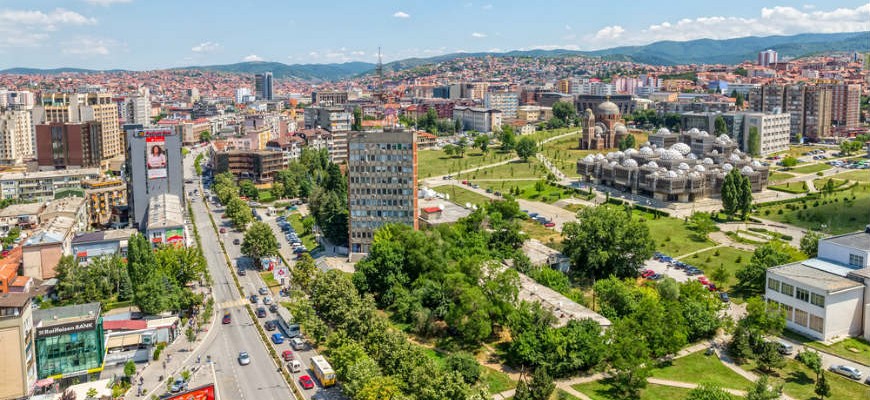

The Council of Europe has supported Kosovo* towards the advancement of its reform agenda through co-operation activities since 1999, in full compliance with the United Nations Security Council Resolution 1244. The Council of Europe Office in Pristina holds a key role in the implementation of the co-operation activities by facilitating the delivery of support programmes, assisting key institutions in the process of democratic reforms and actively co-ordinating efforts with all relevant local and international actors in the field.
The first Working Group on co-operation activities between the Council of Europe and the Kosovo* institutions was held in Pristina in November 2013 to initiate discussions on collaborative planning and programming. It has since been followed by eight Joint Working Group meetings. The latest meeting of the Working Group was organised on 19 November 2025 in Pristina.
The implementation of the “Overview of Co-operation activities in Kosovo*" document (Overview document) provides an overall framework to the Council of Europe co-operation. It supports the authorities in bringing legislation, institutions and practice further in line with Council of Europe standards in the areas of human rights, rule of law and democracy. In February 2026, the Committee of Ministers took note of the latest version of the Overview document.
Within the Overview Document, the European Union/Council of Europe “Horizontal Facility for the Western Balkans and Türkiye”, provides support to the authorities in the fields of strengthening the efficiency and quality of justice, countering discrimination, and enhancing freedom of expression and freedom of the media.
Seven co-operation projects benefit from voluntary contributions, which support the alignment of laws and policies with the Council of Europe Convention on Preventing and Combating Violence against Women and Domestic Violence (Istanbul Convention), (project co-funded by Belgium), increased societal cohesion by reinforcing minority rights and minority languages (project co-funded by Switzerland), enhanced action on cybercrime and electronic evidence (project funded by INL), a bolstered response against economic crime, improved treatment of persons deprived of liberty, strengthened multilevel governance and enhanced judicial protection of human rights.
Moreover, Kosovo* is included in the regional actions implemented under the Horizontal Facility in the fields of managing violent extremism in prisons, evaluating judicial reform based on the CEPEJ methodology (“Dashboard – Western Balkans II”), tackling economic crime, combating intolerance and promotion of equality, and protecting freedom of expression and of the media, as well as strengthening women’s access to justice.
It also benefits from the regional EU/Council of Europe Joint Programmes CyberSEE, Roma integration III and “Local Observatory on Reform Agendas Implementation in the Western Balkans (LORAI)”. LORAI empowers local authorities to actively monitor the implementation of Reform Agendas under the EU’s Reform and Growth Facility, advocate for reforms, and propose policy and investment priorities for the next EU Multiannual Financial Framework (MFF).
Lastly, Kosovo* benefits from regional projects funded by voluntary contributions. The project “HELP in the Western Balkans” aims to enhance the capacities and skills of legal professionals for the effective application of European standards in human rights. Thanks to Germany’s financial contribution, the Council of Europe promotes deliberative democracy in the region as an innovative form of citizen participation in local decision-making.
For updated information on ongoing co-operation, please consult directly the website of the Council of Europe Office in Pristina.
*All references to Kosovo, whether the territory, institutions or population, in this text shall be understood in full compliance with United Nations' Security Council Resolution 1244 and without prejudice to the status of Kosovo.


Through the implementation of these projects, the co-operation activities in Kosovo* actively contribute to the UN 2030 Agenda for Sustainable Development by supporting the United Nations Sustainable Development Goals (SDGs), notably SDG1, SDG 3, SDG 4, SDG 5 (target 1), SDG 8, SDG 10, DSG 11, SDG 13, DSG 14, DSG 15 and SDG 16.
More information: Overview of the Council of Europe Contribution to the UN 2030 Agenda


