|
 |
|
Newsletter N° 3 - July / August 2011
|
|
European
dialogue on Internet governance 2011
A multistakeholder dialogue to address the challenges the Internet
brings to public policy
During
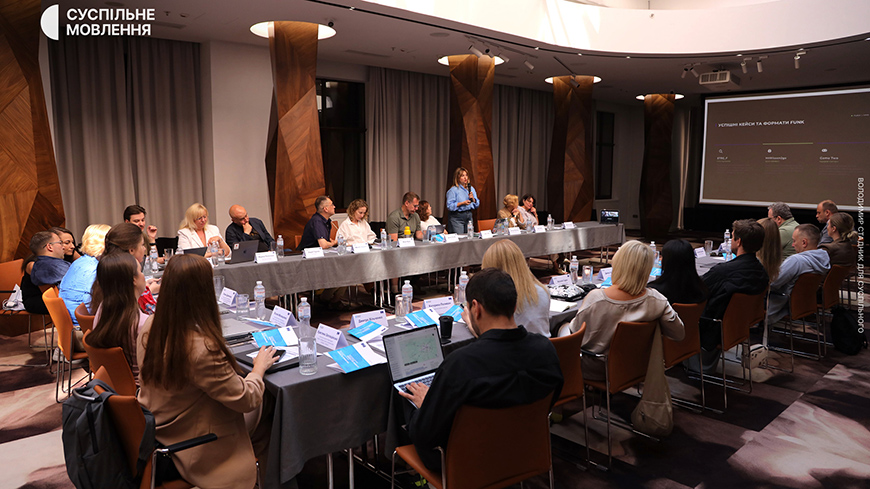
two days the conference brought together more than 500 participants
– a hundred of them participating from 12 regional remote hubs
across Europe - from the private sector, governments, international
organisations, youth, media, civil society and the academic and
technical communities to discuss public policy issues and challenges
related to the Internet.
The need to
protect privacy on the Internet was present in many of the
discussions. A common idea that was underlined is the need to raise
users´ awareness on their rights as much as on the consequences of
their actions when managing their personal data online. This should
be a shared responsibility between public authorities, industry and
civil society. Education of users, for example of social networks,
was highlighted as a key priority.
Another topic of
discussion was the protection of critical resources of the Internet
in Europe, especially having in mind the fast development of the
Internet and the need for security of the infrastructure, since the
increased use of the Internet and the intensity of network traffic
creates risks for the quality of services. It is thus necessary to
create procedures for a fast and secure recovery in case of an
attack or a failure. What also needs to be done is to define
critical segments and potential threats so that they can be
efficiently neutralised. (more information)
EuroDIG 2012 will
take place in Stockholm.
Messages from Belgrade
|
|
|
European Broadcasting Union and Council of Europe join forces to
promote media freedom and pluralism

On 20 June 2011, the Council of Europe
and the European Broadcasting Union (EBU) signed a Memorandum of
Understanding at the Deutsche Welle Global Media Forum in Bonn.
The
Memorandum of Understanding defines shared objectives and values, in
particular the promotion and protection of human rights, democracy
and the rule of law, and creates a framework for strengthening and
further developing the existing cooperation between the two
organisations.
Press release |
Human Rights in a globalised world – challenges for the media

"Today we
understand that the strongest force of globalisation is in bringing
a new sense of freedom and enlightenment for which the Internet is
its symbol."
Keynote speech by Thorbjørn Jagland, Secretary General of the
Council of Europe, at the Deutsche Welle Global Media Forum
|
|
International Data Protection Conference, 16 and 17 June 2011,
Budapest
Jörg Polakiewicz
speech
- Convention 108 as a global privacy standard?
|
|
Global education on-line training-course - A North-South Centre new
pedagogical tool
This
introductory online training course on global education (GE), with a
particular focus on human rights (HR), targets practitioners in the
field of education and development, teachers, social and youth
workers, as well as policy-makers, civil servants and local and
regional authorities.
More information
|
|
Recommendation 1906
(2010) Rethinking creative rights in the Internet age
The
extraordinary development of the digital society has
significantly upset the balance between the copyrights of
authors of intellectual works, investors and the general public,
and raises questions and issues as to the functioning of
democracy, the protection of human rights and the viability of
the rule of law. It also raises ethical questions and questions
relating to property, particularly intellectual property.
Link to the Recommendation of the Parliamentary Assembly
|
Medicines on the net - risks and benefits

The
Council of Europe drafted a convention which constitutes, for the
first time, a binding international instrument in the criminal law
field on counterfeiting of medical products and similar crimes
involving threats to public health.
Factsheet
Medicrime website |
|
Book:
An introduction to Internet Governance
by
Dr. Jovan Kurbalija, founding director of DiploFoundation

Book is
available for viewing and downloading
|
What is a RFID
RFID (Radio-frequency
identification) is an identification technology relying on
three components
- A tag, which is attached to or incorporated in the object to be
identified;
- A reader, used to read the tag when it is whithin range;
- An information system, which receives data from the reader and
processes it. |
|
About
|
About |
The
European Broadcasting Union (EBU)
is the largest association of
national broadcasters in the world. We promote cooperation
between broadcasters and facilitate the exchange of
audiovisual content. The EBU works to ensure that the
crucial role of public service broadcasters is recognised
and taken into consideration by decision-makers.
Link to website
|
The
Electronic Frontier Foundation (EFF)
is an international non-profit
organisation based in the United States who is defending
free speech, privacy, innovation, and consumer rights.
Link to website |
|
|
|
©
Council of Europe 2011 -
Contact |
|
Subscribe |
Unsubscribe |
|
Opinions expressed in this newsletter do not necessarily reflect the official
policy of the Council of Europe or of its Secretariat. |