


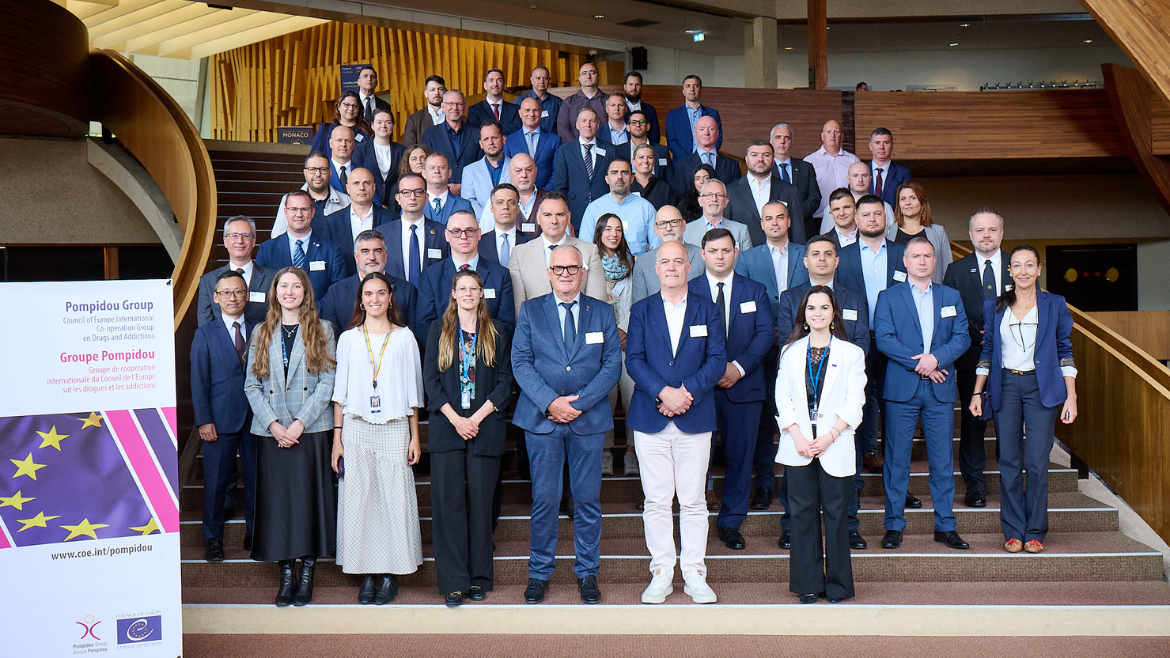




The Council of Europe International Co-operation Group on Drugs and Addictions (Pompidou Group) is a leading multilateral platform for intergovernmental co-operation, fostering open dialogue and the exchange of good practices. It maintains a balanced approach between demand reduction—including prevention, treatment, and harm reduction—and supply reduction, by promoting human rights-based and evidence-driven policy development.
Founded in 1971 at the initiative of French President Georges Pompidou, it has achieved over 50 years of success in promoting drug policy co-operation, combating trafficking and improving prevention of drug use and treatment for substance use disorders.
The Group upholds the core values of the Council of Europe – human rights, democracy and the rule of law – and seeks to balance the interests of the community at large with the protection of the individual’s fundamental rights in addressing the challenges of drug use and illicit trafficking in drugs, as well as new forms of addictions.
Currently comprising 41 member States, it fosters international co-operation, offering knowledge and support to create effective, sustainable and humane drug policies.
 Revised Statute and internal Rules of procedure
Work Programme Pompidou Group 2026-2029
99th meeting of the Committee of Permanent Correspondents

Pompidou Group Guidelines on Combating Organised Crime related to Drug Trafficking (2026)
English version only

English version only

Trainer's manual on care and treatment of persons with substance use disorders in prisons (2025)
English version only


 GET THE LATEST UPDATES


FOLLOW US ON SOCIAL MEDIA
 Pompidou Group


Health

Social Rights, Health and Environment Directorate
Directorate General Human Rights and Rule of Law