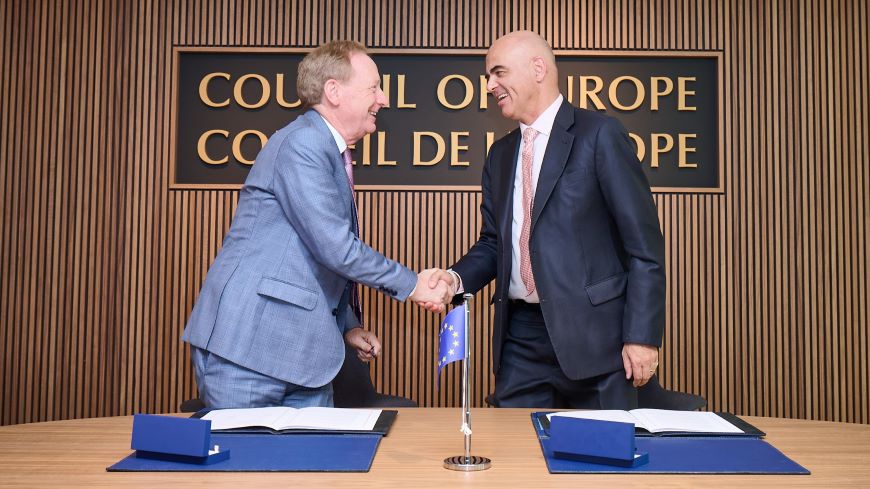
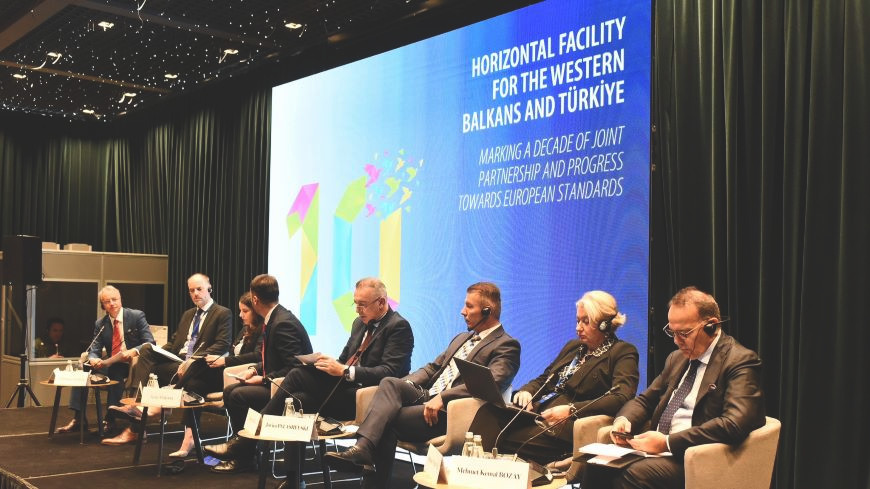
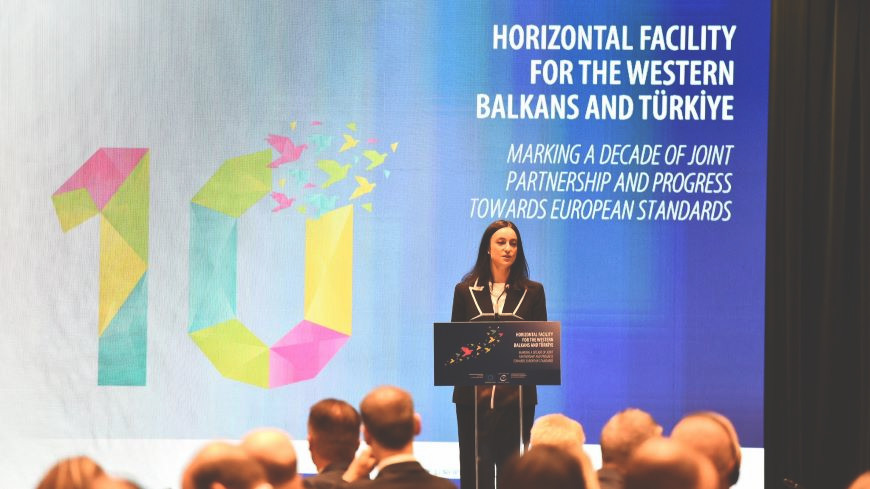
More accessible justice, stronger protection of human rights, including for women and children, better safeguards against corruption and economic crime, safer media environments, more inclusive societies and intercultural understanding are among the tangible results of a decade of cooperation between the European Union, the Council of Europe and partners across the Western Balkans and Türkiye.
These achievements were highlighted at a regional conference in Tirana on 7 October 2026, marking ten years of cooperation under the programme, which has helped translate European standards into practical reforms, strengthen institutions and supporting professionals while delivering changes that make a difference to people’s everyday lives.
Sustainable reforms
The event was opened by Christophe Galand, Deputy Director of the Western Balkans Directorate, Directorate General for enlargement and eastern neighbourhood in the European Commission, who underlined: “For ten years, the European Union and Council of Europe programme Horizontal Facility has supported beneficiaries in advancing rule-of-law reforms and making progress on benchmarks under the enlargement process. In the next phase, we should maintain the same ambition, building on the achievements and lessons to deliver even more tangible impact in areas that are critical to advancing in the EU accession process.”
“Sustainable reforms are built through partnership, ownership and the ability of institutions to turn standards into everyday practice. The achievements of the Horizontal Facility show the value of bringing European expertise together with the knowledge and priorities of local institutions. The next phase will build on this foundation and continue supporting reforms that make a tangible difference to people’s lives,” said Claus Neukirch, Director of the Directorate of programme co-ordination at the Council of Europe.
A record of improving citizens’ lives
The Horizontal Facility programme has worked closely with the authorities in the region to promote reform. Implementation has resulted in key achievements, including the following:
In Albania justice has become more accessible and efficient through digital tools, clearer information and free legal advice, including on property registration. Detention safeguards, mental-health support and rehabilitation have improved, while stronger capacities to combat economic crime, prevent corruption and recover assets have been recognised internationally. Work on non-discrimination, minority rights and journalists’ safety has further strengthened human rights and access to independent information.
In Bosnia and Herzegovina public-court dashboards are making justice more transparent and reducing uncertainty for people using the judicial system. More than 4,300 police, prison and forensic staff have strengthened their practical human-rights skills, while improved prison records support safer detention. More than 1,000 legal professionals, police officers and journalists have also gained skills to protect freedom of expression and journalists’ safety. LGBTI protection, inclusive education and safeguards against misuse of public resources have been strengthened.
In Kosovo* electronic case-management and automated processes are helping reduce delays and improve court services. Stronger monitoring and reporting mechanisms are supporting protection from discrimination and human-rights violations, while legal reforms and capacity-building promote fairer treatment. Media legislation has been aligned with European standards.
In Montenegro updated legislation, ethical standards and professional training are supporting a fairer, more independent and accountable justice system, while victims of domestic violence and human trafficking have better access to legal support and compensation. Police and prosecutors are better equipped to investigate ill-treatment and prevent excessive use of force. Anti-corruption and anti-money-laundering frameworks have also been strengthened. Same-sex partnerships are now formally recognised and protected, while work continues to advance legal gender recognition.
Turning standards into practice
In North Macedonia mobile legal-aid teams have provided free advice to around 1,200 people, while more than 10,000 have learned about their rights. New free legal aid software is making applications easier. More than 1,765 prison officers have received human-rights training, and children’s corners are making family visits more welcoming. A digital gift-registry platform strengthened anti-money-laundering measures, improved protection of ethnic communities and training for more than 500 professionals are reinforcing integrity, equality and human rights.
In Serbia new laws, digital tools and European human-rights standards are making justice more transparent and predictable, while rehabilitation programmes support people leaving prison. More than 500 professionals have strengthened their ability to identify and support victims of trafficking, and awareness initiatives have reached more than 95,000 people. More than 113,000 students and 9,500 teachers are helping build democratic and inclusive schools, while media reforms and training support responsible communication and safer journalism.
In Türkiye more than 2,700 women have gained practical knowledge of their legal rights, while lawyers and law students have strengthened gender-sensitive and victim-centred legal assistance. Measures are also improving protection for refugee and migrant women and children and strengthening action against money laundering and terrorist financing. A digital citizenship game gives more than 18 million students and one million teachers access to tools for safe and responsible online behaviour.
Together, these results demonstrate the lasting impact of European cooperation in turning standards into practice and strengthening institutions, rights and public trust across the region. The next phase, expected to begin in early 2027, will build on these achievements and address remaining reform priorities.
- - - - - - - - - - - - - - - - - - - -
The “Horizontal Facility for the Western Balkans and Türkiye” programme is a joint initiative of the European Union and the Council of Europe, running from 2023 to 2026. With a total budget of 42 million EUR, it supports public authorities and local actors to meet key reform agendas in the areas of human rights, rule of law, and democracy, in line with European standards, playing a crucial role in EU accession process.
*This designation is without prejudice to positions on status, and is in line with UNSCR 1244/1999 and the ICJ Opinion on the Kosovo declaration of independence.