


Scientific Advisory Council

The Scientific Advisory Council – composed of 12 renowned persons in the field of history teaching and learning – is one of the Observatory's statutory bodies. SAC members are elected by the Governing Board for the term of office of two years, renewable once. To always ensure the presence of both experienced members with knowledge of existing working methods and the renewal of expertise, SAC members are elected at different stages.
On 1 July 2025, Olena Palko was elected Chair, and Arthur Chapman Vice-Chair, of the Scientific Advisory Council.
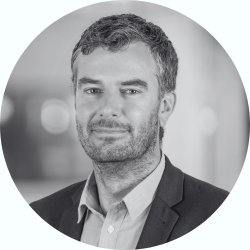

Robbert-Jan Adriaansen, Researcher, academic
Robbert-Jan Adriaansen is a EuroClio Endowed Professor of Historical Culture in Transition at the History Department of Ghent University (Belgium) and Associate Professor at the History Department of Erasmus University Rotterdam (EUR, the Netherlands). At EUR, he co-ordinates the Heritage & Identity research cluster and serves as Executive Director of the Center for Historical Culture. He obtained his PhD Cum Laude from EUR in 2013. In 2015, he published the monograph The Rhythm of Eternity: The German Youth Movement and the Experience of the Past, 1900-1933 (Berghahn Books, 2015). His current research explores historical culture and historical consciousness from both theoretical and empirical perspectives, with a particular focus on the impacts of digitisation on historical understanding and history education.
Elected until June 2027
Languages: Dutch, English, German
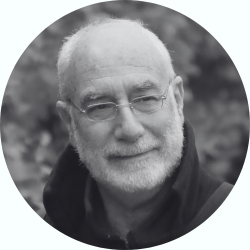

Luigi Cajani, Historian
Luigi Cajani served as a Professor of Early Modern History at the Sapienza University of Rome and a history teacher trainer at the Scuola di Specializzazione per l’Insegnamento Secondario del Lazio. In 2001, he co-ordinated the commission of the Italian Ministry of Education responsible for reforming the history, geography and social sciences curricula in primary schools. From 2012 to 2018, he served as President of the International Research Association for History and Social Sciences Education (IRAHSSE), and he is currently Editor-in-chief of the association’s journal. In 2022, he co-founded the Società Italiana di Didattica della Storia with several colleagues. He most recently co-edited Negotiating Ethnic Diversity and National Identity in History Education. International and Comparative Perspectives (Cham: Palgrave Macmillan, 2023).
Elected until June 2027
Languages: Italian, French, English, German
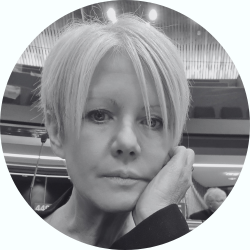

Caitríona Ní Cassaithe, Researcher, academic & teacher educator
Caitríona Ní Cassaithe is Assistant Professor of History Education at Dublin City University’s Institute of Education in Ireland. She previously worked as a primary school teacher for 15 years. Her PhD (2020) focused on challenging children’s epistemic beliefs about the nature of history and historical evidence. Her current research explores historical enquiry and the development of children’s historical thinking.
Caitríona is co-chair of the History Educators International Research Network (HEIRNET) and is the Irish co-ordinator of the History Teachers Education Network (HTEN). She was co-opted to the Primary Social and Environmental Education Development Group by the National Council for Curriculum and Assessment and is a member of the Heritage Council's Multi-stakeholder Advisory and Information Group for Heritage in Education (MAIGHNE) in Ireland. She also serves on the steering committee of the Centre for Human Rights and Citizenship Education (DCU).
She has published journal articles, book chapters, and commissioned reports, and most recently co-edited two volumes: “Pushing the boundaries of human rights education: Concepts, challenges and contexts” (2024) and “Beyond Single Stories: Changing Narratives for a Changing World” (2024). She also serves on the advisory boards of several international academic journals, including the History Education Research Journal and Panta Rei.
Elected until June 2027
Language: English
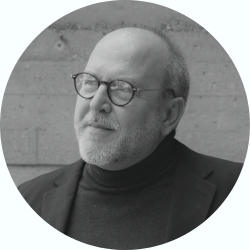

Arthur Chapman, Researcher, academic - SAC Vice-Chair
Arthur Chapman is Professor of History Education and Head of Department of Curriculum, Pedagogy and Assessment at IOE, UCL Insitute of Education, University College London. He holds degrees in History (BA) and Social and Political Science (MPhil) from the University of Cambridge and a Doctor in Education degree, in History Education, from the University of London. Arthur is a fellow of the Royal Historical Society, an Honorary Fellow of the Historical Association and a School's History Project Fellow and member of the SHP's Council. He is Editor-in-Chief of the History Education Research Journal, and series editor of The International Review of History Education and the open access UCL Press book series Knowledge and The Curriculum. Arthur taught history and related subjects for 12 years before moving into university history teacher education and history education research in 2005. He has worked at the universities of Cumbria and Edge Hill.
Elected until June 2028
Language: English
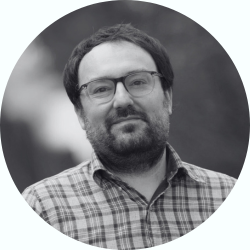

Carlos D. Ciriza-Mendivil, Researcher, academic
Carlos Ciriza is a lecturer in Social Science Education and Vice-Dean of the Faculty of Social, Human and Educational Sciences at the Public University of Navarra, where he also directs the Master's in Teacher Training for Secondary Education programme. He holds degrees in History, Anthropology and Latin American History, and a PhD in History from the University of the Basque Country.
Before joining academia in 2019, he taught in various countries and worked as an editor of secondary-level history textbooks. He is a member of I-Communitas, the Institute for Advanced Social Research, and his research focuses on digital competence in history education, teacher training, and the use of historical sources across educational levels.
His recent work explores the TPACK model for history teaching, the treatment of controversial issues and heritage related to histories of violence, and the pedagogical potential of video games in history education.
Elected until June 2027
Languages: Spanish, English


Maria K. Georgiou, Researcher, consultant & teacher trainer
Maria K. Georgiou is a history education researcher, educator, and practitioner. She holds a PhD from the UCL Institute of Education (IOE), where her doctoral research explored how Greek-Cypriot teenagers understand, evaluate and engage with conflicting histories. Maria has taught and trained teachers in Cyprus (European University of Cyprus, Open University of Cyprus, the Pedagogical Institute of Cyprus) and the UK (UCL IOE and UCL BA Arts & Sciences). Maria served as Education & Heritage Consultant for UNDP and the Cyprus’ bicommunal Technical Committee on Cultural Heritage, and co-authored Cyprus’ is a consultant for AHDR (Association of Historical Dialogue and Research).
She is involved in multiple international and local research projects, including Public History Weekly, Youth & History 2.0, and The Normalisation of Violence in History Textbooks. Her research focuses on the purposes and dispositions of history, in the classroom (i.e. students’ epistemological ideas and disciplinary limitations) and in public (i.e. post-memory, collective memory, and uses of the past). She also co-authored AHDR’s new History Education Policy Paper.
Elected until June 2027
Languages: Greek, English
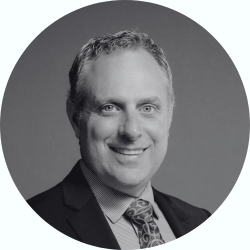

Stéphane Lévesque, Researcher, academic
Stéphane Lévesque is Professor and Director of the Virtual History and Stories Lab at the University of Ottawa (Canada). Professor Levesque holds a doctoral degree in history education from the University of British Columbia and advanced studies in academic leadership from Penn State University. International expert in the field of history education and didactics, he has published over 100 publications in Canadian and international journals. He is the acclaimed author of Thinking Historically Educating Students for the 21st century published at the University of Toronto Press. Professor Lévesque is a former chair of the Governor General Awards for History Teaching in Canada. He currently serves as expert senior analyst for the government of Canada on matters of postsecondary education and scientific knowledge.
Elected until June 2027
Languages: English, French
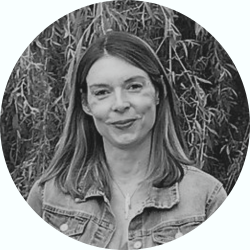

Ann-Laure Liéval, Professeure agrégée of History & Teacher Trainer
Ms Ann-Laure Liéval is Professeure agrégée of History and Geography, teaching in the European English section at the Lycée Fénelon in Lille. She graduated from Artois University (Arras, France) with a Master in Ancient Greek History, and passed the Agregation externe d'Histoire in 2003 with Lille University (France). She also taught in Master MEEF2 at the University of Lille to future teachers, after having been a member of the jury of the external CAPES of History-Geography, and worked as a lecturer at Sciences Po Lille (Undergraduate college 1st year) for 5 years. She is a teacher trainer and is involved in several Erasmus + projects, all dealing with the teaching of contested and sensitive topics in History (Learning to disagree, Parallel Histories, Monumental challenges). Member of the APHG (Association des Professeurs d'Histoire-Géographie) Europe workshop, she is currently a Board member of Euroclio, a non-profit NGO and an international network of 84 associations of history teachers and trainers, which collaborates with the OHTE.
Elected until June 2028
Languages: French, English
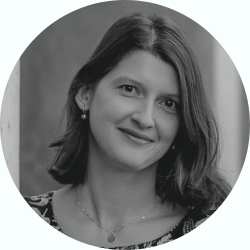

Olena Palko, Academic historian and researcher - SAC Chair
Assistant Professor at the Chair for East-European History at the University of Basel, Switzerland, Olena Palko is a historian of Ukraine and modern Eastern Europe. Educated at Kyiv Taras Shevchenko National University, Ukraine, she holds a PhD in History from the University of East Anglia (UK). She has previously worked at Birkbeck College, University of London, and has held Research Fellowships at the Vienna Institute for Human Sciences, Humboldt University (Berlin), the German Historical Institute in Warsaw, and the Polish Institute for Advanced Studies. Olena Palko is a member of the Advisory Board of the Ukrainian Research in Switzerland (URIS). She is the author of Making Ukraine Soviet. Literature and Cultural Politics under Lenin and Stalin (Bloomsbury Academic, 2020), and a co-editor of Making Ukraine: Negotiating, Contesting, and Drawing Borders in Twentieth Century (Montreal, 2022), and Ukraine’s Many Faces. Land, People, and Culture Revisited (Bielefeld, 2023). She is a co-convener of the Study Group for Minority History.
Elected until June 2028
Languages: Ukrainian, English, German, Russian, Polish, Spanish
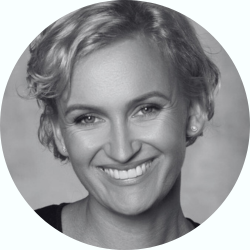

Dovilė Sagatienė, Researcher, academic
Dovilė Sagatienė is Vice-Dean for Research at the Law School of Mykolas Romeris University (MRU) and Senior Researcher at MRU’s Memory and Justice Research Center. From 2022 to 2024, she was a postdoctoral researcher in the MEMOCRACY project (Volkswagen Stiftung) at the University of Copenhagen’s Centre for Military Studies. In 2024, she was appointed by the Lithuanian Parliament to the newly established Council of the Genocide and Resistance Research Centre of Lithuania for a five-year term.
Her research focuses on Soviet judicial repression, transitional justice, and memory politics in Eastern Europe. Her PhD (2013) examined Soviet courts in occupied Lithuania, and during a Fulbright postdoc at Columbia University (2019–2020), she explored Soviet repressions through the lens of the genocide concept.
Her recent publications address memory laws in the Baltic states, challenged narratives around Soviet crimes, and Lithuania’s role in advancing justice for Ukraine. These include contributions to the International Journal of Transitional Justice, Polish Yearbook of International Law, and several collective volumes published in 2024.
Elected until June 2027
Languages: Lithuanian, English, Russian

Rok Stergar, Historian
Rok Stergar is Professor of Modern History at the University of Ljubljana and Director of the Slovene History research programme. He specialises in the Habsburg Empire during the long nineteenth century, the First World War, and nationalism. He is the author of two books and numerous articles on nationalism in the Habsburg Empire, the First World War, and post-imperial transitions. His third book is under contract with CEU Press.
He has been a visiting professor at the University of Zagreb and the École des hautes études en sciences sociales, and has held two research fellowships at the European University Institute. He is co-editor of the Purdue University Press book series Central European Studies and associate editor of the journal First World War Studies.
Elected until June 2027
Languages: Slovene, English, German, Croatian
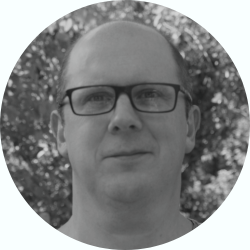

Karel Van Nieuwenhuyse, Researcher, academic
Karel Van Nieuwenhuyse is a professor at the Research Unit of History at the University of Leuven (Belgium) and Program Director of the KU Leuven School of Education. He earned his PhD in History in 2002. From 2002 to 2010, he combined secondary school history teaching with research and teaching assistant roles at KU Leuven. Since 2010, he has been a postdoctoral researcher and later an associate professor within the history teacher trainer programme at KU Leuven.
His research focuses on the history of history education and history didactics, particularly historical thinking. This includes the role of the present in history education, students' narrative representations of the past, and the use of primary sources and historical films. He has held visiting positions at UCL, the Georg Eckert Institute, the University of Coimbra, the University of Alberta, and McGill University.
Karel is president of the Flemish Association of History Teachers and vice-president of the International Research Association for History and Social Sciences Education. He serves on the editorial boards of several national and international academic journals and is the main editor of the book series ‘Historisch Denken’ (Historical Thinking).
Elected until June 2028
Languages: Dutch, English, French


