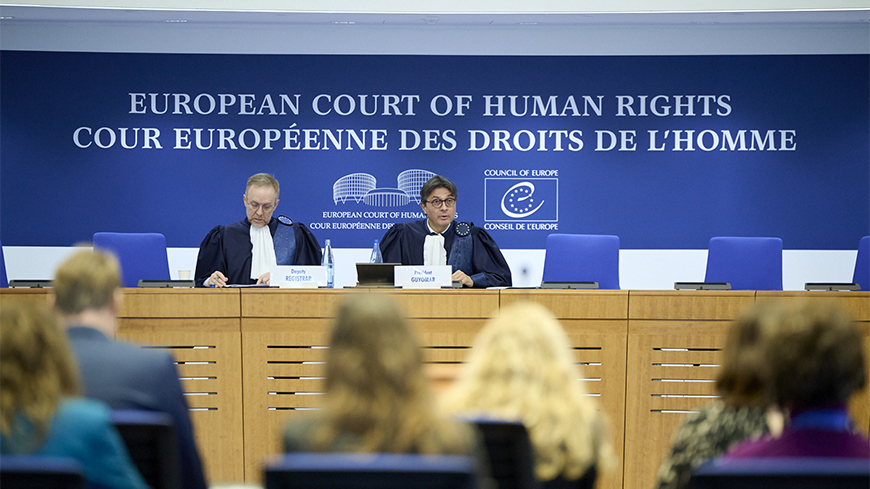
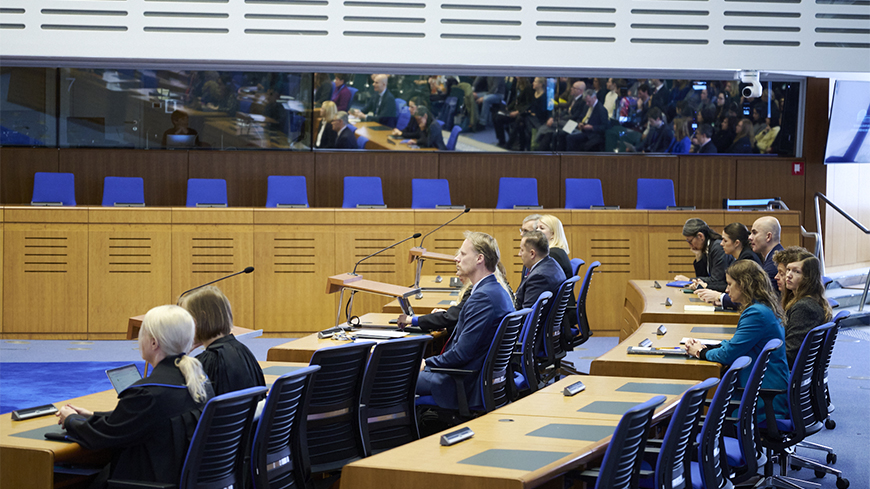
The Grand Chamber of the European Court of Human Rights has issued three judgments concerning the “instrumentalisation of migration” at borders between Council of Europe member states and Belarus.
The cases concerned attempts by people from Afghanistan, Iraq and Cuba to unlawfully enter Poland, Latvia and Lithuania, respectively, between 2021 and 2022. All of the applicants were then returned to Belarus.
This occurred in a context of hostile actions by the Belarusian authorities, where Belarus had encouraged, facilitated, or forced the movement of migrants across its borders aiming to destabilise the states in question or the wider region – described as the “instrumentalisation of migration”.
States obliged to identify people particularly at risk
In its judgments, the European Court stressed that states have the right to control the entry of foreign nationals into their territory.
The Court underlined that – in the context of the instrumentalisation of migration – states must still ensure that migrants are protected against inhuman or degrading treatment. It also reiterated the limits to people’s rights and states’ obligations in that context.
The judgments found that, in such circumstances, the national authorities were obliged to identify people who were particularly at risk of suffering or enduring ill-treatment.
Such people fell into two categories: those who were evidently vulnerable (for example, owing to their age, ill health or disability) and those with a specific reason for claiming that being returned would expose them to a real and immediate risk of ill-treatment or death.
The Court found that there had been a violation of Article 3 of the Convention (covering inhuman and degrading treatment) where the applicants fell into one of the two categories above and no violation of that article when they did not.
Complex judgments
Looking in detail at the specific circumstances of each case, the Court found that certain additional aspects of the European Convention on Human Rights had been violated by each state whereas others had not.
These judgments are final and legally binding under the terms of the human rights convention.
The Council of Europe’s Committee of Ministers is responsible for supervising the implementation of rulings from the European Court of Human Rights, working closely together with the states concerned.
 How does the European Convention on Human Rights help you
Read more about these cases with this Q&A
Press release [A.R. and Others v. Poland, H.M.M. and Others v. Latvia and C.O.C.G. and Others v. Lithuania]