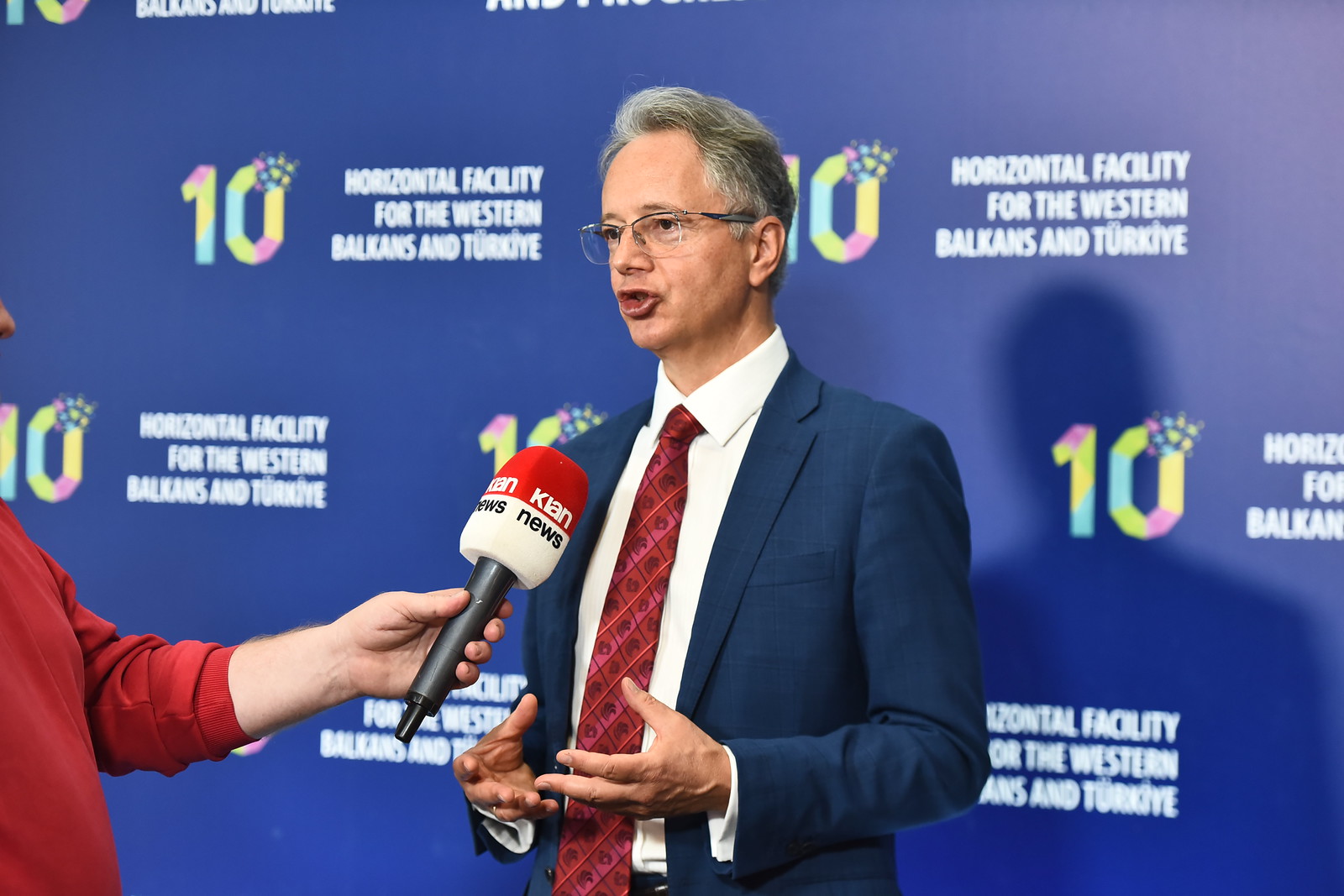
Over the past decade, the partnership between Montenegro, the European Union and the Council of Europe has turned ambition into action, delivering lasting change for institutions, professionals and communities. This co-operation, carried out through the “Horizontal Facility for the Western Balkans and Türkiye” programme, was marked at an event yesterday in Tirana, recognising achievements in advancing rule of law, democracy and human rights.
The event was opened by Christophe Galand, Deputy Director, Western Balkans Directorate, Directorate General for Enlargement and Eastern Neighbourhood in the European Commission: “For ten years, the joint EU and Council of Europe programme Horizontal Facility has supported Beneficiaries in advancing rule of law reforms and making progress on benchmarks under the enlargement process. In the next phase, we should maintain the same ambition, building on the achievements and lessons to deliver even more tangible impact in areas that are critical to advancing in the EU accession process.”
Claus Neukirch, Director of the Directorate of Programme Co-ordination at the Council of Europe, reiterated that sustainable reforms are built on partnership, ownership and the ability of institutions to turn standards into everyday practice. “The achievements of the Horizontal Facility show the value of bringing European expertise together with the knowledge and priorities of local institutions. The next phase will build on this foundation and continue supporting sustainable reforms that make a tangible difference to people’s lives,” said Neukirch.
Fatmir Gjeka, Minister for Human and Minority Rights of Montenegro, stressed that the most significant and lasting impact of the Horizontal Facility lies not only in the adoption of individual laws, but also in the systemic change in institutional culture and the establishment of sustainable human rights standards. “This support has enabled us to directly incorporate European standards, defined through the recommendations of the Council of Europe and the European Union, into our domestic legislation and policies. The mechanism offered a unique combination of high-level expertise and concrete tools for implementation on the ground,” Gjeka stated.
Across the region, the programme “Horizontal Facility for the Western Balkans and Türkiye”, currently concluding its third phase, has supported key reforms designed to improve the functioning of justice system, strengthen anti-corruption institutions, protect persons at risk of discrimination and promote media freedom.
In Montenegro, updated laws, codes of ethics and professional training are helping courts, prosecution offices and legal professionals become fairer and more independent and accountable. Victims of crime, especially those affected by domestic violence and human trafficking, can now access legal support and compensation more easily.
The same commitment is reflected in stronger investigation of ill-treatment and policing practices. Police officers and prosecutors are better equipped to conduct effective and accountable investigations, while police are also better prepared to respond professionally in highly stressful situations, helping to prevent excessive use of force. At the same time, the monitoring body has strengthened its capacity to carry out more thorough and in-depth visits, identify risks and follow up on concerns. These improvements bring investigation, monitoring and police practice closer to the EU standards and the latest European trends, contributing to greater accountability and stronger protection of fundamental rights.
This support has also helped strengthen the tools that public institutions use to prevent corruption and manage integrity risks, including through ethical standards and oversight mechanisms. In the fight against money laundering and other forms of economic crime, authorities are now better placed to focus on the areas of highest risk, make effective use of financial intelligence and recover criminal assets. Together, these efforts are important for safeguarding public resources, protecting the economy from illicit financial flows and strengthening trust in public institutions.
Same-sex partners are now formally recognised and protected, following the adoption of laws that promote greater visibility, respect and safety. The adoption of the Law on the legal gender recognition based on self-determination which would lead to formal recognition and protection of people with diverse identities, would further contribute to safeguarding their human rights
Schools are becoming safer and more welcoming through up-to-date crisis plans, hands-on training for staff and parents, and practical activities for pupils. Resource centres and targeted support programmes help children and families find information and assistance. Awareness-raising initiatives, including those focused on academic integrity and inclusion, have reached more than 300,000 people with messages of respect and belonging.
New media laws and procedures are helping protect freedom of expression and information and giving people better ways to find trustworthy news and raise their voices on issues that matter in their communities. The development of the Code of Ethics has provided a clearer framework for professional conduct and accountability in journalism. Greater awareness of strategic lawsuits against public participation (SLAPPs) has strengthened understanding among media sector professionals of their implications for media freedom and public debate. These results contribute to improved conditions for independent journalism, better access to reliable information and public participation.
The event concluded with a discussion on the main priorities of the fourth phase of the Horizontal Facility programme, expected to begin in early 2027. It will provide a reinforced framework for continued co-operation between the European Union, the Council of Europe and Montenegro, focusing on consolidating key achievements, addressing remaining reform gaps and supporting beneficiary-led priorities that have a direct impact on people's lives.
The “Horizontal Facility for the Western Balkans and Türkiye” programme is a joint initiative of the European Union and the Council of Europe, running from 2023 to 2026. With a total budget of 42 million EUR, it supports public authorities and local actors to meet key reform agendas in the areas of human rights, rule of law, and democracy, in line with European standards.