


OVERVIEW
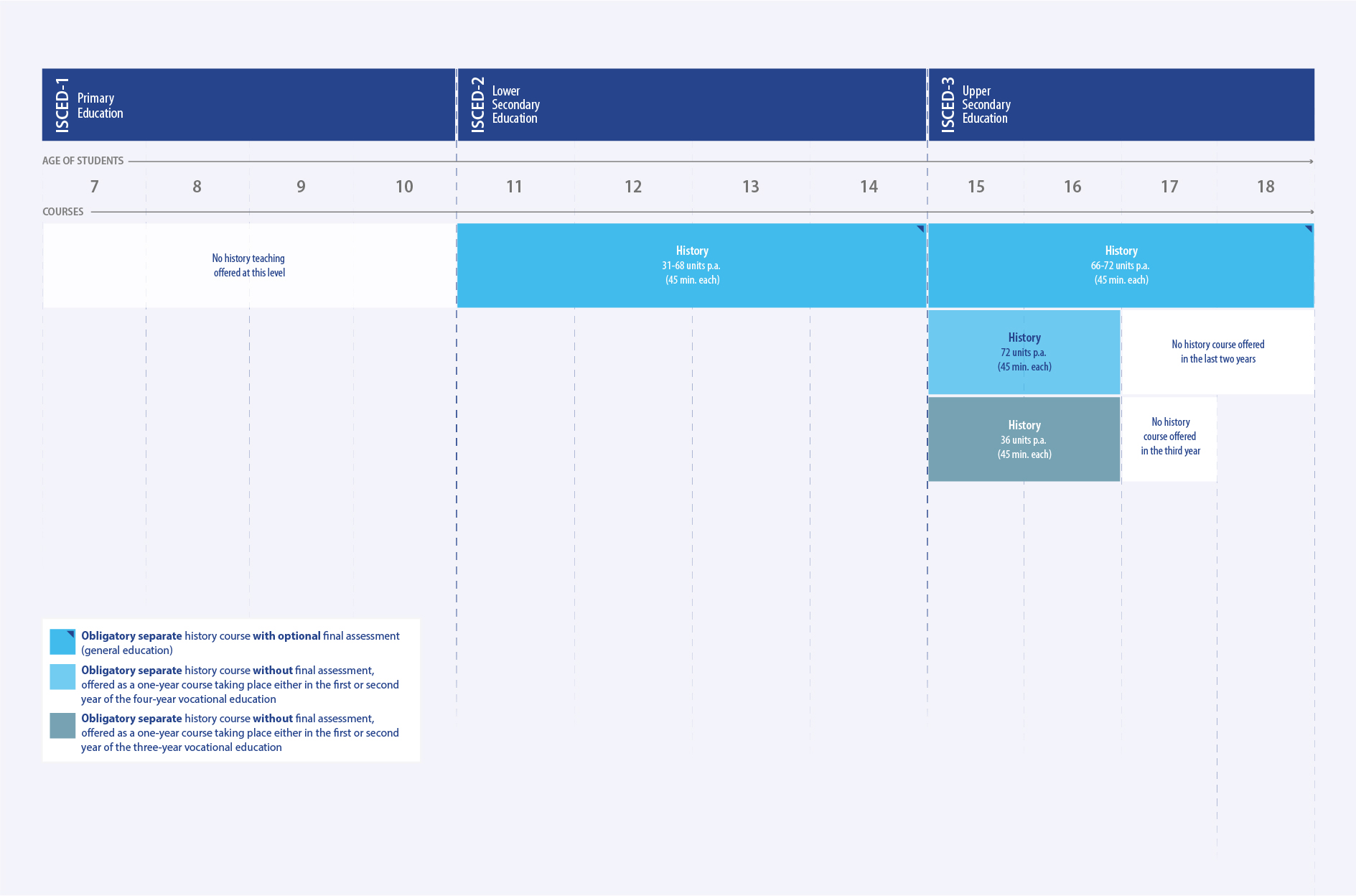
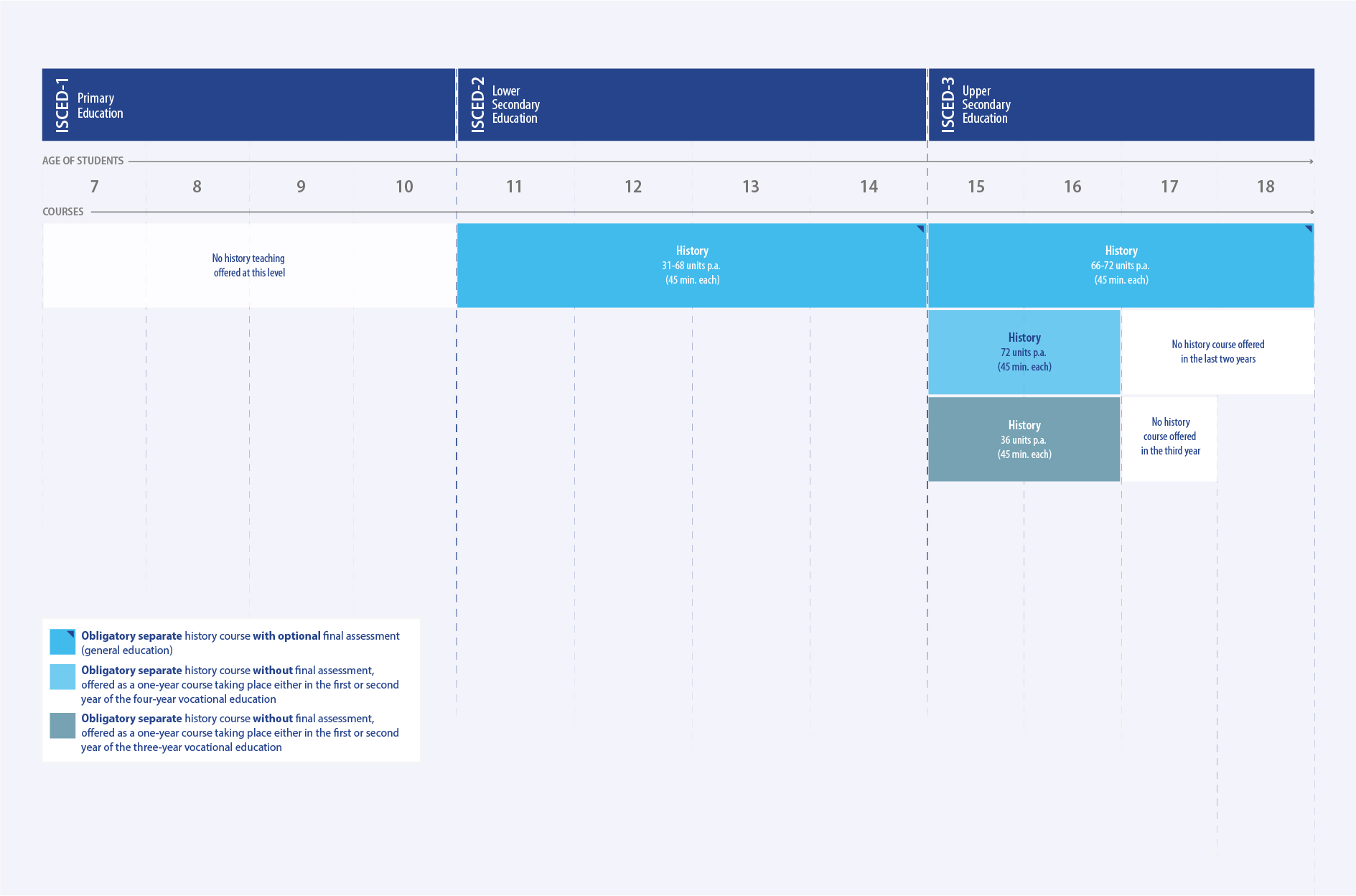
In Montenegro, history is a compulsory subject starting from age 11 and continuing throughout primary and secondary school, which corresponds to ISCED-2 and ISCED-3 educational levels. In general education, end-of-stage examinations are optional at both levels. In vocational education, history is also mandatory, taught as a one-year course without a final assessment.
The Ministry of Education oversees the curriculum, with the Bureau for Education Services developing it and the National Council for Education approving it. The history curriculum is structured both chronologically and thematically. Schools can allocate 15 to 20% of the curriculum to specific themes, such as local history or history of minority groups.
Assessment methods include oral exams, multiple-choice and knowledge-based questions, and project work. End-of-stage examinations, set at the national level, assess historical knowledge and critical thinking skills. The state selects and approves textbooks, which are published annually by the Institute for Textbooks and Teaching Aids (ZUNS).
A master’s degree in history is required to teach the subject. Teacher training focuses mainly on historical content, with some instruction in history didactics. Newly qualified teachers must complete a one-year, state-funded traineeship. In-service training is mandatory and funded by the Ministry of Education.

Download high-resolution schematic
FURTHER INSIGHTS

HISTORY IN SCHOOL
History teaching in Montenegro begins in primary schools at age 11 with the compulsory subject “History,” which continues throughout primary and secondary, which corresponds to ISCED-2 and ISCED-3 educational levels. A final assessment is optional at the end of both ISCED-2 and ISCED-3 levels.
In secondary school, history is also a mandatory subject for students in vocational education. Depending on the programme, it is offered as a one-year course, with 36 or 72 lessons yearly, without a final assessment. Vocational schools follow the same history curricula as general education schools (periods from Middle Ages to contemporary history).
Teaching is conducted in Montenegrin, except in schools for the Albanian minority, where Albanian is the language of instruction. Montenegro has nine primary and four secondary private schools, each with its own history curriculum. Additionally, there are two religious-affiliated schools, which follow the same history curriculum as public schools.

HISTORY CURRICULUM
Montenegro has a centralised education system, with curricula determined at the national level. The Ministry of Education oversees state school curricula, while other key bodies also play a role. The Bureau for Education Services establishes commissions to develop history curricula, and the National Council for Education is responsible for their approval. Before final approval, national minority councils provide their opinions on the history curricula.
The history curriculum is organised both chronologically and thematically. Education authorities report that individual teachers and professors from minority groups may be involved in its development; however, they do not act as representatives of national minorities in this context.
|
AIMS REPRESENTED “VERY WELL” OR “QUITE WELL” IN THE CURRICULUM |
PERIODS |
GEOGRAPHICAL SCOPE |
APPROACHES |
|
|
|
|
* This relates to early medieval migrations not contemporary migrations.
The authorities report that minority groups (cultural, ethnic, linguistic, national or religious) are included in the history curriculum. Specific themes and topics on the history of national minorities in Montenegro are integrated into the curricula at all grade levels. Additionally, 15 to 20% of the curriculum consists of flexible content, allowing schools to allocate these lessons as they see fit, such as for local history or specific themes. Schools with pupils from national minorities often use this flexibility to focus on their own national history.

ASSESSMENT AND EXAMS
The assessment methods teachers are required to use are oral examinations, knowledge-based questions, multiple-choice questions and project work. Numerical grades are required.
End-of-stage examinations are optional and taken for the compulsory primary school and secondary school course “History”. The examinations are set at the national level.
End-of-stage examinations assess the following fields of knowledge: historical content knowledge, historical thinking competences (e.g., evaluation of evidence, consideration of different perspectives), and generic skills.
End-of-stage examinations are written and consist of both open-ended questions and close-ended questions.

TEXTBOOKS AND OTHER RESOURCES
The state is involved in the process of selection and authorisation of textbooks. National Council for Education, serving as a professional advisory body, approves the list of textbooks. Textbooks and teaching materials are published annually by the Institute for Textbooks and Teaching Aids (ZUNS), which operates under the guidance of the Ministry of Education.
Policies on the use of different types of educational resources are as follows:
 REQUIRED REQUIRED |
 ENCOURAGED ENCOURAGED |
 ALLOWED ALLOWED |
 NO POLICY NO POLICY |
|
|
|
|

HISTORY TEACHERS AND THEIR EDUCATION
In Montenegro, a university degree is required to teach history. Until 2017, prospective teachers had to complete a four-year university degree. Since 2017, a master’s degree in history has been required. Teacher training primarily focuses on history as a discipline, with history didactics taught for only one year. Training courses also include child development psychology and pedagogy.
All newly qualified teachers must complete a one-year traineeship in schools, as mandated by law and funded by the Ministry of Education. The same criteria apply to both permanent and substitute teachers.
In-service training is mandatory for all teachers at all levels of education. Any teacher can apply for this training, which is conducted in educational institutions, teachers’ associations, NGOs, international organisations and funded by the Ministry of Education.