


After 20 years of existence, the European Commission for the Efficiency of Justice (CEPEJ) of the Council of Europe will finalise the various aspects of the expected reform of its evaluation exercise of European judicial systems. Every two years, the CEPEJ publishes its Report on the Evaluation of Judicial Systems, which aims to provide policy makers and legal professionals with a comprehensive and practical tool for a better understanding of the functioning of justice in Europe and beyond, with a view to improving its efficiency and quality. At its upcoming 44th meeting, to be held in Strasbourg on 4 and 5 June 2025, the CEPEJ will adopt a new questionnaire for States, which will be shorter but cover all aspects of justice, including budgets, the length and efficiency of proceedings, the role of users and legal professionals, with a view to collecting data on an annual rather than biennial basis, a change from the past. The main European trends and country data sheets will be given a new format and new indicators will be discussed with a view to providing a more dynamic and up-to-date picture of the state of justice in Europe.
The CEPEJ should also adopt guidelines on the quality of judicial debate, which requires close cooperation between the various actors involved in this debate, foremost among them judges and lawyers. These guidelines, which will take the form of a roadmap for these actors, are in line with the right to a fair trial, as guaranteed by Article 6 of the European Convention on Human Rights (ECHR) and the principles derived from it, in particular the adversarial principle.
Online court hearings had already been the subject of a CEPEJ tool after the pandemic, at the express request of member states who did not at the time have a precise methodology for implementing them in a manner that respected the rights of those participating in the hearings. A guide on the use and development of these online hearings should complement the existing guidelines, which contain an analysis of statistical data on the subject and compile a number of good practices implemented in the Member States in this area.
CEPEJ members will also be informed of developments in the database currently being developed on existing and effective national practices aimed at reducing the backlog of cases in the courts.
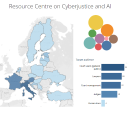
The development of the Resource Centre on AI and Cyberjustice, accessible on the CEPEJ website and presenting the tools actually implemented in Europe, particularly those using AI, will also be discussed.
Finally, the recent results obtained in the implementation of the CEPEJ's various current cooperation programmes aimed at improving the efficiency and quality of justice in many European countries and in Morocco will be presented.
The President of the CEPEJ, Francesco Depasquale (Malta), will welcome Jonathan Attard, Minister for Justice and Reform of the Construction Sector of Malta, in the context of Malta's Presidency of the Committee of Ministers of the Council of Europe, and Gianluca Esposito, Director General for Human Rights and the Rule of Law, to the opening of the plenary meeting.




 Collaborative workspaces:


