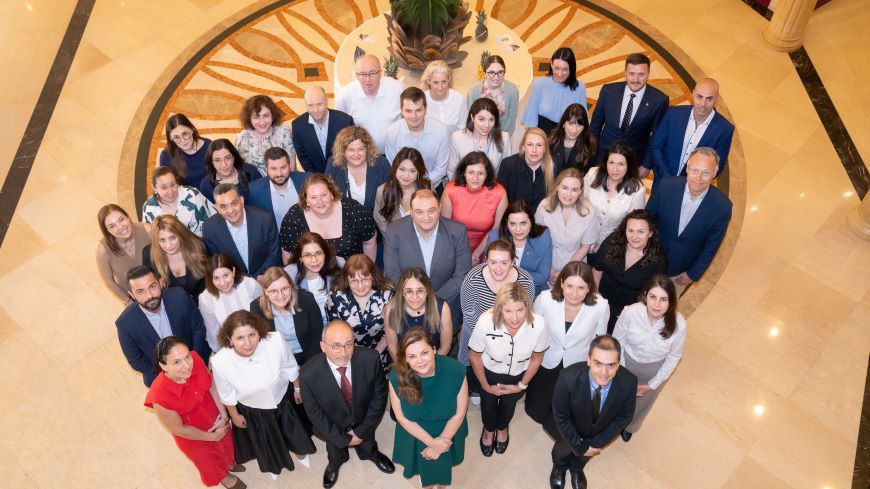
Joint EAG/ MONEYVAL Experts’ Meeting on Money Laundering
and Terrorist Financing Typologies
Moscow, 9 November 2010
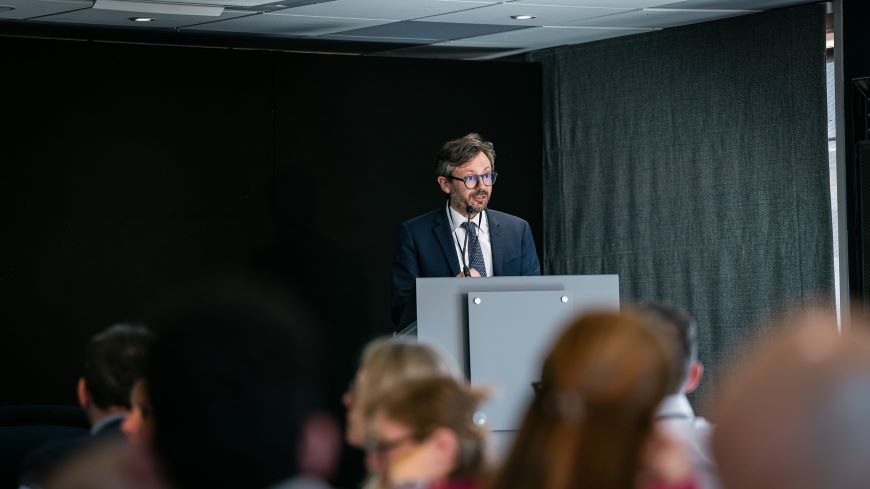
Speech by Mr Vladimir Nechaev
Chairman of MONEYVAL
Mister Chairman of Rosfinmonitoring,
Co-chairs of the Typologies Working Group,
Distinguished guests, colleagues, ladies and gentlemen
It is a great pleasure for me, as Chairman of MONEYVAL, to
join Mr. Chikhanchin in welcoming you all to the 2010 Joint EAG/MONEYVAL
Typologies meeting in Moscow, the capital of the country that is both an EAG and
MONEYVAL member, an in addition to that – my native country.
I would like to express my appreciation to EAG for the
initiative to invite MONEYVAL to hold a joint event. I would also like to thank
the EAG and MONEYVAL Secretariats and the Russian authorities for all their
efforts in preparing the meeting.
MONEYVAL has gladly accepted this invitation. This is thus
the first meeting of its kind, where two FATF regional style bodies and FATF
associate members join forces on typologies.
I would thus like to thank each and every one of you for
coming to this meeting. It is encouraging to see that so many experts have come
to discuss the methods and techniques used by criminals to launder money,
specifically: the use of Internet, as well as ML/FT risks of misuse of E-money,
of non-traditional financial institutions, of alternative remittance systems and
of foreign trade operations.
It’s good to see here private sector representatives.
MONEYVAL has recently initiated a dialogue with the private sector on a range of
AML/CFT issues in the context of specific typologies projects, such as those on
ML/FT risks in the insurance sector and in the online gaming industry. One
result of it is the publication by MONEYVAL in October this year of our typology
study on ML through the insurance sector. I am convinced that such interactions
should be enhanced in the future, as they can only be mutually beneficial.
Also in October the Committee of Ministers of the Council
of Europe approved a new Statute for MONEYVAL. Among the scope of our activities
the Statute specifically states regular thematic typologies on the features,
techniques, trends and magnitude of money laundering and the financing of
terrorism. Indeed, the examination of ML/FT real cases, methods, techniques and
trends, the identification of new ways which criminals may have found to
circumvent AML/CFT measures, is a part of our core business and at the same time
it is also a key preventive tool.
The topics we have decided to explore jointly during this
meeting – “Criminal money flows on Internet and the risks of misuse of E-money
in ML/FT schemes” are challenging. We all see daily evidences of the use of
Internet and information and communication technologies for fraud and other
economic crimes, all highly transnational in nature, generating large amounts of
proceeds which are inevitably laundered at some stage.
At the same time, law enforcement authorities indicate that
they face a number of difficulties in detecting timely criminal money flows on
the Internet and in taking appropriate action. This meeting will undoubtedly
give EAG and MONEYVAL experts an excellent opportunity to exchange views and
practical experiences on a very timely topic, and to identify relevant ML/FT
trends and techniques.
I would like to cite another paragraph from the new
MONEYVAL Statute: MONEYVAL shall contribute actively to the global fight against
money laundering and the financing of terrorism by working closely with other
key international partners, including the FATF, the IMF, the World Bank, the
United Nations, the European Union and other FATF-Style Regional Bodies (FSRBs).
Our present meeting is exactly one of such activities in
this cooperation. I am confident that the discussions during the next two days
will lead to a productive dialogue, and concrete results will be achieved.
The results of this typologies meeting will also enable
both EAG and MONEYVAL to make a substantive contribution to the overall FATF
policy making process in the following months. As you know, the FATF is
reconsidering some parts of the Recommendations in order to address identified
loopholes in the standards or new or emerging threats. Those include inter alia
FATF Rec. 5 on CDD, Rec. 8 on the misuse of technological developments in ML or
terrorist financing schemes.
I look forward to the discussions we will have here in Moscow and wish you
productive work.
Thank you for your attention.