|
What are MONEYVAL's objectives?
The aim of MONEYVAL is to
ensure that its member states have in place effective systems to counter
money laundering and terrorist financing and comply with the
relevant international standards in these fields.
Such standards are those contained in the
recommendations of the FATF, including the Special Recommendations on
Terrorist Financing, the 1988 United Nations Convention against Illicit
Traffic in Narcotic Drugs and Psychotropic Substances, the United
Nations Convention against Transnational Organised Crime, the 1999
United Nations International Convention for the Suppression of the
Financing of Terrorism, the Directive 2005/60/EC of the European
Parliament and of the Council of 26 October 2005 on the prevention of
the use of the financial system for the purpose of money laundering and
terrorist financing and the relevant implementing measures and the 1990
Convention on Laundering, Search, Seizure and Confiscation of the
Proceeds from Crime, concluded within the Council of Europe.
MONEYVAL assesses its members' compliance with all
relevant international standards in the legal, financial and law
enforcement sectors through a peer review process of mutual evaluations.
Its reports provide highly detailed
recommendations on ways to improve the effectiveness of domestic regimes
to combat money laundering and terrorist financing and states’
capacities to co-operate internationally in these areas.
MONEYVAL also conducts typologies studies of money laundering and terrorist financing methods, trends and techniques.
How and when was it established?
The Committee of Experts on the Evaluation
of Anti-Money Laundering Measures and the Financing of Terrorism -
MONEYVAL (formerly PC-R-EV) was established in 1997 and its functioning
was regulated by
the general provisions of
Resolution Res(2005)47 on committees and
subordinate bodies, their terms of reference and working methods.
At their meeting of 13 October 2010, the Committee of Ministers adopted the
Resolution CM/Res(2010)12
on the Statute of the Committee of Experts on the
Evaluation of Anti-Money Laundering Measures and the Financing of Terrorism
(MONEYVAL). This new statute elevates MONEYVAL as from 1 January 2011 to an
independent monitoring mechanism within the Council of Europe answerable
directly to the Committee of Ministers.
What is its structure?
The Committee elects for a period of two years a
Chairperson and Vice-Chairperson, as well as three other persons who
together constitute the Bureau. The Bureau
prepares the work of the Committee. The current Bureau is
composed as follows:
Mr Anton Bartolo, Chairman (Malta) (biography)
Mr Daniel Thelesklaf, Vice-Chairman (Liechtenstein)
Mr Alexandru Codescu, Member (Romania)
Ms Elzbieta Franków-Jaskiewicz, Member (Poland))
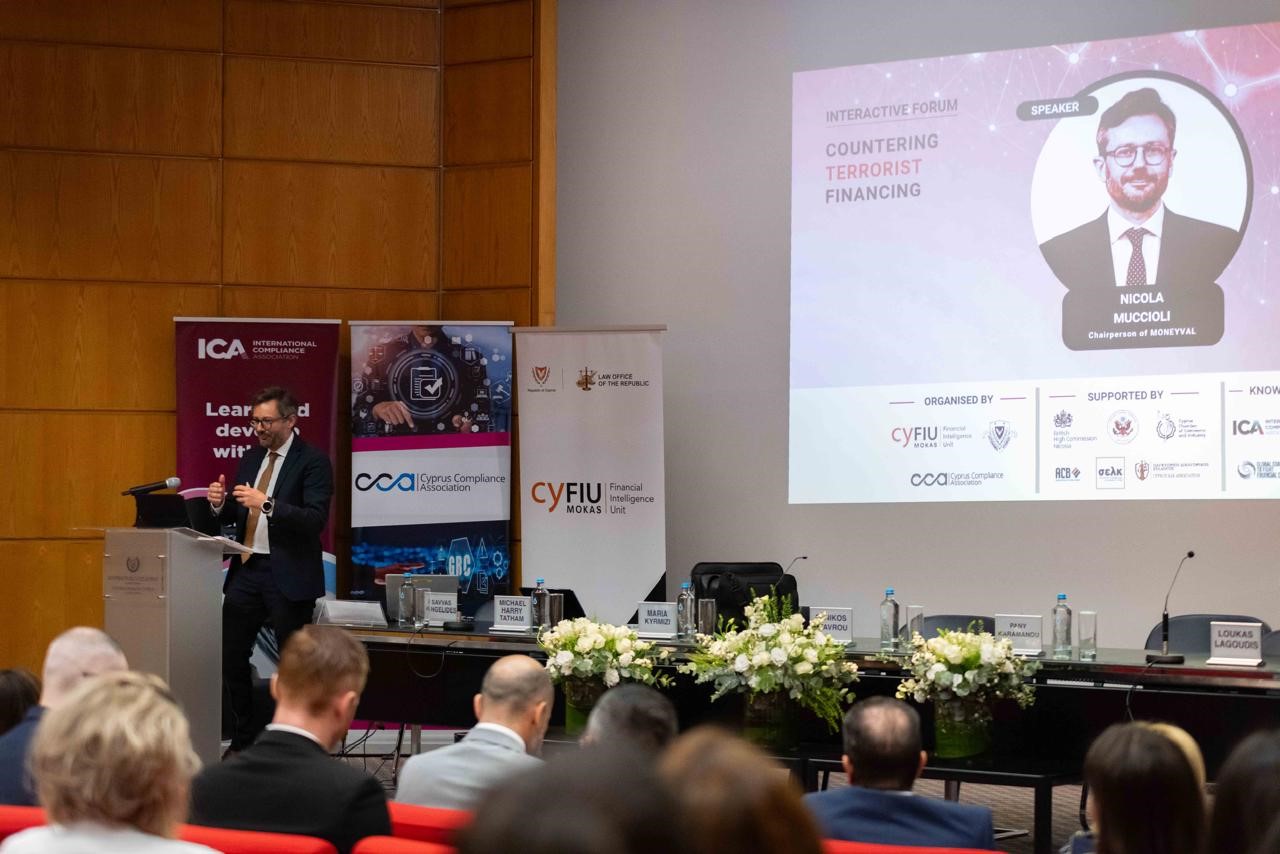
Mr Nicola Muccioli, Member (San Marino)
The Committee is assisted by a Secretariat provided
by the Council of Europe.
Who are its members and observers?
MONEYVAL’s statute provides that it shall
consist of representatives having particular knowledge and experience of their
domestic AML/CFT regimes and who should have profiles in each of the following
areas:
a. senior officials and experts with responsibility for regulation and
supervision of financial institutions;
b. senior officials in law enforcement and financial intelligence units;
c. senior legal experts from ministries of justice and/or judicial and
prosecutorial bodies.
MONEYVAL
currently comprises 30
members which are subject to its evaluation processes and procedures,
each member being entitled to appoint up to three representatives. Furthermore, the
presidency of the Financial Action Task Force (FATF) shall appoint two
delegations from among two states members of the FATF, composed each of one
representative appointed for a term of office of two years renewable.
In addition, the following bodies, countries and organisations have observer status with
MONEYVAL and are entitled to send a representative at MONEYVAL:
The Parliamentary Assembly
of the Council of Europe, the Council of
Europe Development Bank, the
European Committee on Crime Problems, and the
Conference of the Parties of the Convention on Laundering, Search, Seizure
and Confiscation of the Proceeds from Crime and on the Financing of
Terrorism (CETS 198)
the European Commission
and the Secretariat General of the Council of the European Union
States with observer
status of the Council of Europe (ie. Canada, Japan, Mexico, United States of America)
The following international organisations and institutions:
- Secretariat of the Financial Action Task Force on
Money Laundering (FATF)
- ICPO-Interpol
- Commonwealth Secretariat
- International Monetary Fund (IMF)
- United Nations
Office on Drugs and Crime (UNODC)
- United Nations Counter-Terrorism Committee (CTC)
- World Bank
- European Bank of Reconstruction and Development
(EBRD)
- Group of
International Finance Centre Supervisors (previously named Offshore Group of Banking Supervisors (OGBS))
- Egmont Group of
Financial Intelligence Units
- Eurasian Group on Combating Money Laundering and
Terrorist Financing (EAG)
- any other FATF style regional body (FSRB) which is or becomes associate
member of the FATF, on the basis of reciprocity (currently only
Asia Pacific Group on Money Laundering -
APG)
any
other members of the FATF.
Co-operation with other bodies
In its action in this field, MONEYVAL has a close
cooperation, in particular with:
the
FATF: MONEYVAL used to be an observer to
the FATF and as of June 2006, it has become an Associate Member.
There are several benefits arising from this new status – including the
opportunity for more countries within MONEYVAL to attend and actively
participate in FATF meetings as part of the Council of Europe/MONEYVAL
delegation;
the IMF
and World Bank: the common methodology
enables the mutual recognition of evaluations, and thus avoid repeating
evaluations in the same countries and overloading national authorities
with these exercises;
other
entities with which MONEYVAL has observer
status (this is the case of the Eurasian Group set up in 2004).
|
|
Its key tasks are:
|
to
elaborate appropriate documentation, including questionnaires for self
evaluation
and mutual evaluation, and follow up and assess the compliance with
relevant AML/CFT standards of states falling into the following
categories:
a. member states of the Council of Europe which are
not members of the FATF;
b. member states of the Council of Europe which become members of the
FATF and request to continue to be evaluated by MONEYVAL;
c. member states of the Council of Europe which are members of the FATF
and which request to be evaluated by MONEYVAL as regards European
standards not already covered by the FATF or any other evaluation body;
and, subject to a decision by the Committee of Ministers,
d. member states of the Council of Europe which are members of the FATF,
with respect to the territory(ies) for whose international relations
they are responsible or on whose behalf they are authorised to give
undertakings, provided these territories are not evaluated by the FATF,
upon the relevant member state’s request that its territory(ies) be
evaluated by MONEYVAL;
e. any applicant state for membership of the Council of Europe and any
other non-member state of the Council of Europe which is not a member of
the FATF, provided the interested state makes a request in writing to
the Secretary General in which it undertakes to participate fully in the
evaluation procedure, to comply with its results and to contribute to
its costs.
3. A non-member state of the Council of Europe, non-member of the FATF,
which is subject to evaluation by MONEYVAL in pursuance of the above may
at any time declare, by means of a notification to the Secretary
General, that it decides to interrupt its participation in the
evaluation.
adopt reports covering:
- the features and magnitude of money laundering and
the financing of terrorism, including typologies;
- the efficiency of measures taken to combat money laundering and the
financing of terrorism in the legislative, financial regulatory, law
enforcement and judicial sectors, with recommendations to improve the
domestic system to combat money laundering and the financing of
terrorism.
conduct regular thematic typologies research in
respect of all evaluated states on the features, techniques, trends and
magnitude of money laundering and the financing of terrorism.
conduct other research into issues relating to money
laundering and the financing of terrorism, including horizontal reviews
of the progress of evaluated states in meeting the international
standards in each evaluation round.
after consultation with the European Committee
on Crime Problems (CDPC), propose recommendations for adoption by the
Committee of Ministers which would improve the international fight
against money laundering and the financing of terrorism.
raise awareness of major global policy and
operational initiatives to counter money laundering and the financing of
terrorism.
contribute actively to the global fight against money
laundering and the financing of terrorism by working closely with other
key international partners, including the FATF, the IMF, the World Bank,
the United Nations, the European Union and other FATF-Style Regional
Bodies (FSRBs) in the global network of AML/CFT assessment bodies.
|
|