Support for a better evaluation of the results of judicial reform efforts in the Eastern Partnership” ("Justice Dashboard EaP"

15 January 2021 - 14 July 2025 / 15 July 2025 - 28 February 2027
This webpage was created and maintained with the financial support of the European Union. Its contents are the sole responsibility of the CEPEJ and do not necessarily reflect the views of the European Union
The Phase II of the Action is implemented in the framework of the Partnership for Good Governance III (2023-2027), a co-operation initiative of the European Union and Council of Europe. The Partnership for Good Governance provides tailor-made support to beneficiary countries to meet their reform agendas and comply with the European standards in the fields of human rights, rule of law and democracy. Phase II will continue to support the EaP countries in achieving an effective, systematic and data-based evaluation of the results of judicial reform efforts through an annual data collection and analysis on the functioning of the judicial systems in Armenia, Azerbaijan, Georgia, Moldova, Ukraine. Phase I was implemented from January 2021 to July 2025 under a Joint CoE-EU Programme.
- Overall Objective of the Action
The country evaluation systems for Judiciary are improved using CEPEJ methodology.
- Specific Objective
Entities (correspondents) involved in the EaP Justice Dashboard meet their commitments vis-à-vis the CoE in the area of judicial reporting (data coordination, collection, processing, transmission).
The CEPEJ will collect annually data on the functioning of the justice system in each beneficiary. The methodology for the collection and quality check of data used by the CEPEJ in Evaluation cycles apply to this exercise. Each beneficiary appoints a Justice Eap Dashboard correspondent entrusted with the collection and coordination of the replies to the CEPEJ Dashboard Eap Questionnaire, through the electronic system: CEPEJ-COLLECT. This correspondent is the unique interlocutor of the CEPEJ Secretariat during the whole process. The CEPEJ Questionnaire contains questions from the general CEPEJ evaluation cycles, and some additional questions specific for this Action, some defined in liaison with the Group of States against Corruption (GRECO), the European Court of Human Rights (ECHR) and the Department for the execution of Judgments of the European Court of Human Rights. The CEPEJ Dashboard Eap Questionnaire is accompanied by an explanatory note to ensure comparability of data collected through this process. Extensive work is carried out by the Action team responsible for the data collection within the CEPEJ secretariat to verify the quality of the data submitted by the project correspondents.
Beneficiary countries
Armenia, Azerbaijan, Georgia, the Republic of Moldova and Ukraine.
The following three deliverables to show the results of the data collection for 2024 were delivered to the European Commission in the framework of the Justice Dashboard EaP for Armenia, Azerbaijan, Georgia, the Republic of Moldova and Ukraine.
 Part 1 - Comparative tables and graphs
The Comparative tables present quantitative and qualitative data validated for 12 indicators regarding efficiency and quality of justice in the region for all the beneficiaries, organised in tables and charts, accompanied by a summary overview per indicator as well as comments provided for the understanding of data. These tables and graphs also include when relevant some previous cycles’ data (from 2020 onwards), so that some regional trends can be identified.
Part 2 – Beneficiaries profiles
The Beneficiary profiles provide an in-depth user-friendly analysis for each beneficiary’s justice system including, with the assistance of a Greco expert, some analysis on accountability within each justice system. Infographics, tables, graphs, comparisons with previous cycles’ data as well as with the regional medians have been used Narrative explanations have been added throughout the document to further facilitate the understanding of the presented data, as well as an executive summary.
Part 3 – Key findings and Analysis
Key findings and Analysis is a condensed presentation of comparative data for all beneficiaries on the following themes selected by the European Commission: Efficiency, Quality, Mandate of judges and prosecutors, and Accountability. It combines quantitative and qualitative data under each theme, accompanied by reader-friendly graphs and tables.
This section features thematic reports and outputs developed in the framework of specific capacity-building activities conducted under the Justice Dashboard Eastern Partnership project.
Overview of Prosecutorial Systems and Case-Flow Data Collection in the Eastern Partnership – Regional Workshop, Budapest, 27 February 2025
The regional workshop on the organisation of prosecutorial systems and the collection of case-flow data in the Eastern Partnership countries was held on 27 February 2025 in Budapest. Within the framework of the Justice Dashboard Eastern Partnership (Dashboard EaP) project, CEPEJ correspondents from the beneficiary countries and representatives of public prosecution services met to exchange practices, address common challenges, and explore avenues for harmonising prosecutorial data collection. The key outcomes of the workshop are available in the report provided below.
Link: Summarizing discussions and recommendations for improving prosecutorial data collection processes

CEPEJ Regional Workshop on Legal Aid strengthened data comparability across Western Balkans and Eastern Partnership
From 25 to 26 March 2026 in Budva (Montenegro), the European Commission for the Efficiency of Justice (CEPEJ) organised a Regional Workshop related to data collection on Legal Aid: “From legal frameworks to comparable data and policy use”, bringing together CEPEJ correspondents responsible for...

Presentation of comparable judicial statistics on the Western Balkans at a CEPEJ workshop in Sarajevo
On 3 February 2026, CEPEJ organised a workshop in Sarajevo to present to judicial professionals from Bosnia and Herzegovina a comparative overview of the quality of judicial data and practices, the methodology developed by CEPEJ for data collection, and the usefulness of these data for guiding...

Presentation of some CEPEJ Data in the Context of Ongoing Justice Reforms in Kosovo*
A presentation of the 2024 CEPEJ data on the efficiency of the judicial system was organised on 4 November 2025 in Pristina. The event brought together representatives from the Ministry of Justice, the Kosovo Judicial and Prosecutorial Councils, the Chamber of Mediators, the Justice Academy, the...

The CEPEJ is organising, as part of its Dashboards, two workshops on prosecutorial case-flow data
The CEPEJ is organising two regional workshops in Budapest (Hungary) for national data collectors involved in the CEPEJ evaluation process—namely, the CEPEJ national correspondents—along with representatives of public prosecution services and the CEPEJ Evaluation Unit, responsible for overseeing,...

Dashboard Eastern Partnership: Publication by CEPEJ of the 2023 data analyses
The CEPEJ has released the results of the 2023 data collection within the “Dashboard for the Eastern Partnership/EaP” for the beneficiary countries (Armenia, Azerbaijan, Georgia, the Republic of Moldova and Ukraine). A comparative first part allows for the identification of regional trends...

Justice Dashboard Eastern Partnership Steering Committee ("Justice Dashboard EaP")
The 4th meeting of the Steering Committee of the Action " Justice Dashboard EaP" took place on 14 November 2024 via videoconference. It brought together the persons responsible for the national data collection in the Beneficiary States of the Action (Armenia, Azerbaijan, Georgia, the Republic of...
Enhancing Judicial Data Management in Georgia: training and preparation of a methodology for statisticians
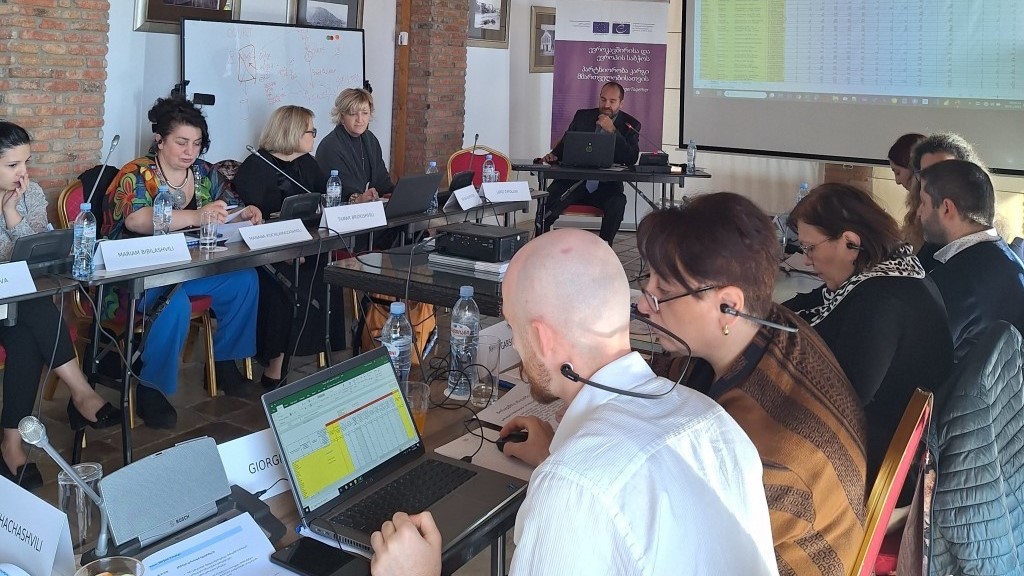
From November 17 to 19, 2023, the European Commission for the Efficiency of Justice (CEPEJ) organised a training session for court statisticians involved in data collection in Georgian courts. This training was an occasion to present all the issues involved in data collection (ways to harmonize,...

Support to data collection in the framework of CEPEJ Evaluation of judicial systems in the Republic of Moldova
The CEPEJ organised between 27 and 28 September 2023 a data collection support visit in Chisinau (the Republic of Moldova) within the regular biennial CEPEJ evaluation and the Joint Programme "Support for a better evaluation of the result of judicial reform efforts in the Eastern Partnership”...

Trainings in Azerbaijan on court performance reporting according to CEPEJ tools and methodology
On 8 and 10 February 2023, the European Commission for the Efficiency of Justice (CEPEJ) in cooperation with the Justice Academy of Azerbaijan organised two training sessions on court performance reporting according to its tools and methodology. The aim of the trainings was to develop a standard...
Justice Dashboard Eastern Partnership: visits to support data collection
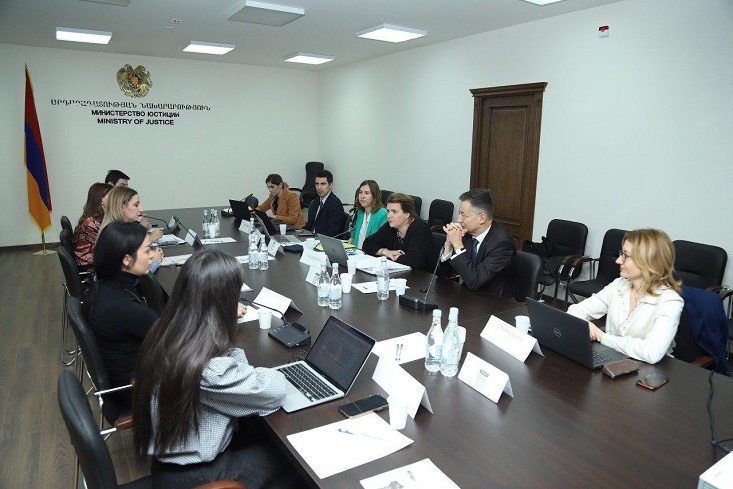
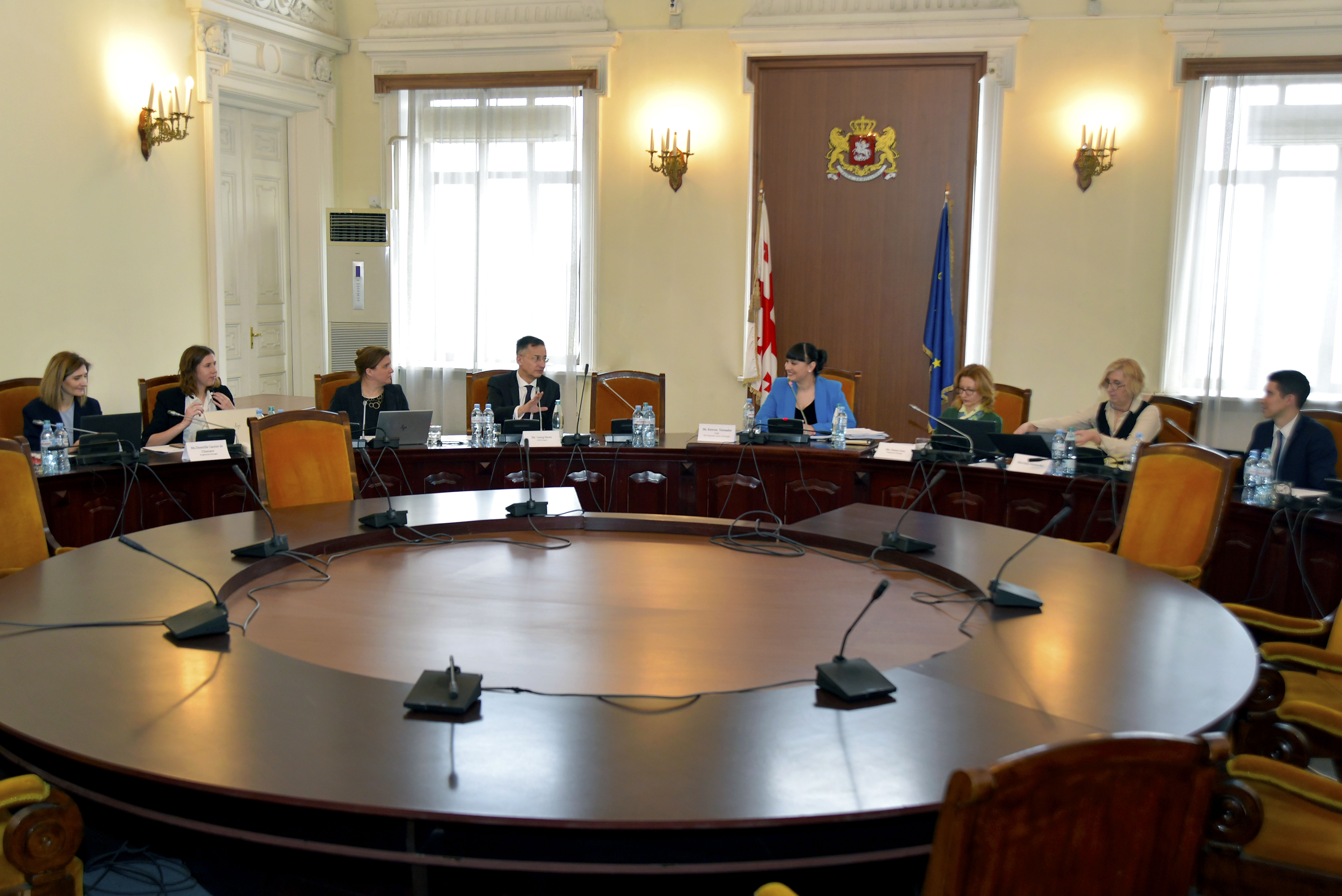
The CEPEJ organised between 23 and 26 January 2023 data collection support visits for some beneficiaries of the Joint Programme "Support for a better evaluation of the result of judicial reform efforts in the Eastern Partnership” ("Justice Dashboard EaP"). These visits took place in Baku...

Justice Dashboard Eastern Partnership : Steering Committee Meeting
The second meeting of the Steering Committee of the Action "Support for a better evaluation of the results of judicial reform efforts in the Eastern Partnership" ("Justice Dashboard EaP") will take place on 24 November 2022 via videoconference. It will bring together representatives of the...

The CEPEJ will organise a training on judicial statistics in Georgia
On 9-10 July 2022, the European Commission for the Efficiency of Justice (CEPEJ) will organise a training for court managers and courts staff in order to enhance their skills to collect and analyse judicial data and to use performance indicators for courts. The collection, processing and analysis...

Justice Dashboard for the Eastern Partnership: support to data collection for the beneficiaries of the project
The CEPEJ is organising from December 2021 to March 2022, a number of data collection support meetings for the beneficiaries of the "Justice Dashboard EaP" Project. The support is provided through online bilateral meetings with national correspondents and their national interlocutors involved in...
Call for tender for providers for assistance in the assistance in collecting and processing judicial data in Armenia, Azerbaijan, Georgia, Republic of Moldova and Ukraine
The Council of Europe is looking for a Provider for the provision of assistance in the collection and processing of data on the functioning of the judicial system, as well as in the training delivery on data collection and analysis in Armenia, Azerbaijan, Georgia, Republic of Moldova and Ukraine...
Launch of the Justice Dashboard Eastern Partnership Project
On 8 June 2021, the CEPEJ will launch the Project "Support for a better evaluation of the results of judicial reform efforts in the Eastern Partnership - Justice Dashboard EaP” through an online meeting with the beneficiary countries, the representatives of the European Commission and the...

The European Union and the Council of Europe help bring European standards to justice systems in Eastern Partnership countries
The European Union and the Council of Europe present the “Justice Dashboard EaP” with the objective of better measuring the impact of the justice reform efforts of the Eastern Partnership countries. The rule of law, fair justice systems and functioning of democratic institutions are crucial...




 Collaborative workspaces: