The CEPEJ Artificial Intelligence Advisory Body (AIAB) provides expert advice on Artificial Intelligence (AI) related issues in the judicial environment. It was established in 2022 to support the CEPEJ in monitoring the actual emergence of AI applications in the justice sector and to implement related strategies as well as to contribute to the reflection on the use of AI in justice systems with respect to fundamental rights.
The AIAB is a key element of the CEPEJ’s Roadmap to ensure an appropriate follow-up of the CEPEJ “European Ethical Charter on the use of artificial intelligence (AI) in judicial systems and their environment”, adopted in 2018.
The AIAB is steered by, and reports regularly to both the CEPEJ Working Groups on Cyberjustice and Artificial Intelligence (CEPEJ-GT-CYBERJUST) and on Quality of Justice (CEPEJ-GT-QUAL).
The AIAB Members
The AIAB is composed of five board members, appointed with a view to their qualifications while ensuring overall diversity and complementarity of the board, namely:
Mandate 2024-2025
Katie Marie Atkinson (United Kingdom)
Morgan Briggs (United Kingdom)
Alfonso Peralta Gutierrez (Spain)
Matthieu Quiniou (France)
Marek Świerczyński (Poland)
The AIAB regularly monitors the actual emergence of AI applications in the justice sector
There are numerous debates concerning various tools using algorithms that are already or likely to be used in the field of justice. However, applications are often pilot projects that are not widely implemented or developed. The CEPEJ contributes to the debate by providing a register of existing AI applications in the judiciary, additionally providing information on the use case.
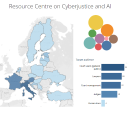
The information on AI systems is presented in the “Resource Centre on Cyberjustice and Artificial Intelligence”, after validation by the AIAB.
The Resource Centre shall serve as a publicly accessible focal point for structured and reliable information on AI systems and other key cyberjustice tools applied in the digital transformation of the judiciary, and:
- help authorities tasked with the planning and implementation of digitalisation of justice to gain an overview of applied key systems and exchange on the use cases;
- provide a starting point for further examination of key systems and discussion on their risks and opportunities;
- provide professional and end-users with information on key systems they are using or are exposed to, in line with the “European Ethical Charter on the use of Artificial Intelligence in Judicial Systems and their Environment”.
The AIAB provides targeted advice on issues of AI in the judicial sector
The AIAB provides expert guidance on the operationalisation of the principles of the CEPEJ Charter, which will take the form of an “Assessment Tool” for the compliance of AI systems with the principles of the Charter. The tool will give authorities in charge of implementing judicial AI systems more practical guidance on how to apply the five principles laid down in the CEPEJ Charter.
The AIAB advises the CEPEJ working groups on possible new strategies concerning the use of AI in the justice system respecting fundamental rights
The AIAB contributes to relevant discussions and ensures that the CEPEJ has the required expertise and finds the right answers to the challenges and opportunities that AI presents to the judiciaries in the Council of Europe’s member States and beyond.
The full Terms of Reference can be accessed following this link.