Responsible Artificial Intelligence – a Council of Europe priority
Artificial Intelligence (AI) is revolutionising our societies, enhancing innovation and opening up new opportunities.
However, this technological leap also brings ethical challenges that could pose a threat to our human rights. The Council of Europe is at the forefront of regulating AI to create a balanced, ethical, and equitable future, and has created the world's first internationally binding legal text on the issue with the 2024 Framework Convention on Artificial Intelligence.
The following closing remarks were delivered by Michael O’Flaherty, Council of Europe Commissioner for Human Rights, at the 17th Warsaw Human Rights Seminar on “Justice in the digital...
Who Does What on Artificial Intelligence in the Council of Europe
The Steering Committee for New and Emerging Digital Technologies (CDNET) conducts and coordinates the intergovernmental work of the Council of Europe in the field of new and emerging technologies, ensuring that this work supports innovation, and give its legal and policy expertise to the Committee of Ministers. CDNET also serves as custodian of the Framework Convention on Artificial Intelligence and Human Rights, Democracy and the Rule of Law.
By adjudicating cases involving AI, the European Court of Human Rights safeguards against violations of fundamental rights in AI applications, ensuring justice remains accessible to all.
The Venice Commission advises on constitutional and legal frameworks to ensure democratic safeguards are in place when AI systems influence governance.
The World Forum for Democracy provides a platform to debate grassroots initiatives addressing the democratic challenges posed by AI, fostering innovation in governance and public participation.
Highlights of the Council of Europe's Work on Artificial Intelligence
AI in healthcare
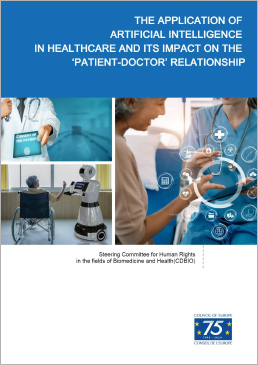
A landmark report on AI in healthcare highlights its transformative potential while addressing ethical challenges, particularly the "patient-doctor" relationship.
Ethics and Human Rights
The Ethics and Human Rights Toolkit offers a practical guide for policymakers and developers to ensure AI systems comply with ethical and legal standards.