


The CDCJ organised jointly with the UNHCR, a technical meeting of experts and an international conference (23-24 September 2021) to raise awareness and promote the accession of all its 47 member States to International and European conventions relating to nationality and statelessness, and their successful implementation.
Statelessness and Access to Nationality

Statelessness remains an issue of concern both in Europe and globally. The causes of statelessness are manifold and are often the result of intricate conflicts in nationality laws, state succession, forced displacement, historical and contemporary migration, structural birth registration problems, access to nationality and related administrative practices.
The right to a nationality is recognised in widely ratified international treaties, such as the International Covenant on Civil and Political Rights and the European Convention on Nationality (ETS No. 166), and is considered a gateway to the enjoyment of a range of other rights. It also constitutes part of a person's social identity as highlighted by the European Court of Human Rights. Yet, according to the United Nations High Commissioner for Refugees (UNHCR) latest estimates of 2022, there are some 442 000 stateless persons, including those with undetermined nationality, living in Europe. The lack of nationality has a serious impact on their lives, their enjoyment of the full range of human rights, including access to education, employment, healthcare, housing, and freedom of movement.
The Council of Europe considers as a priority the need to ensure the effective enjoyment of human rights by the most vulnerable, including those faced with nationality and statelessness issues.
Further to the conclusions of the international conference on “Statelessness and the right to a nationality in Europe: progress, challenges and opportunities” organised jointly with the UNHCR in 2021 and the Analysis of current practices and challenges regarding the avoidance and reduction of statelessness in Europe, the Council of Europe, through its European Committee on Legal Co-operation (CDCJ), focuses during the period 2024-2026 on issues relating to the statelessness of children and their access to nationality.
At its 103rd plenary meeting (19-21 November 2024), the CDCJ examined a feasibility study for a non-binding legal instrument on access to nationality for stateless children. It agreed to revise Recommendation CM/Rec(2009)13 on the nationality of children, and complement it with a checklist for policy makers by the end of 2026. In parallel, the CDCJ has prepared a Compendium of promising practice in respect of legal aid and representation, access to information and to justice for children in procedures relating to the determination of nationality or statelessness, adopted at the 105th plenary meeting of the CDCJ (18-20 November 2025).
These activities will contribute to the Council of Europe Action Plan on Protecting Vulnerable Persons in the Context of Migration and Asylum in Europe (2021-2025) and the Council of Europe Strategy for the Rights of the Child (2022-2027). Furthermore, the Council of Europe also contributes through these activities to the new Global Alliance to End Statelessness launched by the UNHCR in 2024.
Compendium of Promising Practices on Access to Nationality for Stateless Children
CDCJ-MIG MEETINGS
6th meeting (22-23 September 2026)
Videoconference
5th meeting (23-24 February 2026)
Videoconference
4th meeting (29 September-1st October 2025)
Strasbourg
3rd meeting (23-25 April 2025)
Videoconference
2nd meeting (26-27 September 2024)
Videoconference
1st meeting (30-31 May 2024)
Videoconference
News
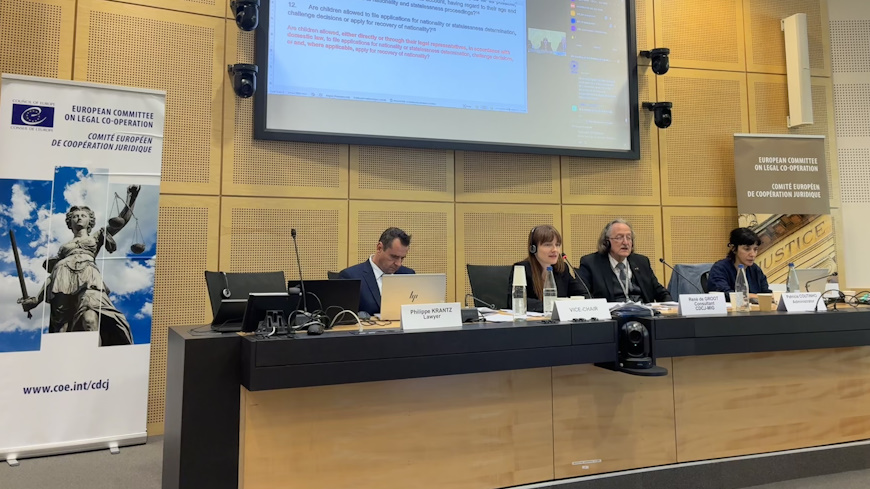
Child statelessness: final meeting of the Limited Working Group on Migration (CDCJ-MIG)
22-23 September 2026
Online
The CDCJ Limited Working Group on Migration held its 6th and last meeting on 22-23 September online, chaired by Katerina Radova (Czechia). The Working Group finalised its work on the draft revised Recommendation on the nationality of children, its explanatory memorandum and its checklist for...
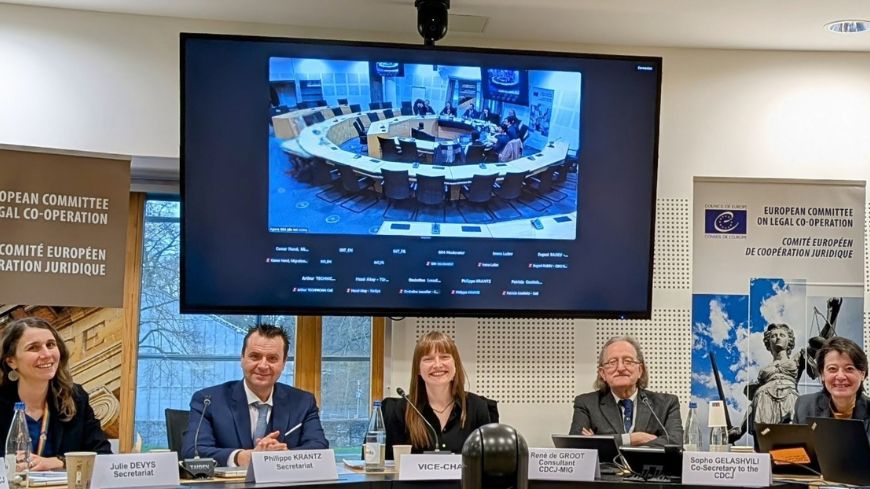
Child statelessness – 5th meeting of the Limited working group on migration (CDCJ-MIG)
23-24 February 2026
Online
The CDCJ-MIG held its 5th meeting on stateless children on 23-24 February 2026, online, chaired by Katerina Radova (Czechia). During its meeting, it continued reviewing the draft revised recommendation on the nationality of children as well as its related explanatory memorandum in the light of...

Publication of the Compendium of Promising Practices on Access to Nationality for Stateless Children
6 February 2026
The European Committee on Legal Co-operation (CDCJ) publishes today the Compendium of Promising Practices on Access to Nationality for Stateless Children, following its adoption at its 105th plenary meeting (18-20 November 2025). This compendium was prepared by the CDCJ’s Limited Working Group...
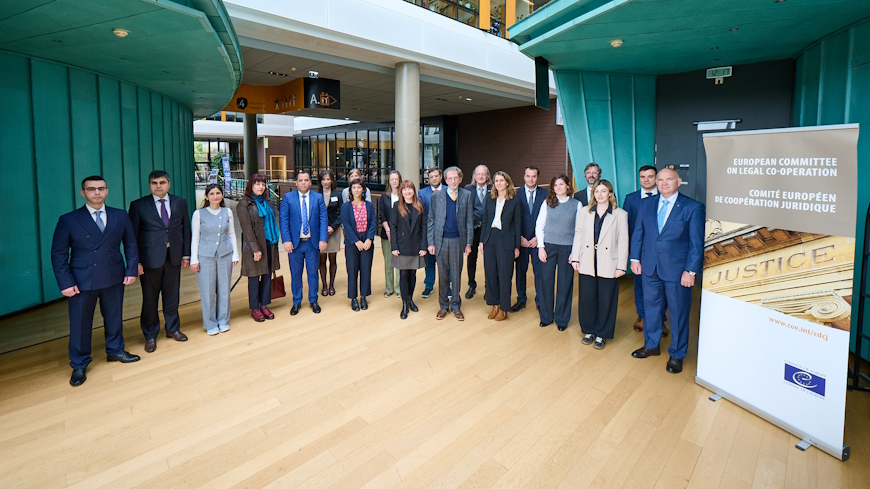
CDCJ Working Group on Migration holds its 4th meeting on child statelessness
29 September-1st October 2025
Strasbourg
The CDCJ Limited Working Group on Migration (CDCJ-MIG) held its 4th meeting where it examined and finalised a draft compendium on promising practices in respect of legal aid and representation, access to information and to justice for children in procedures relating to the determination of...

Stateless children - 3rd meeting of the Limited working group on migration (CDCJ-MIG)
23-25 April 2025
Strasbourg
The Limited Working group of the CDCJ on migration (CDCJ-MIG) held its third meeting on access to nationality for stateless children on 23-25 April 2025 online. During its meeting, it examined and reviewed the preliminary draft revised Recommendation CM/Rec(2009)13 on the nationality of children...

The CDCJ publishes a Feasibility study on a non-binding legal instrument on stateless children’s access to nationality
21 February 2025
Strasbourg - France
As a contribution to the Council of Europe Action Plan on Protecting Vulnerable Persons in the Context of Migration and Asylum in Europe (2021-2025) and the Council of Europe Strategy for the Rights of the Child (2022-2027), the European Committee on Legal Co-operation (CDCJ) publishes a...

Stateless children: 2nd meeting of the Limited working group on migration (CDCJ-MIG)
26-27 September 2024
Strasbourg - France
The Limited Working group of the CDCJ on migration (CDCJ-MIG) held its second meeting on stateless children on 26-27 September 2024 online. During its meeting, it examined the preliminary draft feasibility study on a non-binding legal instrument regarding stateless children’s access to...

1st meeting of the Limited working group on migration (CDCJ-MIG) concerning stateless children
30-31 May 2024
Strasbourg - France
On 30-31 May 2024, the CDCJ Limited working group on migration held its 1st meeting online and exchanged views on its work programme, key themes and implementation of tasks for its two-years mandate in 2024-2026. The group also carried out a hearing of statelessness advocates having experienced...
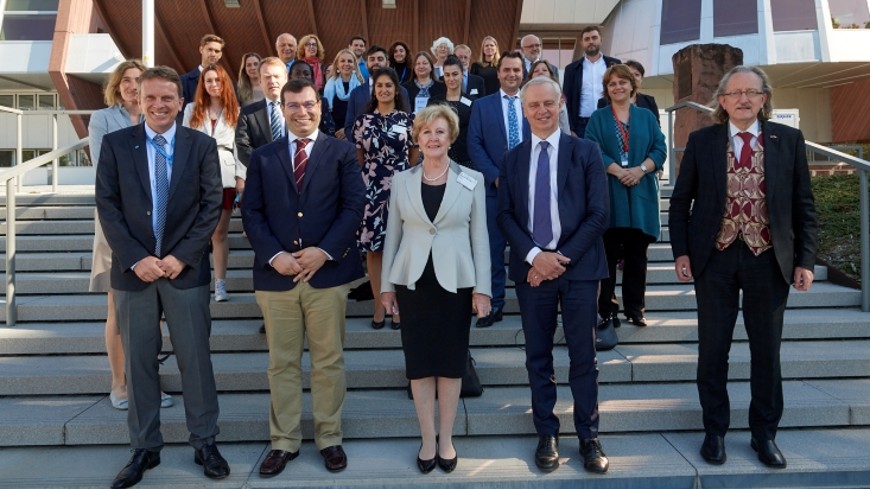
UNHCR and Council of Europe discuss statelessness, urge States to uphold the right to a nationality in Europe
24 September 2021
Strasbourg, France
Strengthening efforts to end statelessness in Europe and guarantee the provision of fundamental rights to everyone was the key theme of the events organised on 23-24 September in Strasbourg by the Council of Europe’s European Committee on Legal Co-operation (CDCJ) and UNHCR, the UN Refugee...
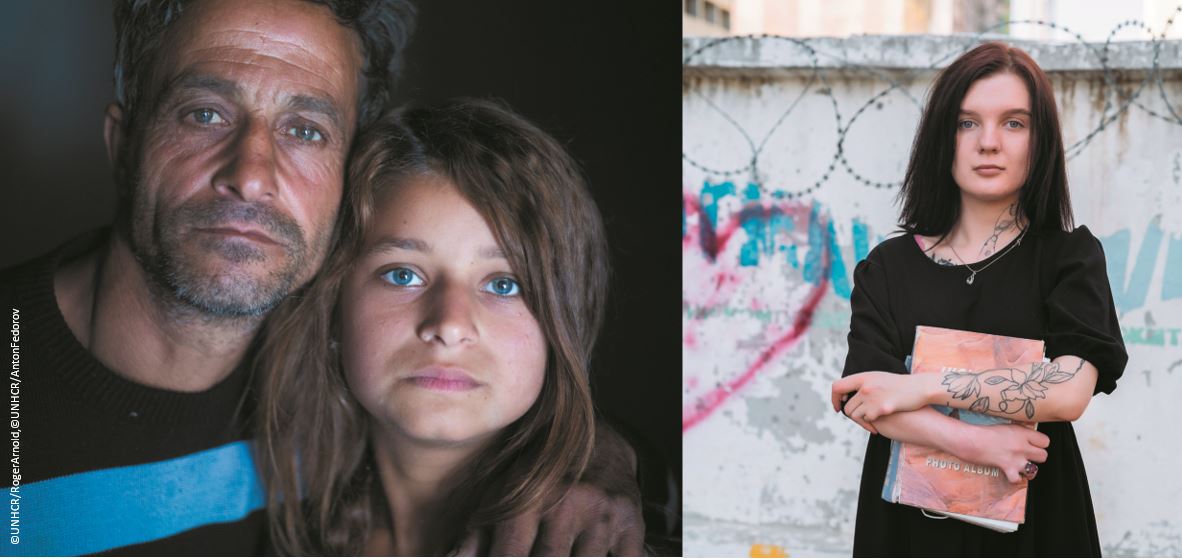
Statelessness and the right to a nationality in Europe
23 September 2021
Strasbourg
An international conference jointly organised by the Council of Europe, through the European Committee on Legal Co-operation, and the United Nations Refugee Agency (UNHCR) will examine how member states in Europe can best address the problem of statelessness and foster opportunities to rally...


