|
Biobanks
The Council of Europe's Recommendation (2006)4 on research on biological materials of human origin
aims to safeguard the fundamental rights of individuals whose
biological materials could be included in a research project after having been collected and stored (1) for a previous
specific research project, (2) for future unspecified research or (3) as residual material originally removed for
clinical or forensic purposes or for a previous specific research project. As was envisaged in the Recommendation, a
careful re-examination is now called for, both in the light of the experience acquired in the first five years of its
implementation and in the light of recent developments. The evolution of the origin of the samples stored in biobanks
and its consequences with regard to consent; the identifiability of samples and accompanying data which may have
repercussions on protection of privacy and confidentiality; technological evolutions providing easier access to genome
wide sequencing and analysis which may raise issues of risk and benefit, consent, and privacy; the increasing amount
of multicentre research using large quantities of samples and data coming from different biobanks, and the related
problems of transborder flow of materials and associated personal data; rapidly evolving technological advances
coupled with the increasing volume of data readily available which may allow identification of an individual from
data that is currently considered non-identifiable; those are some of the developments in the light of which the
provisions of Rec(2006)4 may need to be re-examined.
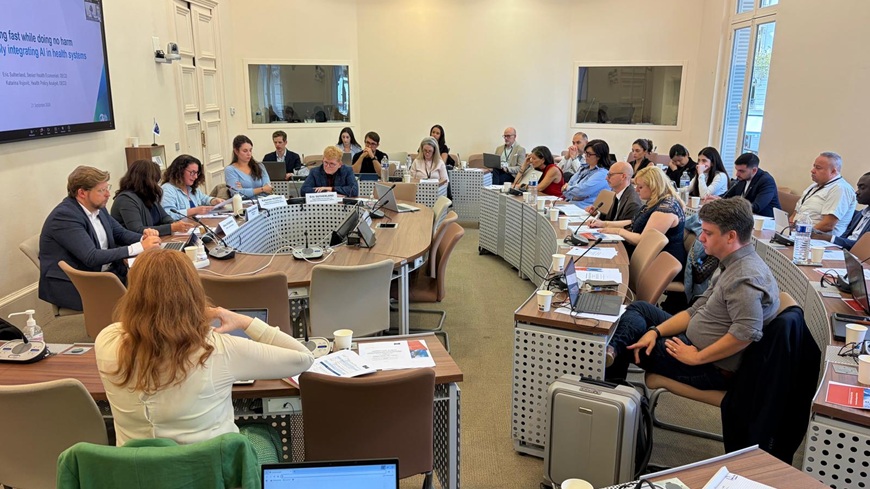
Symposium on Biobanks and Biomedical Collections - An ethical framework for future research,
organised by the Committee on Bioethics (DH-BIO), was held on
19-20 June 2012 in Strasbourg, France.
The objective of this Symposium was to provide a basis for the re-examination of the Council of Europe Recommendation
(2006)4 on research on biological materials of human origin.
To that end, the Symposium examined the developments in biobanking and research on biological materials of human
origin, that have taken place since the adoption of the Recommendation
and considered their possible evolution,
in order to assess the challenges they may raise with respect to the ethical and legal principles enshrined in the
Recommendation.
Any questions you may
have about this Symposium should be addressed by e-mail to:
bioethics.biobanks@coe.int
Recommendation (2006)4
Explanatory memorandum
Report of the European Commission Expert Group on biobanks
Programme
Chairs and speakers. Biographical notes
The Speakers. Abstracts
Conclusions to the Symposium
Proceedings (abstracts, full texts, biographical notes)
List of participants
Broadcast
of the Symposium
Press review
Photos of the Symposium
_____________________________
[1]
The interpretation of the seminars, conferences and other events serves to facilitate communication and does
not constitute an authentic record of the proceedings. Only the original speech is authentic. No liability shall
be incurred by the interpreter in the exercise of his/her function
|