|
|
|
II. THE COMMITTEE OF MINISTERS |
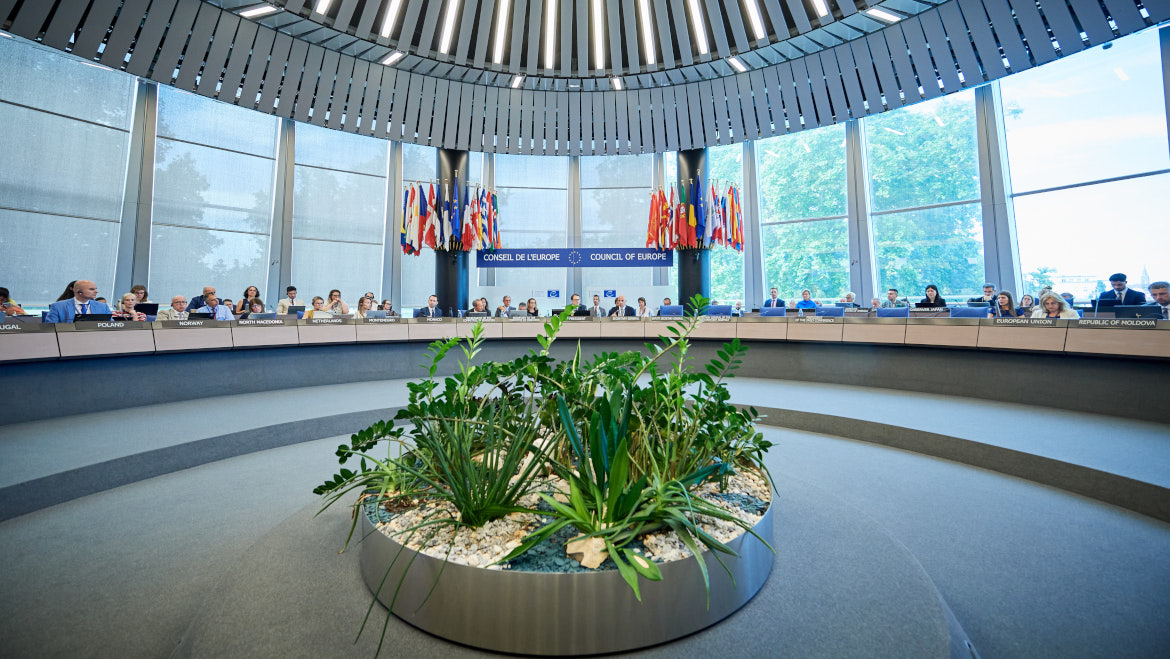
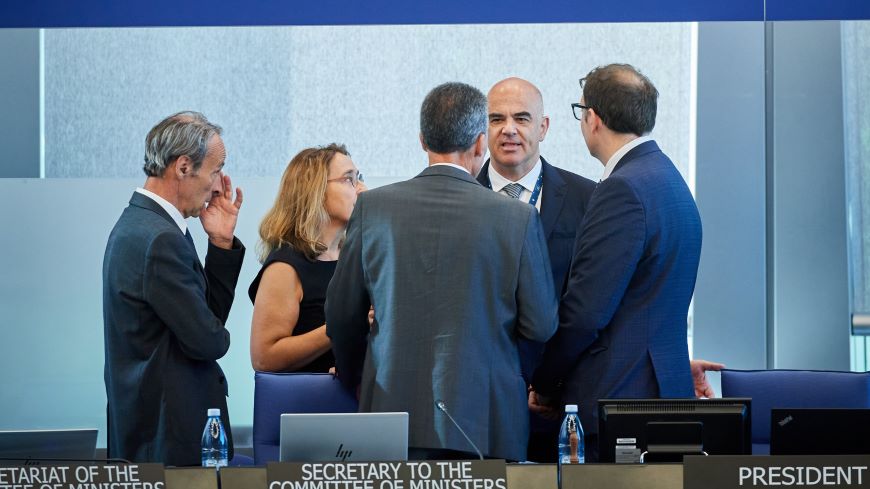
The Committee of Ministers (CM) is the Council’s executive organ whose role and functions are described in Chapter IV of the Statute. The CM meets at ministerial level and at Deputy level. |
| |
|
1. Appointment to various functions and bodies 1.1 Secretary General, Deputy Secretary General and Secretary General of the Assembly / 1.2 Council of Europe Commissioner / 1.3 Advisory panel of experts on candidates for election as judge to the European Court of Human Rights / 1.4 Other functions and bodies |
|
1.1. Secretary General, Deputy Secretary General and Secretary General of the Assembly
1.2. Council of Europe Commissioner for Human Rights
1.2.1 Terms of reference
1.2.2 Election procedure
1.3. Advisory panel of experts on candidates for election as judge to the European Court of Human Rights
1.3.1 Terms of reference
1.3.2 Appointment of the members of the panel
1.4. Other functions and bodies
1.4.1 Calls for candidatures
1.4.2 Deadline for receipt of candidatures
1.4.3 Voting arrangements in the Committee of Ministers
1.1. Secretary General, Deputy Secretary General and Secretary General of the Assembly
In accordance with Article 36.b of the Statute, the SG and DSG are appointed by the Assembly on the recommendation of the CM. The same applies to the SG of the Assembly.
The regulations for the appointment of the SG, DSG and SG of the Assembly are laid down in regulations adopted by both the CM and the Assembly.
Concerning the procedure for election of the SG, the CM agreed in 2007 that it will henceforth present to the Assembly candidates who enjoy a high level of recognition, are well-known among their peers and the people of Europe, and have previously served as Heads of State or Government, or held senior ministerial office or similar status relevant to the post, and asks the governments of member States to present candidates who match this profile.1 The CM and the Assembly have adopted a joint interpretative statement on Rules and procedures for the future elections of the SG.2 This statement clarifies the consultation process between the Assembly and the CM. The calendar for the election of the SG and a competence framework are appended to that statement. It also specifies that the CM may vote when drawing-up the list of candidates. In this context, it is recalled that Article 20.d of the Statute (i.e. two-thirds majority of the representatives casting a vote and of a majority of the representatives entitled to sit on the CM) applies in the absence of a consensus on the list of candidates to be submitted to the Assembly.
Concerning the DSG, the Deputies, having agreed with the Assembly in the Joint Committee on 26 January 2012, approved a competence framework for the post of DSG.3
1.2. Council of Europe Commissioner for Human Rights
1.2.1 Terms of reference
The terms of reference are set out in the Resolution Res(99)50 on the Council of Europe Commissioner for Human Rights.
1.2.2 Election procedure
Article 9 of Resolution Res(99)50 stipulates that the Commissioner shall be elected by the Assembly by a majority of votes cast from a list of three candidates drawn up by the CM.
The Deputies apply the following procedure for drawing up a list of three candidates:4
“1. A ballot paper presenting the names and proposing States of all the candidates would be presented. The names would appear in the chronological order of the submission of the candidatures.
2. Each delegation would vote for three candidates appearing on the ballot paper. Ballot papers on which either less than three or more than three candidates were indicated would be considered invalid.
3. The three candidates obtaining the highest number of votes and the absolute majority of the representatives entitled to vote would be declared selected for inclusion in the list.
4. If in the first round less than three candidates obtained the majority referred to under paragraph 3 above, a second or subsequent rounds might prove necessary. The Chairman might propose that, for the purposes of a second or subsequent round, the threshold majority could be that of the absolute majority of the valid votes cast.
5. In the case of a second or subsequent rounds, the Chairman may invite delegations of States whose candidates have obtained the lowest number of votes to consider withdrawal.
6. In the second or subsequent rounds, each delegation would vote only for the number of candidates corresponding to the remaining places on the list.
7. The Chairman would announce the results of each round of election in camera.
8. Once the list is drawn up, the Chairman would address a letter to the President of the Assembly indicating that, out of [number] candidates submitted, the Committee of Ministers had drawn up the list of three candidates following a voting procedure, the names being presented in alphabetical order so as to indicate that the Committee of Ministers does not wish to express any preference as between candidates included in the list.”
1.3. Advisory panel of experts on candidates for election as judge to the European Court of Human Rights
1.3.1 Terms of reference
The terms of reference of the Advisory Panel of Experts on Candidates for Election as Judge to the Court are set out in Resolution CM/Res(2010)26.
1.3.2 Appointment of the members of the panel
The Panel shall be composed of seven members, chosen from among members of the highest national courts, former judges of international courts, including the Court and other lawyers of recognised competence, who shall serve in their personal capacity. The composition of the Panel shall be geographically and gender balanced.5
The members of the Panel shall be appointed by the CM following consultations with the President of the Court. Proposals for appointment may be submitted by the High Contracting Parties. Any vacancy shall be filled in the same manner. Members shall be appointed for a term of three years, renewable once. Where a member of the Panel does not complete his/her term, a successor will be appointed for a full term. Members of the Panel shall be from different member States.6
The Deputies applied the following procedure for the appointment of the first panel in December 2010:7
- delegations were invited, having regard to paragraphs 2 and 3 of Resolution CM/Res(2010)26, to submit to the Chair, proposals for appointment to the Advisory Panel of Experts on Candidates for Election as Judge to the Court;
- their Chair was entrusted, in contact with the Chair of the Ad hoc working party on Reform of the Human Rights Convention system (GT-REF.ECHR)8 and the Chair of the then Liaison Committee with the European Court of Human Rights (CL-CEDH)9, with carrying out the necessary consultations in order to present proposals regarding the composition of the Panel;
- the decision on the composition of the Panel was taken on the basis of the Chair’s proposals.
|
1
117th Session (11 May 2007)
5
Cf. Paragraph 2 of Resolution
CM/Res(2010)26
6
Cf. Paragraph 3 of Resolution
CM/Res(2010)26
8
Formerly GT-SUIVI.Interlaken
9
The CL-CEDH has since been discontinued.
11
The bodies concerned are: the European Committee for the Prevention of Torture and Inhuman or Degrading Treatment or Punishment (CPT); the Advisory Committee on the Framework Convention for the Protection of National Minorities; the Committee of Experts of the European Charter for Regional or Minority Languages; the European Committee of Social Rights (ECSR); the Administrative Tribunal; the Budget Committee, the Youth Card Board of Co-ordination; the Management Board of the Pension Reserve Fund; the Committee of Experts on Buildings (CAHB) and the Audit Committee.
12
The functions concerned are: the External Auditor and the Independent Person sitting on the Management and Executive Boards of the European Union Agency for Fundamental Rights.
13
Cf. in particular, Recommendation
Res(81)6
|
Top  |
|
| 2. Intergovernmental Committees |
|
|
Intergovernmental committees are governed by Resolution CM/Res(2011)24 on intergovernmental committees and subordinate bodies, their terms of reference and working methods. Committees may also be set up in the framework of conventions or resolutions which set out their own rules for their functioning.
The current list of intergovernmental committees can be found at the following link: Terms of reference (Intergovernmental committees' database) (internal access) / Terms of reference (Intergovernmental committees' database)(external access)
The list of other committees can be found at the following link: Council of Europe committees established by a Resolution of the CM or by a Convention or by other instruments
|
| |
|
| 3. Council of Europe Conferences of Specialised Ministers |
|
The principles for the organisation of such conferences are set out Resolution CM/Res(2011)7 on Council of Europe conferences of specialised ministers.
|
| |
|
| 4. Council of Europe Conventions |
|
The Council of Europe Treaty Series groups together all the conventions concluded within the Organisation since 1949. Whatever they are called ("agreement", "convention", "arrangement", "charter", "code", etc.), all these texts are international treaties in the sense of the Convention of Vienna of 1969 on the law of treaties.
The conventions of the Council of Europe are prepared and negotiated within the institutional framework of the Council. Negotiations culminate in a decision of the CM to adopt the final text of the proposed treaty. It is then agreed to open the treaty for signature by member States of the Council and, if necessary, by the other States or organisations who have taken part in its elaboration.
The conventions of the Council are not statutory acts of the Organisation. They owe their legal existence to the consent of those member States that sign and ratify them.
Furthermore, the great majority of the conventions of the Council make provision for non-member States of the Organisation to become Parties thereto, upon invitation by the CM of the Council and by means of the procedure of accession (see II.F, Chapter 2.3.2 on Contributions of non-member States).
The SG is the depositary of the conventions of the Council of Europe. He is the custodian of these conventions and presides over their signature and the deposit of the instruments of ratification, acceptance, approval or accession. It is also the SG who is responsible for the notifications prescribed in the final clauses of the conventions, and who arranges for their registration with the Secretariat of the United Nations.
Following the practice introduced by the CM in 1965, explanatory reports have been published on most conventions. They are prepared by the committee of experts instructed to draft the convention in question and are published when the convention is adopted by the CM. These explanatory reports might facilitate the implementation of the provisions of the conventions, although they do not constitute instruments which provide an authoritative interpretation of them.
The text of all Council of Europe treaties, their explanatory reports, the status of signatures and ratifications, declarations and reservations made by States, as well as the notifications issued by the Treaty Office since 2005, are available on the
website of the Treaty Office.
Generally, the costs relating to the functioning and operation of these conventions are covered by the Ordinary Budget of the Organisation, unless otherwise provided for by the respective conventions or in the case of
non-member States (see II.F, Chapter 2.3 Income and contributions).
|
| |
|
5. Information policy and classification of documents 5.1 Information policy / 5.2 Classification of documents |
5.1 Information policy
5.2 Classification of documents
5.2.1 General rule
5.2.2 Rules applicable to other bodies of the Council of Europe
5.2.3 Nomenclature of CM documentation
5.1 Information policy
The Council's information strategy is set out in Resolution Res(2000)2.
The outlines of the CM's information policy are given in document RAP-INF(2000)3 rev.
5.2. Classification of documents
5.2.1 General rule
Resolution Res(2001)6 regulates access to Council documents.
The policy of access to CM documents is based on the following principles:16
i. documents not subject to any particular classification are public;
ii. documents classified “restricted until examined by the Committee of Ministers” are declassified after the CM has examined the item in question;
iii. documents classified “restricted” are declassified a year after being issued;
iv. documents classified “confidential” are declassified ten years after being issued;
v. documents classified “secret” are declassified thirty years after being issued.
With a view to further improving transparency of the work of the CM, the Secretariat is encouraged to make more use of lower level classifications.17
With regard to “human rights” meeting and “monitoring” documents this policy is applied subject to advance distribution by the Secretariat of the list of documents reaching their declassification date and to the possibility for member States to oppose such declassification. Opposition by one or more member States to the declassification of one or more documents is communicated – with the reasons for this opposition – to the CM, which sets a new date for the declassification of the document(s) concerned, within the limit of the maximum period of 30 years laid down for the declassification of documents classified “secret”.
Any delegation wishing to prevent the automatic declassification of a document may do so by informing the Secretariat within 12 months of its date of issue. The Secretariat will periodically check whether an embargo on a document should stand.18
In addition, ad hoc decisions concerning the classification of specific types of documents have been taken as follows:
Documents
|
Classification
|
Decisions
|
Unclassified unless the CM explicitly decide otherwise.19
|
Agendas of CM meetings
|
Public one week in advance of meeting.20
|
Chair’s summing up
|
Restricted.21
|
Records
|
Confidential (unless a decision to declassify).22
|
Abridged reports of meetings of steering committees
|
Restricted at the date of issue and declassified after examination by the CM.23
|
Explanatory memorandum
|
Public at the same time as the corresponding recommendation or convention (except if an objection has been or is mentioned concerning this publication (in which case, the CM will decide according to the nature and motivation of this objection)).24
|
Thematic “monitoring” documents :25
|
|
- national contributions on the various themes;
|
- public
|
- general comments by the Secretariat on the different themes, which were not confidential ;
|
- restricted
|
- country-by-country comments by the Secretariat.
|
- confidential
|
DH documents:
Rules of the CM for the supervision of the execution of judgments and of the terms of friendly settlements26
|
|
- information and documents relating thereto provided by a High Contracting Party to the CM27
|
- public unless the CM decides otherwise in order to protect legitimate public or private interests;
|
- information and documents relating thereto provided to the CM, in accordance with the present Rules, by the injured party, the applicant, by non-governmental organisations or by national institutions for the promotion and protection of human rights;
|
- public unless the CM decides otherwise in order to protect legitimate public or private interests. This information is distributed together with any observations of the delegation(s) concerned provided that the latter are transmitted to the Secretariat within five working days of having been notified of such communication;
|
- annotated agenda, decisions
|
- after each meeting of the CM, the annotated agenda presented for the CM’s supervision of execution shall also be accessible to the public and shall be published, together with the decisions taken, unless the CM decides otherwise.
|
- annual report28
|
- public once adopted
|
- action plans29
|
- action plans and action reports, together with relevant information provided by applicants, non-governmental organisations and national human rights institutions30 will be promptly made public31 and put on line except where a motivated request for confidentiality is made at the time of submitting the information.
|
5.2.2 Rules applicable to other bodies of the Council of Europe
The rules on the access to Council documents32 apply as follows:
- steering committees: Rules on access to CM documents are directly applicable.
Steering Committees and Ad hoc Committees may themselves decide as to the publication of technical reports on certain activities.
33
- Partial Agreements: the rules apply to the Partial Agreements, without prejudice to any more favourable rules on access already applied by certain Partial Agreements, and subject to duly reasoned specific exceptions which may be adopted by the competent governing bodies.
- independent monitoring bodies: willingness to implement the policy, subject to compliance with the conventional or statutory provisions applicable to each of them.
In the event of any doubt about whether or not a document is public, use is made of the procedure for access to classified documents set up by the CM in September 1998, particularly in respect of documents – other than those of the CM – which have not been the subject of specific decisions with a view to achieving consistency between access to documents issued before and access to those issued after adoption of the 2001 resolution.
5.2.3 Nomenclature of CM documentation
The definitions of CM document references can be found at the following link:
Nomenclature of CM documentation.
|
27
Pursuant to Article 46, paragraph 2 and Article 39, paragraph 4 of the Convention
31
Taking into account Rule 9§ 3 of the Rules of supervision
|
Top  |
|
6. Other 6.1 Use of the Committee of Ministers Foyer / 6.2 Gifts to the Council of Europe/Committee for Works of Art |
6.1 Use of the Committee of Ministers Foyer
6.2 Gifts to the Council of Europe/Committee for Works of Art
6.1 Use of the Committee of Ministers Foyer
The use of the Foyer of the CM is subject to prior authorisation by the CM. Any request is first considered by the Bureau of the Deputies, which makes a recommendation to the CM, in application of the regulations.34
6.2 Gifts to the Council of Europe/Committee for Works of Art
Gifts to the Council are subject to prior authorisation of the CM. The Committee for Works of Art is responsible for recommending to the CM whether to accept offers of gifts and their appropriate location within the Council premises. The CM adopts the
rules governing the functioning of the Committee for Works of Art and criteria for gifts.35
|
|
|
|
|