


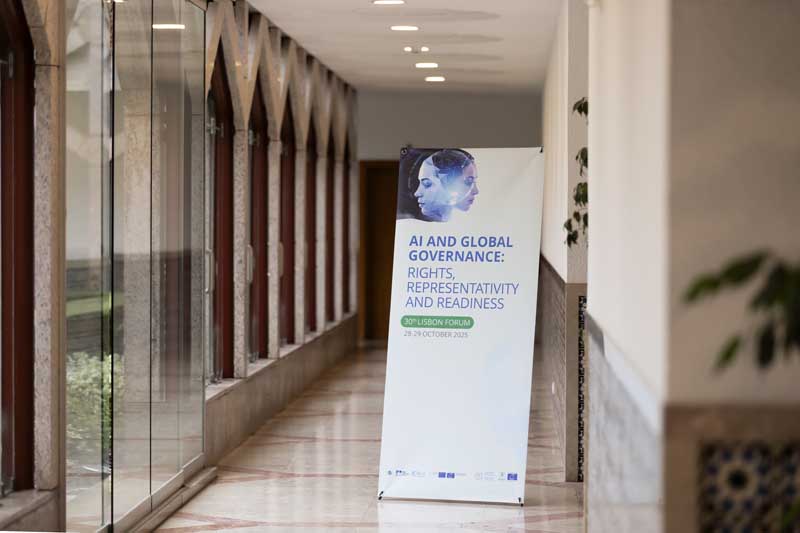
Lisbon Forum 2025

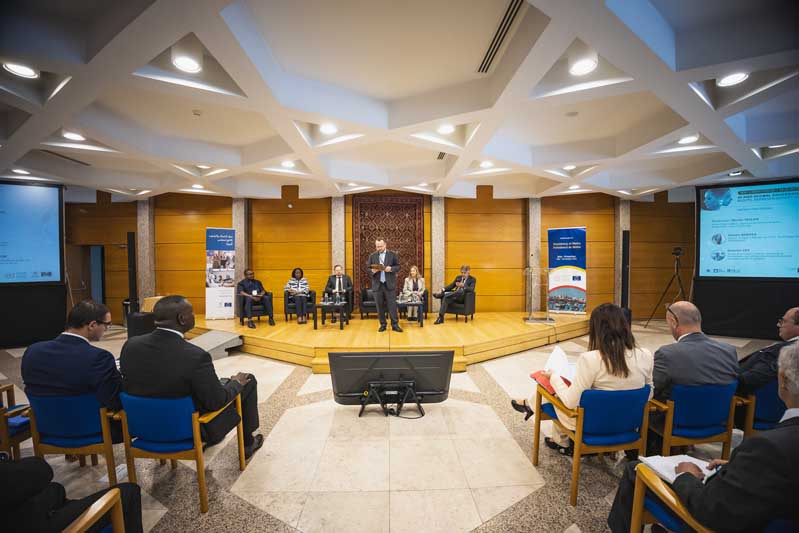
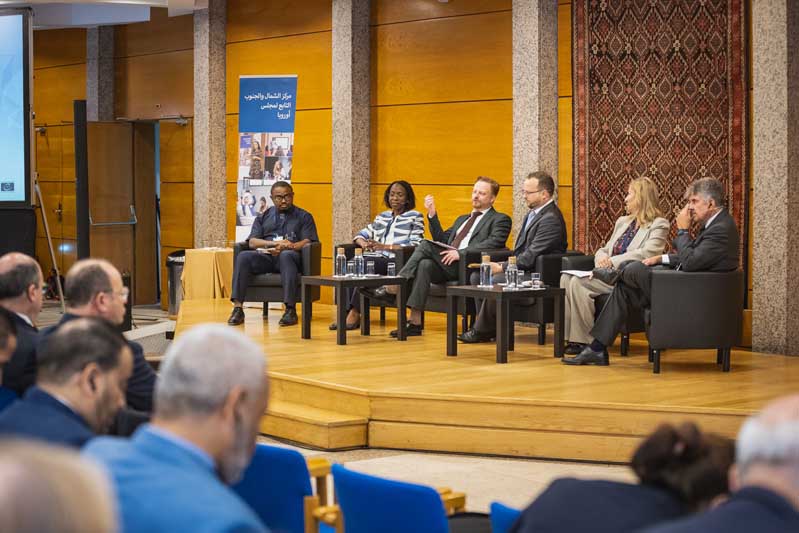
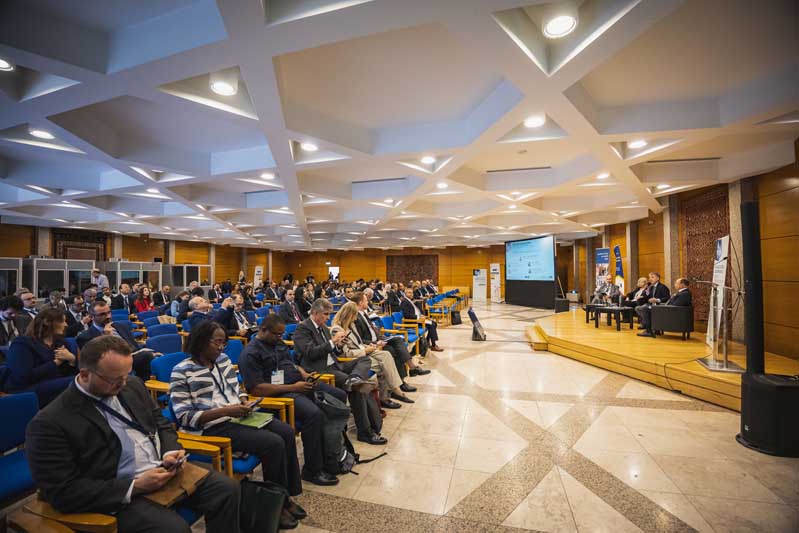
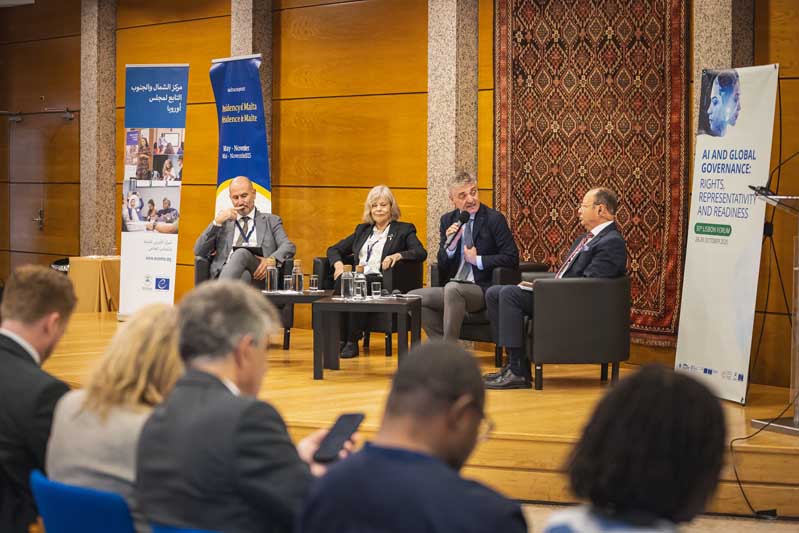
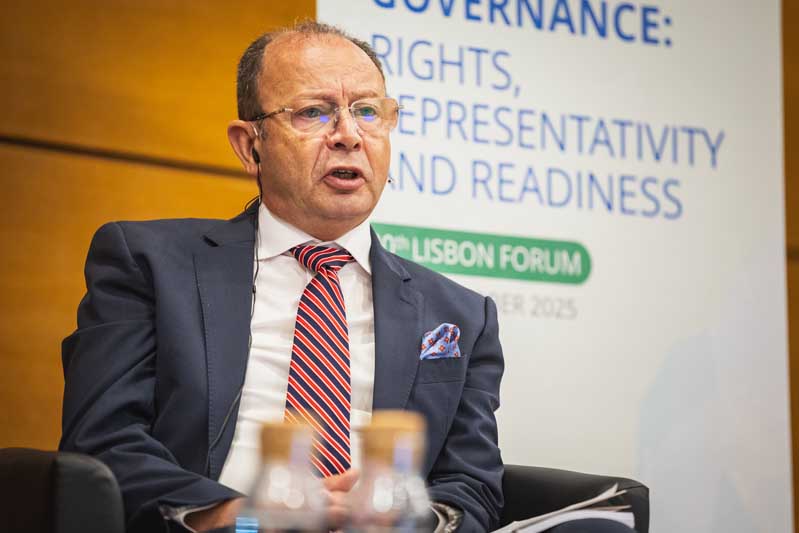
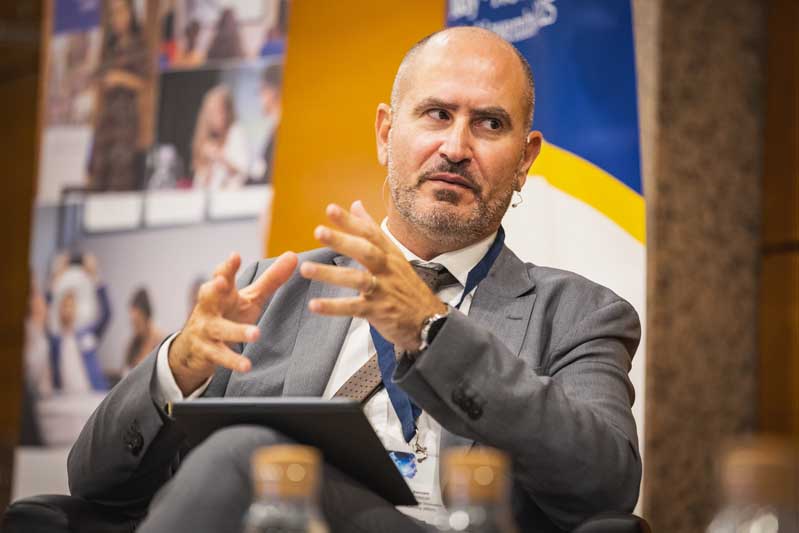
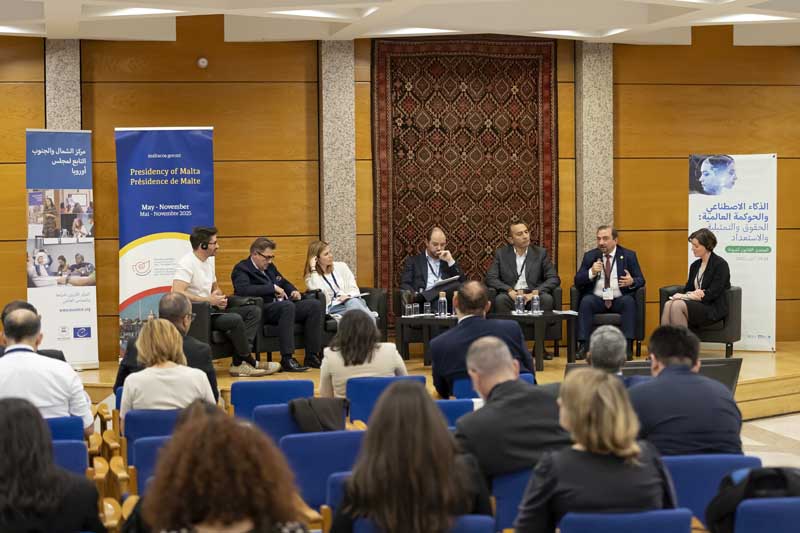
Artificial Intelligence is reshaping how we learn, communicate, govern, and interact — creating both unprecedented opportunities and profound challenges for human rights, democracy, and cultural diversity. Building on the Council of Europe’s new Framework Convention on Artificial Intelligence and Human Rights, Democracy and the Rule of Law — the world’s first binding international treaty on AI — the 2025 Lisbon Forum explored how societies can govern these technologies in ways that are inclusive, rights-based, and globally connected. At the heart of the debate was the urgent need for AI literacy and capacity-building, especially for policymakers, legal professionals, youth, and vulnerable groups, whose voices should be considered in the digital transformation.
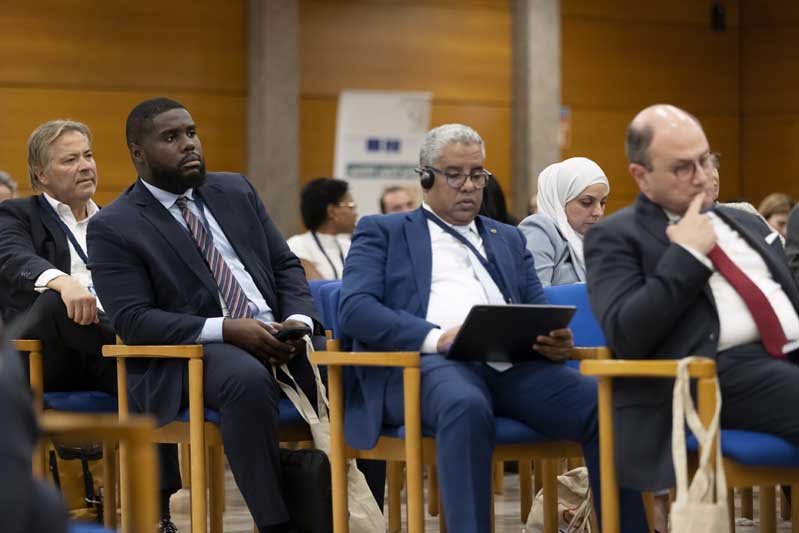
The Lisbon Forum contributed to addressing these challenges by providing a unique platform for intercultural and interregional dialogue, where diverse actors from across regions can share perspectives, build capacity, and develop actionable proposals. Through exchange of knowledge, innovative practices, and collaborative strategies, the Forum strengthens cross-regional cooperation and promote human rights-based governance of AI. By combining policy reflection with capacity-building, it helps equip societies to harness AI responsibly while safeguarding human rights, democracy, and the rule of law.
After the Forum, the adopted Declaration sets out shared principles and orientations to guide efforts toward a human-centred, ethical and inclusive approach to AI governance. It highlights the importance of international legal instruments and underscores the need for cross-regional cooperation to ensure representativity, accountability, and readiness in the digital age.
Tuesday 28 October
 9:00
9:00

- Nazim AHMAD, Representative of the Ismaili Imamat in Portugal
- Christopher CUTAJAR, Permanent Secretary for Foreign Affairs and Tourism at the Office of the Deputy Prime Minister of the Government of Malta
- Pilar MORALES, Executive Director of the North-South Centre of the Council of Europe
9:30

- Matthias KLOTH, Head of the Digital Governance and Sport Department, Council of Europe
- Hoda BARAKA, Advisor to Egypt's Minister of ICT for Technology Talent Development
- Waldemar GONÇALVES, President-Director of the National Data Protection Authority of Brazil (ANPD)
- Damian EKE, School of Computer Science, University of Nottingham, and African Brain Data Network & International Brain Initiative
- Vera OBONYO, Deputy Director, KSG, eLearning and Information Technology Institute (eLITI), Kenya (to be confirmed)
Moderator: Moritz TAYLOR, Senior Project Officer, Digital Governance and Sport Department, Council of Europe
11:30

Overcoming the challenges of implementation through AI literacy
This session will explore how human rights-based AI strategies can be effectively translated into practice, focusing on the role of AI literacy for policymakers, legal professionals, and citizens, among them the new generations.
While global and regional instruments such as the Council of Europe’s Framework Convention on AI and Human Rights, the EU AI Act, the African Union’s Continental AI strategy, or the forthcoming Arab AI Strategy, provide guiding principles, the real challenge lies in implementation.
Experts will build on how to bridge the gap between strategies and daily realities, ensuring that AI systems serve the public good, strengthen democracy, and protect vulnerable groups. The session will draw on diverse experiences from Africa, Europe, and the Arab region.
- Neema LUGANGIRA, Member of Parliament, Tanzania, Chair of African Parliamentary Network on Internet Governance (APNIG) and Secretary General of Women Political Leaders (WPL)
- Kenneth BRINCAT, CEO of the Malta Digital Innovation Authority (MDIA)
- Janice RICHARDSON, Director at Insight
- Mohamed BEN AMOR, General Director of the Arab ICT Organisation (AICTO)
Moderator: Tobias FLESSENKEMPER, Head of the Youth Department, Council of Europe
14:30

- Digital governance in the public sector: rights-based approach and good practices organised by the Digital Governance and Sport department of the Council of Europe
- AI and justice – fact and fiction organised by the European Commission for the Efficiency of Justice (CEPEJ)
- Virtual Borders: Human Rights Challenges in AI-Based Migration Management organised by the European Institute of the Mediterranean (IEMed)
16:30


This panel will examine how AI systems can either reinforce stereotypes and cultural bias or become tools for inclusion and mutual understanding. The discussion will highlight the perspectives of international organisations, intercultural dialogue centres, and diversity advocates on ensuring that AI systems reflect pluralism, strengthen social cohesion, and prevent new forms of digital exclusion.
Speakers
- Quico DOMINGO, Partner and CEO at Mortensen
- Ambassador António DE ALMEIDA RIBEIRO, Acting Secretary General of the International Dialogue Centre (KAICIID)
- Charlotte GILMARTIN, Co-Secretary of the Steering Committee on Anti-discrimination, Diversity and Inclusion (CDADI), Directorate General of Democracy and Human Dignity of the Council of Europe
- Henri MONCEAU, Permanent Representative, Digital Governance and AI, Organisation Internationale of la Francophonie (OIF)
- Rami ESKANDER, Director of the Department of Education at Arab League of Educational, Cultural and Scientific Organisation
Moderator: Rui TAVARES LANCEIRO, Assistant Professor at the Faculty of Law of the University of Lisbon
Wednesday 29 October
9:00-10:30
- Shaping an Ethical, Inclusive, and Fair AI Governance Framework for the Arab Region organised by the Arab ICT Organization (AICTO)
- The role of capacity building in the era of artificial intelligence and cybercrime organised by the Digital Governance and Sport department of the Council of Europe with the support of the GLACY-e project
- Inclusive and Multicultural AI: Perspectives from Global Dialogue organised by the Centres of the GPAI Expert Community
15:30

- Salwa HAMROUNI, Professor of Public Law, Faculty of Legal, Political and Social Sciences of Tunis, Honorary President of the Tunisian Association of Constitutional Law
- Vera Lúcia RAPOSO, Associate Professor with Aggregation and Vice Dean, NOVA School of Law – Faculdade de Direito da Universidade NOVA de Lisboa
16:45

- Alain BERSET, Secretary General of the Council of Europe
- Miguel Ángel MORATINOS, Under-Secretary-General of the United Nations and High Representative for the Alliance of Civilizations (UNAOC)
- Augustin KIBASSA MALIBA, Minister of Digital Economy of the Democratic Republic of Congo
- Inês DOMINGOS, Portuguese Secretary of State for European Affairs
- Ambassador Francesca CAMILLERI VETTIGER, Permanent Representative of Malta to the Council of Europe, President of the Ministers’ Deputies of the Council of Europe and President of the Executive Committee of the North-South Centre of the Council of Europe.
1. Digital governance in the public sector: rights-based approach and good practices
Digital Governance and Sport department of the Council of Europe
28 October, 14:30-16:00 |  EN, AR
This session will explore how public administrations can harness digital transformation while ensuring full respect for human rights, democracy and the rule of law. Speakers will share experiences on building transparency, accountability, and trust in the digital governance of public services, highlighting good practices from both national authorities and Council of Europe initiatives.
This workshop will introduce HUDERIA Methodology: a new Council of Europe tool that provides guidance and a structured approach to carry out risk and impact assessments for Artificial Intelligence (AI) systems which can be used by both public and private actors.
Experts
Moderator: Moritz TAYLOR, Senior Project Officer, Digital Governance and Sport Department, Council of Europe
Speakers
- Neil MICALLEF, AI Supervision Manager, Malta Digital Innovation Authority (MDIA)
- Albina OVCEARENCO, Secretary to the Committee on Artificial Intelligence (CAI), Council of Europe
- Kristian BARTHOLIN, Head of the Data Protection Unit, Council of Europe
- Elena YURKINA, Head of Unit, Transversal Challenges and Multilateral Projects Division, Council of Europe
- Luis ARANDA, Senior Economist/Policy Analyst, Artificial Intelligence and Emerging Digital Technologies Division, the Organisation for Economic Co-operation and Development (OECD)
2. AI and Justice – Fact and Fiction
Council of Europe’s European Commission for the Efficiency of Justice (CEPEJ)
28 October, 14:30-16:00 | EN, FR
This interactive workshop brings together key actors in the justice system to showcase how artificial intelligence is being integrated into their daily work. Through live demonstrations, real-world case studies, and a moderated discussion, participants will explore the opportunities, challenges, as well as legal and ethical considerations of AI in legal practice.
Live demonstrations of real tools by different judicial actors will be followed by a “hot chair” discussion with the co-moderators and the audience.
Experts
Co-moderators (members of the Rule of Law Youth Network):
- Nour Mohamed, Egypt
- Ikram Yassamine Mekidiche, Algeria
Speakers
Introduction
- Muriel DÉCOT, Secretary of the Council of Europe’s European Commission for the Efficiency of Justice
AI Interactive Chat for judicial services
- Juvenal PEREIRA, President of the Instituto de Modernização e Inovação da Justiça (IMIJ.IP), Cabo Verde
AI for legal research - AIMON
- Klaudia MACIEJEWSKA, lawyer, product manager and head of the Currenda Lab Research and Development Centre, Poland
Hyper-automation of payment procedures
- Javier PARRA, Government Secretary of the Superior Court of Justice of Murcia, Spain
3. Virtual Borders: Human Rights Challenges in AI-Based Migration Management
European Institute of the Mediterranean (IEMed)
28 October, 14:30-16:00 | EN
This workshop will address the intersection of migration governance, technology, and human rights in the Mediterranean. Three case studies will be presented by young experts from across the region examining (1) the integration of Artificial Intelligence tools in EU asylum procedures; (2) the use of digital and AI technologies to trace and identify missing migrants; (3) and technology-facilitated gender-based violence (TFGBV) against migrant women. Collectively, these contributions aim to shed light on the ethical, legal, and humanitarian challenges posed by technological transformations in migration management.
The workshop will consist of presentations of the three case studies, followed by an open debate. The session will be facilitated by a moderator. Speakers will present the main challenges identified in their respective fields of expertise and put forward recommendations. A rapporteur will gather the main takeaways of the session.
Experts
Moderator: Jusaima Moaid-azm PEREGRINA, Scholar and researcher at the University of Granada
Speakers
- Konstantina LIONTOU, Young Legal Professional specialising in European Union Law
- Nabil FERDAOUSSI, Doctoral Research Fellow at HUMA-Institute for Humanities in Africa and a PhD candidate in Social Anthropology at the University of Cape Town
- Martina CANESI, Postgraduate student in Diplomatic Studies at LUISS School of Government
Rapporteur: Yasmine FALFOUL, Communication Project Manager, ALDA- European Association for Local Democracy
4. Shaping an Ethical, Inclusive, and Fair AI Governance Framework for the Arab Region
Arab ICT Organization
29 October, 9:00-10:30 | EN, AR
This workshop will assess the current state of AI adoption and governance in the Arab region, and explore strategies for developing ethical, inclusive, and fair governance frameworks tailored to its specific context while drawing lessons from other parts of the world. To enrich this comparative perspective, international experts will be invited to share their experiences and insights. Bringing together policymakers, experts, and stakeholders, the workshop will address key questions of rights, representation, and readiness in the era of artificial intelligence.
Experts
Opening
- Mohamed BEN AMOR, Director General – Arab Information and Communication Technologies Organization
- Mohamed Saleh BEN AISSA, Assistant Secretary-General and Head of the League of Arab States Center in Tunisia
Moderator: AICTO
Keynote speech
- Hoda BARAKA, Advisor to the Minister, National AI Lead and Acting Director of the Egyptian Center for responsible AI - Ministry of Communications and Information Technology – Egypt
Panelists
- Abdul Baset Salem AL-BAOUR, Chairman of the Authority General Authority for Information – Libya (TBC)
- Pierre EL KHOURY, Director of the Beirut Bar Institute - Council of Europe expert - Lebanon
- Tawfiq Abu BAKER, Director of the Personal Data Protection Directorate - Ministry of Digital Economy and Entrepreneurship - Jordan
- Mohamed JEMNI, Director of ICT Department - Arab League Educational, Cultural and Scientific Organization (ALECSO)
Rapporteur
- Nada Laabidi
5. The role of capacity building in the era of artificial intelligence and cybercrime
Digital Governance and Sport department of the Council of Europe with the support of the GLACY-e project
29 October, 9:00-10:30 |
The session will explore initiatives helping criminal justice systems adapt to AI-enhanced cyber threats without compromising fundamental rights and synergies arising from aligning the Framework Convention and AI and the Budapest Convention in capacity-building strategies.
Experts
Moderator: Javier GOMEZ PRIETO, Programme Manager Cybercrime Programme Office (C-PROC) of The Council of Europe
Speakers
- Maria Vidal BENEYTO, Senior Prosecutor, specialised in cybercrime and hate crime, Public Ministry Spain
- Daniel Alves MONTEIRO, Director General | Financial Intelligence Unit, Cabo Verde, member of T-CY AI working group on AI
- Nadine Shawi, Senior legal advisor, Ministry of Technology and AI, Lebanon
- Thomas LAMPERT, Chair of data science and artificial intelligence, University of Strasbourg
- Albina OVCEARENCO, Secretaire Framework Convention on Artificial Intelligence of the Council of Europe

6. Inclusive and Multicultural AI: Perspectives from Global Dialogue
Network of Centres (NoC) of the GPAI Expert Community
29 October, 9:00-10:30 | EN
The session aims to explore how multilingual and multicultural AI ecosystems, as well as inclusive approaches to AI development, can strengthen cooperation between Europe and the Global South. The discussion builds on the outputs of the GPAI Tokyo Innovation Workshop (May 2025) and contributes to the upcoming India AI Impact Summit 2026, under its “Social Good” track.
Experts
Opening remarks/moderation
- Yuko HARAYAMA, Secretary General of the Global Partnership on AI (GPAI) Tokyo Expert Support Center
- Sophie FALLAHA Executive Director at CEIMIA
- Aurélie SIMRAD, Executive Director Paris Center of Expertise for International Cooperation on AI (INRIA)
Discussants
- Basheerhamad SHADRACH, Director, Commonwealth Educational Media Centre for Asia (CEMCA)
- Fabio PORTO, Senior researcher at the National Laboratory of Scientific Computing (LNCC), Brazil
- Elena Yurkina, Head of Unit, transversal Challenges and Multilateral Projects Division, Council of Europe
Concluding reflections
- Yuko HARAYAMA, with reference to India AI Impact Summit 2026


 Part of the policy programme of the Maltese Presidency of the Committee of Ministers of the Council of Europe.
 Organised in close collaboration with the Council of Europe’s Digital Governance and Sport department.
 Organised back-to-back with the final meeting of the Steering Committee of the South Programme V.
 Registered as Pre-event of the India Global Impact Summit
Since 1994, the Lisbon Forum of the North-South Centre of the Council of Europe has been a flagship event providing a platform for interregional exchange among representatives of governments, parliaments, regional and local authorities, and civil society — the quadrilogue — to discuss the global role of the Council of Europe in the areas of human rights, democracy, and the rule of law. In line with the mandate of the North-South Centre of the Council of Europe, the Forum maintains a global focus, with particular attention to the Southern Mediterranean region and Africa.
 |
|
 |
 |
 |
.jpg/48299279-d259-2ec7-85d4-cdacac6117a0?version=1.0)
.jpg/19865288-9d58-154e-502c-1376764db8e3?version=1.0)
.jpg/138e7835-f6c6-008e-31cf-5fffe7a0d01c?version=1.0)
.jpg/be3acd1b-c844-abbb-7c60-0f45a0bcc188?version=1.0)
.jpg/c2bb4892-614a-5de1-05a7-484202e40f7a?version=1.0)
.jpg/1dc84316-c660-3916-d320-4deee4838353?version=1.0)
.jpg/84746548-d7ec-32fe-f998-7416983a7040?version=1.0)
.jpg/baaf87f1-c8cd-972c-b403-fba640529d87?version=1.0)
.jpg/2ca2d5ec-77e9-cb88-de4c-e12d26814f09?version=1.0)
.jpg/e662a38a-051a-b343-b67e-514a84005ae9?version=1.0)
.jpg/cdd4313d-6d91-34a1-1952-882656132a80?version=1.0)
.jpg/f831d52c-6c92-f8e2-561a-0e0ba9b212d3?version=1.0)

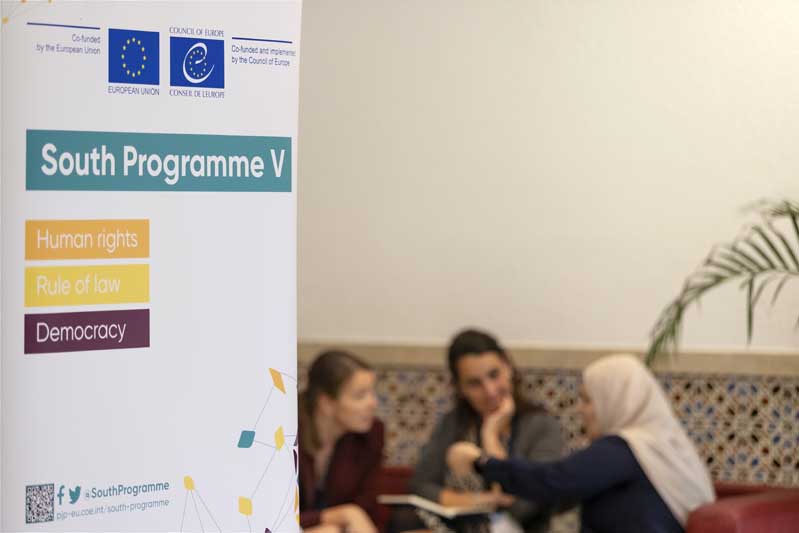
This edition is organised by the North-South Centre of the Council of Europe and part of the joint programme between the European Union and the Council of Europe "Protecting human rights, rule of law and democracy through shared standards in the Southern Mediterranean" (South Programme V), co-financed by both organisations.