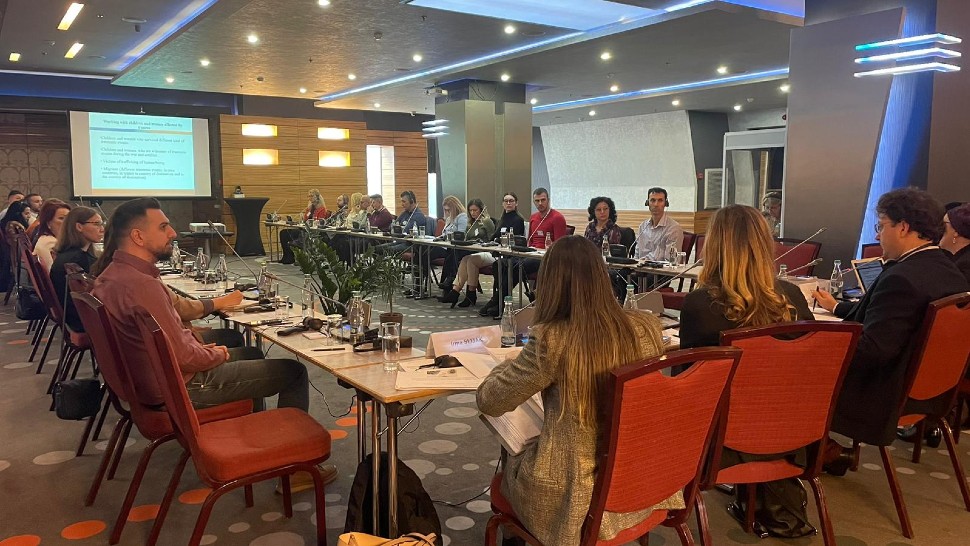
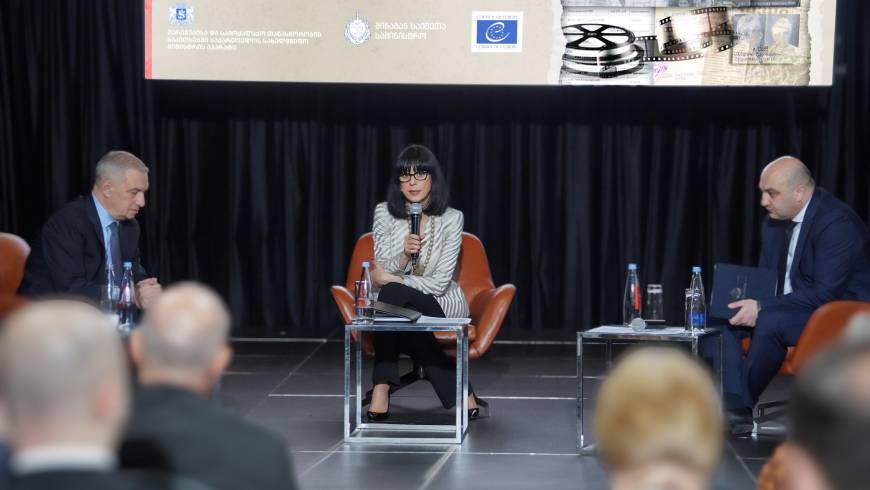
The armed conflict of the early 90s and the resulting separation of the Transnistria region from the rest of the Republic of Moldova had serious negative consequences on the effective exercise of human rights by the population on both sides of the river Nistru/Dniestr. In addition, the twenty year separation adversely affected contacts and exchanges between the population on both sides and hence the level of mutual knowledge, trust and co-operation. The overall objective of the programme is to establish a dialogue between different components of the population on both sides of the river Nistru/Dniestr, namely professional groups, decision-makers or pressure groups and to increase awareness of European and international standards in the region.
Since 2008, the Council of Europe has been implementing a series of CBM's between the two sides of the river Nistru/Dniestr in the areas of media, education and civil society. The programme relies on a strong partnership with governmental institutions in Chisinau, as well as the de facto authorities in Tiraspol, and local NGOs, identified because of their specific experience and their previous co-operation record with the CoE. Equality, transparency and dialogue are the three principles on which the implementation of CBM's is based.
The main target groups are professionals from both sides of the river Nistru/Dniestr, civil society (especially small local NGOs active in the social field), local authorities and human rights institutions. The ultimate beneficiary is the entire population of Moldova.
The negative consequences for the human rights of the population living in Abkhaziaand South Ossetiaof the 2008 conflict has been a main concern of the Committee of Ministers of the Council of Europe who instructed the Secretary General to submit a report every six months on these issues, including proposals for CBM's.
CBMs between Sukhumi, Tskhinvali and Tbilisi thus began in 2010 with the double aim of enhancing dialogue, on the one hand, and awareness of, as well as respect for, human rights standards in the region, on the other hand. The first actors involved in the COE activities were the medias.
Council of Europe CBMs programme is based on equal participation from both locations both as far as the number of participants and their involvement in the programme are concerned. Civil society is involved as much as possible in the events because of its role as multiplier and feedback channel on the impact of the projects.
The themes of the first activities were about the “journalists on the balanced coverage of politically sensitive events” and about the “role of media in building a democratic society in post-conflict regions”.
The scope of the CBMs gradually expanded to cover other priority areas, notably education, architectural heritage, fighting violence against women, drugs prevention and treatment, historical archives material.
A dialogue between the ombudsman institutions and civil society in Tbilisi and Sukhumi on human rights issues started in 2014 to address issues like right to heath care, to free movement and human rights awareness raising.
In the framework of its Confidence-Building Programme, the Council of Europe facilitates the dialogue between Armenia and Azerbaijan, with a view to building confidence and promoting reconciliation.
In this context, it organised a first exploratory meeting on “Confidence-building measures to restore dialogue between civil societies of Armenia and Azerbaijan”.
The meeting took place in Venice from 16 - 18 May 2022. It gathered Armenian and Azerbaijani participants from civil society, media professionals and educators, and experts from other member States.
The participants agreed to continue this dialogue and to work together on possible joint activities, with the support of the Secretariat.
In 1995 the Dayton Peace Agreement established an inter-entity line dividing some of the municipalities in Bosnia and Herzegovina in two, and in some cases in four new municipalities. The boundary line did not divide only the territory of the municipalities but also common infrastructure and the legal system, which is, in most cases, different in Republika Srpska and the Federation of Bosnia and Herzegovina. The boundary line was an ex front line between the military formations and a place where tragic suffering occurred.
The Council of Europe confidence building measures (CBMs) aim at enhancing inter-municipal co-operation across this entity boundary line with a view to support reconciliation and overall democratisation efforts. Previous CBMs initiatives served as a framework for enhancing inter-municipal co-operation and improve basic knowledge and skills in joint project management, and facilitated under a small grants scheme the implementation of practical inter-municipal projects across the entity line.
24 pairs of divided municipalities have benefited from this small grant scheme and have carried out joint project proposals of common interest to their population with the aim of fostering reconciliation and enhancing inter-municipal co-operation. The projects covered a wide range of areas such as co-operation between municipalities on education and common cultural activities for children from different ethnic backgrounds, co-operation on protecting cultural heritage, small joint agricultural projects, and joint training for voluntary firemen for civil protection. Support for young people as agents of reconciliation through extensive youth-led consultations resulted in the development of a common youth policy with the involvement of young people and the establishment of a youth association in the municipalities.
Cooperation between women mayors has resulted in the signing of a cooperation agreement among the seven municipalities concerned with a view to practical cooperation notably on infrastructures and the encouragement of women participation in public and political life.
Many European countries are affected by the conflict, notably because of the influx of refugees, following the conflict in Ukraine. Hundreds of thousands of persons have been arriving on the territory of many Council of Europe member States since 24 February 2022.
The experience of displacement due to an armed conflict put significant psychological and social stress on individuals, families, and communities. Support is needed to facilitate access to quality services and psychological counselling. At the same time, support services are inevitably over-stretched, professionals require additional support, training, and skill development to provide for the needs of traumatised refugees. It is very useful for professionals now receiving Ukrainian refugees to liaise with international professional networks as well as Ukrainian professionals already trained after the 2014 occupation of Crimea and Eastern provinces.
The Council of Europe organised a training on “Psychological Support to Refugees: Strengthening Professional Capacities” in Chisinau, Republic of Moldova, on 15 – 16 June 2022. It gathered NGOs and professionals actively engaged into psychosocial support to Ukrainian refugees in the Republic of Moldova since 24 February 2014.
This was the first seminar of a continued series of trainings in several Council of Europe member States that will address different aspects of psycho-social support. The aim would be to enhance the capacities of relevant professionals working on the ground.





 +33 (0)390 21 43 36 / +33 (0)388 41 28 67