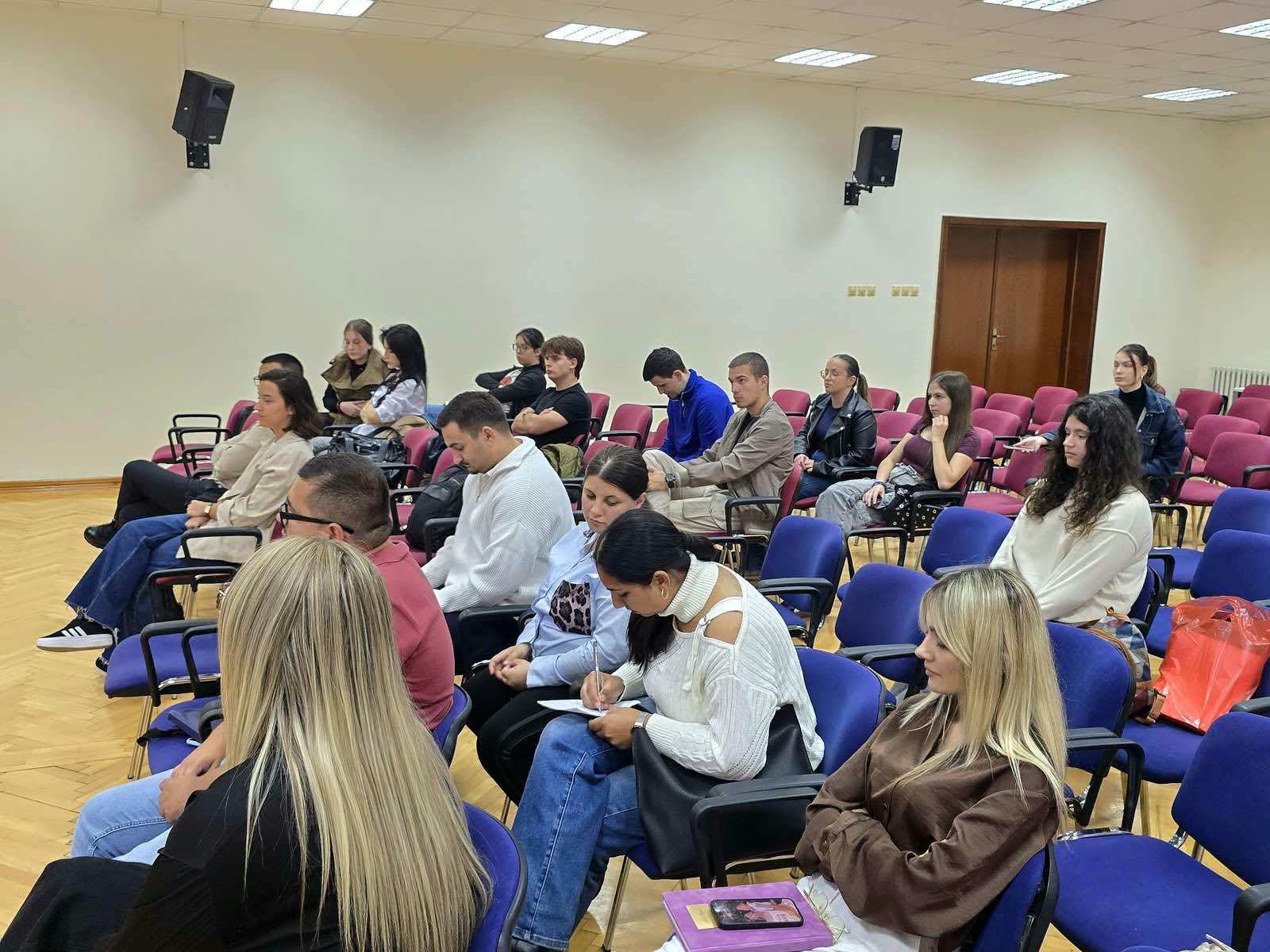
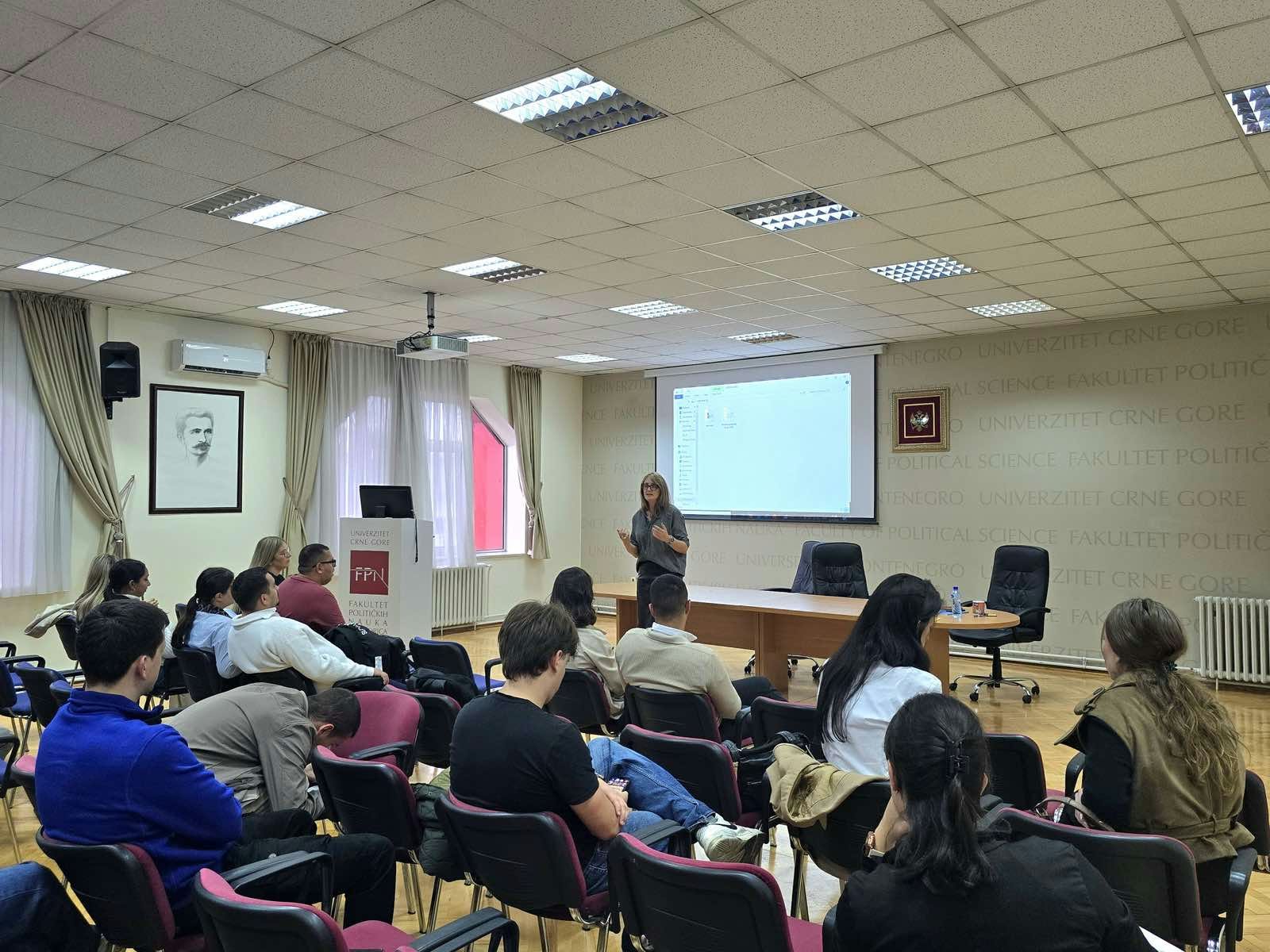
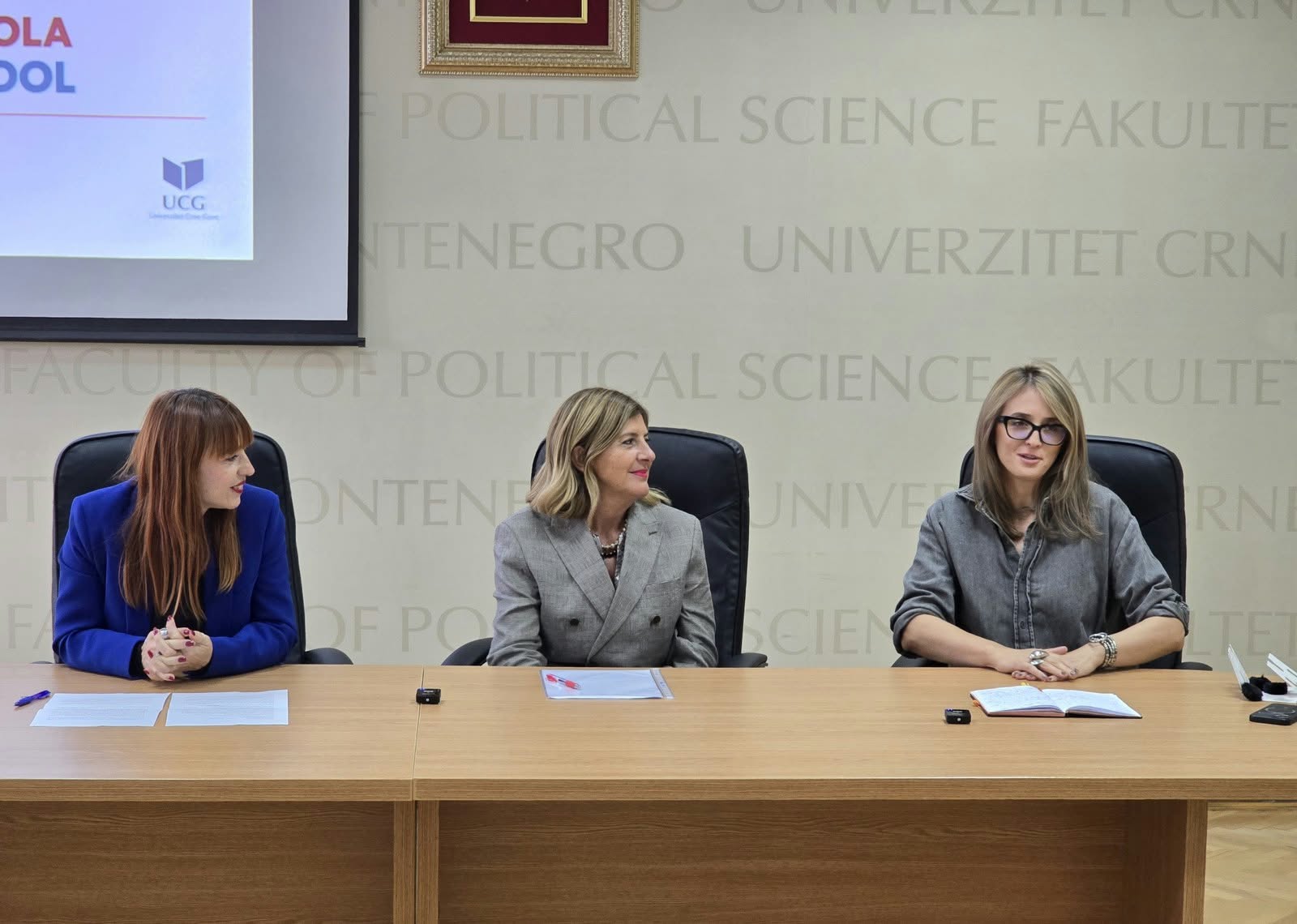
The second generation of participants of the Roma Political School has officially begun its programme at the University of Montenegro's Faculty of Political Sciences, bringing together university students, members of Roma communities, and representatives of public institutions for a unique educational initiative aimed at strengthening democratic participation, inclusion and political engagement.
Organised by the Faculty of Political Sciences with the support of the Council of Europe, the School forms part of the Council of Europe's New Democratic Pact for Europe initiative and contributes directly to the objectives of the Council of Europe Strategy for Roma and Traveller Inclusion (2026-2030), particularly by promoting democratic participation, combating antigypsyism and strengthening the capacity of Roma communities to engage in public and political life.
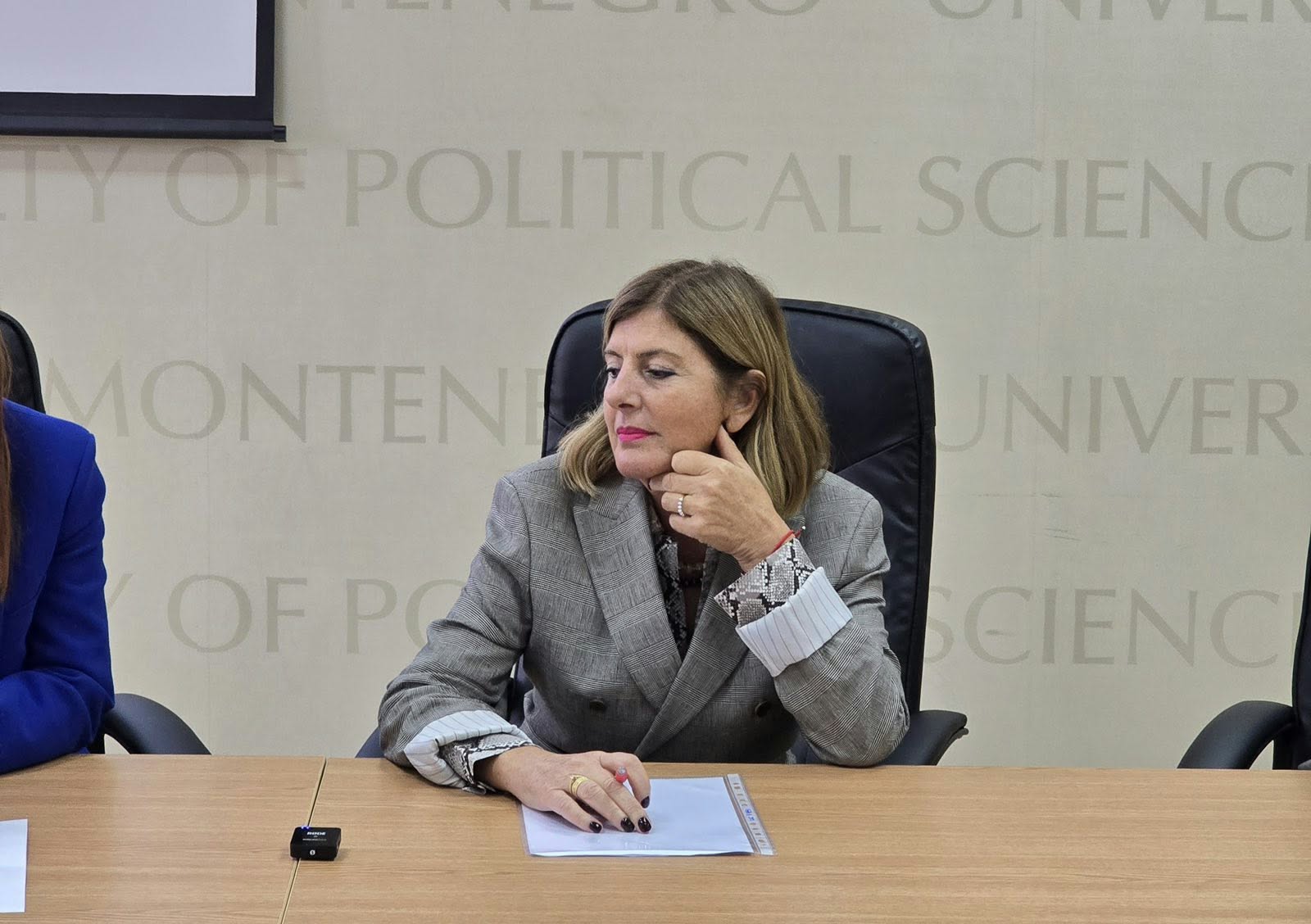
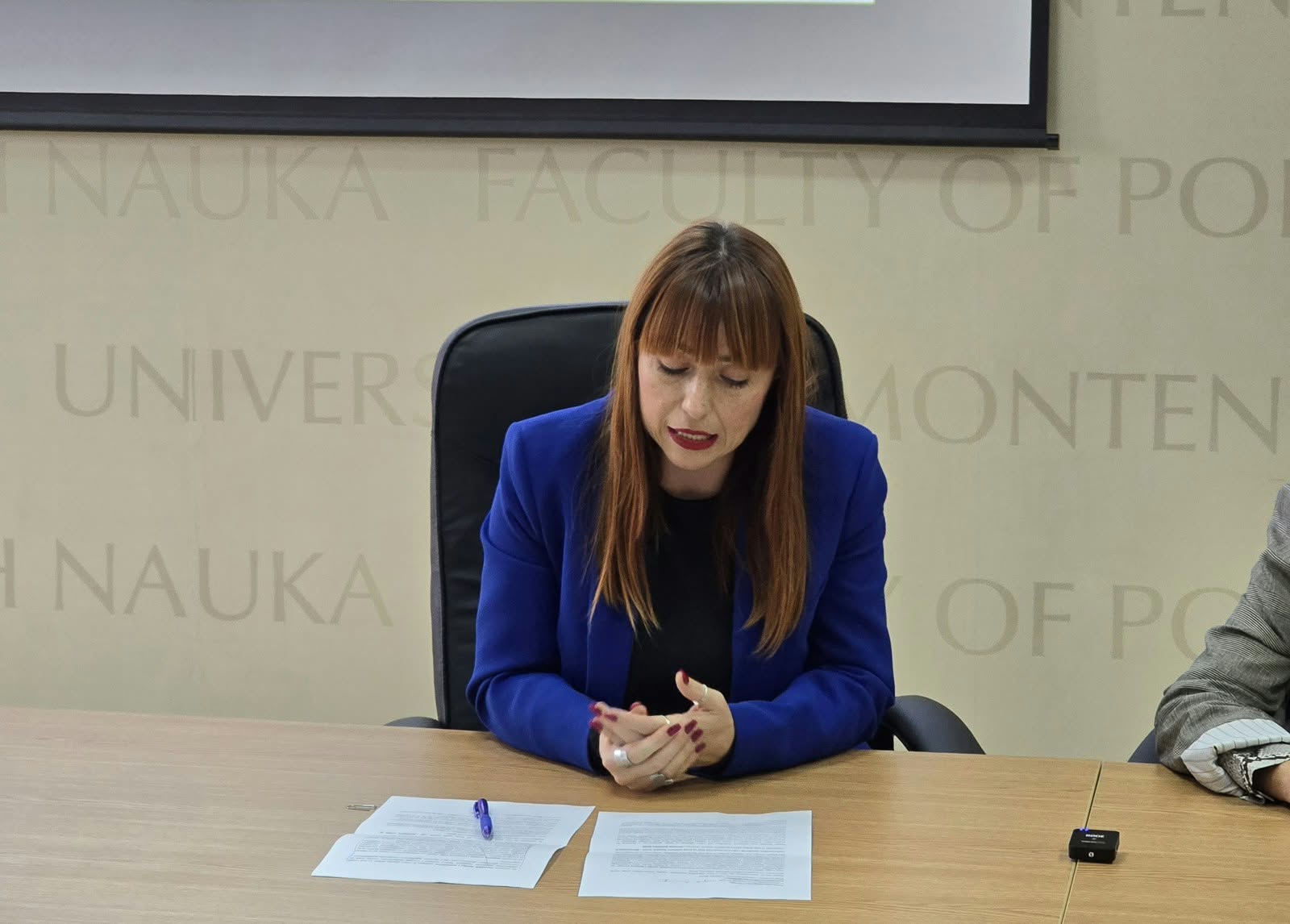
The opening session was addressed by Lejla Dervišagić, Head of the Council of Europe Programme Office in Podgorica, Ena Grbović, Vice-Dean for International Cooperation of the Faculty of Political Science, and Danijela Vuković-Ćalasan, Coordinator of the School. The programme will run until December 2026 and combines lectures, discussions, research and essay writing activities. According to the organisers, the school seeks both to increase understanding of the challenges faced by Roma and Egyptian communities in Montenegro and to empower Roma participants to engage more actively in democratic and political processes.

Building knowledge and participation
The Roma Political School is the first programme of its kind in Montenegro. It was first launched in 2025 in response to the limited presence of Roma history, culture and contemporary challenges in educational curricula and the need to equip future decision-makers with a deeper understanding of the barriers faced by Europe's largest ethnic minority.
While the first edition primarily targeted university students, this year's School broadens participation by bringing together students, members of Roma communities and institutional representatives. This approach reflects the conviction that meaningful inclusion requires both informed policy-making and stronger community participation.
Curriculum focused on democracy, equality and inclusion
Structured around the three pillars of the New Democratic Pact for Europe, the curriculum addresses current social, political and human rights issues affecting Roma communities in Montenegro and across Europe.
Learning and Practising Democracy
- Media literacy, algorithms and the Roma community in times of technological change;
- Learning and practising democracy: challenges and new opportunities for Roma communities;
- Democratic participation from the perspective of Roma communities.
Protecting Democracy
- Labour rights, employment and the rule of law from the perspective of Roma communities;
- Social justice, poverty and social exclusion;
- Anti-Roma racism, multiple and intersectional discrimination, and equality in Montenegro.
Innovating for Democracy
- Roma in Europe in the context of new threats and opportunities;
- A public discussion on emerging challenges and innovative approaches to participation, education and democratic engagement.
The programme also explores the historical development of Roma communities in Montenegro, political participation, social policies, media representation and the fight against antigypsyism. At the end of the school, participants will prepare analytical essays on topics relevant to Roma inclusion and participation. The authors of the strongest contributions will receive further opportunities for engagement, including participation in international Council of Europe events.
Advancing the Council of Europe Strategy for Roma and Traveller Inclusion
The Roma Political School contributes to the implementation of the Council of Europe Strategy for Roma and Traveller Inclusion (2026-2030) by fostering democratic citizenship, increasing awareness among future public leaders, strengthening Roma participation in decision-making processes and challenging persistent prejudice and discrimination.
By creating a space where Roma community members, students and institutional actors learn together and exchange perspectives, the school helps build the knowledge, skills and networks necessary for more inclusive public policies and stronger democratic participation. It also supports one of the Strategy's overarching objectives: ensuring that Roma and Travellers can participate fully, equally and meaningfully in democratic life.
As Montenegro continues efforts to promote equality and social inclusion, initiatives such as the Roma Political School demonstrate how education, dialogue and civic participation can contribute to lasting change and to the implementation of Council of Europe standards and commitments in the field of Roma and Traveller inclusion.
 Announcement from the Faculty of Political Sciences (available in Montenegrin)