This Convention does not allow for discrimination or persecution on grounds of sexual orientation or gender identity. All 47 member states ratified the Convention.
The protection of the human rights of LGBT persons under the European Convention on Human Rights derives first of all from Article 14, which prohibits any form of discrimination in the exercise of the rights and freedoms guaranteed by the Convention.
The European Court of Human Rights (ECHR) is a supra-national court established by the European Convention on Human Rights and hears complaints that concerning contracting state that have violated the human rights enshrined in the Convention and its protocols. Complaints can be brought by individuals or other contracting states, and the Court can also issue advisory opinions. The ECHR jurisprudence allows an evolutive, dynamic interpretation of the provisions of the Convention and keeps it in line with present-day conditions. The case-law of the ECHR has been essential in combating discrimination on grounds of sexual orientation and gender identity, regularly recognising violations of the various articles of the Convention insofar as the human rights of LGBT persons were at stake.
This Convention is the first legally binding international agreement ever which includes protection for lesbian, bisexual and transgender (LBT) women The non-discrimination article of the Convention protects these women without discrimination and covers the grounds of sexual orientation and gender identity, recognising that LBT women are particularly vulnerable to violence, due to multiple discrimination, and require specific measures of protection.
The European Social Charter, the natural complement to the European Convention on Human Rights , guarantees social and economic human rights. It was adopted in 1961 and revised in 1996. The 1996 revised European Social Charter, which came into force in 1999, is gradually replacing the initial treaty. The rights guaranteed by the Charter concern all individuals in their daily lives: housing, health, education, employment, legal and social protection, free movement of persons and non-discrimination.
The European Committee of Social Rights, which is the supervisory mechanism guaranteeing respect by the States Parties. addressed the issue in its Conclusions 2008 under Article 1§2 of the Charter.
There is a general ban of discrimination, including on the ground of sexual orientation. In these conclusions the Committee asked States parties to indicate in the next report whether discrimination on the ground of sexual orientation is prohibited and how. In several occasions, the Committee went a bit further when it had specific information. The Committee will examine the issue again in its Conclusions 2012 which are currently under study (to be adopted in December 2012 and be made public in January 2013 at the latest).
The European Committee of Social Rights considered the LGBT issue in one decision on the merits in a collective complaint procedure (International Centre for the Legal Protection of Human Rights (INTERIGHTS) v. Croatia, Complaint No. 45/2007, decision on the merits of 30 March 2009. The case dealt with discriminatory statements in educational material (on health education) where sexual orientation was presented in a negative, distorted manner.
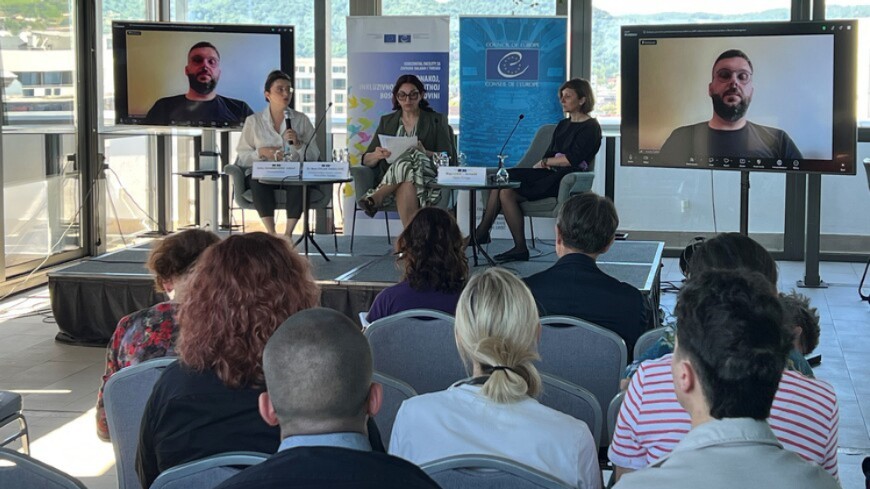
The launching of the "Action Plan of Measures for non-discrimination on the basis of sexual orientation and gender identity" took place in Tirana, organized by the Albanian government, as part of the LGBT Project.
The Seminar on Police Training relating to LGBT issues, organized by the LGBT Project, took place in Budva and brought together the six partner countries of the Council of Europe LGBT Project: Council of Europe country coordinators, a representative from each Ministry of Interior, Heads of Police Training and relevant NGOs.
The start-up conference of the Council of Europe LGBT Project in Serbia took place in Belgrade and gathered national stakeholders working in the field of LGBT issues.