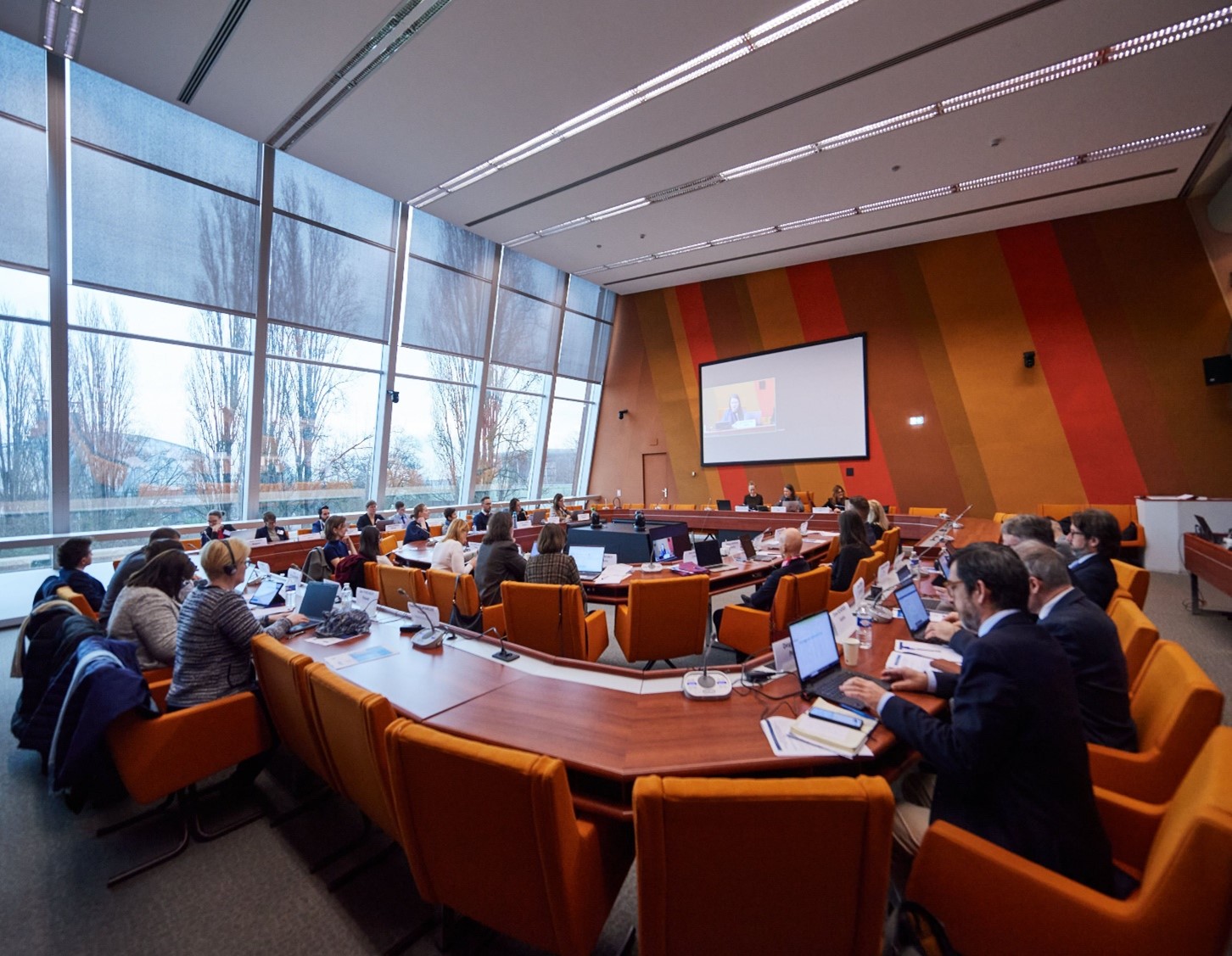
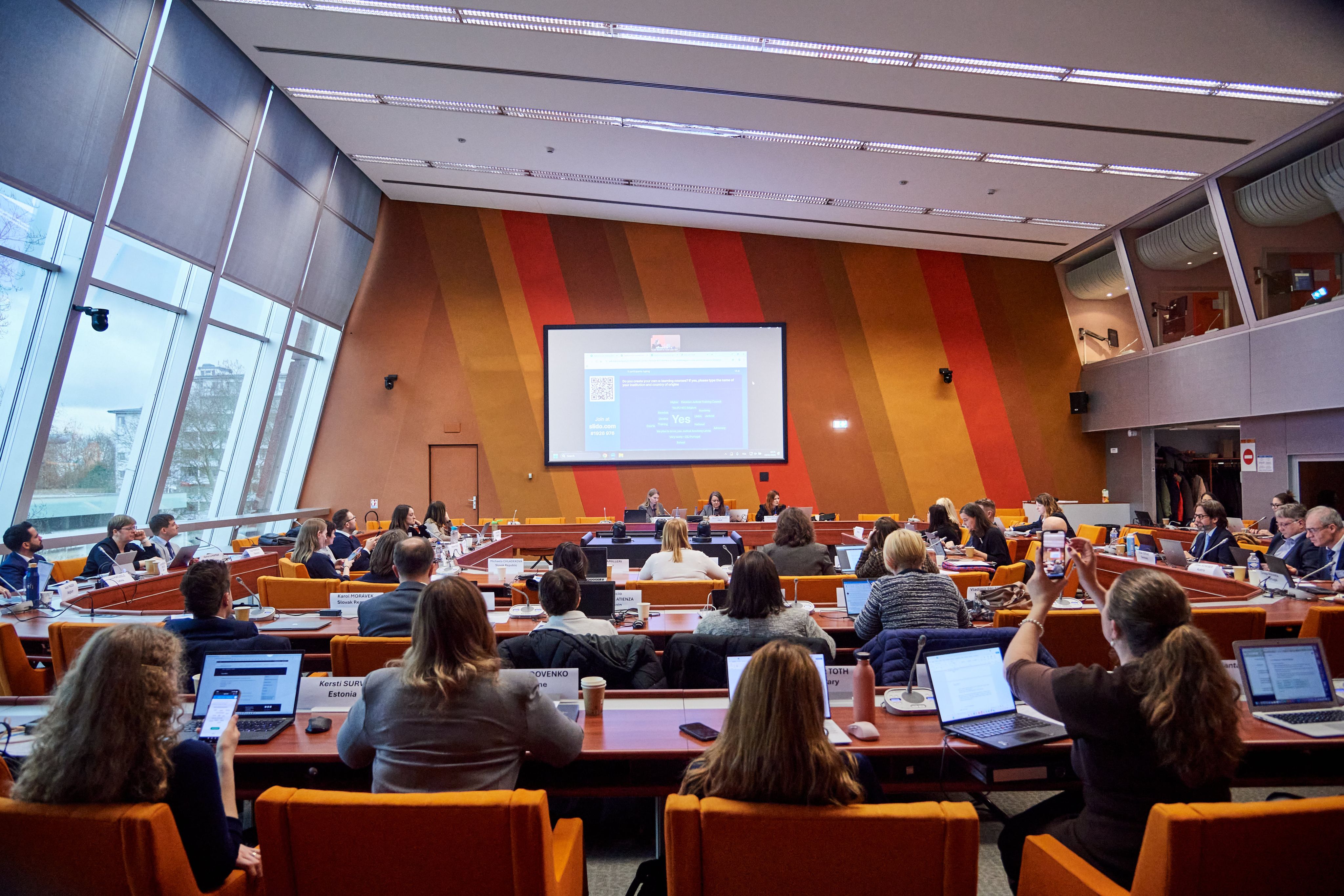
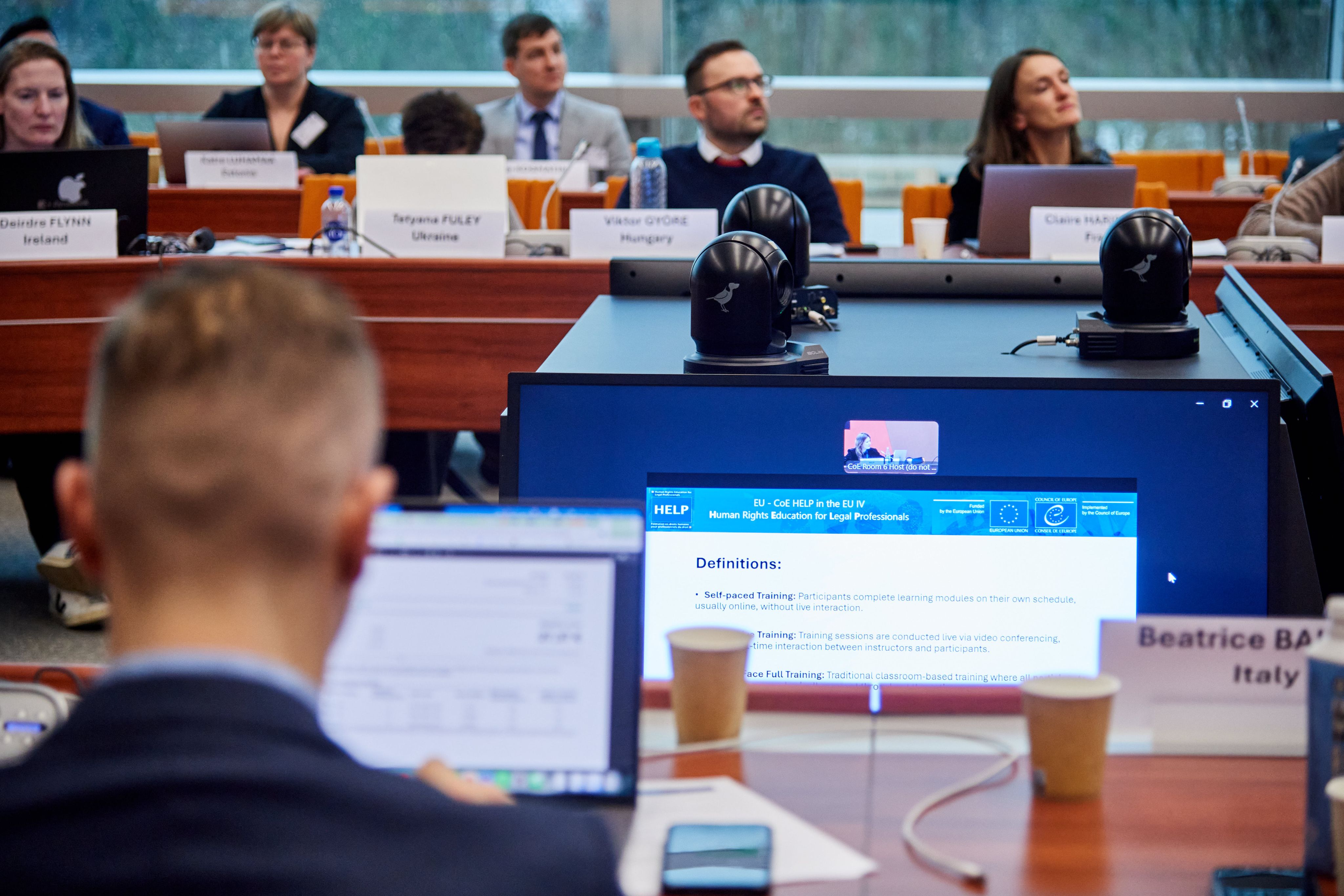
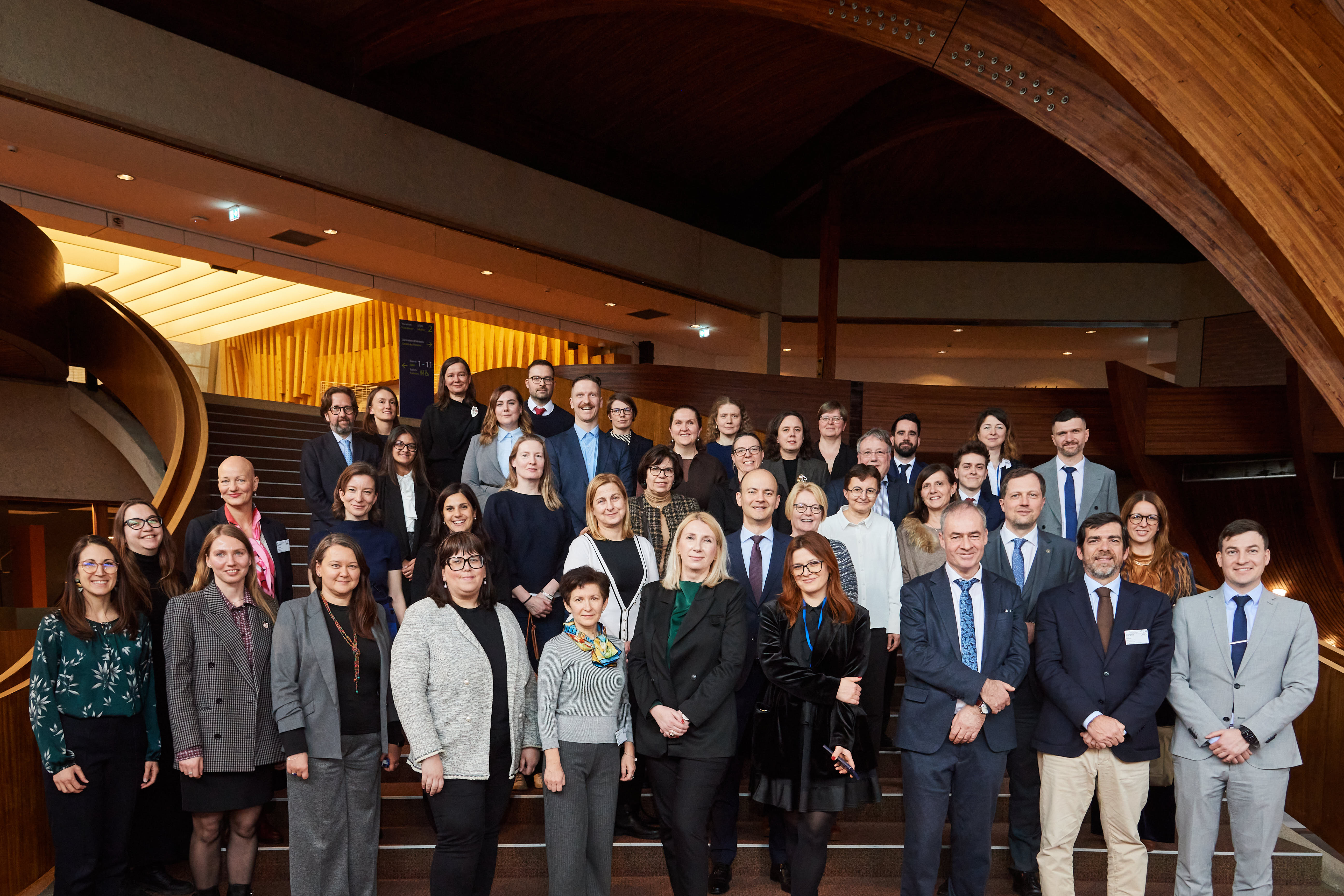
On 19–20 February 2026, approximately 50 distinguished representatives from national legal training institutions for judges, prosecutors, and lawyers convened both in Strasbourg and online to participate in the biennial HELP EU Contact Points Seminar. This high-profile event was organised within the framework of the EU-CoE “HELP in the EU IV” Project, with generous support from the European Union. The seminar gathered HELP Focal and Info Points along with key institutional partners, including the European Judicial Training Network (EJTN) and the Council of Bars and Law Societies of Europe (CCBE). Its principal aim was to foster high-quality human rights education for legal professionals and to further accelerate the digital transformation of justice training across the EU.
At the core of this initiative lies the HELP (Human Rights Education for Legal Professionals) Programme, implemented by the Council of Europe. Since its inception, the HELP Programme has played an essential role in equipping justice professionals with comprehensive training in European human rights law and digital literacy. The programme stands on three foundational pillars: a robust network of training institutions, a suite of free online courses, and an innovative, practice-oriented training methodology. Together, these elements facilitate the consistent and effective implementation of the European Convention on Human Rights, the European Social Charter, and EU legal standards at the national level.
This year’s seminar spotlighted the digitalisation of justice systems, the development and delivery of innovative e-learning, and the growing importance of digital literacy for legal professionals. It provided the HELP Network from the EU and acceding countries the possibility to connect, exchange best practices, and develop strategies for enhanced collaborative learning and professional dialogue.
The official welcome address was delivered by Dora Schaffrin, Legal Adviser of the Delegation of the European Union to the Council of Europe, alongside Ana-Maria Telbis, Head of the HELP Programme at the Council of Europe, who jointly emphasised the centrality of digital transformation in modern human rights training across Europe and the commitment of the institutions they represent to fostering it.
The seminar commenced with an overview of recent advancements within the HELP Programme, underscoring both ongoing efforts and initiatives aimed at strengthening the capacity of legal professionals to apply European human rights standards in their daily practice. An interactive warm-up session provided participants with the opportunity to share recent experiences and set the tone for an open and constructive dialogue.
Wojciech Postulski, of the DG Justice and Consumers at the European Commission, delivered valuable insights into the EU Judicial Training Strategy 2025–2030, highlighting the interplay between strategic policy priorities and practical training requirements. This was followed by a presentation from Szymon Janczarek of the Department for the Execution of Judgments of the European Court of Human Rights, who discussed how national training plans can be tailored to support the effective execution of Strasbourg Court judgments.
Alice Hamilton, Project Manager at the EU Agency for Fundamental Rights (FRA), outlined FRA’s work in supporting the digitalisation of justice and ensuring the protection of fundamental rights in this context. She discussed key findings from a recently published FRA report, “Digitalising Justice: A Fundamental Rights-Based Approach”.
Renis Zaganjori, from the Directorate of the Jurisconsult at the European Court of Human Rights, focused on adapting judicial training curricula in response to evolving Strasbourg case law, particularly through the use of online tools and resources, such as the ECHR Knowledge Sharing platform (ECHR-KS). Building on this theme, a session moderated by Krystyna Khokhlova and Ana-Maria Telbis of the HELP Programme delved into innovative methodologies and digital strategies for the development and delivery of e-learning courses tailored to legal professionals.
The agenda also included a comparative exploration of online, hybrid, and in-person training methodologies, as well as a forward-looking session on planning training activities for the future, including for 2026-2027. These sessions were moderated by Oana Girlescu, EU-CoE HELP in the EU IV Project Manager, and Ana Maria Telbis, who focused on adapting teaching methods to the realities of a digital age, addressing the contemporary realities and future challenges of legal education in an increasingly digital environment.
Oana Girlescu also provided an overview of new and updated HELP courses now accessible to legal professionals across Europe, illustrating the programme’s ongoing commitment to innovation and adaptability in response to emerging needs. She also highlighted the achievements attained under the EU-CoE “HELP in the EU IV” Project, demonstrating its significant contributions to enhancing digital training infrastructure for justice professionals.
As legal systems across Europe continue to evolve in response to rapid technological developments, the HELP EU Contact Points Seminar reaffirms the European Union’s and Council of Europe’s unwavering commitment to promoting justice, upholding human rights, and fostering greater collaboration and innovation among those at the forefront of legal education and practice. The HELP Network will continue its efforts to advance these priorities, drawing on the ongoing support and resources of the HELP Programme to equip legal professionals with the skills and knowledge needed to meet the challenges of the digital age.