


 Impact and success stories
In her dark clothing, Fatime* sits quietly, seemingly uninterested in any conversation, waits impatiently to meet her Probation Officer in Tirana. Every three months, she is required to report and discuss her progress with the probation authorities. She is one of the nine women who returned in October 2024 after years in Syria, where she was caught in a conflict far from her homeland, having survived unimaginable hardship. Now, as a mother, daughter, and convicted violent extremist offender (VEO), Fatime faces the daunting challenge of reintegration under the supervision of the Albanian Probation Service. Her return, along with eight other women, marks a milestone for Albania’s justice system. For years, women like her were seen only as victims, requiring psychological care and support instead of criminal justice intervention. However, with legal definitions now evolved and clarified, Fatime was sentenced to probation — a community sanction and measure, which includes also assistance aiming at the social inclusion of offender.
The decision to convict VEOs to probation regime is a progressive and humane approach to justice and community reintegration. Recognising that effective rehabilitation and reintegration require more than incarceration, Albanian authorities, with support from the European Union and Council of Europe, have pioneered developing proper tools and programmes to support the VEOs in their rehabilitation and effective reintegration.
Roland Sulika, probation officer from Mat, is among those who have participated in specialised capacity-building activities on managing and rehabilitating VEOs, in the framework of the EU and Council of Europe joint action “Enhancing co-operation in the Western Balkans in managing violent extremism in prisons and preventing further radicalisation after release”. He emphasises the significance of equipping probation staff with advanced tools for assessing potential signs of radicalisation and tailoring individual intervention programmes. Roland notes that these instruments are crucial in evaluating the unique needs and factors involved in each individual’s rehabilitation and integration. “One tool that stood out is the Individual Treatment Plan. It adds depth to our approach, ensuring interventions are not only reactive but also proactive and comprehensive,” he explains. For Roland, the training was transformative, enhancing both his technical knowledge and his professional confidence.
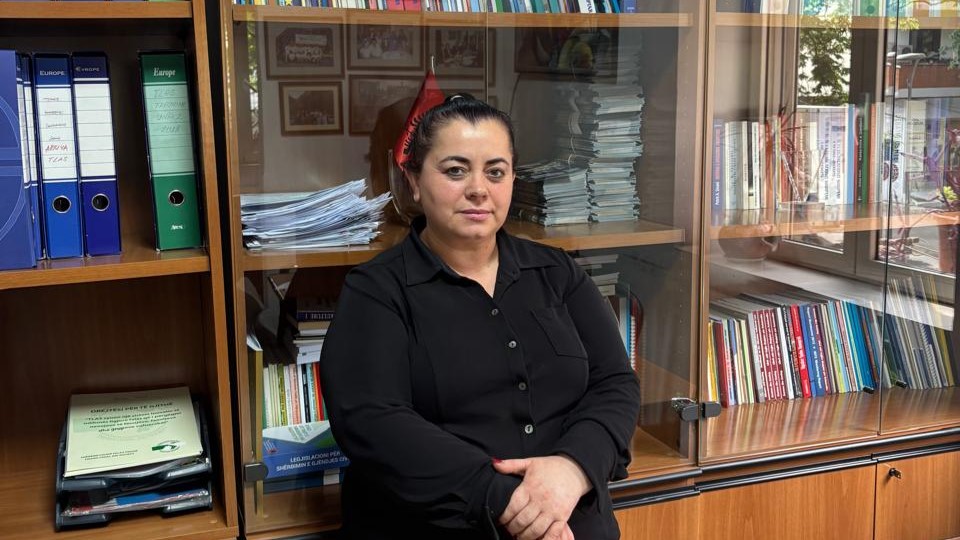
The trainer Julinda Manja, probation inspector from Tirana and one of the first officers to initiate the current training programme, underscores the importance of distinguishing between women VEOs in probation and those in prison settings. “Initially, this reintegration approach was connected only to the prison system, but we advocated for its development within the Probation Service, recognising the unique dynamics, especially for women returning from Syria,” she explains. With support from the Council of Europe, the Albanian Probation Service has developed and successfully piloted new tools tailored for this category of offenders. “Since the gradual introduction of these instruments, their openness and cooperation have grown remarkably. At first, there was scepticism and distance, but today, our communication with them is much easier,” admits Julinda.
Interventions are now expanding, focusing not only on the returned women but also on their families, who may be at risk. We learn that in some municipalities, such as Mat, a working group of diverse stakeholders, led by the local prefect, meets quarterly to review the management of VEOs, assess related risks, and address new cases. These sessions highlight a key lesson that effective reintegration relies on collaboration of various actors and the use of the right tools and methodologies adapted to the specifics of institutions.
While capacity-building activities continue, the Council of Europe’s tools and methodologies, adapted for Albanian probation, are ensuring a gradual and supported reintegration of VEO-s back into society. For, Fatime and others like her, this approach means being recognised not just as former offenders, but as individuals deserving dignity and assistance on their path back to community life.
*Name changed to protect identity of the subject .



 Skanderbeg Square,
 +355 4 45 40 201