Council of Europe’s Confidence Building Measures (CBMs) are designed and implemented by the Organisation and conducted in line with the relevant decisions of the Committee of Ministers. They constitute the operational support to the dialogue the international community strives to facilitate or restore between people from post- or frozen conflict areas. To do so, the CBM projects rely on the defence of human rights and democracy.

LATEST EVENTS

Back Implementation of projects in divided municipalities in BiH in 2022

Reconciliation through inter-municipality cooperation in BiH
Implementation of projects in divided municipalities in BiH in 2022

In the framework of the project on reconciliation through inter-municipality cooperation in BiH, a series of 11 projects has been launched. The projects shall be implemented in divided municipalities in BiH from February to September 2022. All projects involve two divided municipalities.  

The 11 projects, listed below, are being implemented further to the project management training which was organised in Neum in the Winter 2021 by the Council of Europe and in which most of the project holders took part:

• Bosanska Krupa and Krupa na Uni: Project “intermunicipal cycling routes of the municipalities of Bosanska Krupa and Krupa na Uni”

• Eastern Ilidza and Illidza: project “Protect the inter-entity space from flooding in the part of the Tilava stream (Kasindolski potok)”

• Osmaci and Kalesija: Project “Road rehabilitation Osmaci – Kalesija“

• Gračanica and Petrovo: Project “Football school for children from the area of the City of Gracanica and the Municipality of Petrovo”

• Foca RS and Foca FBiH: Project “Together for a more beautiful river Drina”

• Ostra Luka and Sanski Most: Project “From game to cooperation“ 

• Kupres RS and Kupres FBiH: Project “Road to Japage”

• Orasje and Donji Zabar : Project « Intermunicipal cooperation for the revival of culture and art”

• Pale RS and Pale FBiH : “We are building bridges of friendship”

• East Mostar and Mostar: Procurement of a specialised firefighting equipment and arrangement of the existing business premises of the volunteer fire department – Istočni Mostar

• Stari Grad Sarajevo and East Stari Grad: “Together for a better tomorrow – Phase II “

Various municipalities in BiH February – September 2022
  • Diminuer la taille du texte
  • Augmenter la taille du texte
  • Imprimer la page

Psychological support to refugees: Council of Europe strengthening professional capacities in Romania

Psychological support to refugees: Council of Europe strengthening professional capacities in Romania

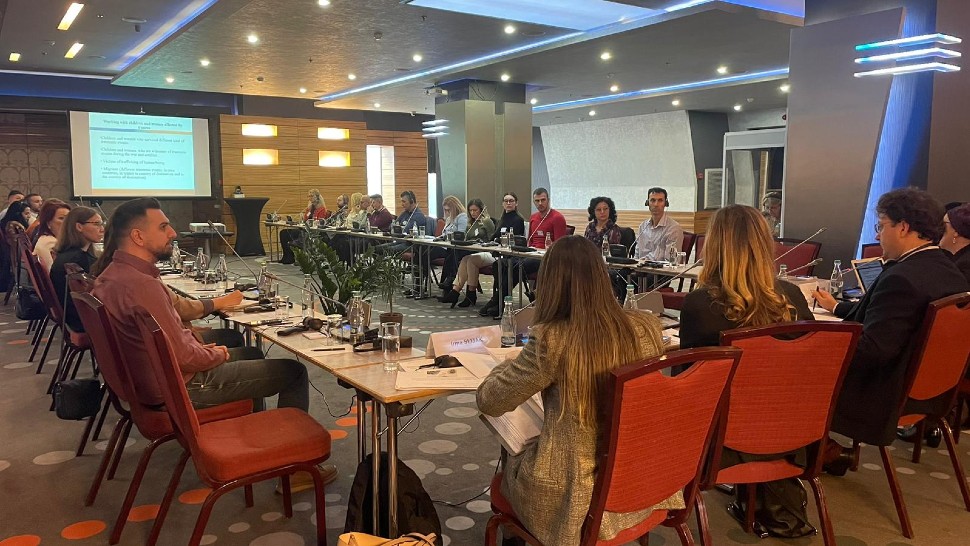
The Directorate of Political Affairs and External Relations of the Council of Europe organised in Bucharest, Romania, on 23-24 November, a training on Psychological Support to Refugees: Strengthening Professional Capacities. The training was organised  in close cooperation with the Office of the Special Representative of the Secretary General on Migration and Refugees (SRSG) and the Romanian Government.

It is a follow-up to the report of the SRSG fact-finding mission to Romania in the framework of the  Council of Europe Action Plan on Protecting Vulnerable Persons in the Context of Migration and Asylum in Europe (2021-2025).

Addressing the event, SRSG Leyla Kayacik underlined that providing mental and psychological support for all displaced persons remains a priority, adding that her report also identified the need to strengthen the capacities of those professionals, who, in their daily work provide psychological support to women and children who suffered war traumas.

“This two-day training aims to concretely support and contribute to the efforts of teams of front-line workers from the Ministry of Internal Affairs of Romania including police officers and border police,  psychologists of the General Inspectorate of Immigration, the General Inspectorate for Emergency Situations and of the National Agency Against Trafficking in Persons , conducting emergency interventions with health and social services staff working on psycho-social support and trauma rehabilitation,” the SRSG stated.

Bucharest 23 - 24 November
  • Diminuer la taille du texte
  • Augmenter la taille du texte
  • Imprimer la page

 CBMs: What for 

CBMs have been implemented in order to promote dialogue and to spread Council of Europe principles throughout the whole of Europe. CBMs are aimed at building bridges between population groups and enhance human rights protection in post-conflict regions. Their objective is to help create an improved level of mutual trust, by addressing concerns which are common to the entire population so that they focus on the way to build a peaceful future rather than memorising their divided past.


CBMs: For whom

The main target groups of the CBMs are professionals who influence public opinion, such as journalists and teachers, as well as local NGOs involved in human rights protection and decision-makers from the different sides involved in the conflicts.

The Council of Europe Secretariat remains in contact with local NGOs and specialists in order to design and implement people-to-people contacts and activities aimed at ensuring respect for, and knowledge of, human rights in the affected areas.