Projects in Finland
 Finland became a member of the Council of Europe in 1989 and ratified the European Charter of Local Self-Government in 1991. Since then, Finland has developed a robust framework for local self-government through the Finnish Local Government Act of 1995 and further decentralisation reforms that ensure strong municipal autonomy and financial independence.
The Congress monitoring report, adopted in October 2024, noted the overall positive application of the Charter’s principles in Finland, the establishment of a second tier of local government at regional level (“wellbeing services counties”), the extensive responsibilities of local authorities, and the effective collaboration between central and local governments.
Completed projects in Finland
 Delivering good governance and balanced local economy in Finland (2022-2024)
Objectives
Contributing to the ongoing reform on establishing regional governance for provision of health, social welfare and rescue services in Finland, the project aims to ensure a higher quality / efficiency in the delivery of these public services, notably by assisting the Finnish authorities to:
- Improve the relevant legislative framework pertaining to good democratic governance at the local and regional level, in accordance with the best European practice;
- Enhance the performance of municipalities and regions through improved awareness, knowledge and skills.
In particular, the project contributed through:
- Provision of Policy advice containing concrete recommendations to the Finnish authorities on:
- Revision of competences and operational mechanisms at the local and regional level;
- Fiscal decentralisation and fiscal autonomy of the regional and local governments, and the fiscal impact of the reform;
- Metropolitan governance, intermunicipal cooperation and spatial planning - City of Turku and Turku City Region;
- The administrative capacities of the Finnish Wellbeing Services Counties - economic, administrative, and political challenges;
- The governing system, restrictions on multiple positions of trust and diverse roles of mayors in selected Council of Europe member states - Austria, Czech Republic, Finland, Germany, Ireland, Northern Ireland and Slovakia.
- Supporting the local and regional authorities in improving the delivery of public services to their citizens, by implementing the following Centre of Expertise’ capacity-building tools:
- Local Finance Benchmarking for central authorities and Local Finance Benchmarking for local authorities - to enable the best use of available resources at central, regional and/or local level;
- European Label of Governance Excellence (ELoGE) - to increase knowledge of the selected municipalities/regions on the 12 Principles of Good Democratic Governance;
- Civil Participation in Decision-Making – to strengthen and facilitate participation by individuals, NGOs and civil society at large in political decision making through development of local strategies for citizen participation;
- Leadership Academy Programme – to build institutional leadership skills within the local or regional authorities.
Results
The Council of Europe’s Centre of Expertise for Good Governance steered the direction and dynamics for implementation of the project in coordination with the main beneficiary – Ministry of Finance, the main donor - DG REFORM of the European Commission, Finnish implementing partner institutions as well as other relevant stakeholders.
The Centre of Expertise also ensured the overall implementation of the project in cooperation with the national implementing partners. In particular:
- The Centre of Expertise provided the international expertise in the project activities and ensured alignment of the work carried out with the relevant European standards. It also shared the best European practice in local and regional governance drawn from the inter-governmental European Committee on Democracy and Governance.
- The Finnish implementing partners ensured the local expertise necessary for contextualising the proposed policy advice and capacity-building tools. They also took care of logistical arrangements, when needed.
The project was part of a cooperation framework agreement between the Council of Europe and the DG REFORM of the European Commission.
Beneficiaries
- Finnish central authorities such as the Ministry of Finance
- The local and regional institutional structures and their staff;
- Finnish implementing partner institutions;
- Other stakeholders: relevant organisations and institutions in Finland that have particular expertise and experience in the topics of the project and access to a relevant network of national experts, such as SITRA – fund directly accountable to the Finnish Parliament;
- Finnish citizens and society at large.
Budget and duration
- The project “Delivering good governance and balanced local economy in Finland” was funded by the European Union via the Technical Support Instrument, and implemented by the Council of Europe, in cooperation with the European Commission.
- The total budget of the project was € 833 334
- The project ran from 1 September 2022 to 31 August 2024

Finland and the Council of Europe
Contact
Head of the Centre of Expertise for Multilevel Governance
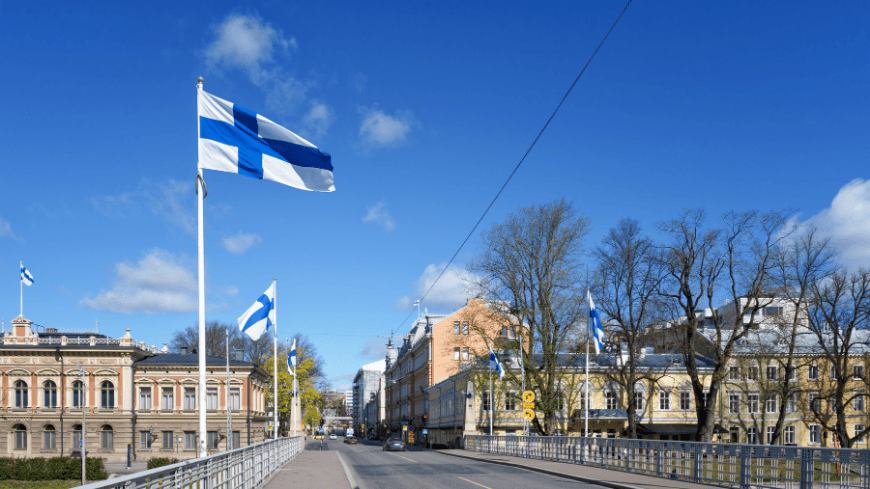
Council of Europe Congress calls on Finland to strengthen campaign finance regulation and awareness of voting procedures