


Deliberative democracy
What are deliberative processes?
A deliberative democratic process is a process in which a broadly representative body of people weighs evidence, deliberates to find common ground and develops detailed recommendations on policy issues for public authorities.
The participation of citizens in free competitive elections to appoint representatives for government is an essential component of any definition of a modern democracy. However, representative democracy faces challenges, including declining confidence in the political system, electoral fatigue and increasing disenchantment with politics.
A democracy where citizens’ only way of participation is to vote is regarded as too minimalist and fragile. Contemporary democratic authorities tend therefore to promote and organise many forms of non-electoral participation by their residents. The 2009 Additional Protocol to the European Charter of Local Self-Government has formalised this by stating that the right to participate in the affairs of local authority should be secured for everyone.
First international standard
The Council of Europe has placed a particular focus on deliberative democracy, as a meaningful way to achieve participation beyond local elections. In 2022, the Congress of Local and Regional Authorities of the Council of Europe issued a report and recommendation on the use of deliberative methods at local and regional level. Recognising the potential of such processes to improve policy outcomes and in turn enhance public trust in public decision making, the Council of Europe has set out the first-ever international standard in the area of deliberative democracy.
Read the standard here.
Deliberative processes strengthen democracy, reinvigorate representative institutions, and are a genuine endeavour which complement more traditional ways of citizen participation. In this spirit, and in line with the Reykjavík Principles of Democracy, the Council of Europe recommends all member states to embed deliberative democracy in decision making, and therefore contribute to innovative and inclusive democratic participation of all groups of residents, with no one left behind.
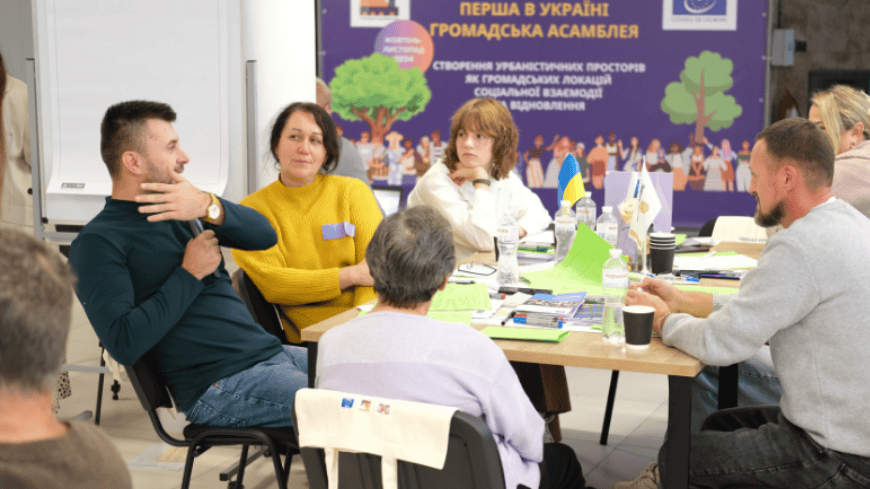

Citizens' Assemblies
Citizens’ assemblies are a form of deliberative process. The members are randomly selected to be broadly representative of the wider population in terms of demographics (for example, age, gender, ethnicity, education, geographical location), and sometimes relevant attitudes.
Participants receive balanced evidence from experts, stakeholders, and those with direct experience of the issue at stake and engage in facilitated discussions. Independent facilitators ensure all voices are heard, and the assembly’s conclusions are compiled. Once the assembly has ended, the recommendations are written up in a report to be presented to decision-makers.

The Congress and deliberative processes
Starting with Mostar’s first citizens’ assembly on the cleanliness and public spaces in the city, in 2021, the Congress of Local and Regional Authorities has supported several deliberative processes at local levels in Bosnia and Herzegovina. The city of Banja Luka has held its first citizens’ assembly on youth entrepreneurship and the city of Mostar its second assembly on tourism development, both in 2024.
The Congress supported the first citizen assemblies in Ukraine in 2024. The citizens’ assembly in Slavutych sought to improve the local household waste management system, while in Zvyahel citizens deliberated on creating urban public spaces for social interaction and recreation.
In 2026, the Congress of Local and Regional Authorities is supporting the organisation of three citizens’ assemblies: in the Obolon district of Kyiv, in the Rivne territorial community and in the Lviv metropolitan area.
Resources
- Council of Europe standard (2023)
- Congress Report (2022) “Beyond elections: the use of deliberative methods in European municipalities and regions"
Other languages : DEU - FRA - ITA - Guide on "How to organise deliberative democracy processes at local level"
Available in : ENG – FRA - SQI – BOS – MKD – RON – SRP – UKR - Visit the “Strengthening Democratic Resilience through Youth Engagement and Deliberative Democracy” page
- See the step-by-step citizen's assembly poster