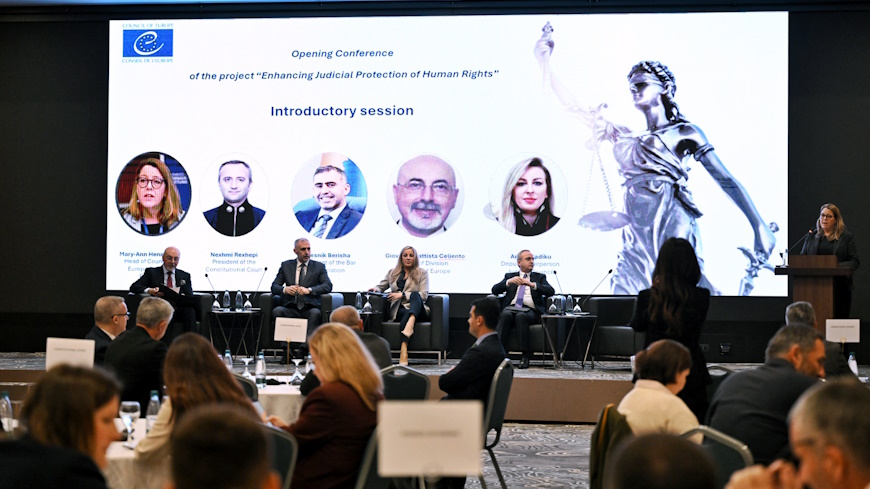
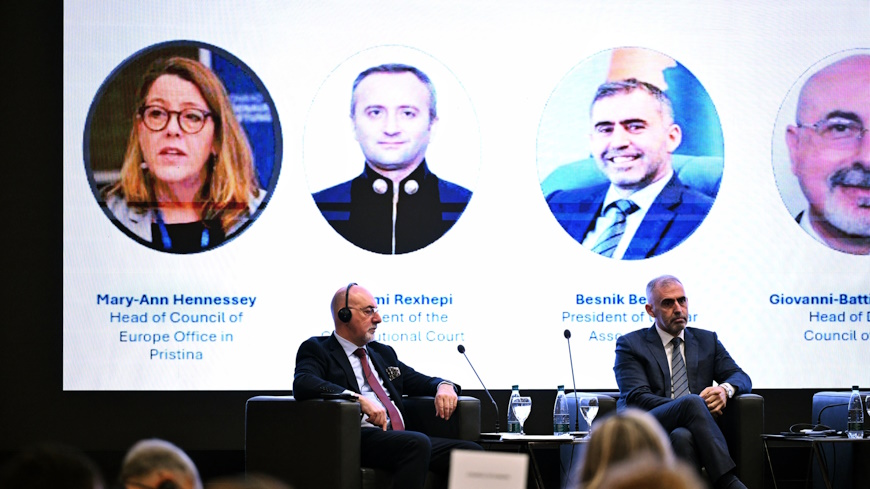
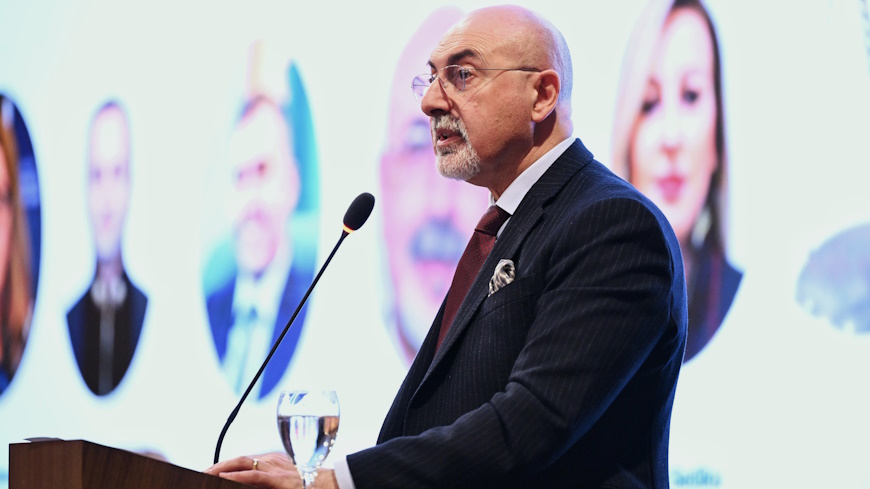
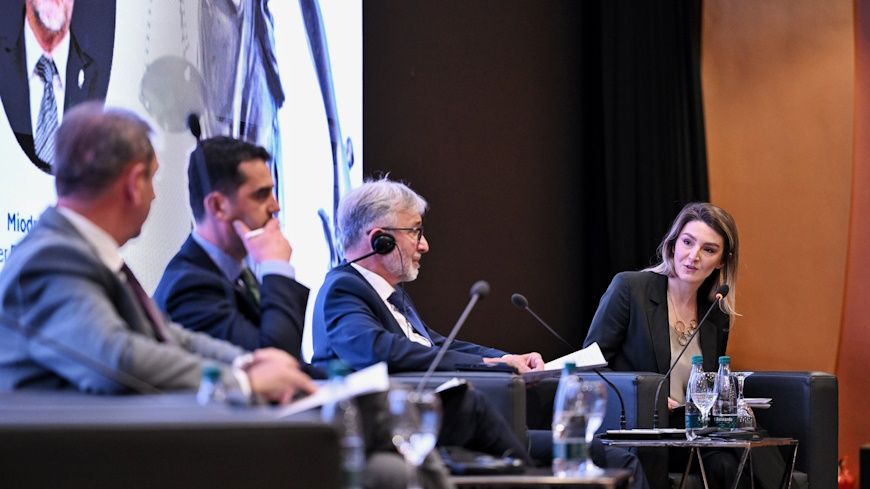
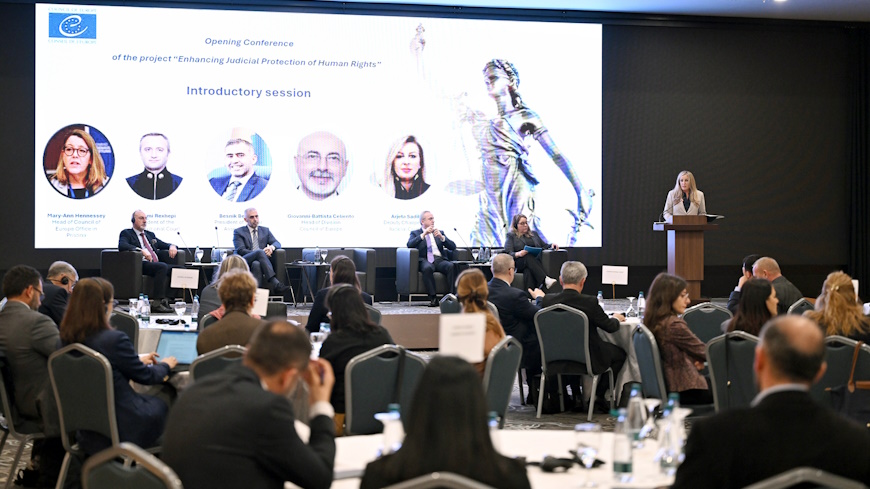
A conference marking the official launch of the project brought together representatives of key institutions, the judiciary, independent bodies, civil society, and international partners to discuss how to translate legal standards into tangible improvements for individuals.
The event, titled “From Law to Practice: Bridging Legal Provisions with Concrete Impact in the Field of Human Rights,” provided a platform for interactive discussions on challenges emerging from judicial practice and the effectiveness of human rights protection. Participants explored the link between legal norms, institutional practice, and their real-life impact, addressing both systemic and practical obstacles.
In her opening remarks, the Head of the Council of Europe Office in Pristina underlined that this is the first initiative launched under the new Overview Document for Kosovo*[1], recently endorsed by the Committee of Ministers. She emphasised that the project forms part of the Council of Europe’s broader commitment to advancing human rights, democracy, and the rule of law across the European continent.
She highlighted that the project aims to strengthen judicial dialogue, promote international cooperation, and foster professional exchange, ensuring that judicial practice at all levels reflects European human rights standards. She stressed that effective protection of human rights requires not only strong legal frameworks, but also institutions that implement them and professionals who actively uphold them. Civil society engagement and public trust, she added, are equally essential. Ultimately, success will be measured by the extent to which individuals can rely on justice when their rights are at stake.
Speaking in the introductory session, Giovanni-Battista Celiento, Head of the Co-operation Programmes Division at the Council of Europe’s Directorate General of Human Rights and Rule of Law, reaffirmed the Organisation’s long-standing support to the justice sector in Kosovo*. He recalled that recent efforts have contributed to strengthening the institutional capacity of the Constitutional Court and improving the quality of its decisions. Across the justice system, targeted training and structured judicial dialogue have enhanced the consistency and application of human rights standards. In addition, hundreds of lawyers have strengthened their ability to submit well-founded applications, contributing to more effective access to justice. Presenting the focus of the new project, Mr Celiento underlined that it will further support judicial redress for human rights violations while promoting stronger alignment among institutions. The project will also draw on the Council of Europe’s expertise to support the integration of human rights standards into legislation and public policy, including through cooperation with the Office for Good Governance and other relevant stakeholders.
Other speakers in the introductory session also highlighted the importance of enhancing judicial protection of human rights. To this end, the President of the Constitutional Court, Nexhmi Rexhepi, emphasised the central role of the Court in safeguarding fundamental rights. The Vice Chairperson of the Judicial Council highlighted ongoing efforts to address case backlog and improve efficiency in ordinary courts, including through increased support to judges. The President of the Bar Association shared insights into the practical challenges lawyers face in protecting human rights in judicial proceedings.
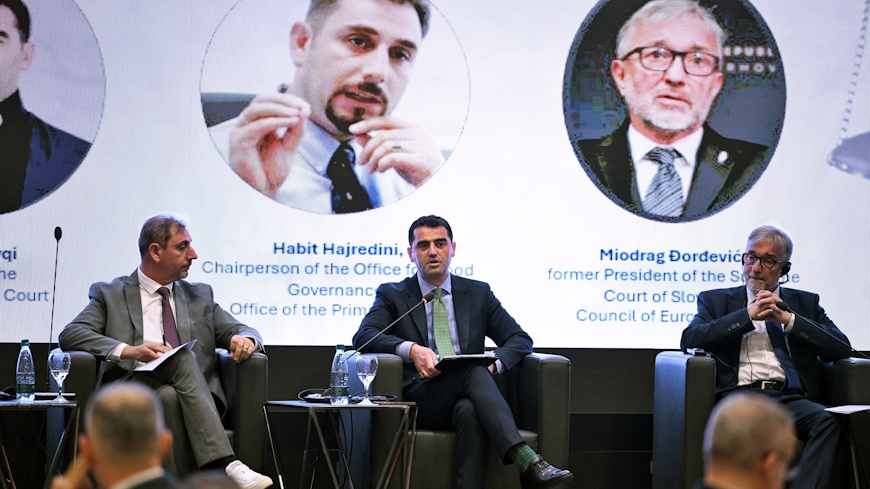
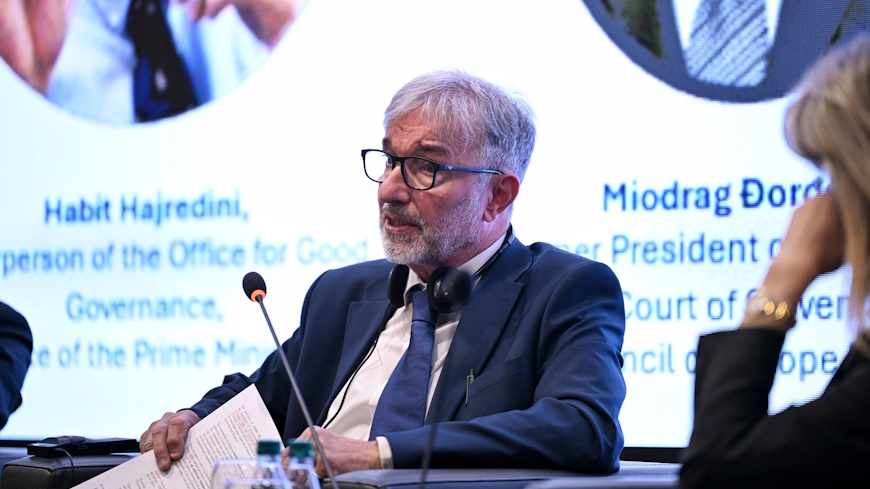
The first thematic session focused on the interaction between legislation, policy, and judicial practice. Speakers provided comparative perspectives, including experiences from Slovenia, and discussed the role of courts in ensuring effective protection of human rights. The Office for Good Governance presented its work in monitoring international human rights treaties and its cooperation with judicial institutions in drafting the new human rights strategy.
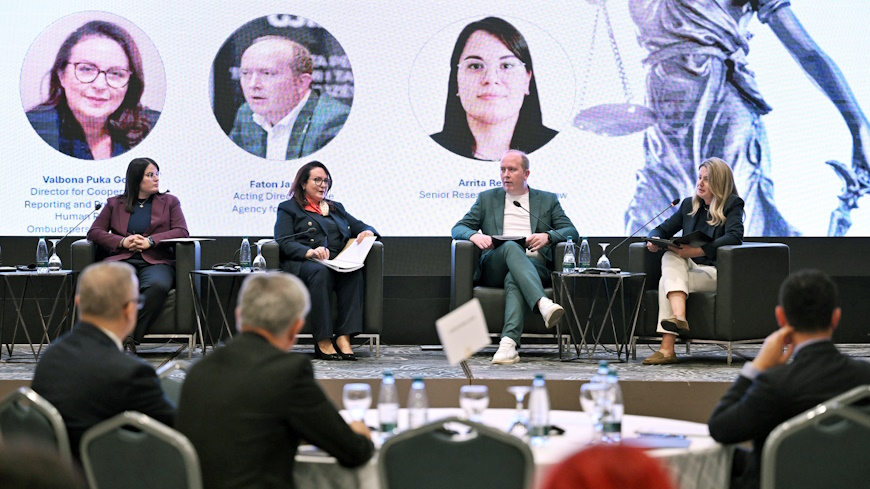
The second session addressed how to make human rights protection effective in practice, with contributions from academia, the Agency for Free Legal Aid, the Ombudsperson Institution, and civil society. Discussions focused on access to justice, particularly for vulnerable groups, including women, minority communities, and individuals in disadvantaged socio-economic situations.
Overall, the conference enabled the identification of key challenges affecting judicial protection of human rights in Kosovo*, strengthened dialogue and cooperation across institutions, and raised awareness of Council of Europe standards and support mechanisms. It also generated practical recommendations to enhance the effectiveness of human rights protection in both law and practice.