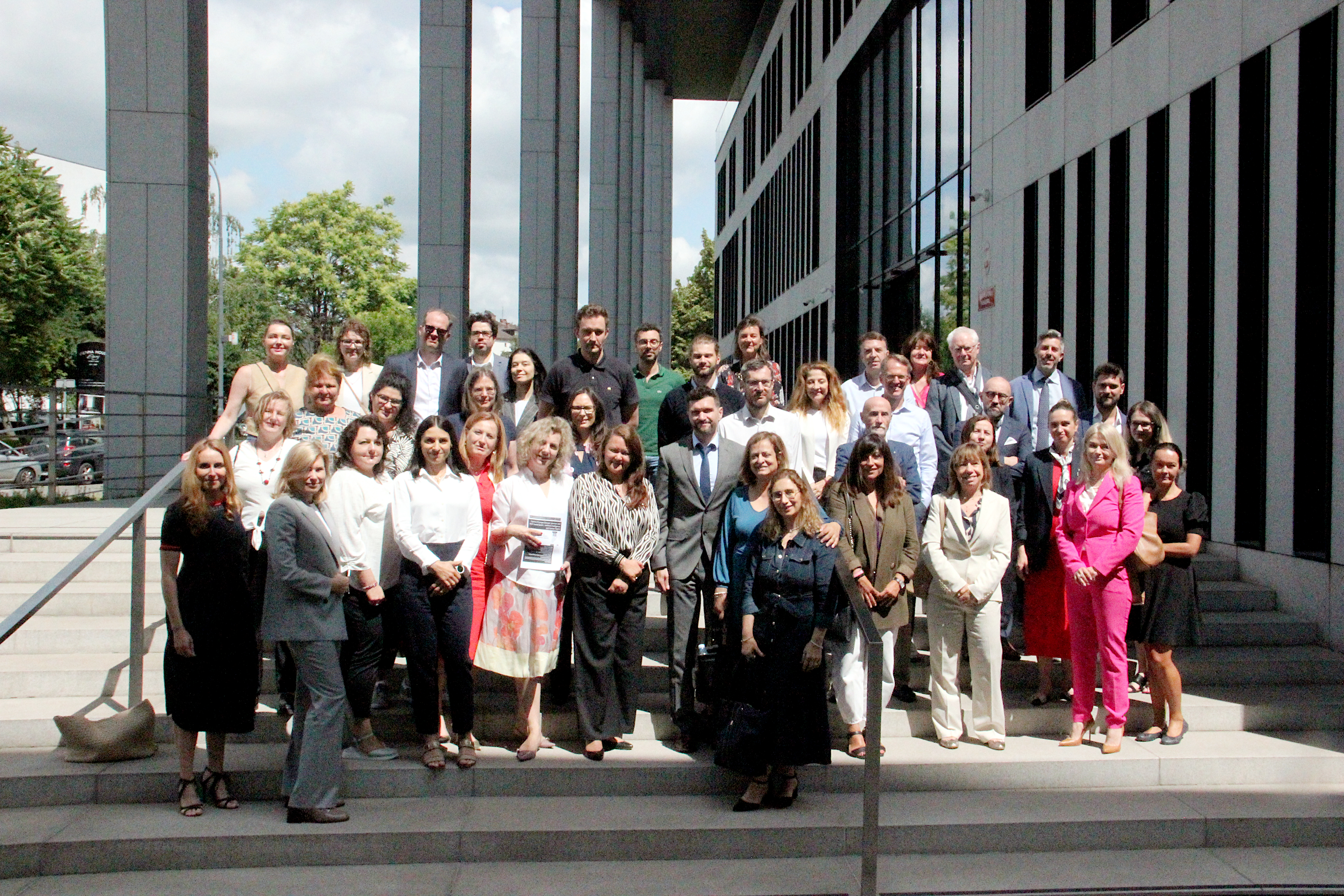
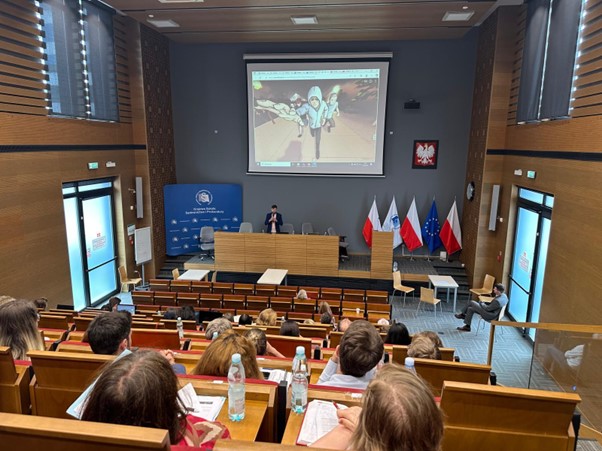
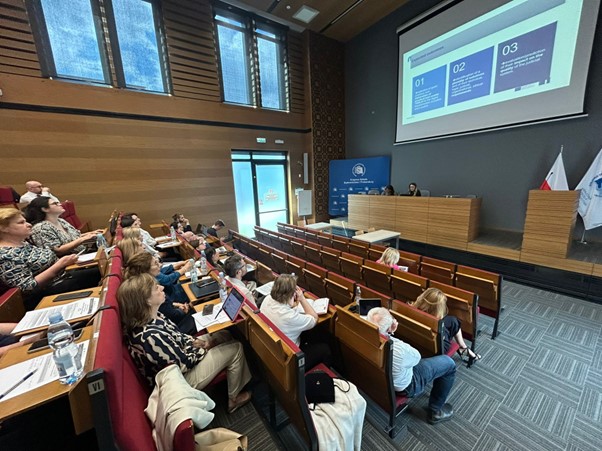
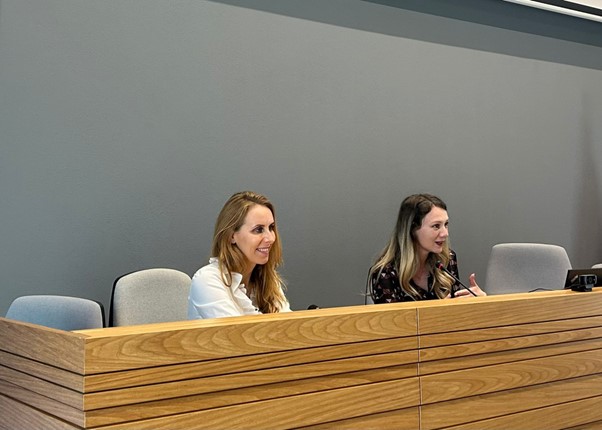
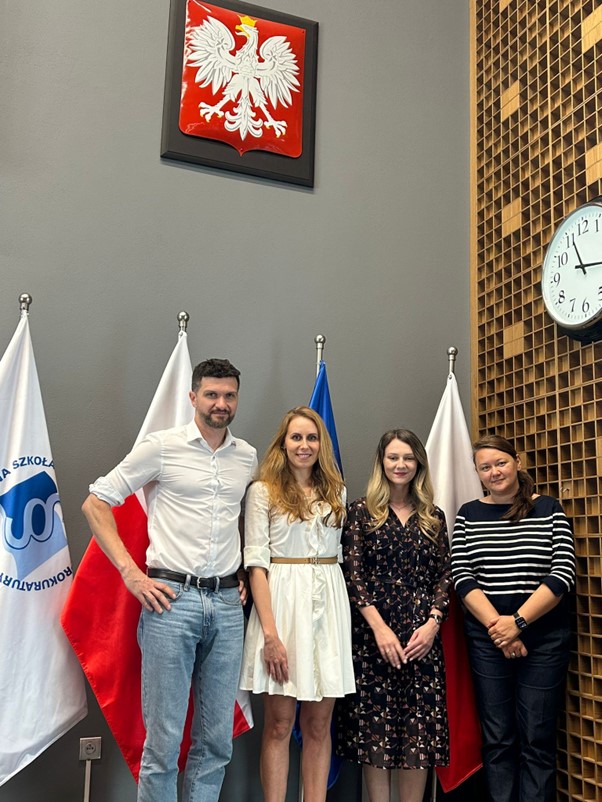
On 17 and 18 June 2025, fifty judges and prosecutors from EU Member States gathered - both in person In Krakow (Poland) and online - for an international seminar marking the launch of the HELP course on Artificial Intelligence and Human Rights. The event was organised in cooperation with the National School of Judiciary and Public Prosecution from Poland, in the framework of the EU-CoE HELP in the EU IV Project (funded under the European Union Justice Programme (2021-2027)).
The course and seminar aim to enhance the understanding of AI technologies and some of their human rights implications. Its objective is to assist professionals in navigating the relevant legal and regulatory landscape, while fostering ethical decision-making. The seminar was moderated by Ana-Maria Telbis, Head of the CoE Justice and Human Rights Training Division, with the participants being welcomed by Marcin Stpiczyński from the National School of Judiciary and Public Prosecution of Poland.
Judge Anna Adamska – Gallant of the European Court of Human Rights addressed the intersection of artificial intelligence and the right to free elections, emphasizing their importance at the core of effective political democracy. She brought attention to the potential challenges and opportunities that artificial intelligence presents with respect to safeguarding the integrity of electoral processes - a fundamental pillar of democracy. By focusing her remarks on the use of AI technologies, she discussed possibilities to strengthen democratic mechanisms by improving transparency and access, and risks in terms of manipulation, misinformation, and undermining public trust in electoral systems.
Raluca Peica, Director-General at the Court of Justice of the European Union ICJEU), delivered an insightful presentation focusing on the integration and application of artificial intelligence within the CJEU. She explored several key aspects, including the strategic approach to AI adoption, the governance frameworks established to oversee its use, the ethical considerations involved, and the practical implementations currently underway at the level of the institution she represented.
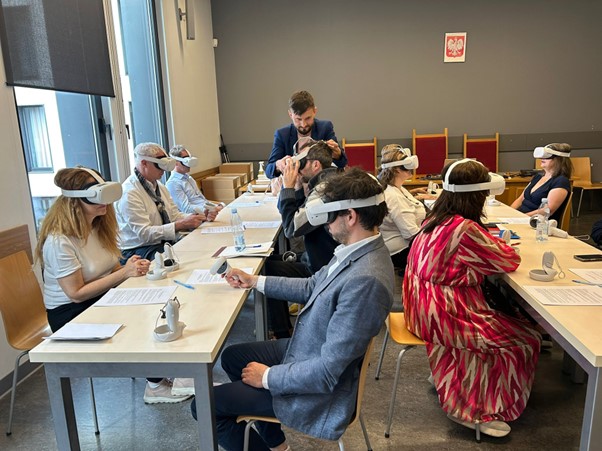
The event also featured an engaging session led by the Virtual Reality (VR) team of the National School of Judiciary and Public Prosecution from Poland. This team discussed the innovative use of VR technology in the legal field, specifically highlighting how immersive learning experiences are being developed to enhance the training of judges and prosecutors. To provide a hands-on understanding of their work, the VR team allowed participants to try out the VR equipment, offering a direct experience of how virtual reality can be used as a powerful tool in legal education and professional development.
During the seminar, the HELP course on Artificial Intelligence and Human Rights was launched in tutored format. Under the guidance of HELP tutors Patrycja Dolniak and Anca Radu, participants were introduced to relevant resources from the Council of Europe European Commission for the efficiency of justice (CEPEJ) and participated in a workshop on magistrates' perspective on the use of AI systems in the judiciary. They were also introduced to the course content, page, different modules and assignments. They will now go through the course online.
By investing in these high-level trainings, the Council of Europe and the European Union demonstrate their unwavering support for a judicial culture rooted in professionalism, integrity, and the shared pursuit of justice for all and human rights protection.
---------------------------------------------------
The HELP course on Artificial Intelligence and Human Rights
The HELP course on Artificial Intelligence and Human Rights aims to enhance understanding of AI technologies and their human rights implications. Its objective is to assist professionals in navigating the relevant legal and regulatory landscape while fostering ethical decision-making.
The course provides information about the most important instruments at the international and European levels and their practical implementation across Europe and beyond, with a focus on the Council of Europe and the European Union frameworks. Developed using the HELP methodology, the topics are explored practically through presentations, interactive screens, knowledge tests, and reflective exercises, enabling users to apply their gained knowledge and skills.
This HELP course was developed in 2024 by the Human Rights Education for Legal Professionals (HELP) Programme of the Council of Europe, using the HELP methodology, in close cooperation with relevant services within the DG Human Rights and Rule of Law of the Council of Europe, and the Registry of the European Court of Human Rights.
The course is available in self-learning format, having a duration of 6 hours. It can be followed in English. Upon completion, users can generate their electronic Statements of Accomplishment, in proof of their acquired knowledge and skills.
HELP courses are intended, in the long term, to become an integral part of the overall learning curricula of the national training institutions and/or other competent authorities of the CoE member states and beyond.