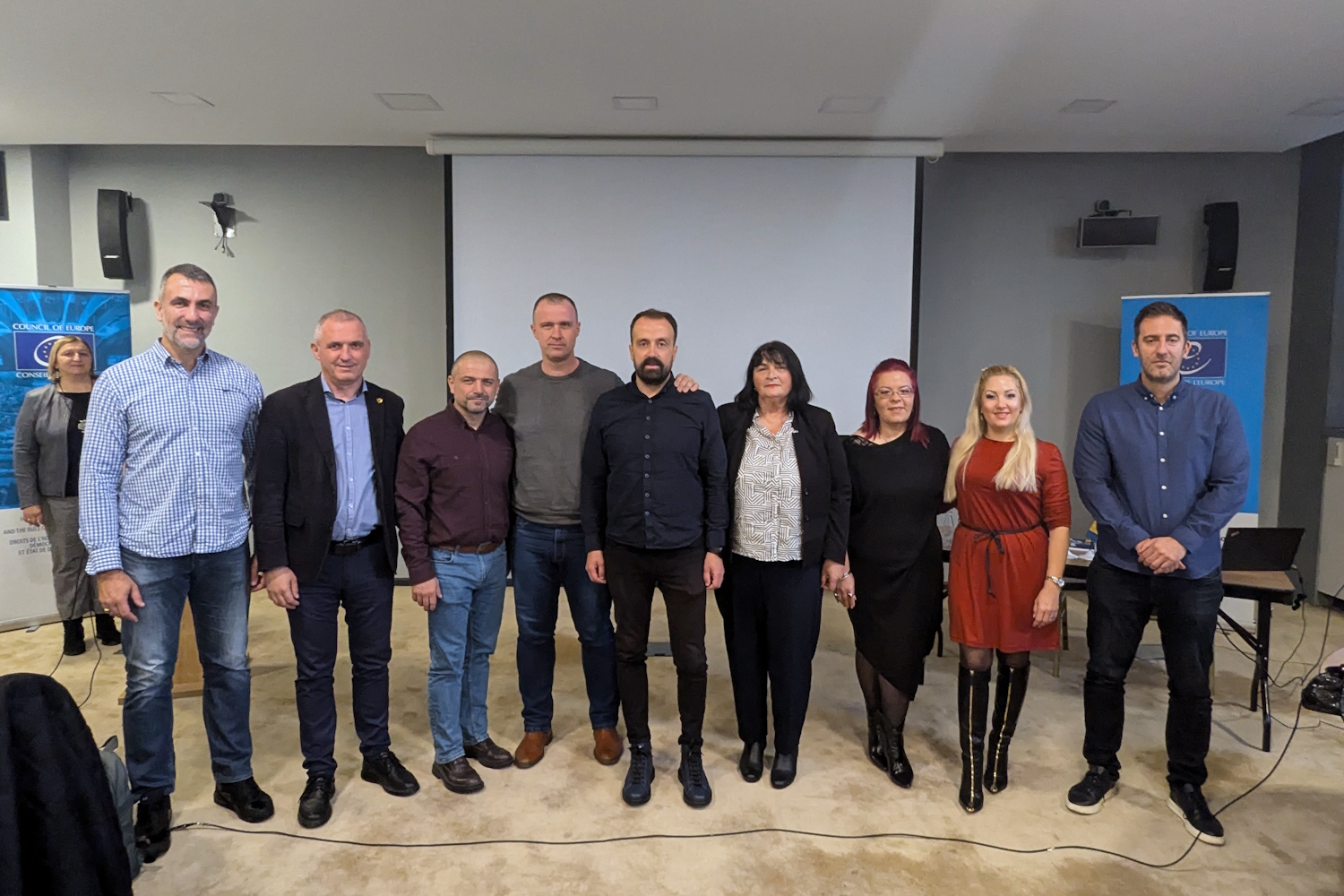
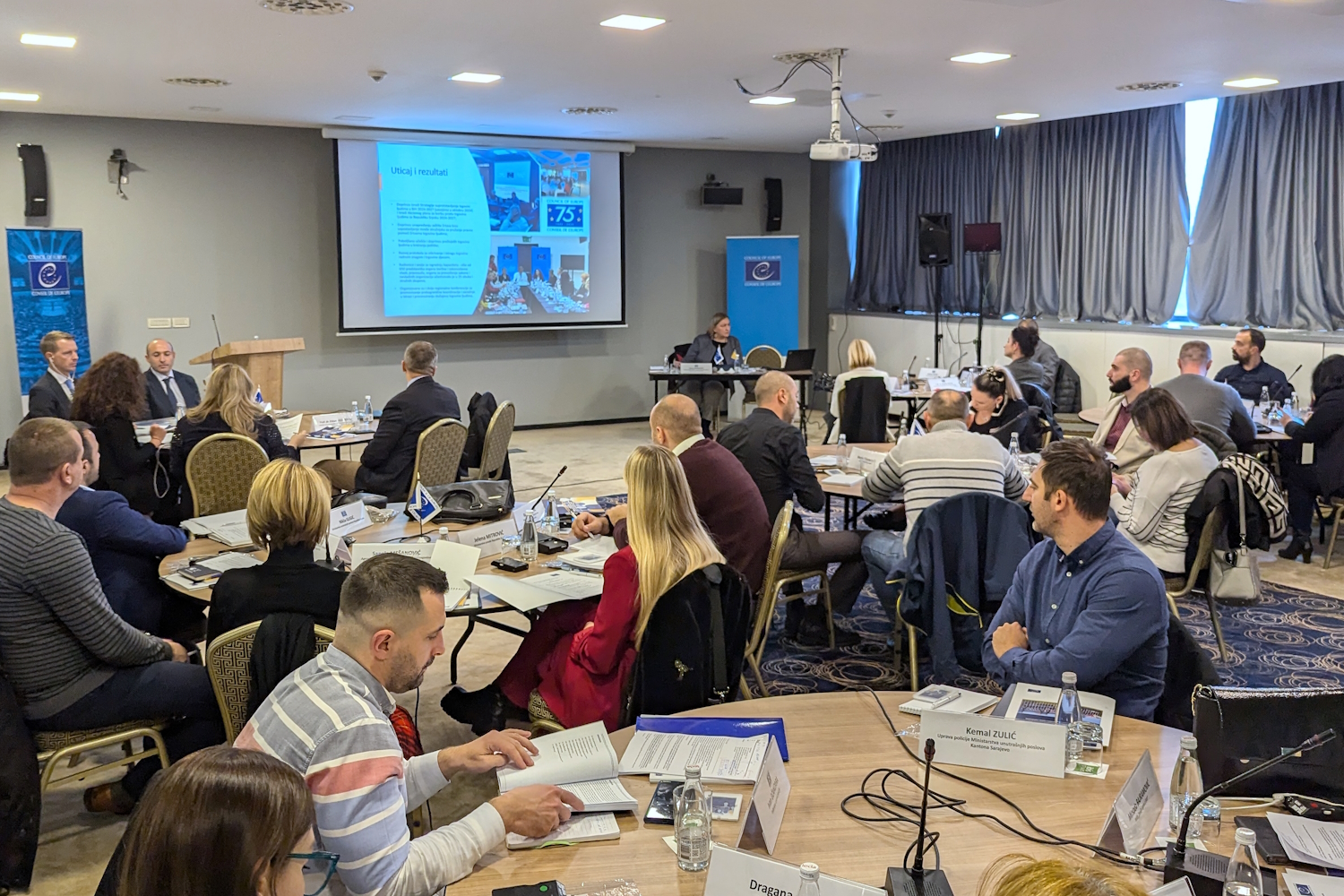
14 expert trainers - police officers and labour inspectors - received certification on 5 December 2024 in line with international standards for combating labour exploitation. This milestone enables them to share knowledge and strengthen institutional responses to this critical social challenge.
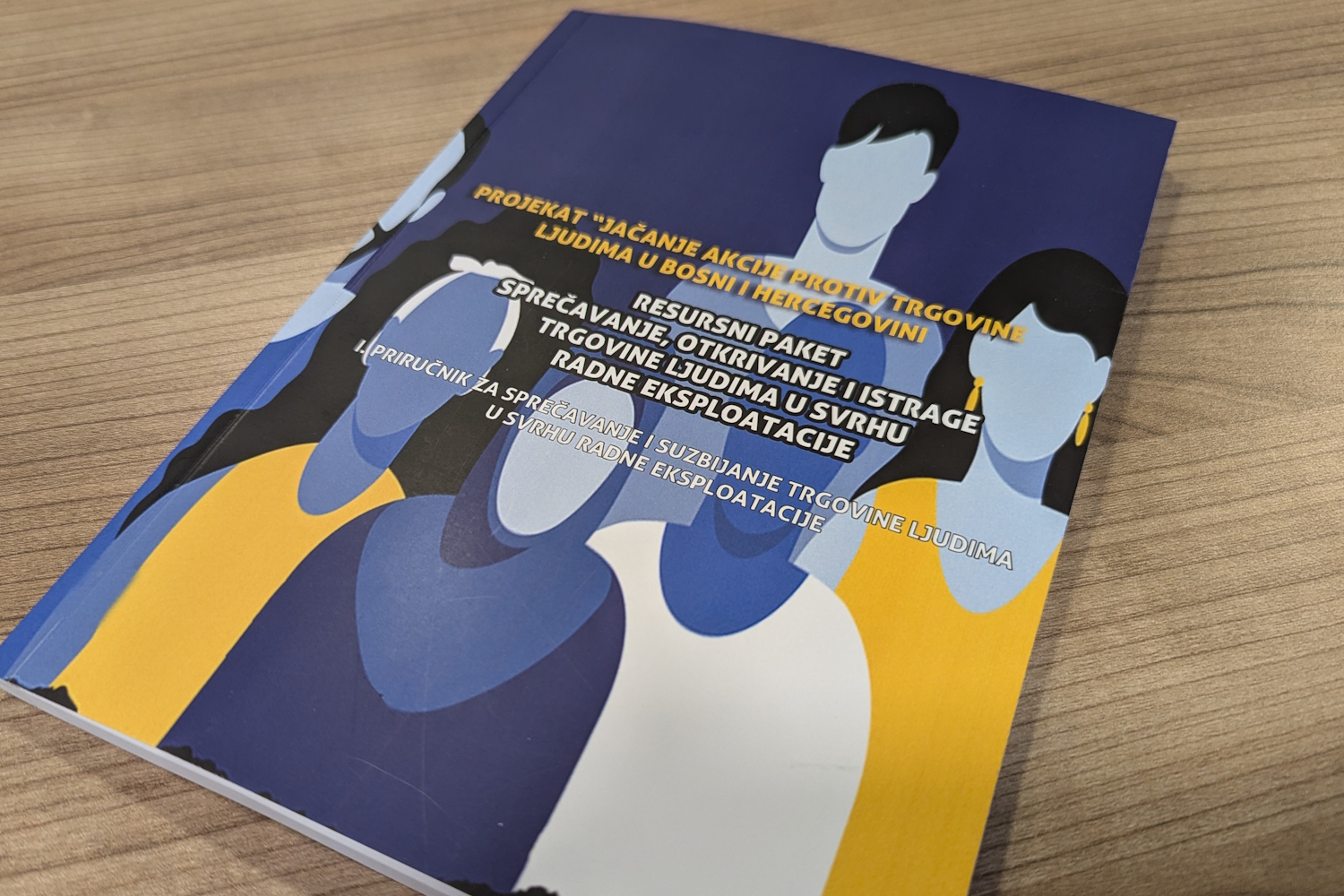
Educated through Council of Europe-tailored modules and materials, the trainers have already begun working with frontline staff who directly engage with victims. Their efforts are establishing sustainability and continuity in BiH's systemic response to trafficking.
Despite significant efforts and progress in recent years, Bosnia and Herzegovina remains a country of origin, transit, and destination for human trafficking. According to official data from BiH institutions, most trafficking victims are BiH citizens, predominantly women and children. Forced begging remains the most widespread form of exploitation, followed by prostitution, sexual exploitation, labour exploitation and servitude, forced marriages, and coercion into criminal acts. Globally, factors such as rising conflicts, refugee crises, and the climate emergency exacerbate vulnerabilities, leaving many, particularly children, at risk of trafficking.
As a party to the Council of Europe Convention on Action against Trafficking in Human Beings, BiH has made notable strides, supported by international partners, including guidelines and recommendations from the Group of Experts on Action against Trafficking in Human Beings (GRETA).
Successful completion of two-year capacity-building project
The certification ceremony also marked the conclusion of the Council of Europe’s two-year action against human trafficking. A key component of this action was the inclusion of former trafficking victims, whose perspectives provided a vital human dimension. Their contributions, facilitated through NGO “New Beginning,” helped address the real experiences and needs of trafficking victims.
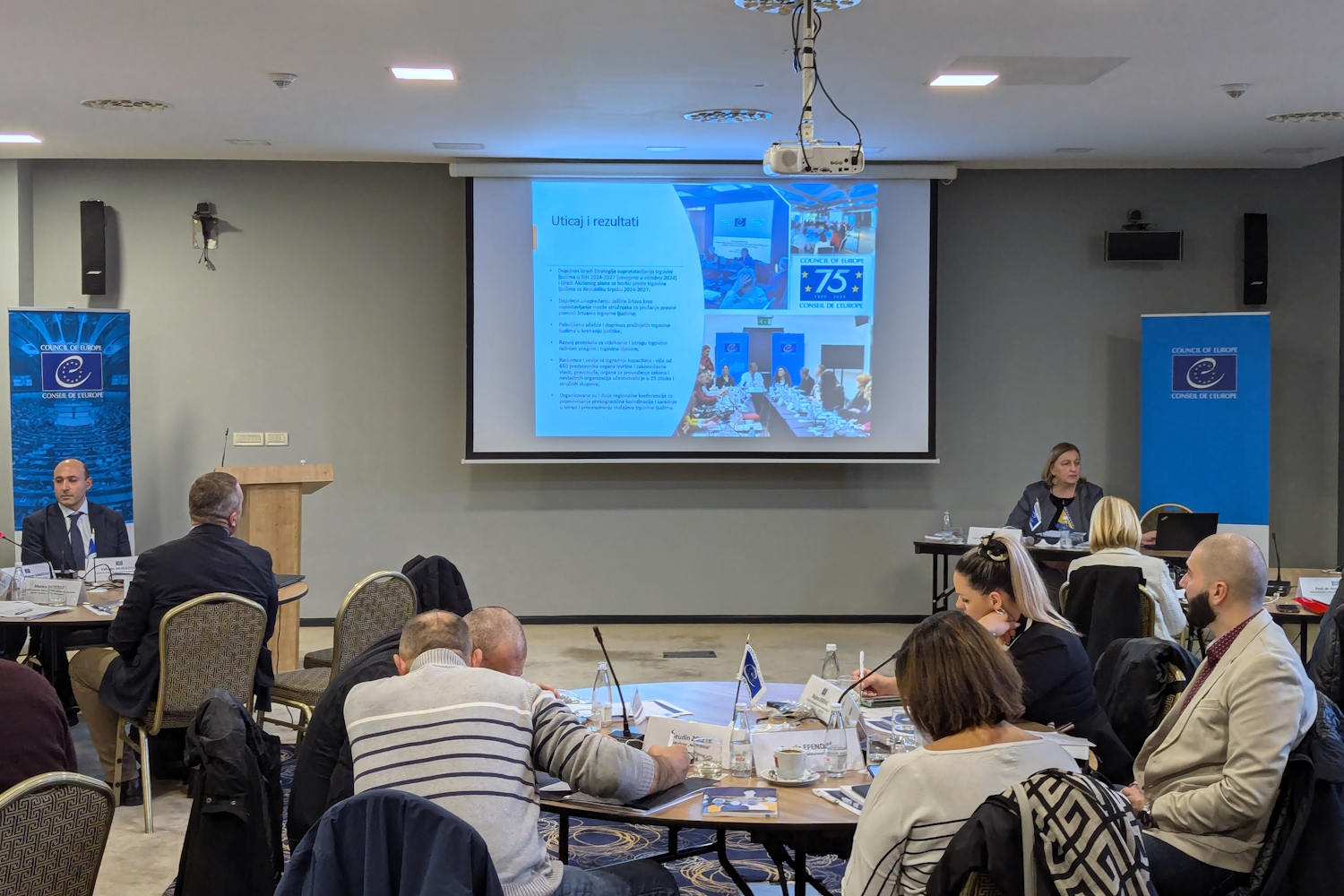
More than 650 representatives from executive and legislative bodies, the judiciary, law enforcement, and NGOs participated in 25 training sessions and expert events. Two regional conferences were also organized to promote cross-border coordination and cooperation in investigating and prosecuting human trafficking cases. These events tackled key issues such as enabling the victims to enjoy the right to compensation, including through seized criminal assets, and the abuse of information technologies for the purpose of human trafficking.
It also included the second online training module on human trafficking for labour exploitation developed by the Council of Europe’s HELP (Human Rights Education for Legal professionals) programme. The content of the module has been adjusted to the BiH legal framework.
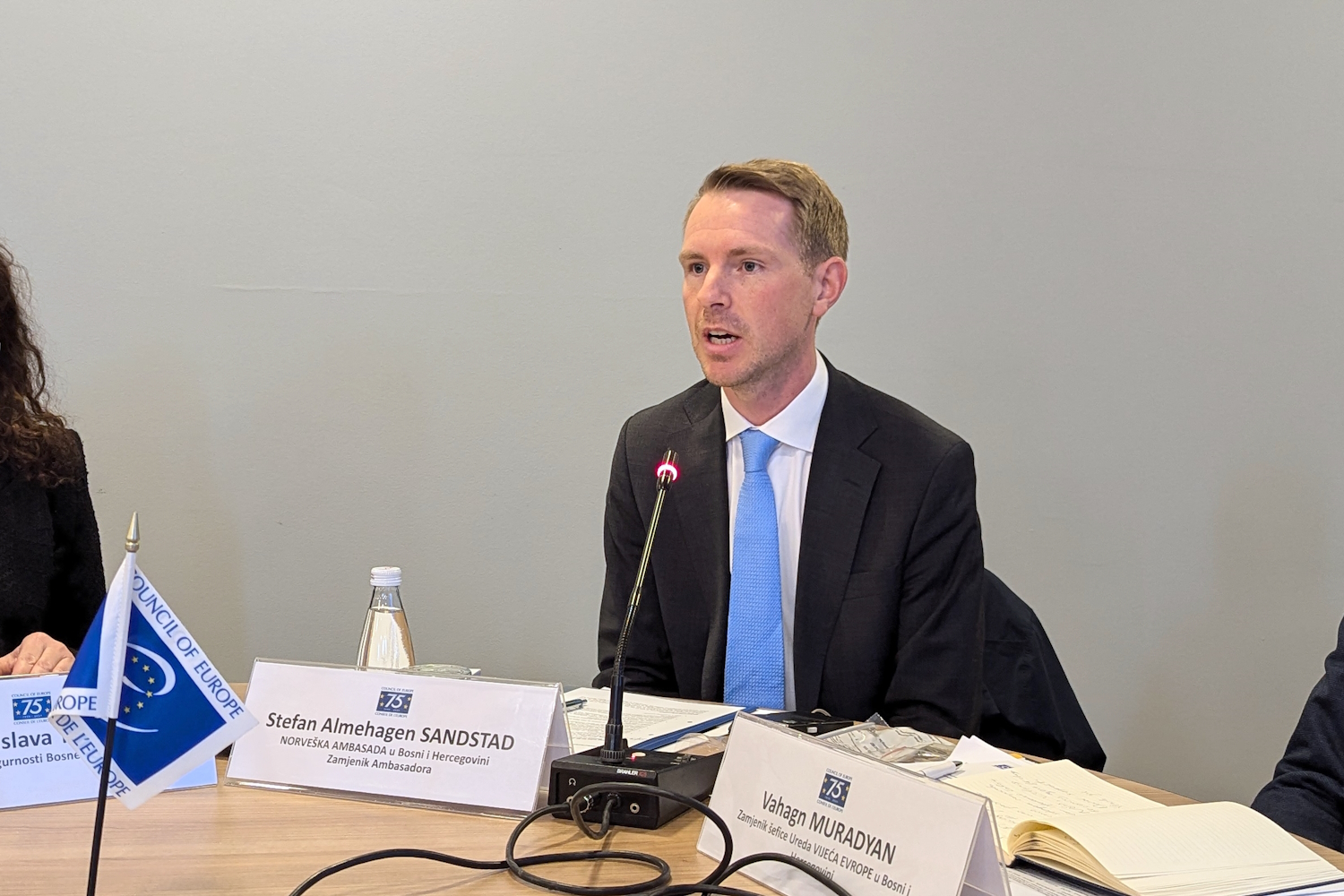
“The participation of survivors in policy-making and interventions to prevent human trafficking can significantly contribute to the effectiveness of the state’s response to this phenomenon, and to the protection and empowerment of other victims. Therefore, our joint efforts should be directed towards supporting victims and making their voices heard, in addition to authorities increasing their efforts to investigate and prosecute, thereby holding the perpetrators responsible for their crimes,” said the Deputy Ambassador of Norway to BiH, Stefan Almehagen Sandstad.
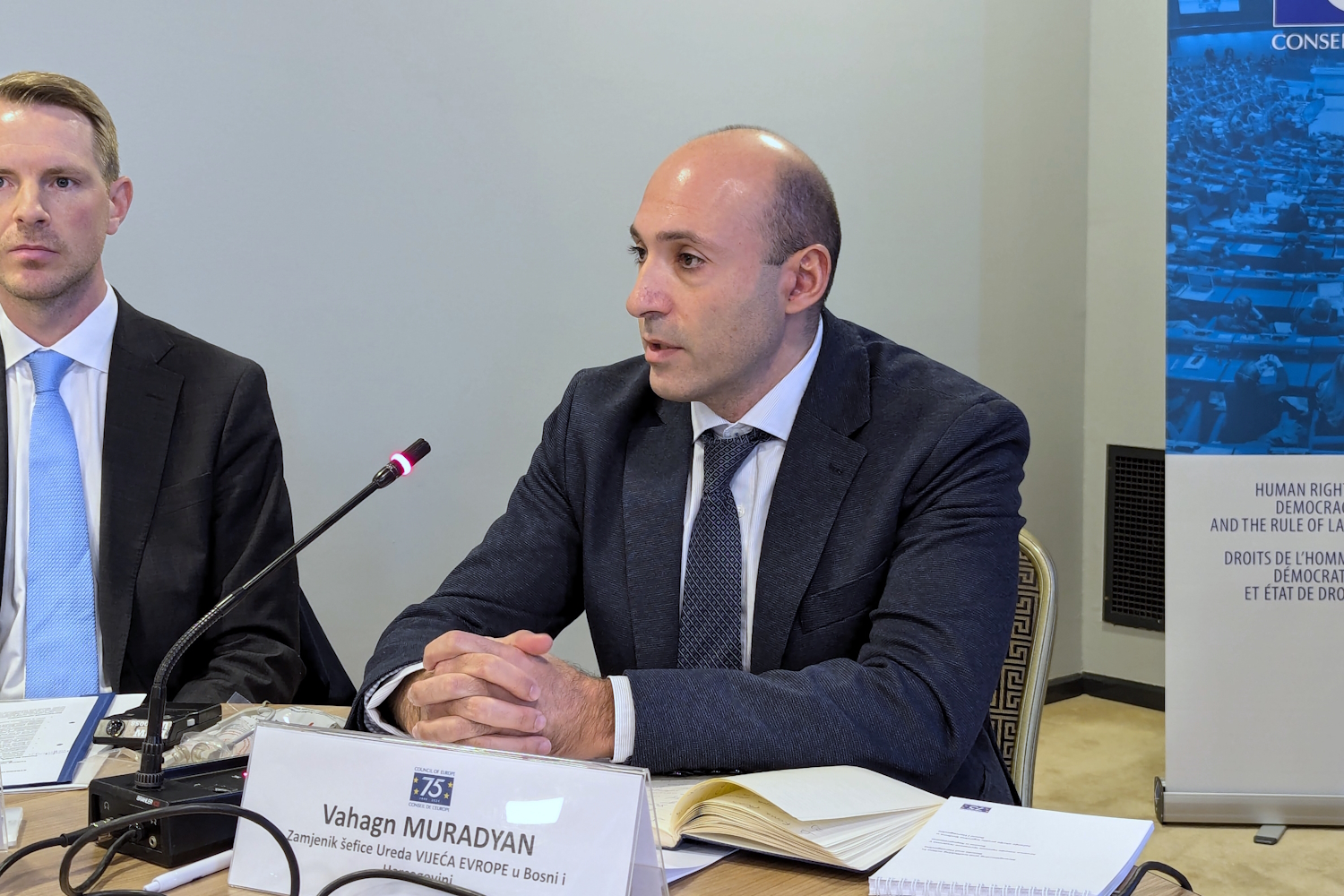
The Council of Europe remains committed to supporting BiH. “These efforts will succeed with greater coordination across all levels of government, as well as the inclusion of civil society, media, and the broader public,” said Vahagn Muradyan, Deputy Head of the Council of Europe Office in Sarajevo. “Such a structured response will help curb exploitation and ensure victims have access to justice and effective remedies. We are pleased to see this commitment reflected among BiH stakeholders.”
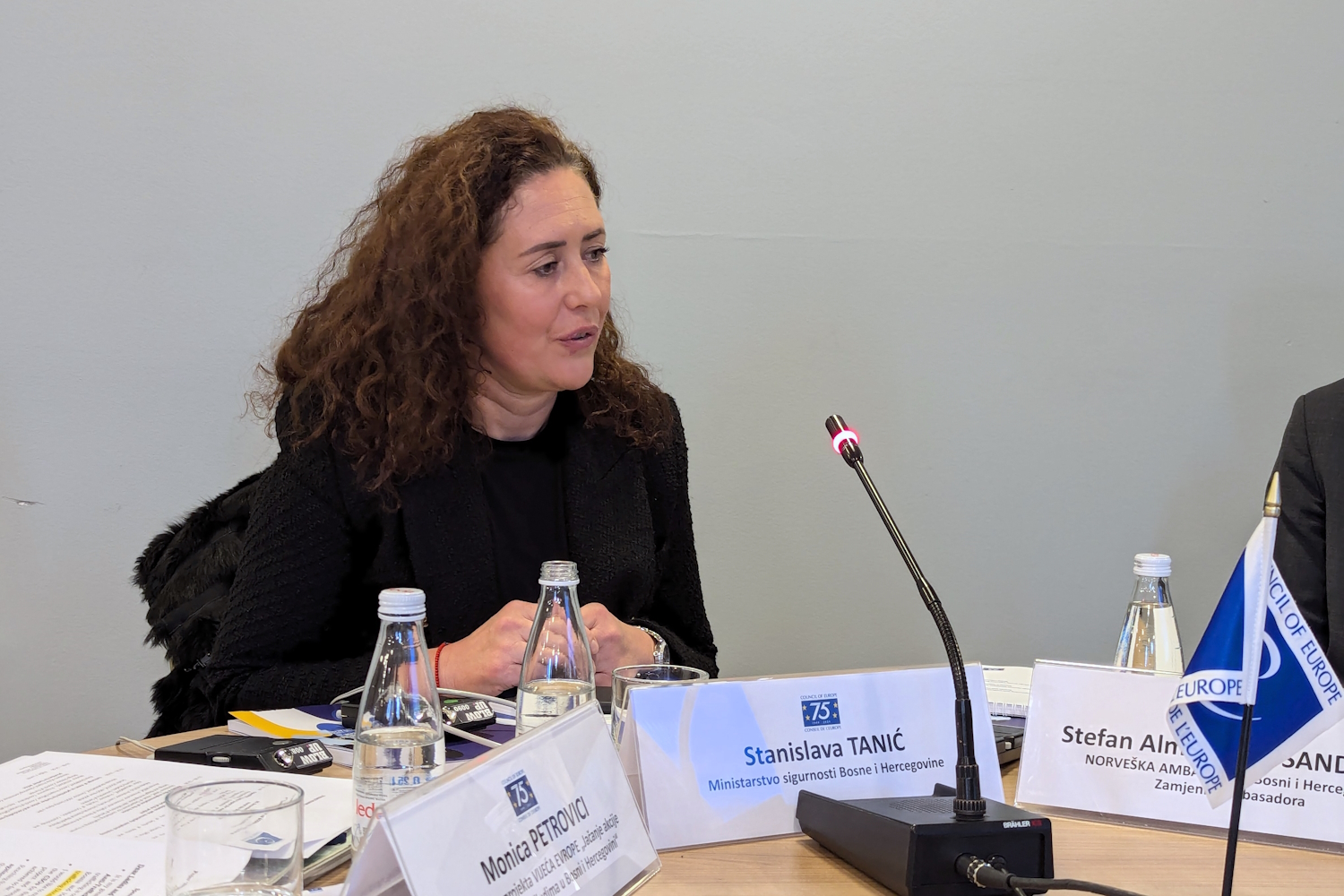
“A partnership between state institutions, civil society, and international organisations will help establish an efficient mechanism for countering human trafficking and facing all challenges involved, starting with the identification of victims, all the way until their full reintegration into society,” said Stanislava Tanić, Head of the Anti-Trafficking Department of the BiH Ministry of Security.
 Related story: We need to be capable of helping human trafficking victims


 +387 33 957 790
 +387 33 590 447