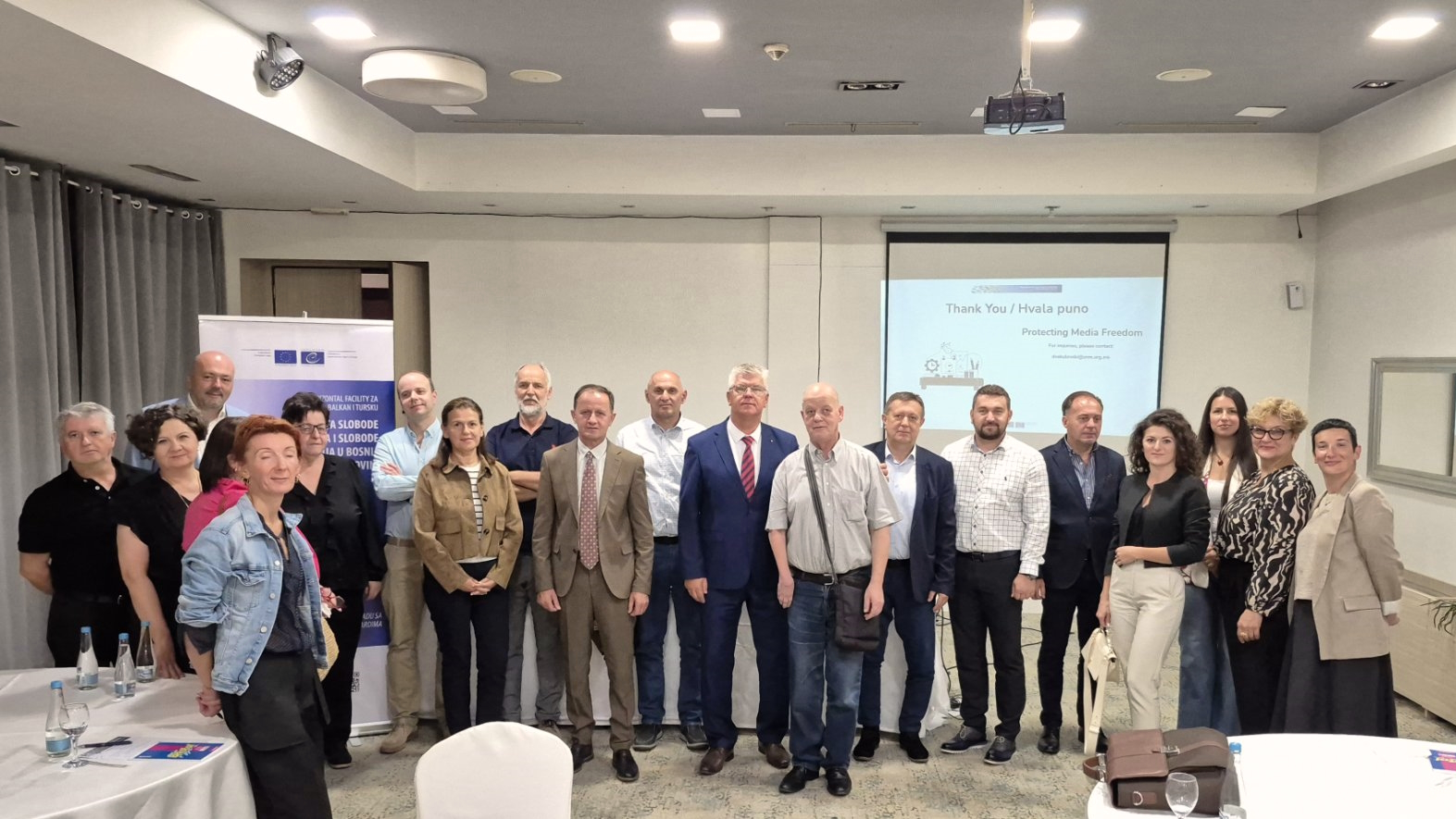
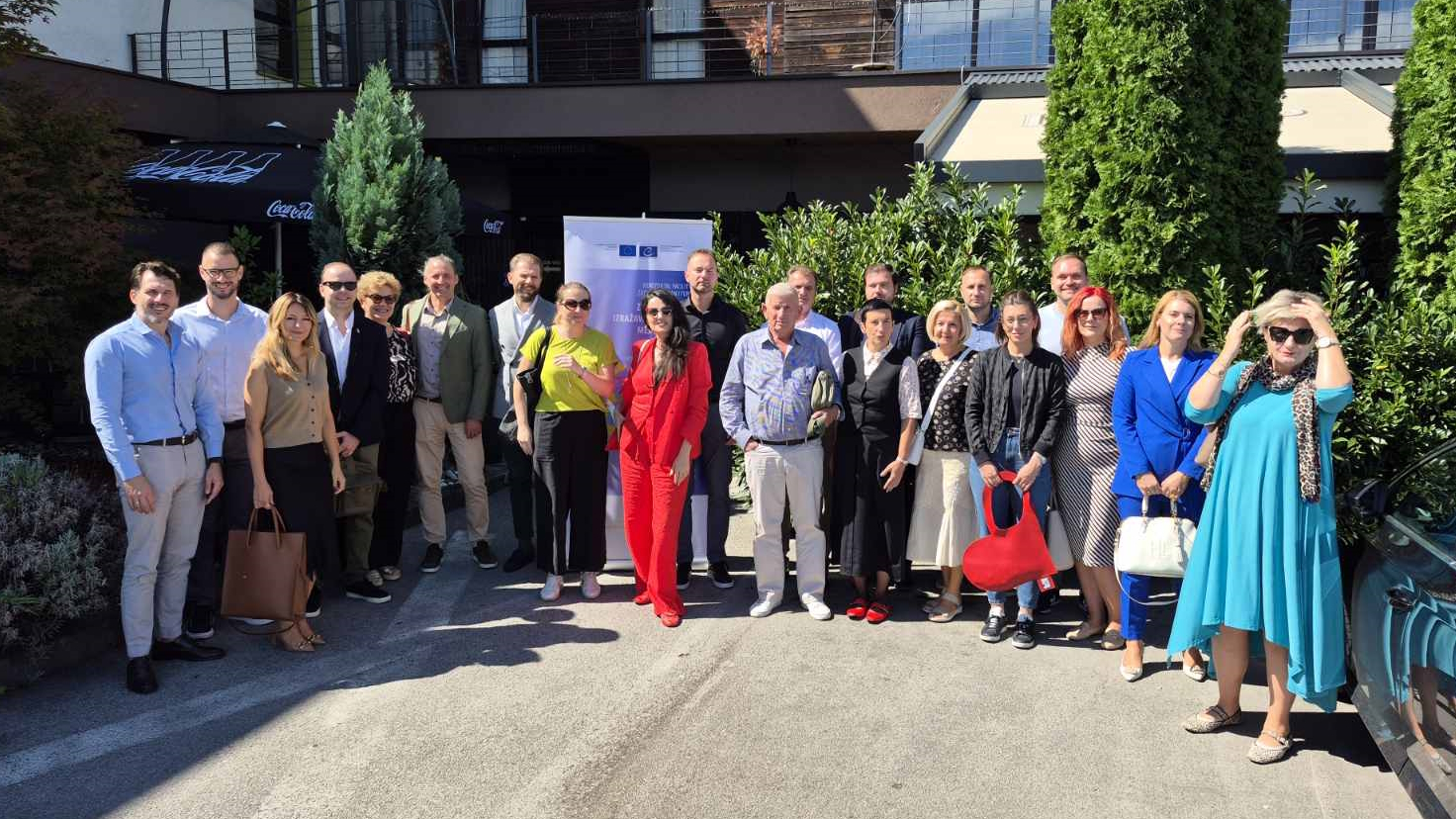
Judicial officials from Bosnia and Herzegovina took part in a two-day training session on 9-10 September 2025 in Bihać, where they learned about effectively applying European standards to protect the rights of whistleblowers and journalists. A follow-up module on the same topic, this time tailored specifically for lawyers, was held on 11–12 September.
By analysing cases from the European Court of Human Rights and domestic courts, the participants of both training sessions gained insights into the existing domestic legislation and practices at the state level and had an opportunity to compare them with European standards designed to provide adequate protection to potential whistleblowers and journalists.
During the discussions, participants called for closer harmonisation of legislation across different levels to ensure proper recognition and effective legal protection. Lawyers, in particular, stressed the need for stronger measures to prevent impunity for attacks against journalists and whistleblowers.
Safeguarding their freedom of expression is essential for protecting the public interest and supporting the development of a democratic society. The seminars also highlighted the importance of applying the “tripartite test” for each individual case. The European Court of Human Rights uses this test to determine whether a restriction on freedom of expression is justifiable: it must be clearly grounded in law, pursue a legitimate aim in line with the European Convention on Human Rights, and be strictly necessary and proportionate in a democratic society.
As these conditions are cumulative, the test serves to prevent the “chilling effect” that disproportionate sanctions against journalists and whistleblowers can produce, threatening freedom of expression as a whole.
The two training sessions were organised as part of the action “Protecting freedom of expression and of the media in Bosnia and Herzegovina (PROFREX)”, implemented under the joint European Union and Council of Europe programme “Horizontal Facility for the Western Balkans and Türkiye”.


 +387 33 957 790
 +387 33 590 447