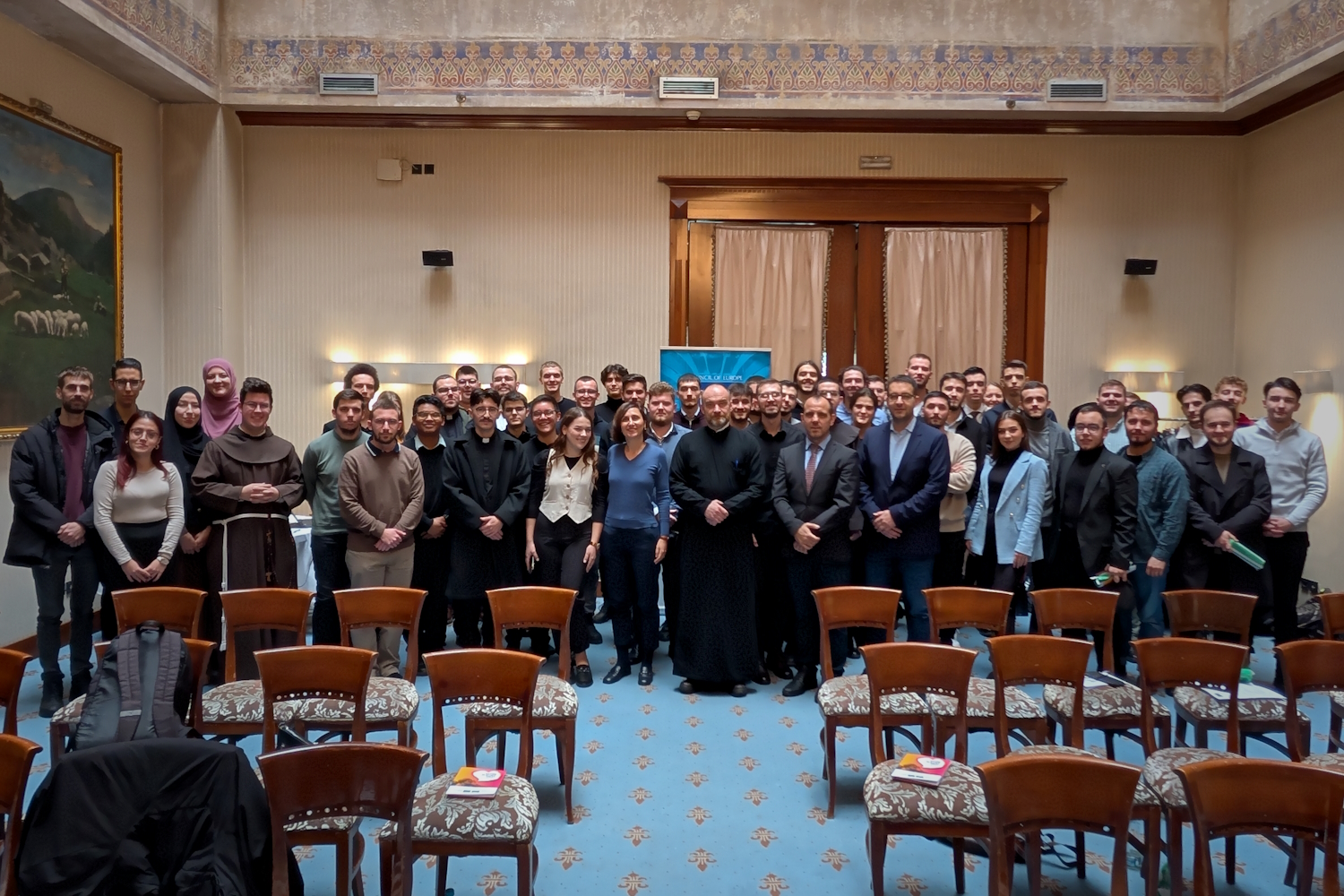
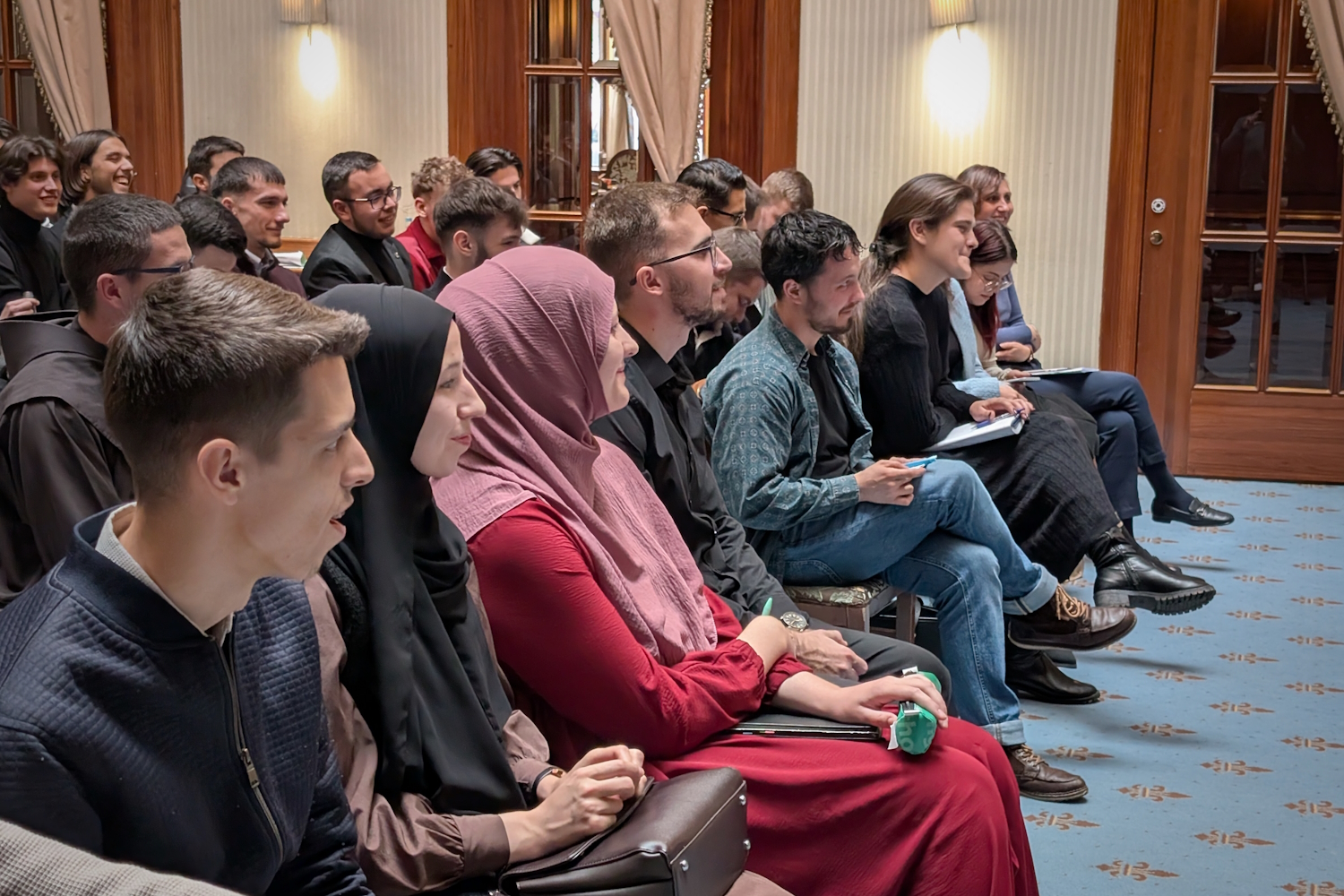
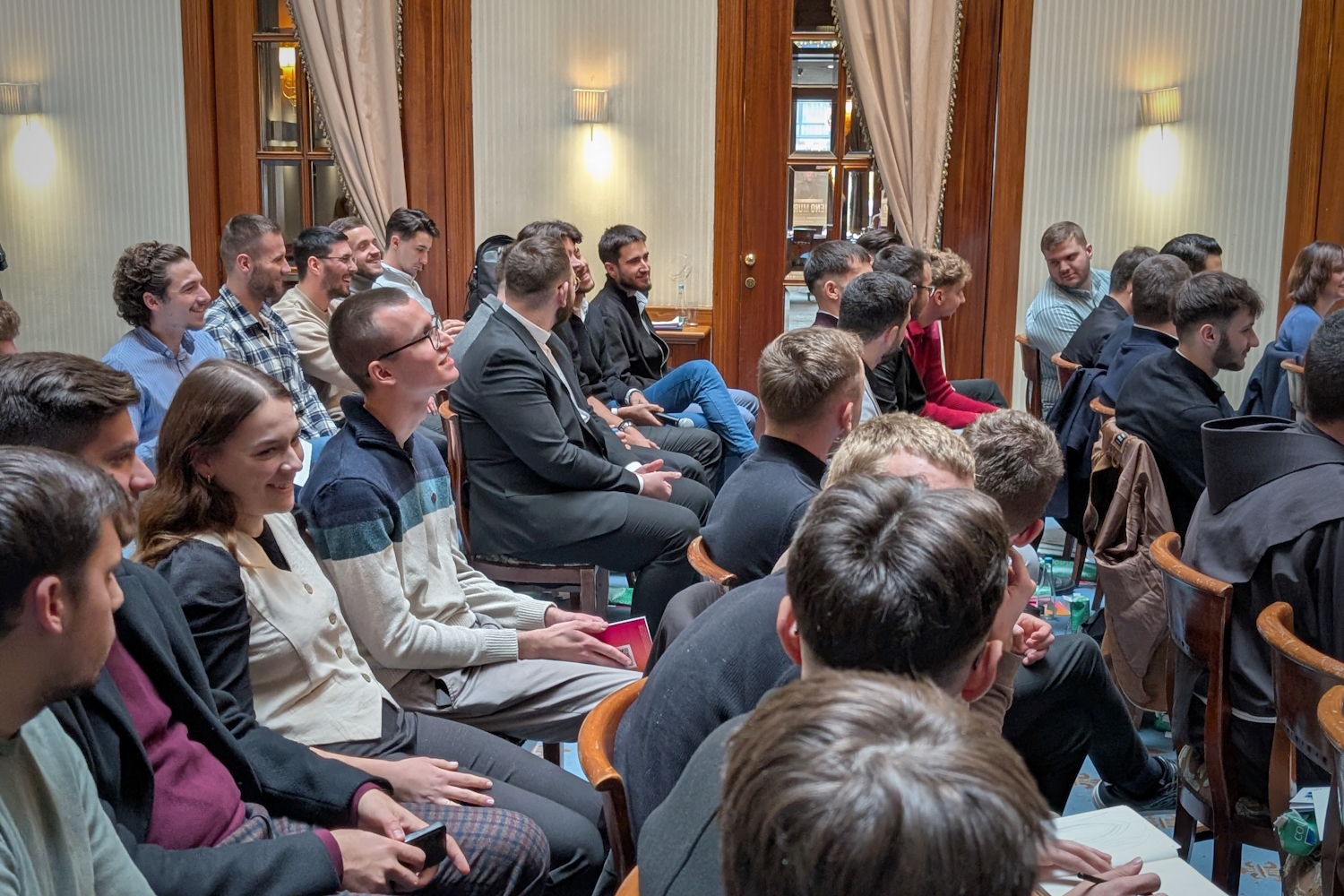
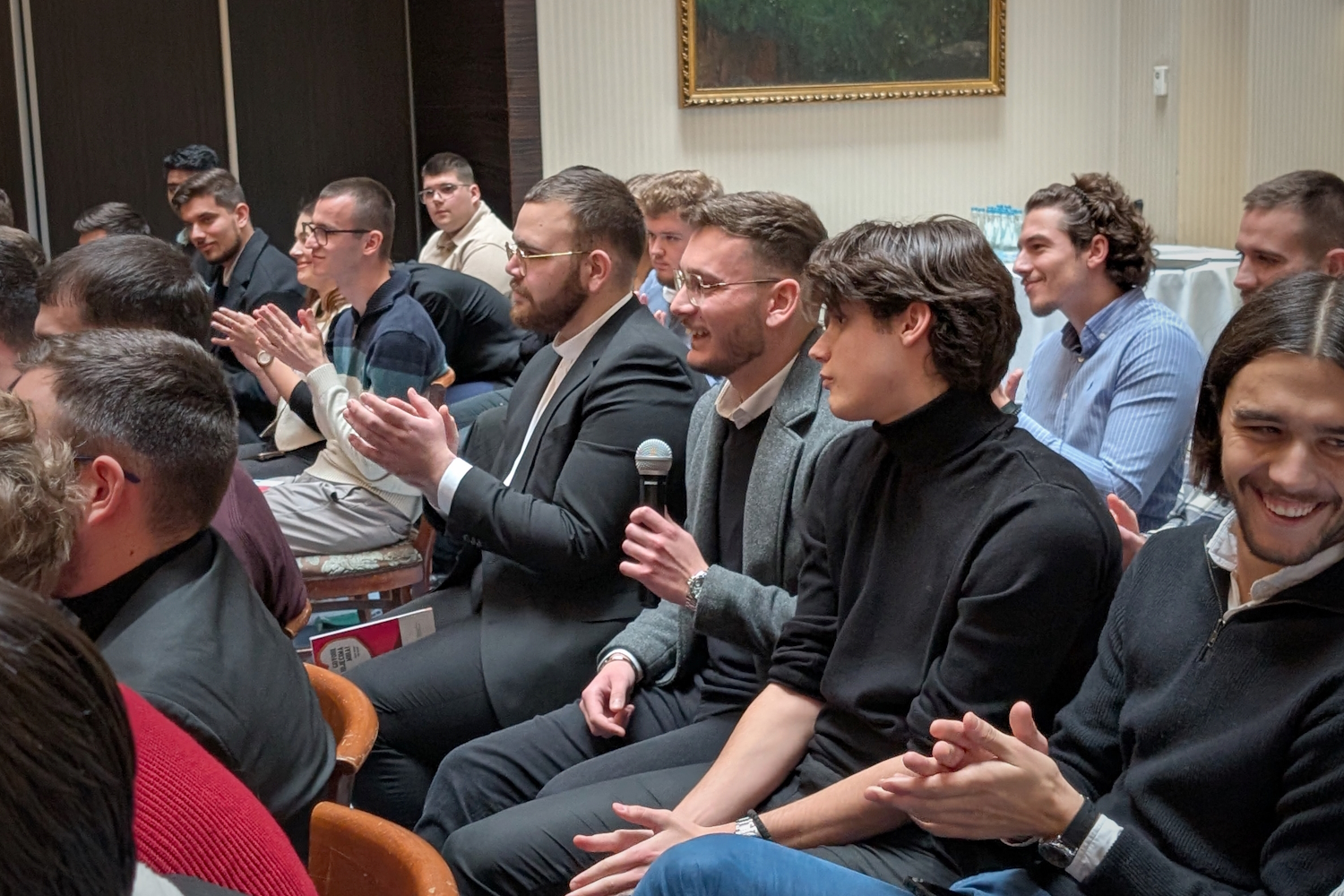
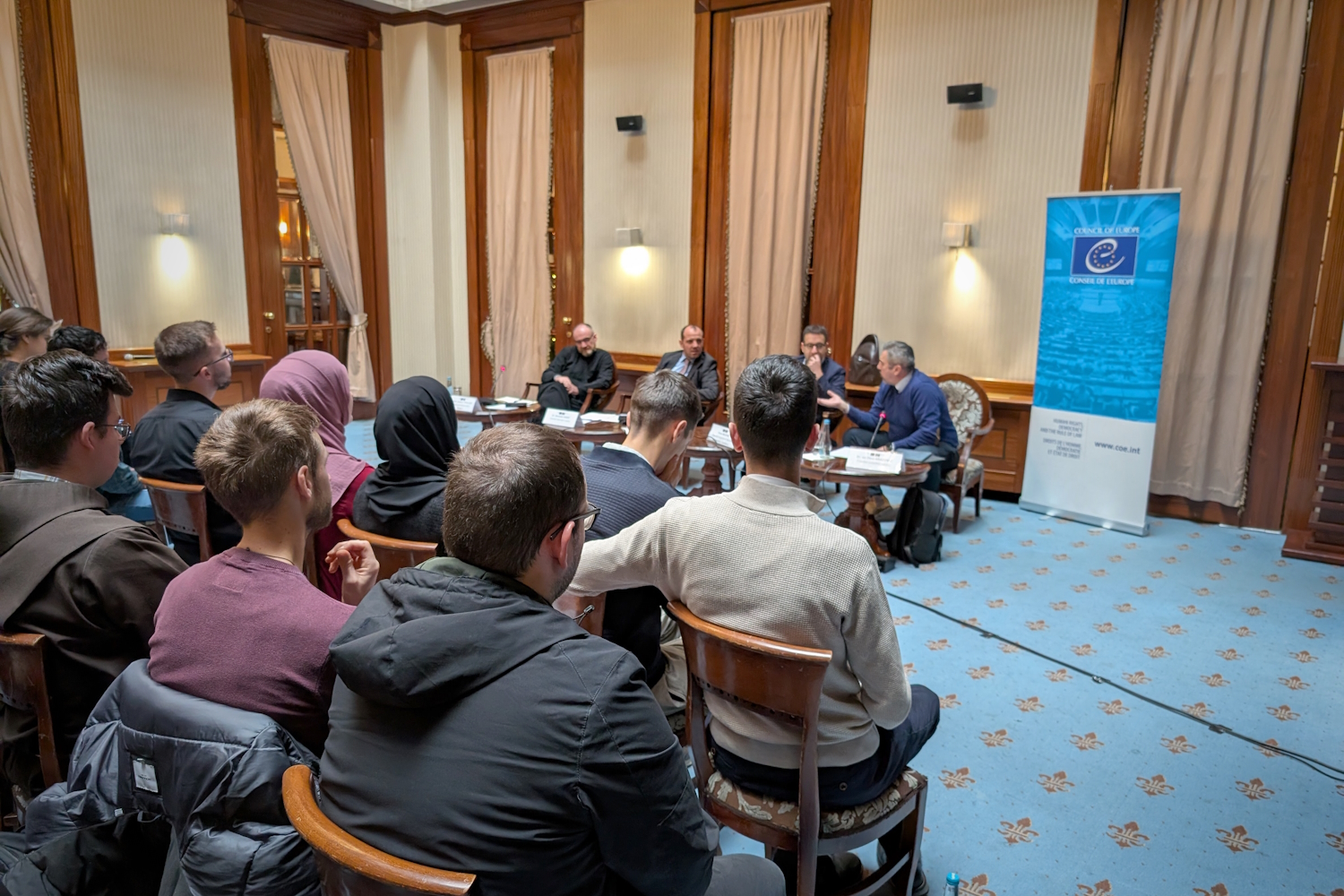
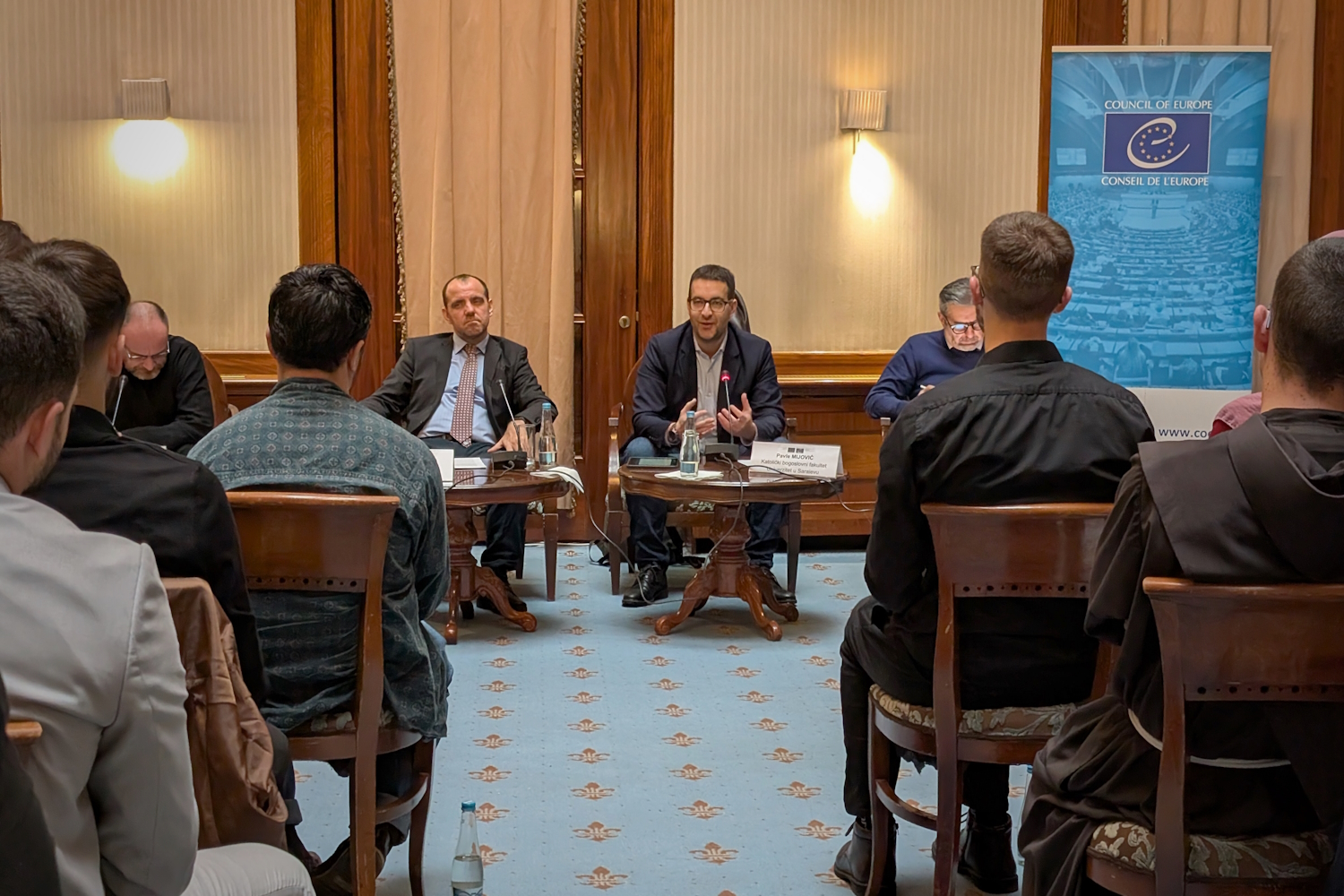
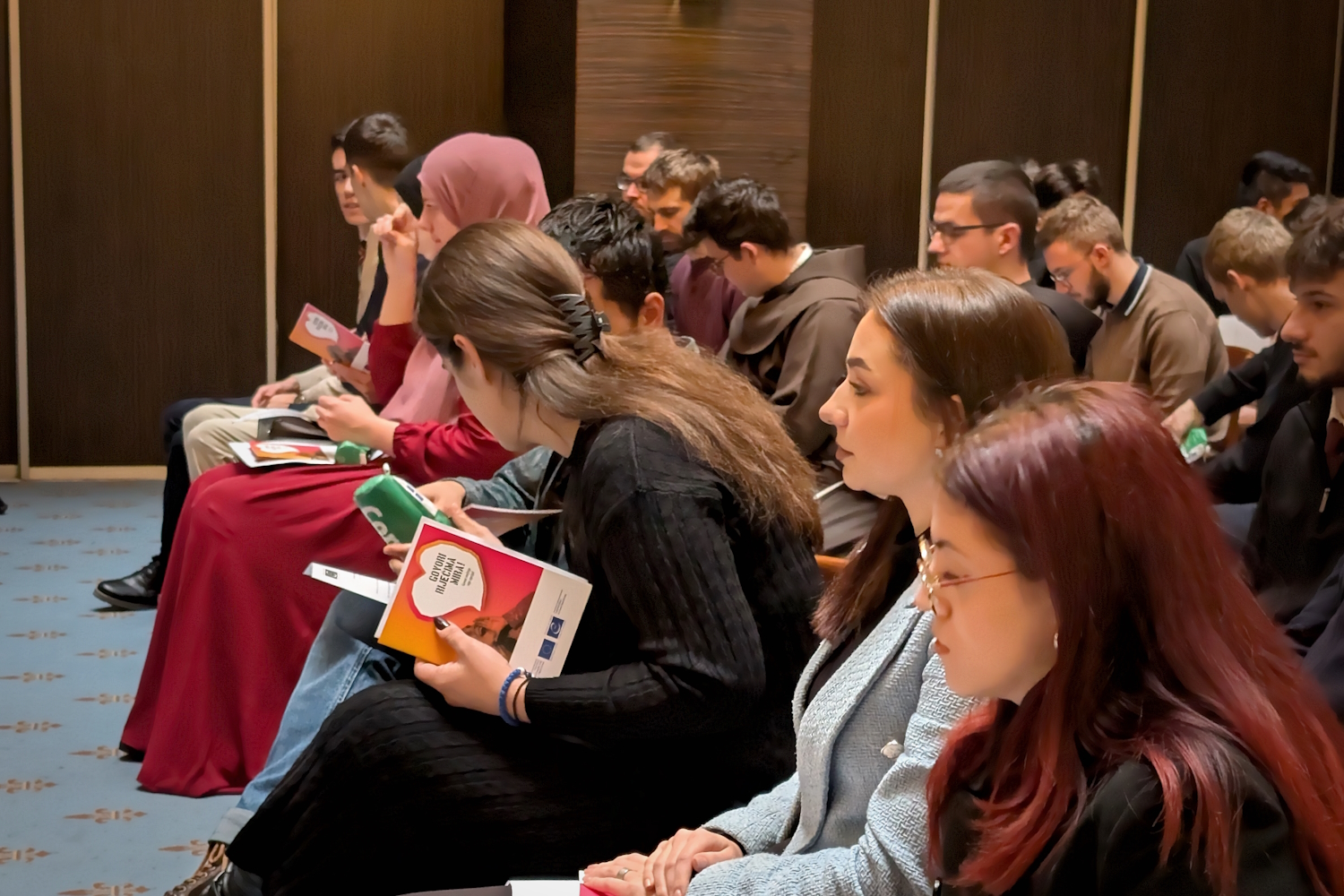
Nemanja sits in the crowded hall of Hotel Europe in Sarajevo, surrounded by 47 other young people. Most of them he has never met, yet they all share the same path: studying theology - Catholic, Islamic, and Orthodox - at three different faculties in Bosnia and Herzegovina.
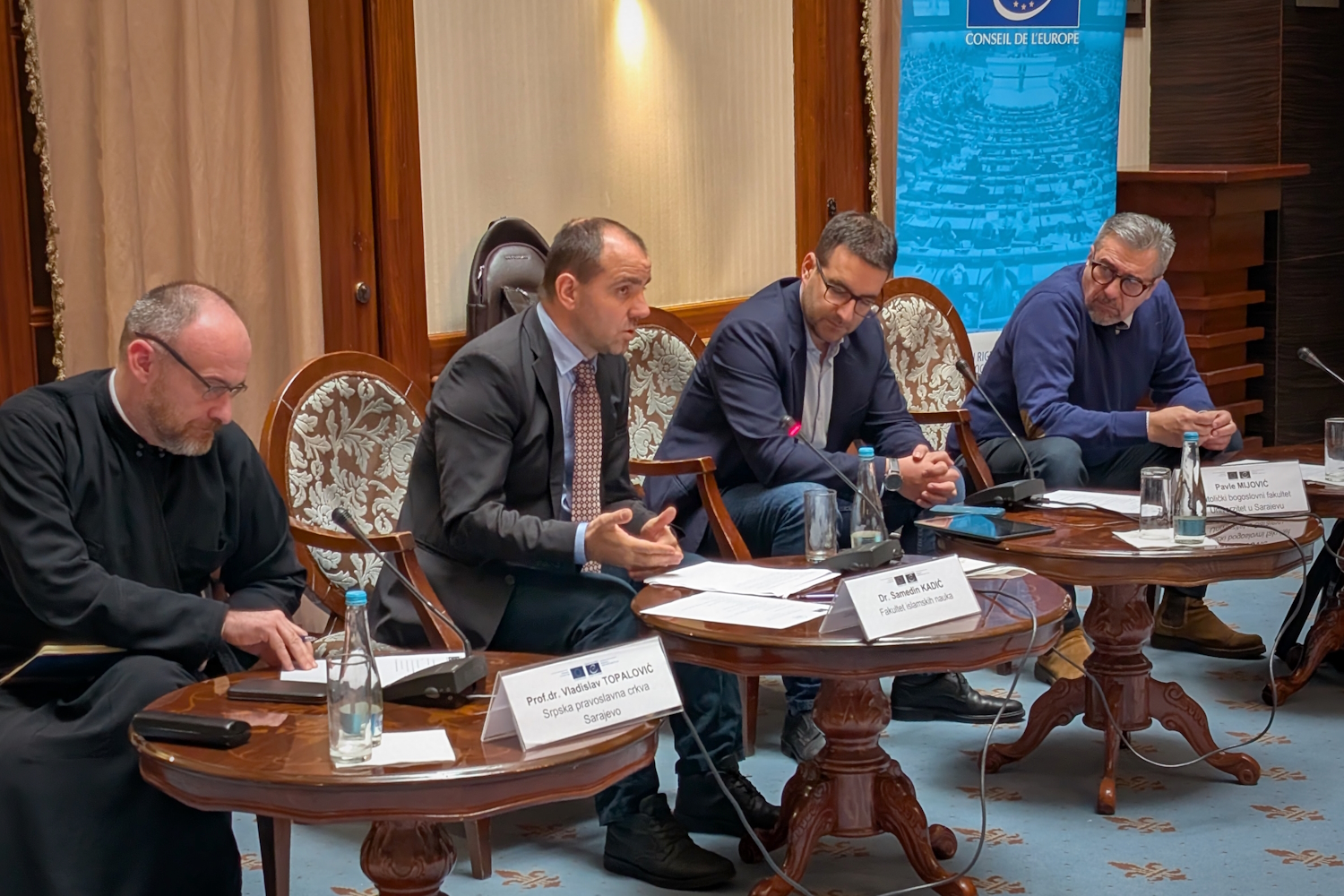
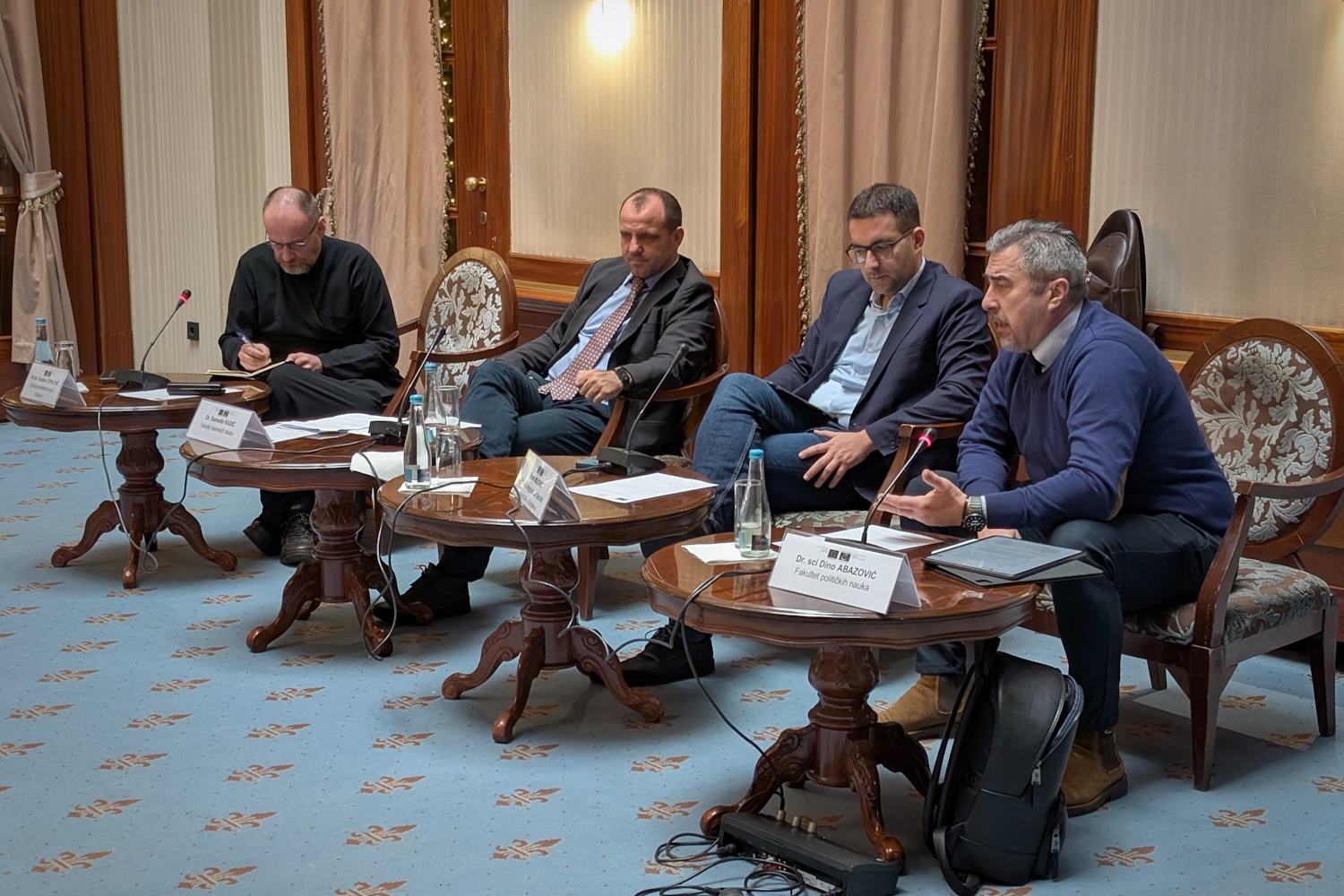
Students are attending an inter-faith discussion, “Interreligious peacebuilding as a response to polarisation”, organised by the Council of Europe in co-operation with the Faculty of Catholic Theology in Sarajevo. A panel of professors from the three theological faculties and the Faculty of Political Sciences in Sarajevo opened the event: Pavle Mijović (moderator), Samedin Kadić, Vladislav Topalović, and Dino Abazović.
For Nemanja, a third-year student, the experience is new. “I didn’t know what to expect,” he says. “I thought it would follow the usual pattern - one topic and we’re done.”
Instead, the discussion addressed issues of identity, otherness, how people perceive one another, and above all, the role of dialogue. Throughout the two-hour conversation, panellists stressed that open, honest exchange is essential for overcoming prejudice. Faith, they argued, should be a bridge between people, not a barrier. Moderator Mijović used a simple image: bridges take effort to build, but once in place, they last.
One student reflected that people often meet “in the middle” for brief moments of civility but then withdraw back into their own groups. Changing this dynamic, the panellists argued, is essential for genuine understanding.
Panellists agreed that constructive conversation is increasingly difficult in a climate shaped by social media and political polarisation. They emphasised the responsibility of teachers and religious leaders to model open dialogue, both between faiths and within their own communities and structures.
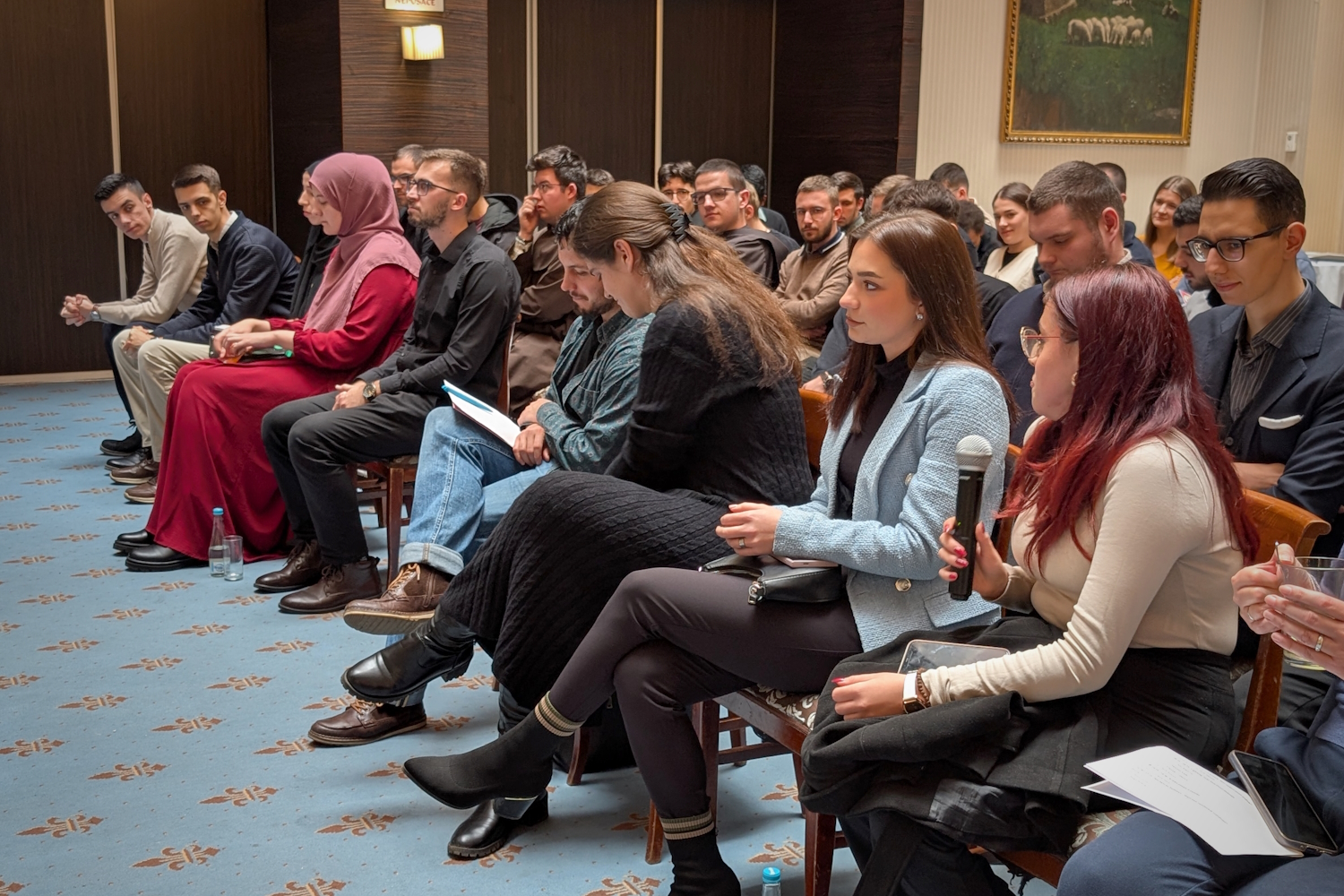
Many students also urged their peers to take the initiative and lead the conversations forward. Angelina, a first-year student, shared her concerns that formal settings sometimes limit the questions students want to ask. She noted that many young people only receive answers from within their own communities, and said that more informal, student-driven discussions could help broaden perspectives.
In the second half of the event, students were invited to introduce themselves and share their reflections. Several students expressed interest in visiting other theological faculties to continue these exchanges independently. Many said it was valuable to observe professors discuss - and disagree - in a respectful way.
Ahmed, a second-year student, summed up a message that resonated widely: “Every religion encourages people to compete in doing good. We won’t agree on everything, but the ultimate message should always be good.”
For Nemanja, the event reinforced the importance of student voices. “Students aren’t usually the ones whose voices carry far, but they should,” he said. “We are future academics, teachers, and in our field, even shepherds of the people.” Looking back on his initial uncertainty, he says this experience changed his perspective: “My mind has been changed. Seeing students from other faculties, and my own, I believe this can lead to something meaningful.”
The panel discussion was organised by the Council of Europe through its project “Combating discrimination, hate, and racism in Bosnia and Herzegovina,” which is implemented under the Council of Europe’s Action Plan for Bosnia and Herzegovina 2022-2025.


 +387 33 957 790
 +387 33 590 447