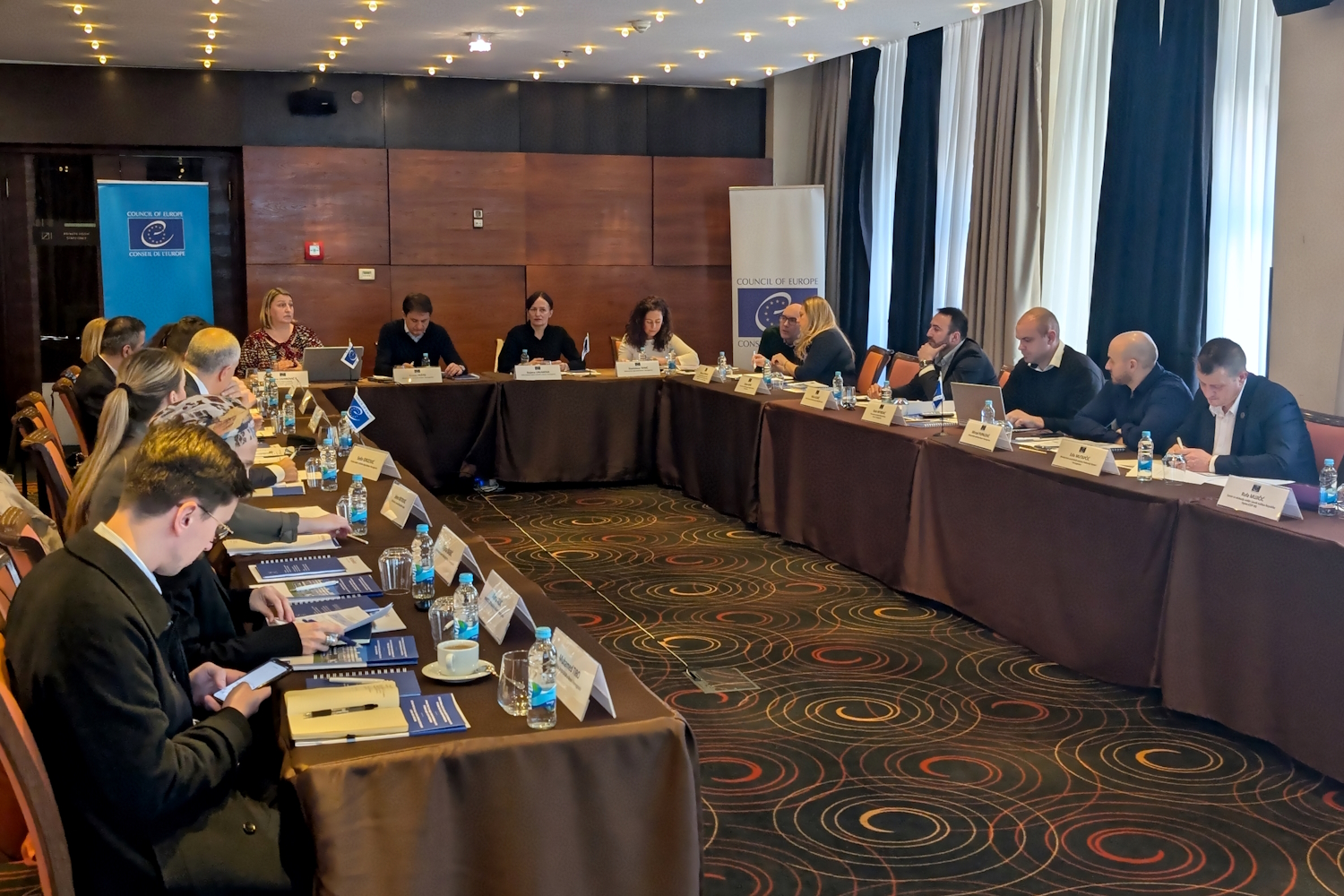
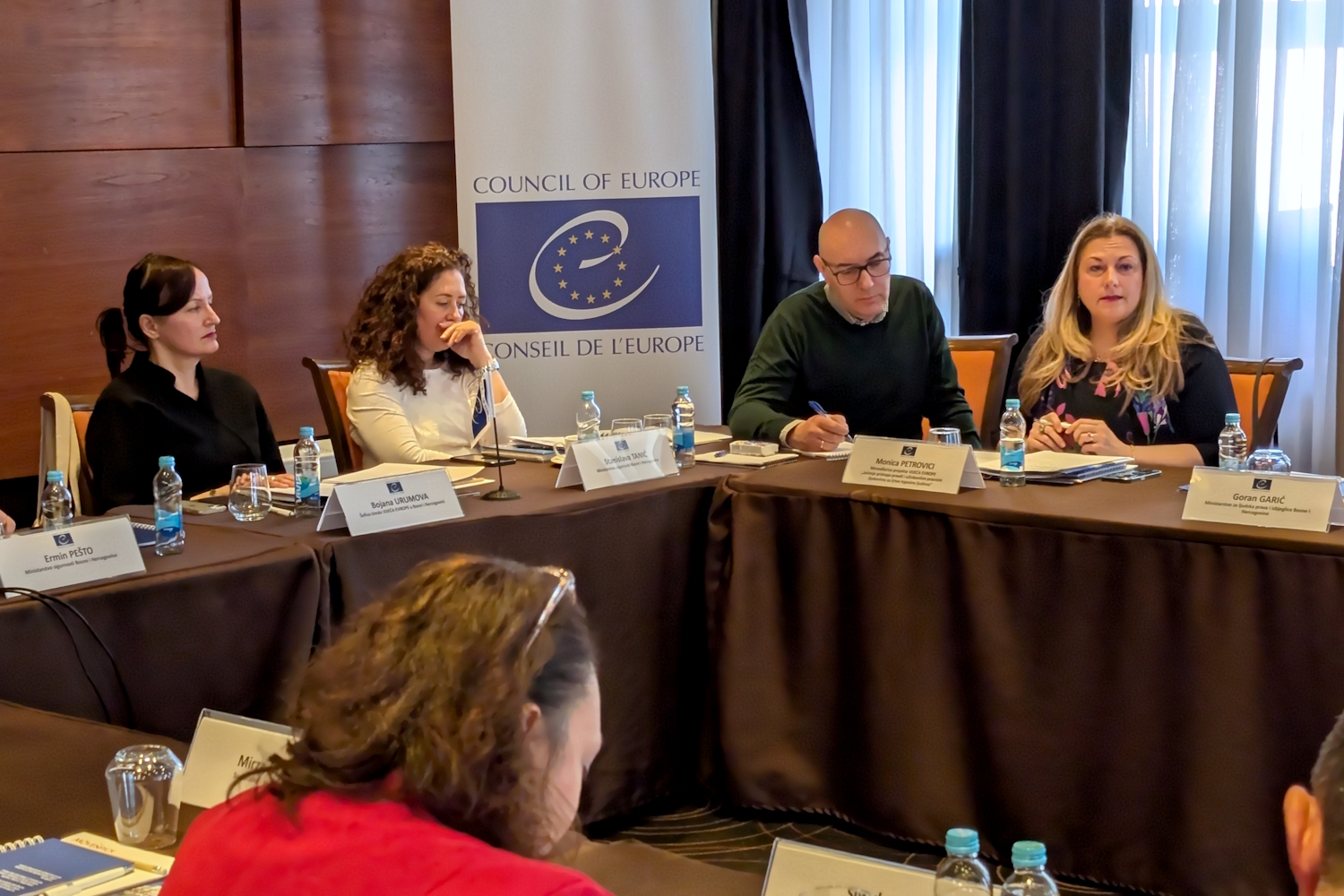
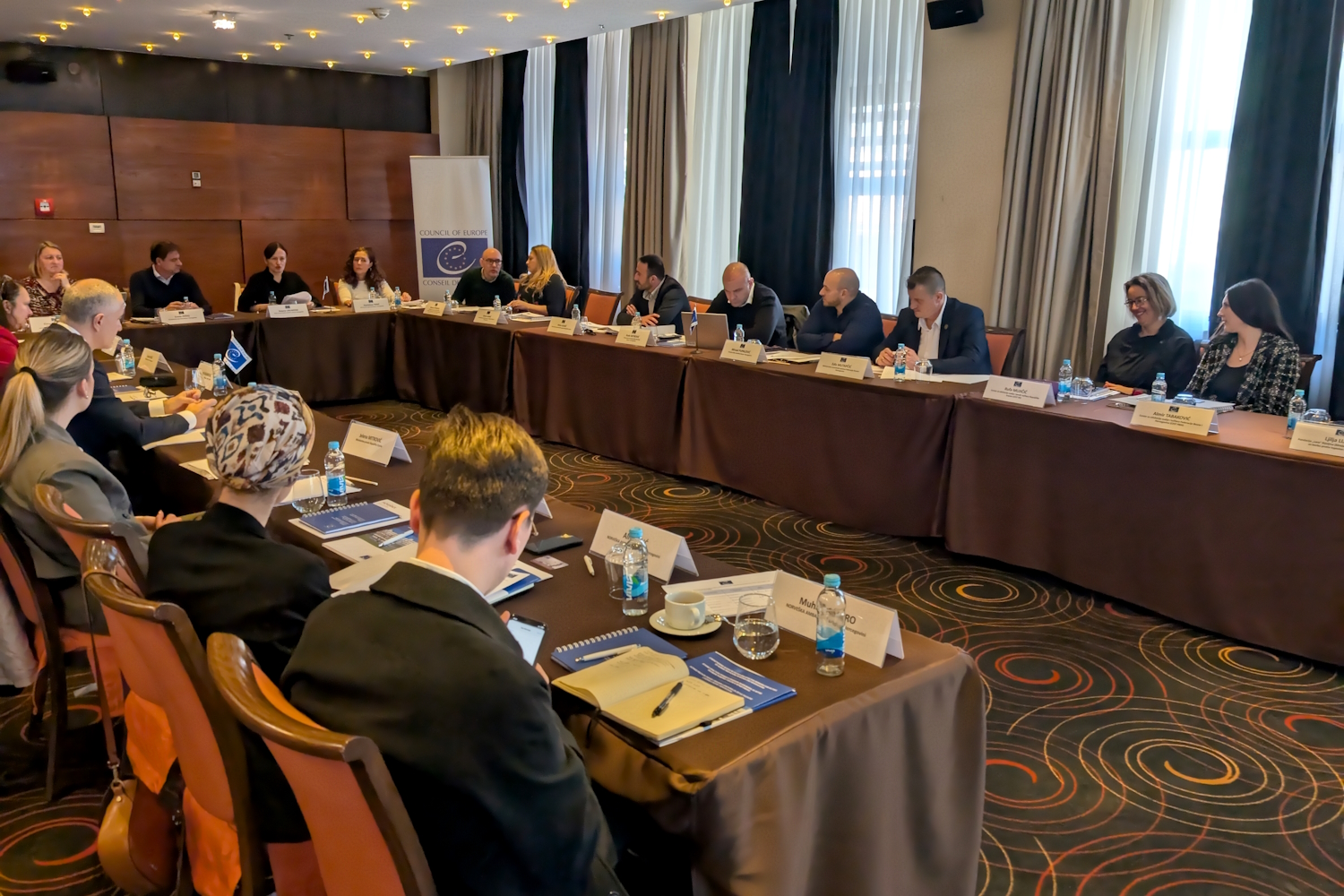
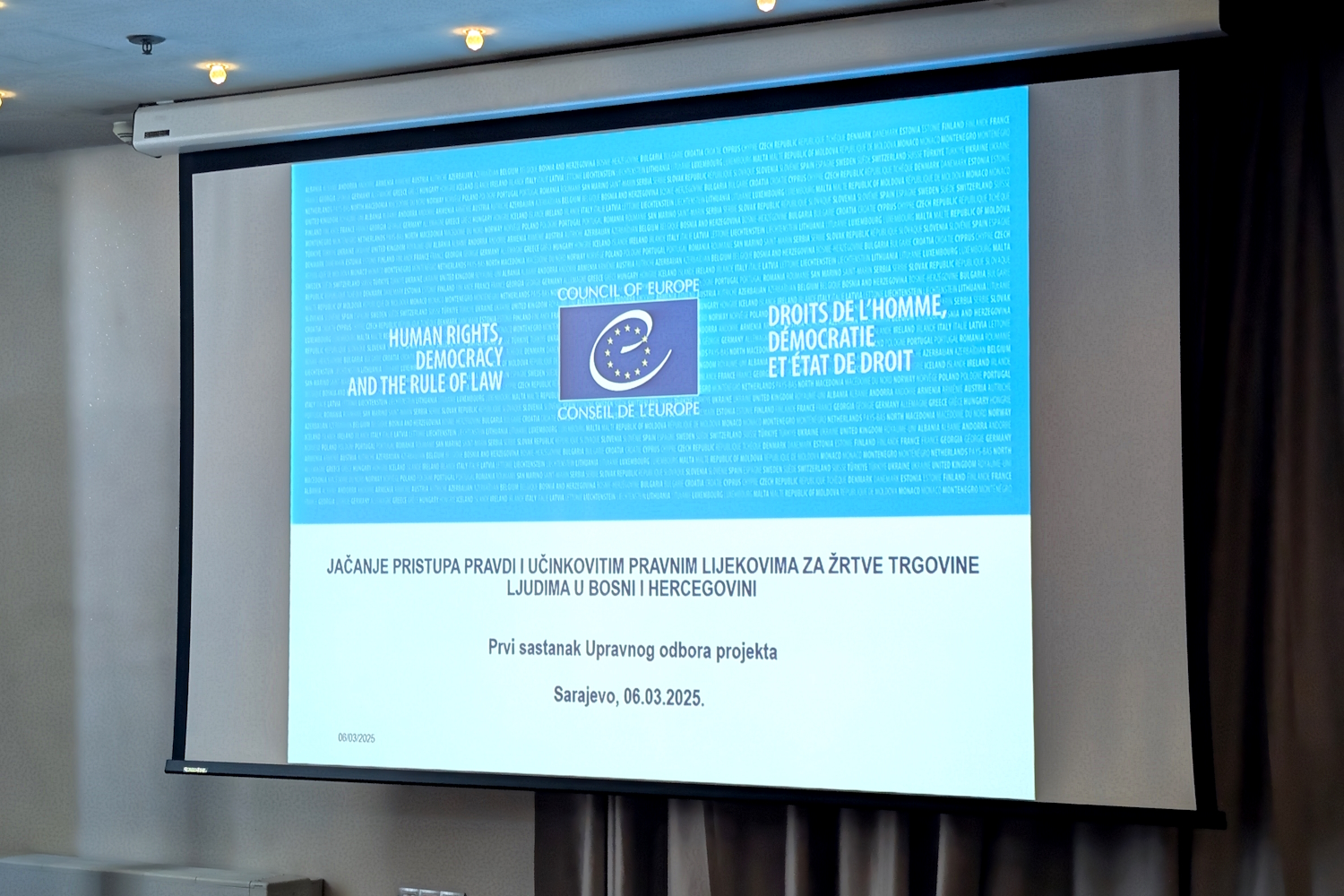
The Council of Europe has launched a new project in Bosnia and Herzegovina to facilitate the provision of essential support for human trafficking victims. This initiative aims to reinforce domestic mechanisms and capacities to ensure better access to justice and effective legal remedies for trafficking victims in Bosnia and Herzegovina.
The project will focus on delivering training and expertise to key groups, including government agencies, the judiciary, and civil society organisations. It will also assist domestic institutions in exploring ways to ensure that victims receive compensation from traffickers, including potential funding sources such as the seizure of illegal assets.
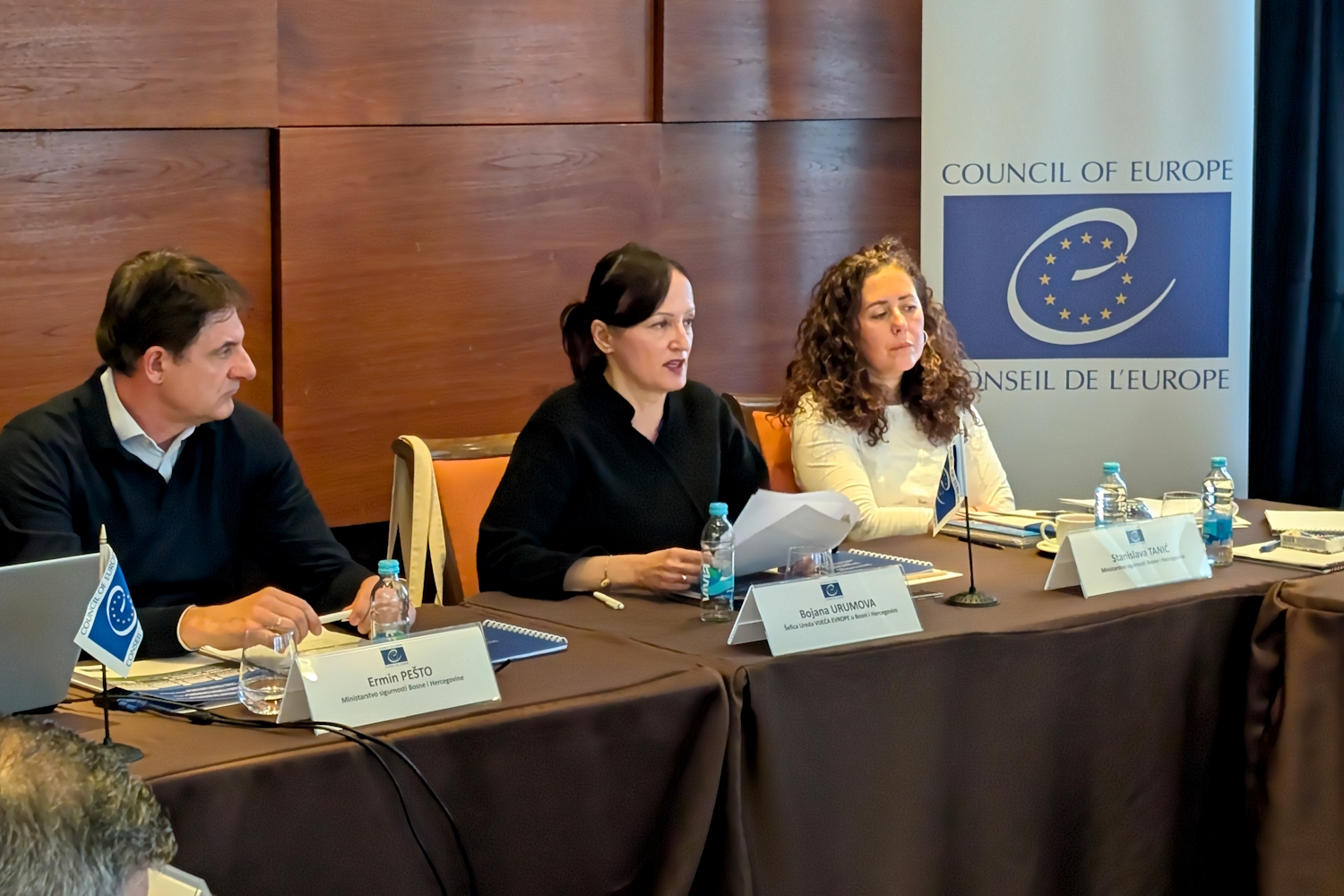
Addressing the inaugural session of the project’s Steering Committee, Bojana Urumova, Head of the Council of Europe Office in Sarajevo, emphasised that the Council of Europe Convention on Action against Trafficking in Human Beings mandates all state parties to provide victims with essential support for their physical, psychological, and social recovery.
“Efforts to combat human trafficking and to repair the harm inflicted are most effective when we listen to victims and gain an understanding of their experiences, perspectives, and needs. This is what we have done when striving to help trafficking survivors get organised and involved in developing mechanisms to support the victims, as well as others who are vulnerable to targeting by traffickers. Protecting human dignity shall continue to guide our work going forward,” Urumova added.
Ermin Pešto, Assistant Minister for International Cooperation and European Integration of the Ministry of Security of Bosnia and Herzegovina, stated that this Ministry, which has a strategic role in coordinating comprehensive activities against human trafficking in BiH, highly values its continuous co-operation with international partners. “In this sense, our collaboration with the Council of Europe has been very successful and we expect this to continue in the future. We shall resume our work on strengthening capacities for providing legal aid, improving access to compensation measures, and further supporting victims and survivors of human trafficking,” Pešto said.
The project is being implemented under the Council of Europe’s Action Plan for Bosnia and Herzegovina (2022-2025) and is funded through voluntary contributions by Norway, Germany, Belgium, and Slovenia. It will support Bosnia and Herzegovina in aligning with the provisions of the Anti-Trafficking Convention and recommendations from the Group of Experts on Action against Trafficking in Human Beings (GRETA).
This initiative builds on the success of a previous two-year project that provided advanced training for front-line professionals, including judiciary members, civil society organisations, and legal aid providers on preventing human trafficking, protecting victims' rights, and improving identification and prosecution processes.


 +387 33 957 790
 +387 33 590 447