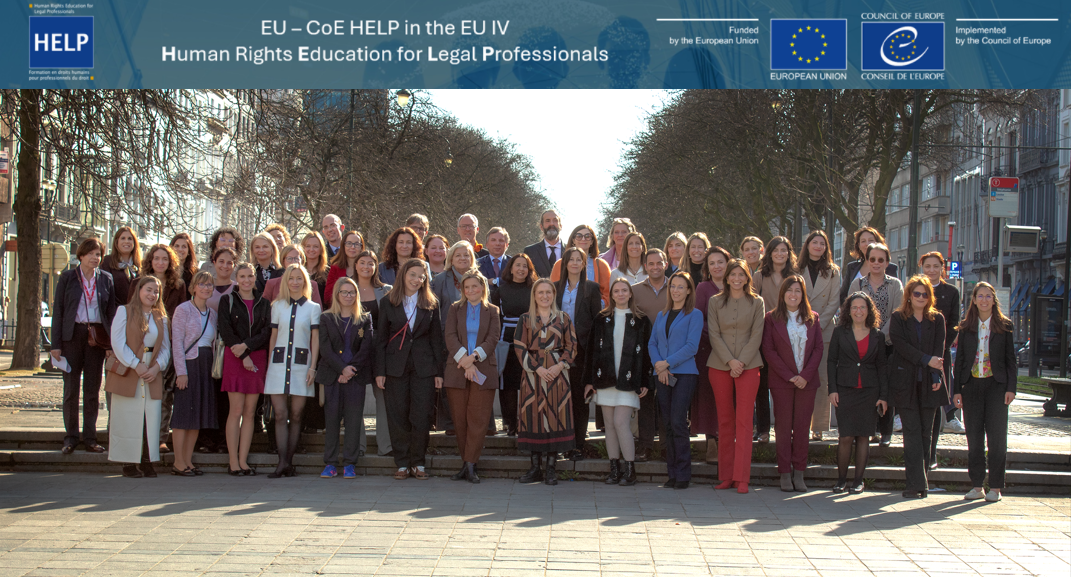
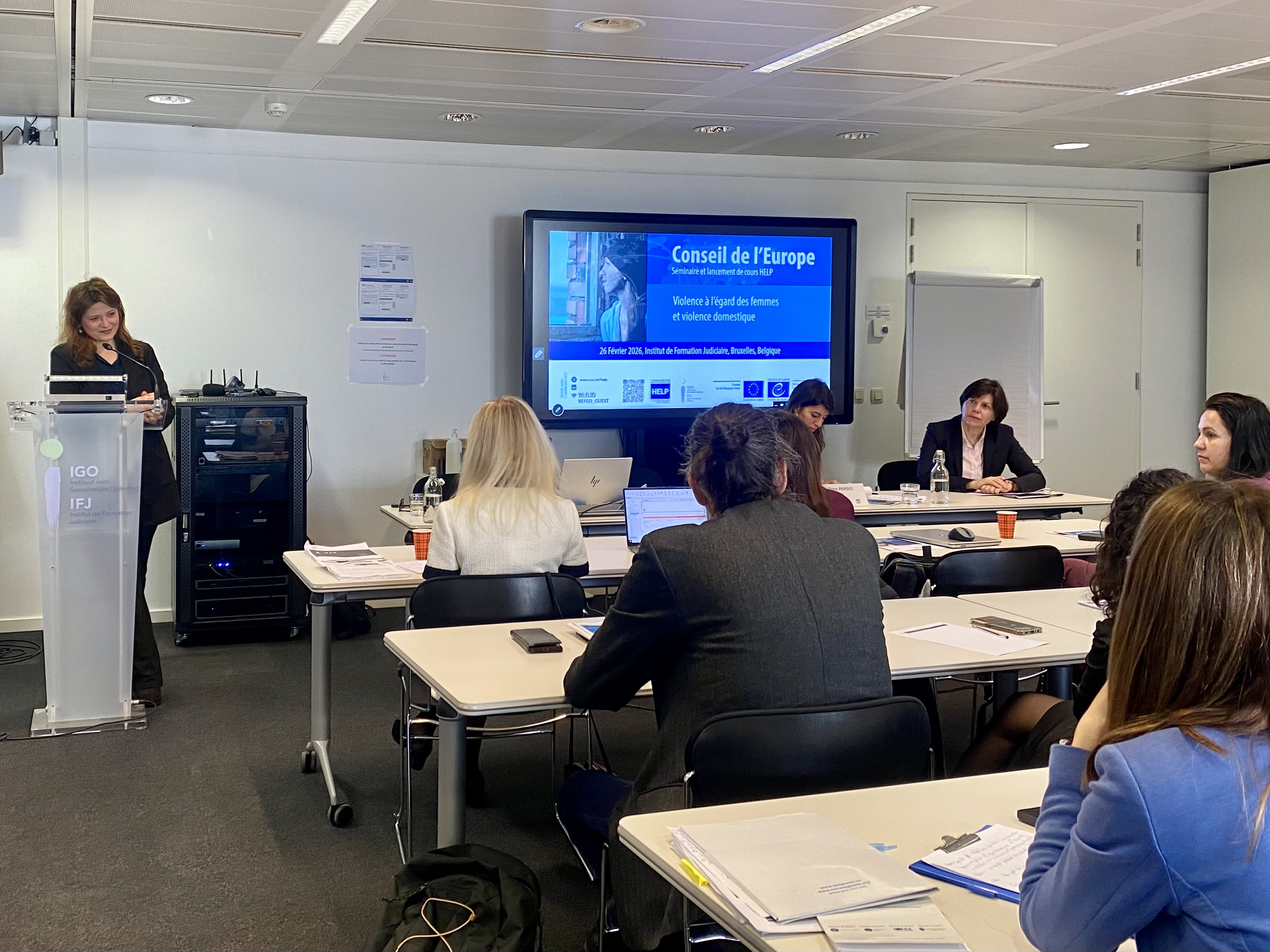
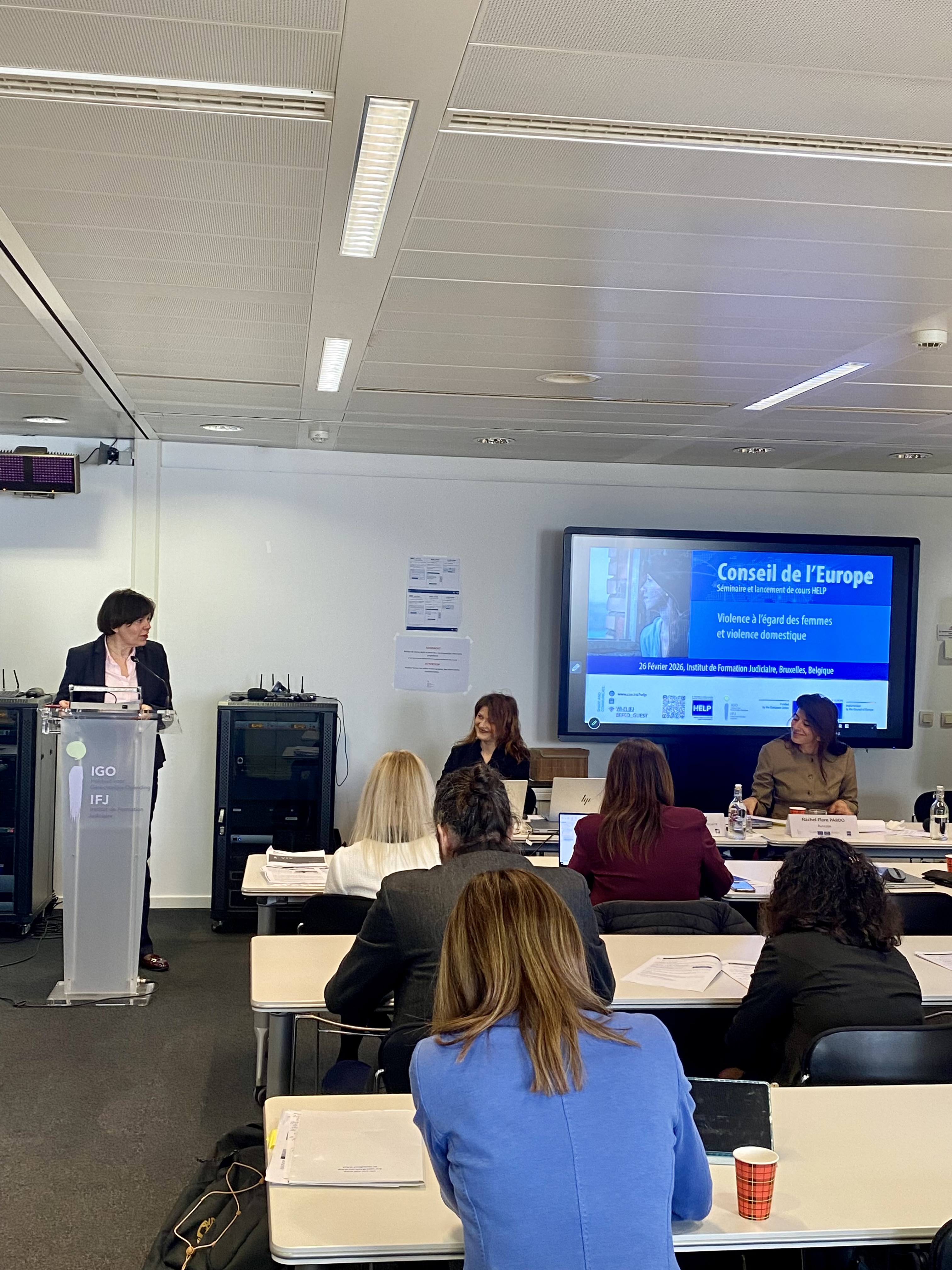
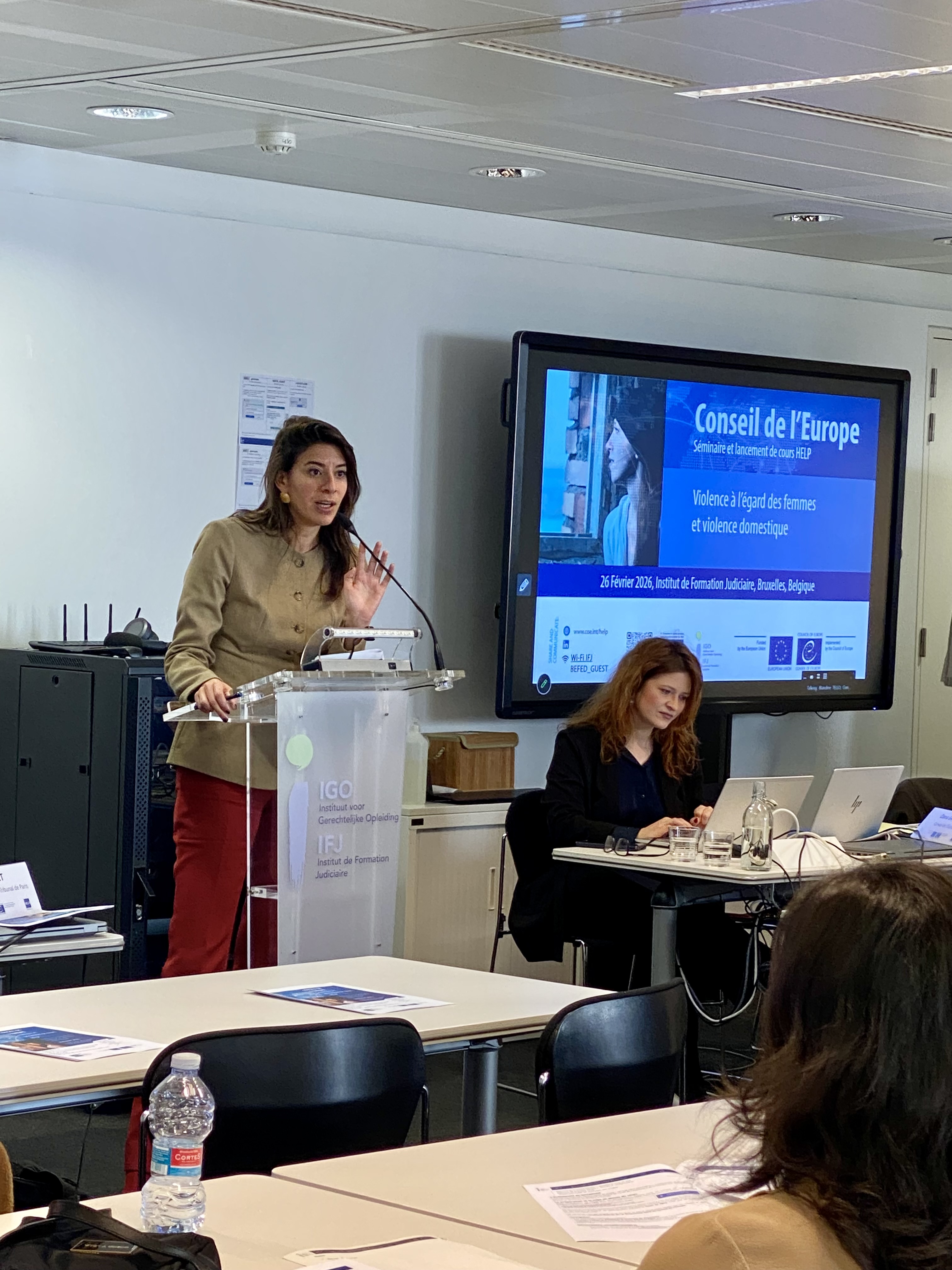
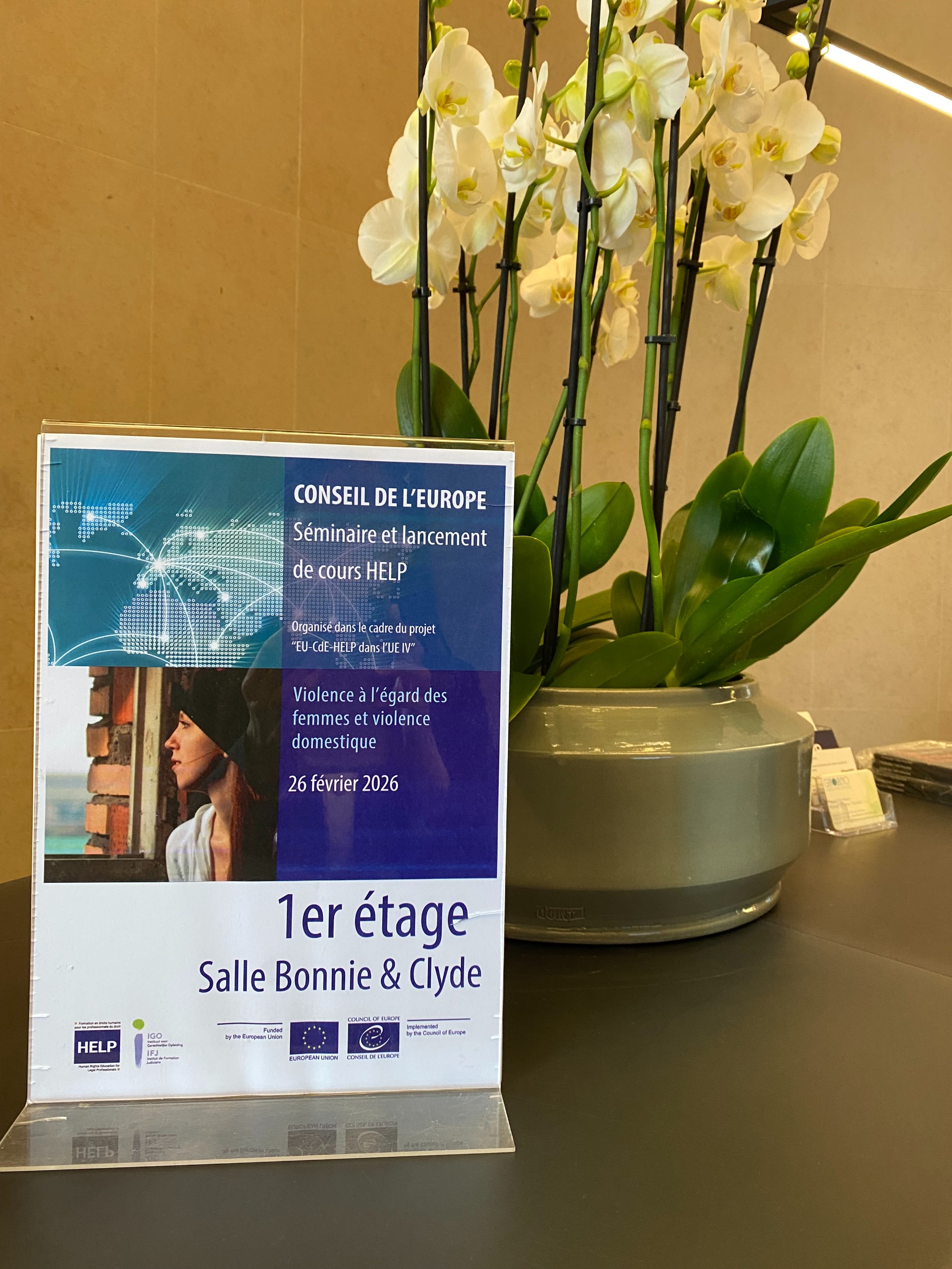
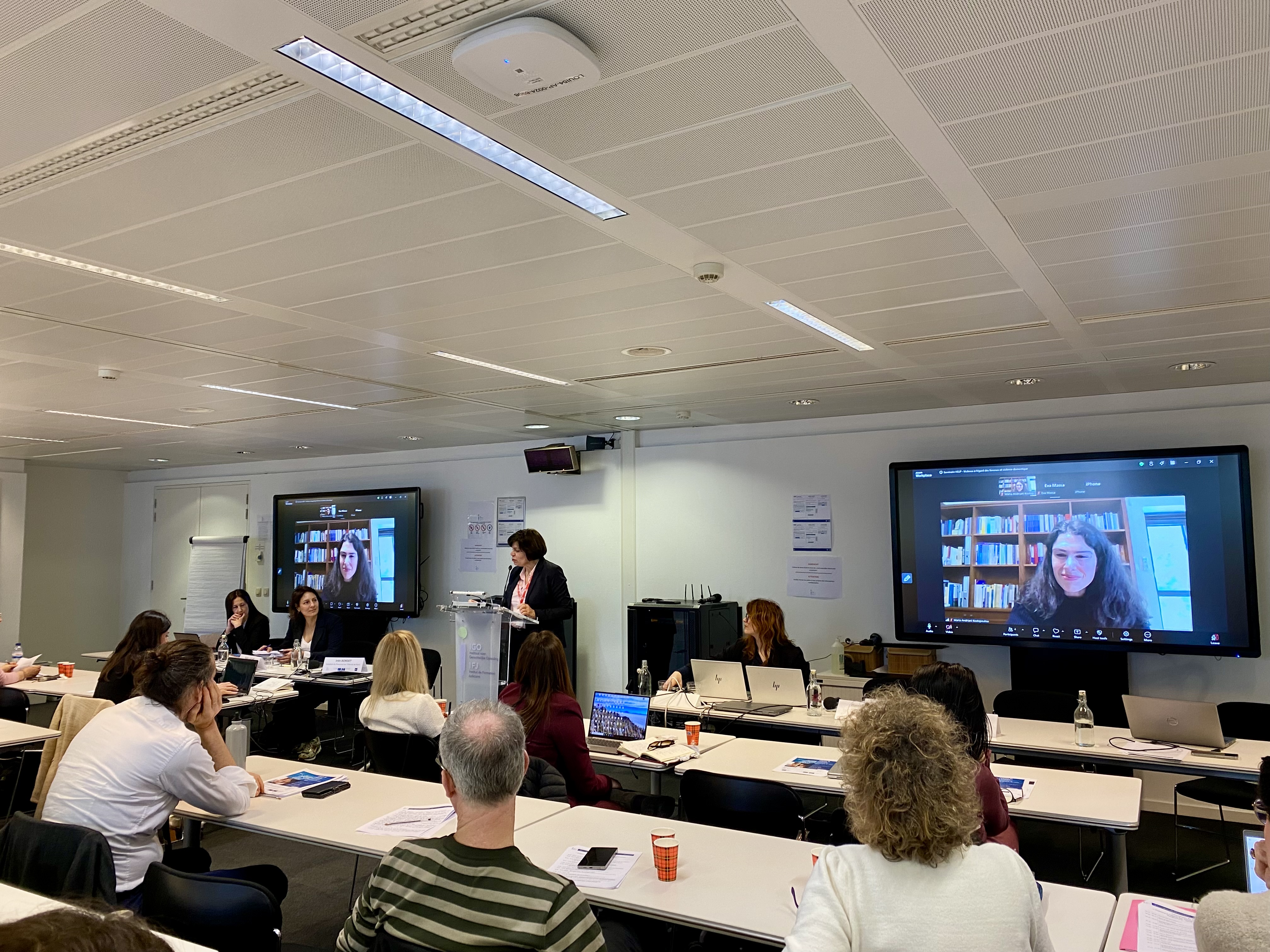
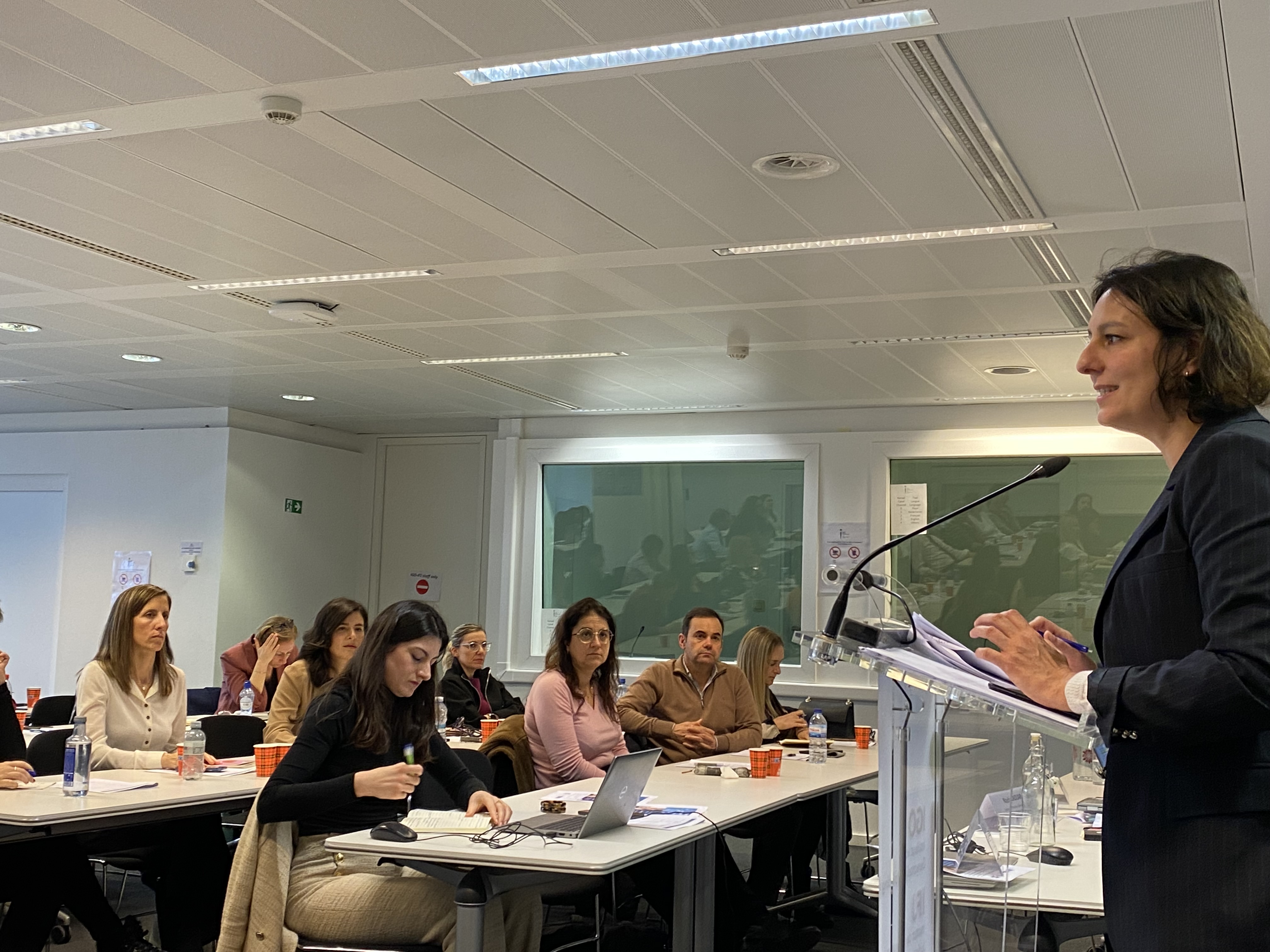
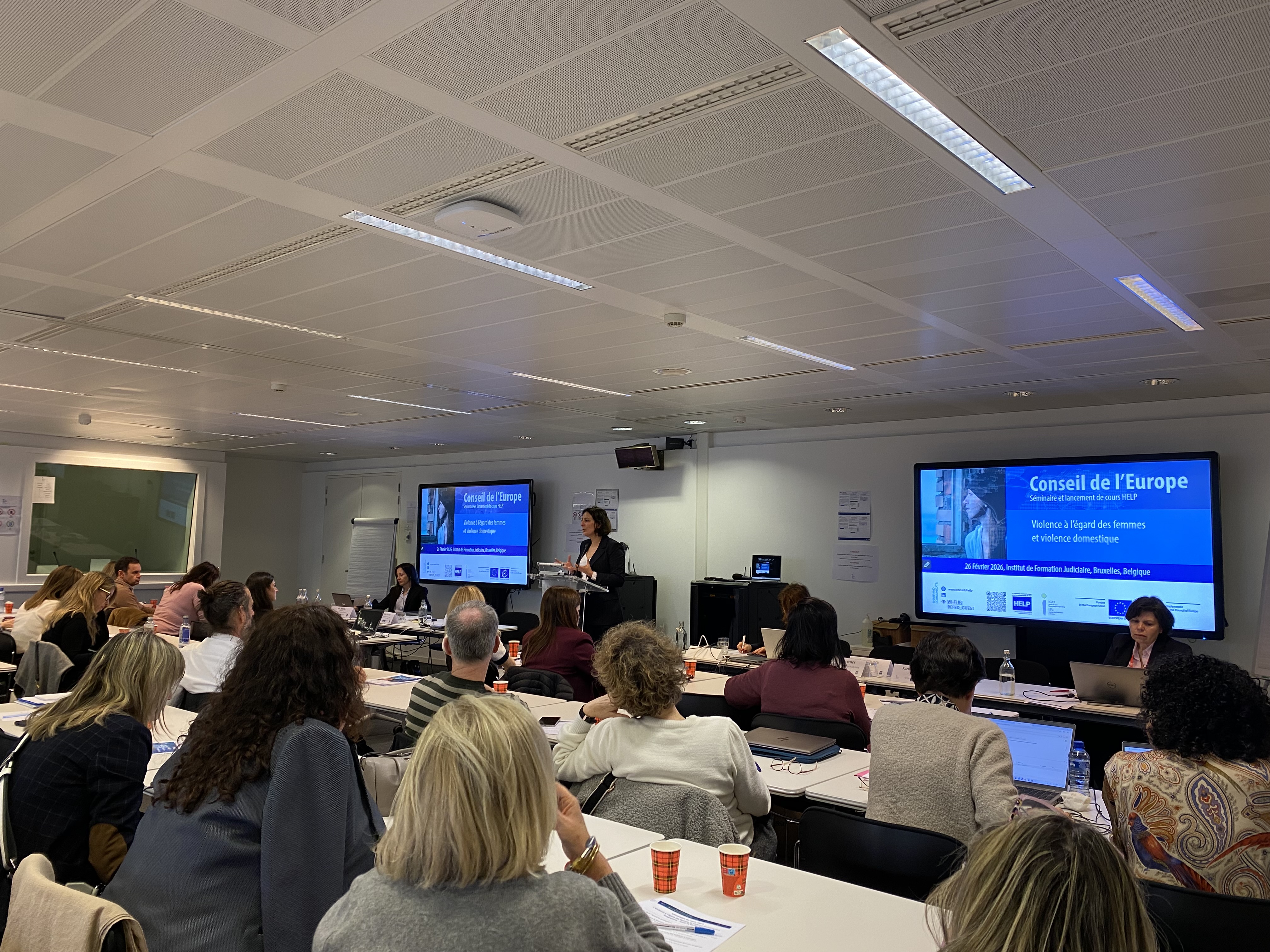
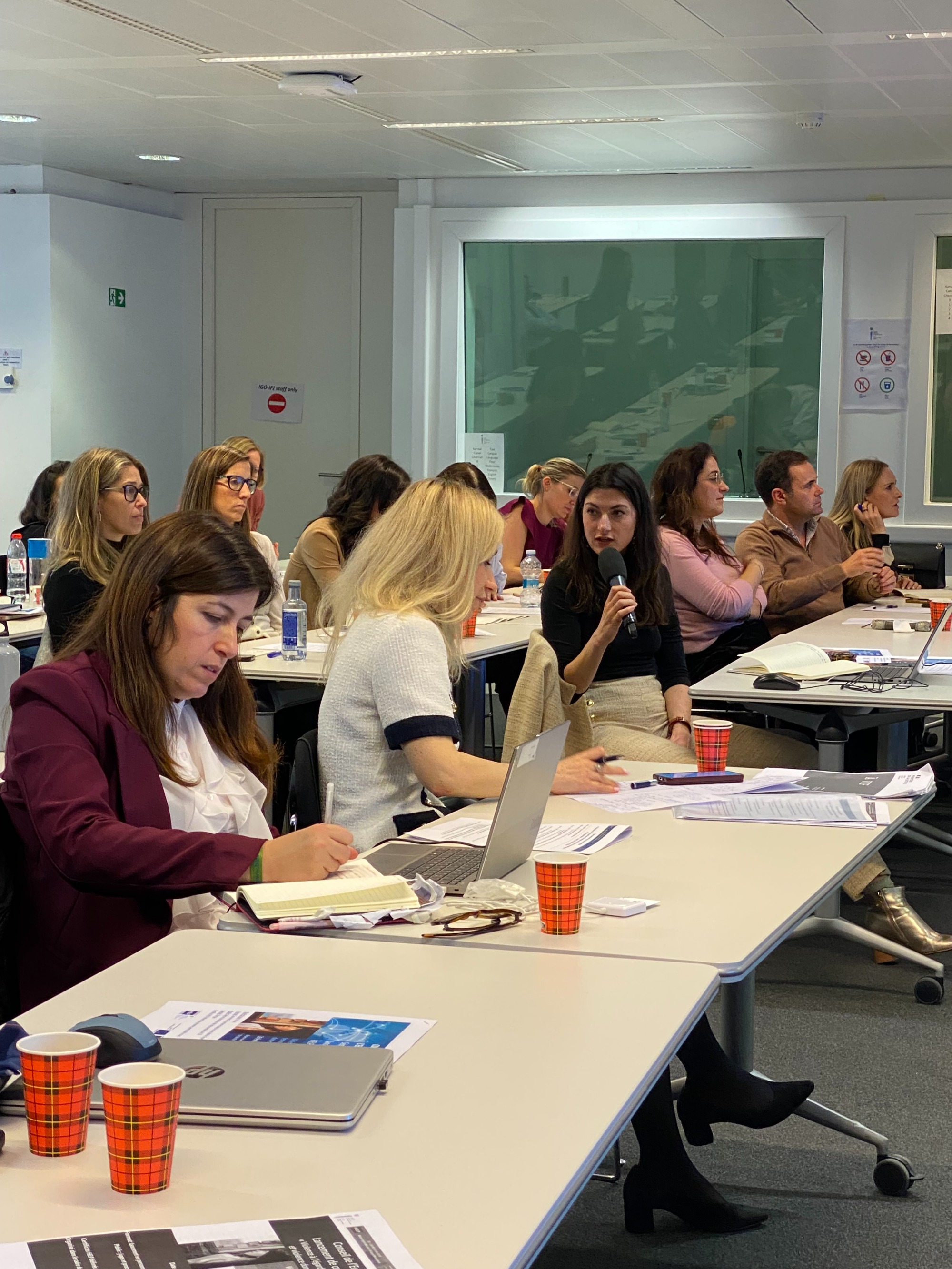
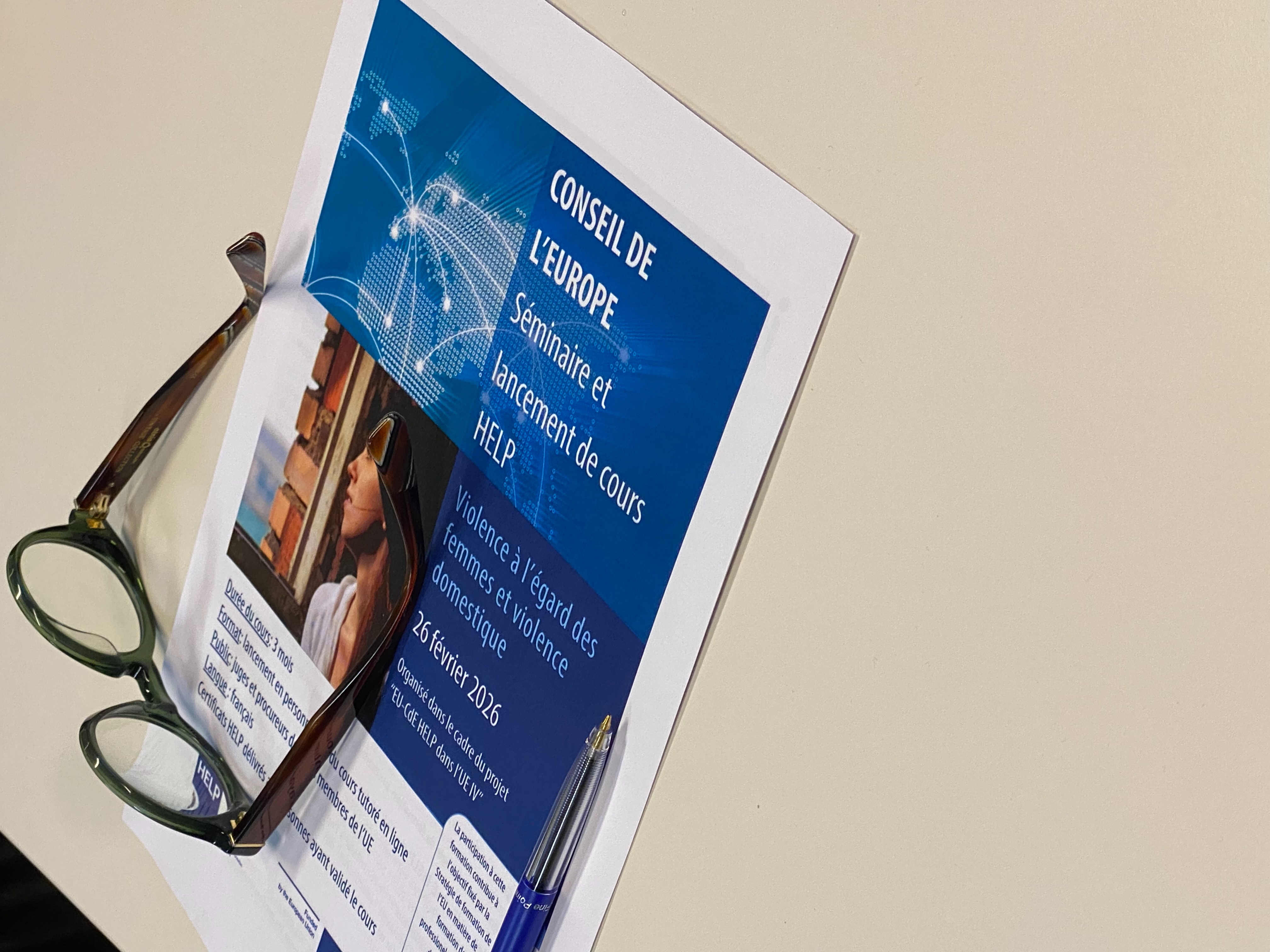
On 26 February 2026, the Belgian Judicial Training Institute hosted the launch of the HELP course on Violence Against Women and Domestic Violence, to which a new short course on Technology-facilitated Violence against Women and Girls was added.
The event was organised in the framework of the EU-CoE HELP in the EU IV Project, funded by the European Union and implemented by the Council of Europe; it gathered judges and prosecutors from across the EU, all aiming to share experiences and enhance their knowledge and skills to better protect victims and enforce European standards on human rights and gender-based violence. The working language of the event was French.
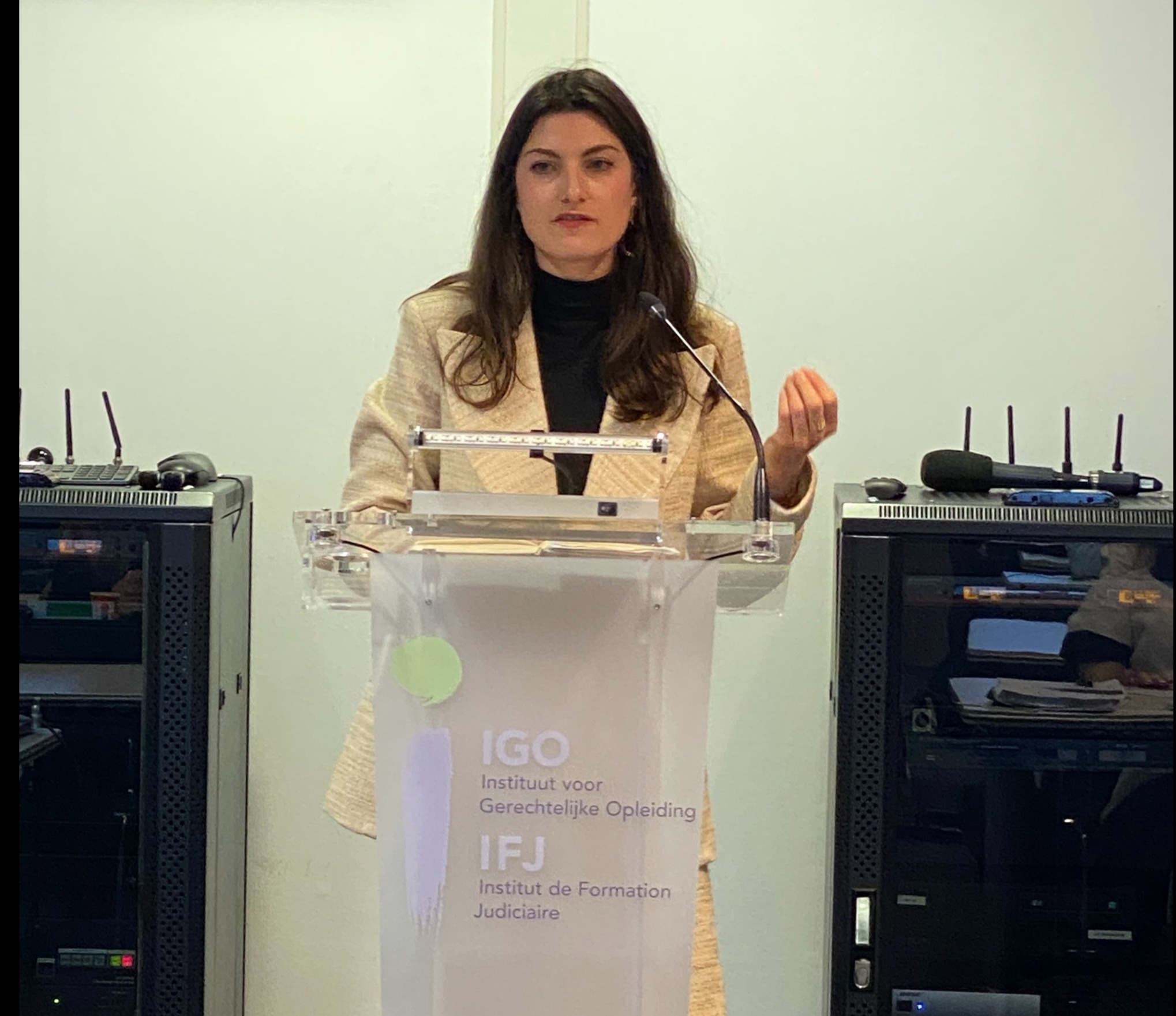
Florence Borcy, International Affairs Officer at the Belgian Judicial Training Institute, welcomed participants and emphasized the essential role of specialized judicial training in tackling violence against women. Oana Girlescu from the Council of Europe, introduced the HELP Programme and detailed the EU-CoE HELP in the EU IV project’s objectives, which focus on equipping professionals with tools for applying European human rights standards and supporting the digitalisation of justice system.
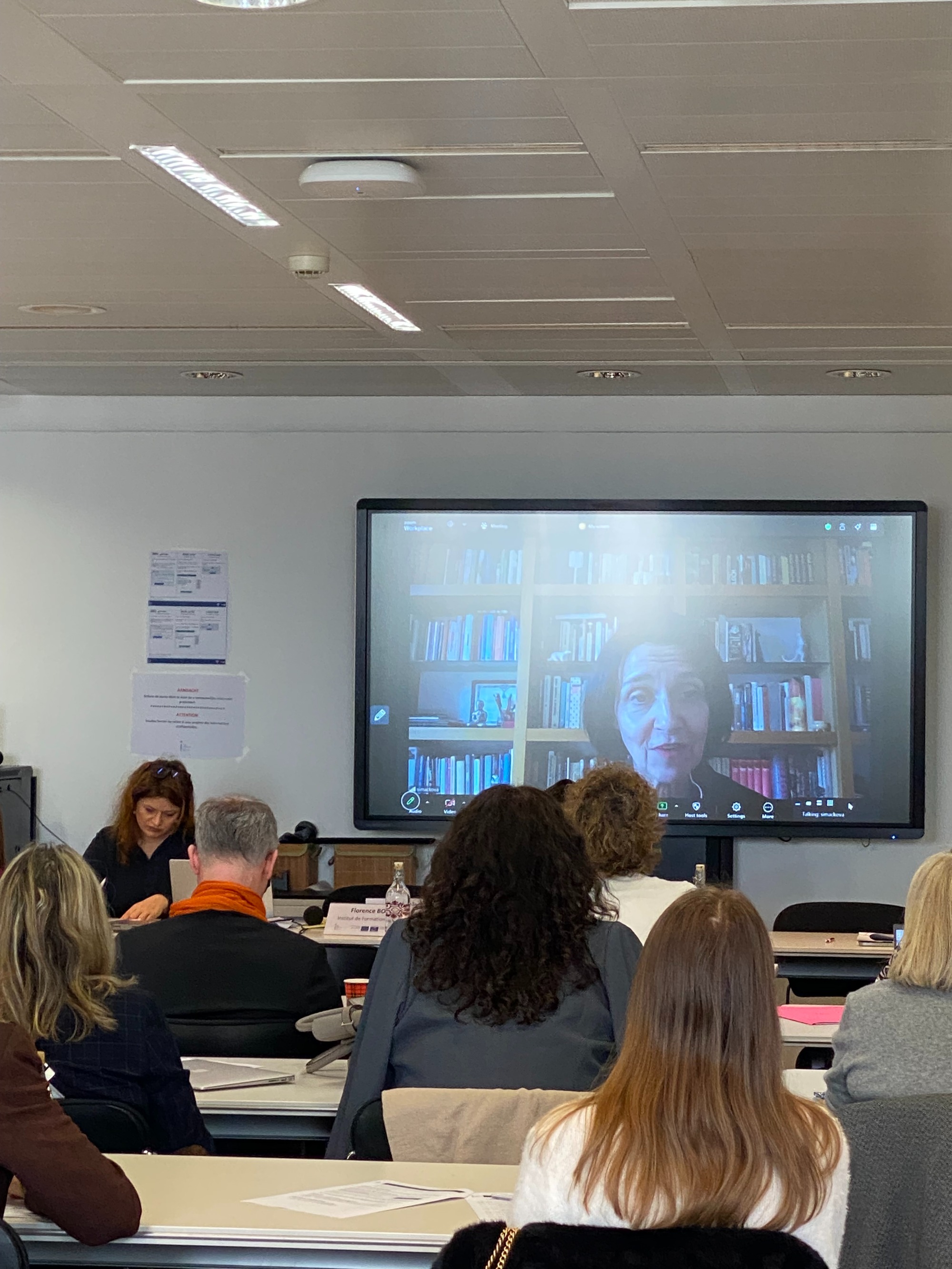
Rachel-Flore Pardo, a lawyer and co-author of "Combattre le cybersexisme", discussed technology-facilitated violence against women and girls, addressing both legislative and practical challenges. Judge Kateřina Šimáčková of the European Court of Human Rights provided insights on the Strasbourg Court’s case law regarding sexual violence, highlighting jurisprudence that shapes national responses and ensures victim protection.
Maria Andriani Kostopoulou, President of GREVIO, explored the monitoring of the Council of Europe Convention in prevention and combating violence against women and domestic violence (the Istanbul Convention) and its role in developing effective mechanisms to evaluate and improve responses to violence against women in Europe. Inès Bordet, deputy prosecutor and focal point on domestic violence at the Paris Tribunal, shared frontline judicial strategies and support services for victims of domestic violence in France, underlining the importance of swift and sensitive court procedures.
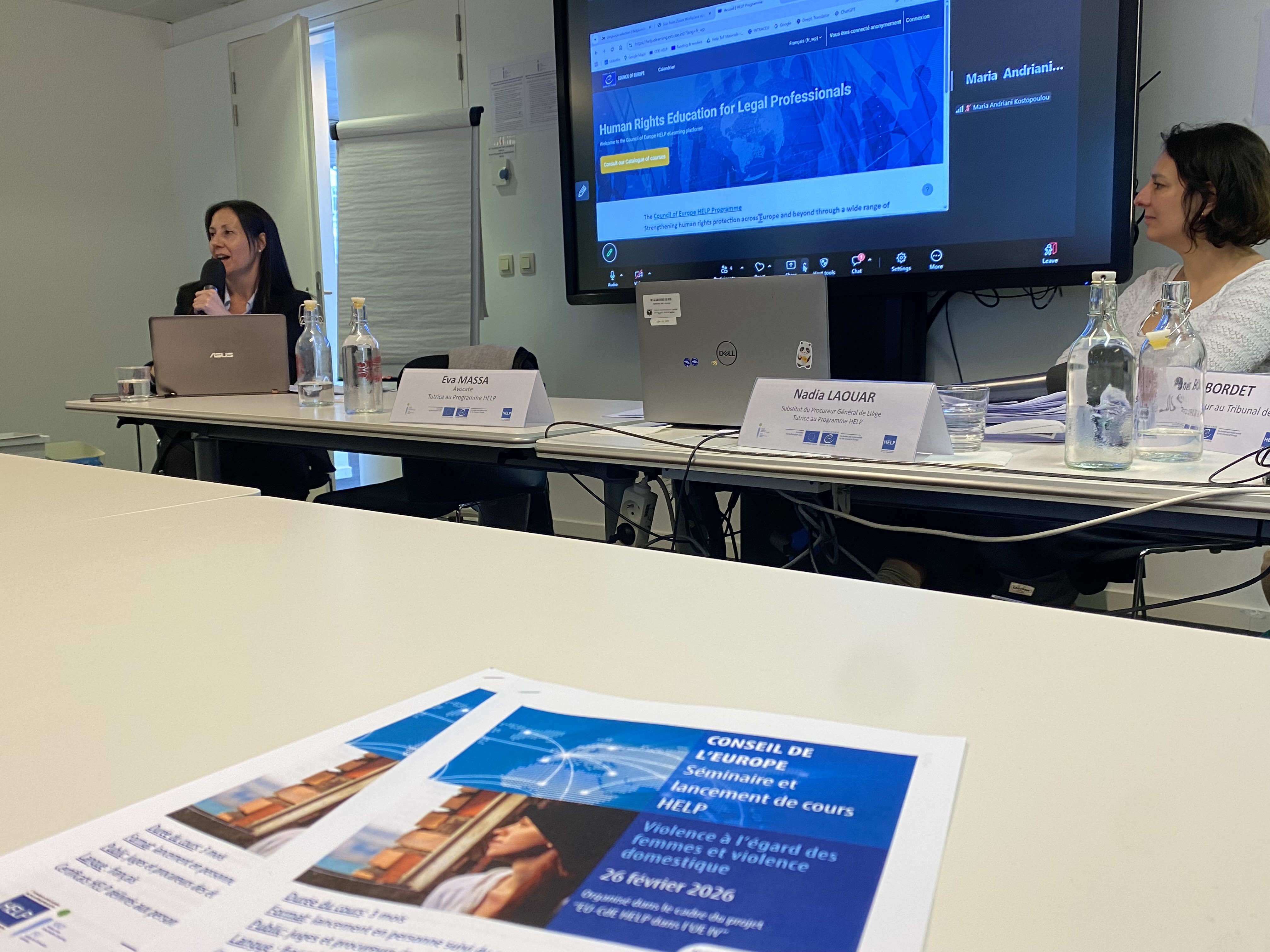
The participants also met their HELP tutors, Nadia Laouar, Maria Andriani Kostopoulou, and Eva Massa. The tutors led an interactive workshop, highlighting Belgian practices and fostering an exchange of ideas on best practices and obstacles in tackling gender-based violence. In the coming months, under the guidance of their tutors, attendees will follow online the HELP course on Violence against Women and Domestic Violence, with the possibility to also complete the short course on Technology-facilitated Violence against Women and Girls.
These initiatives signal a strong, shared commitment, from the Council of Europe and the European Union, alongside legal professions to ensure gender-based violence does not go unpunished, victims receive the support they need and technology serves human rights, rather then undermining them.
The HELP course on Technology-facilitated Violence against Women and Girls
The HELP course on Technology-facilitated Violence against Women and Girls has been published in 2026; it aims to support legal professionals and other relevant stakeholders understand the current challenges and developments in the field and identify and apply existing legal standards.
The course explores the definitions and occurrence of TFVAWG, unpacking the various types of harm, the relationship of these acts with human rights and gender stereotypes, and the ways in which technological development shapes and exacerbates these phenomena. The course provides information about the most important instruments at international and European level, and about how they are being implemented in practice across Europe and beyond.
The course is available in self-learning format, having a duration of 3,5 hours. It can be followed in English and French; other translations have been initiated as well. Upon completion, users can generate their electronic Statements of Accomplishment, in proof of their acquired knowledge and skills.
The HELP course on Violence against Women and Domestic Violence
The HELP course on Violence against Women and Domestic Violence recognises that violence against women is a grave violation of human rights and a form of discrimination against women. It can take many forms, such as physical violence, sexual abuse, stalking, female genital mutilation or forced marriages. Violence against women is both a cause and a consequence of unequal power relations between women and men and it limits the full advancement of women. It is a complex issue, particularly when it occurs within the home, which can be compounded by the response of authorities to whom women turn for help. A comprehensive European curriculum on the topic for a better understanding of violence against women and domestic violence by legal professionals is therefore needed.
The HELP course Violence Against Women and Domestic Violence covers in an interactive way the key concepts, the international and European legal framework and case law governing the prevention and protection of women and girls from violence, focusing in particular on the Council of Europe Convention on Preventing and Combating Violence against Women and Domestic Violence (Istanbul Convention). Furthermore, the course provides the legal professionals with practical tools for dealing with cases of violence against women and domestic violence with respect to a human rights and victim centred approach.
The course is available in self-learning format, having a duration of 12 hours. It can be followed in English, and in 27 other languages. Upon completion, users can generate their electronic Statements of Accomplishment, in proof of their acquired knowledge and skills.
HELP courses are intended, in the long term, to become an integral part of the overall learning curricula of the national training institutions and/or other competent authorities of the Council of Europe member states and beyond.