


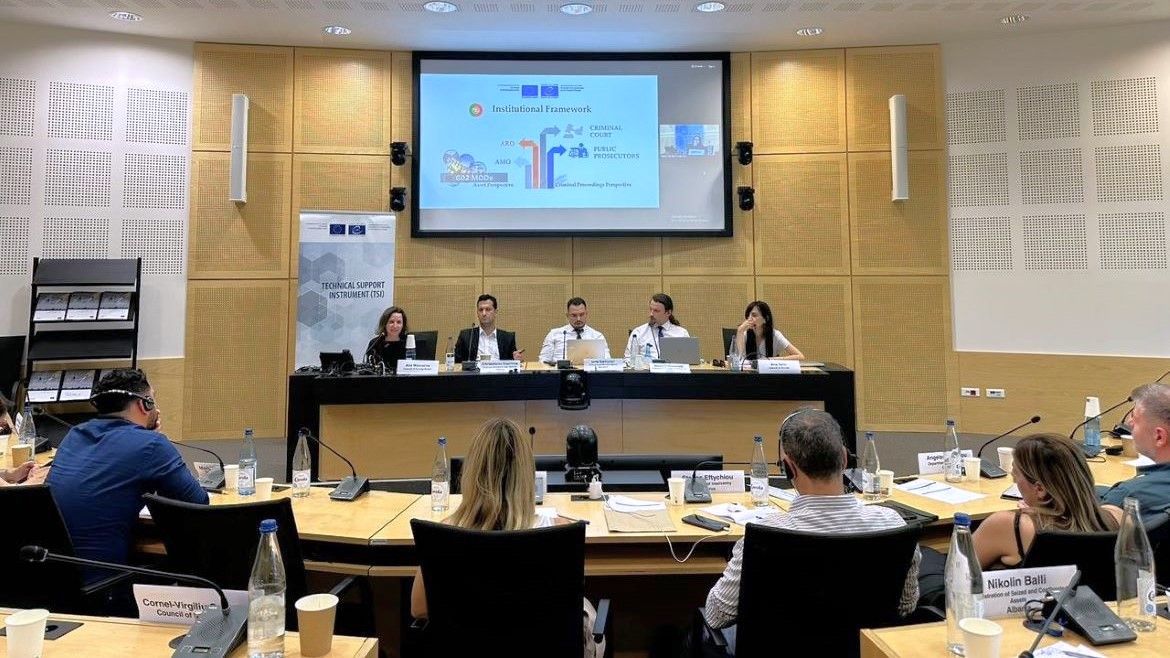
Effective recovery of criminal proceeds helps ensure that crime does not pay and that the harm caused to society and citizens can be addressed. With this aim, prosecutors, investigators, judges, financial intelligence officers and other law enforcement professionals from Azerbaijan took part in a workshop on the identification, seizure, management and recovery of assets derived from criminal activity.
Through the workshop, participants enhanced their knowledge and practical skills on confiscation measures and the management of seized assets. They also explored the opportunities provided by the current national legal framework for confiscation and discussed existing challenges. They further looked at recommendations for introducing new legal modalities that would enable recovering criminal proceeds more effectively.
Working through practical case studies, participants followed the successive stages of the asset recovery process, deepening their understanding of the legal and institutional frameworks required to support it. The sessions covered confiscation measures and the management of seized assets, including standalone money laundering, unexplained wealth orders, the planning of asset seizures and the preservation of the value of seized property.
An important part of the workshop focused on social reuse of confiscated assets to explain to the participants how countries can use part of the assets they recover to support the work of law enforcement agencies and encourage further efforts to combat crime, while highlighting both the benefits and potential risks of such approaches.
The level of engagement demonstrated by the participating institutions reflects the government's commitment to strengthening the asset recovery system and enhancing its efforts to combat financial crimes in Azerbaijan. Equipped with the practical knowledge and skills, the law enforcement and judiciary professionals could make the best use of available confiscation instruments.
This activity is part of the European Union and Council of Europe joint programme “Partnership for Good Governance”, co-funded by the European Union and the Council of Europe, and implemented by the Council of Europe, in the framework of the project "Preventing and fighting economic crime in Azerbaijan.”


 GET THE LATEST UPDATES
 Activities
 Annual Reports


