As part of Malta's Presidency of the Committee of Ministers of the Council of Europe, on the initiative of its President, Mr Francesco Depasquale, the CEPEJ invited its various Working Groups and its Bureau to meet in Valletta (Malta) on 20 and 22 October 2025 for a conference on the theme ‘Towards more effective and people-centred digitalized justice in Europe” and an exchange of views on future activities, in preparation of the CEPEJ action plan for 2026-2029 and of the CEPEJ's programme of activities, which is expected to be adopted at its 45th plenary meeting, on 4 and 5 December.
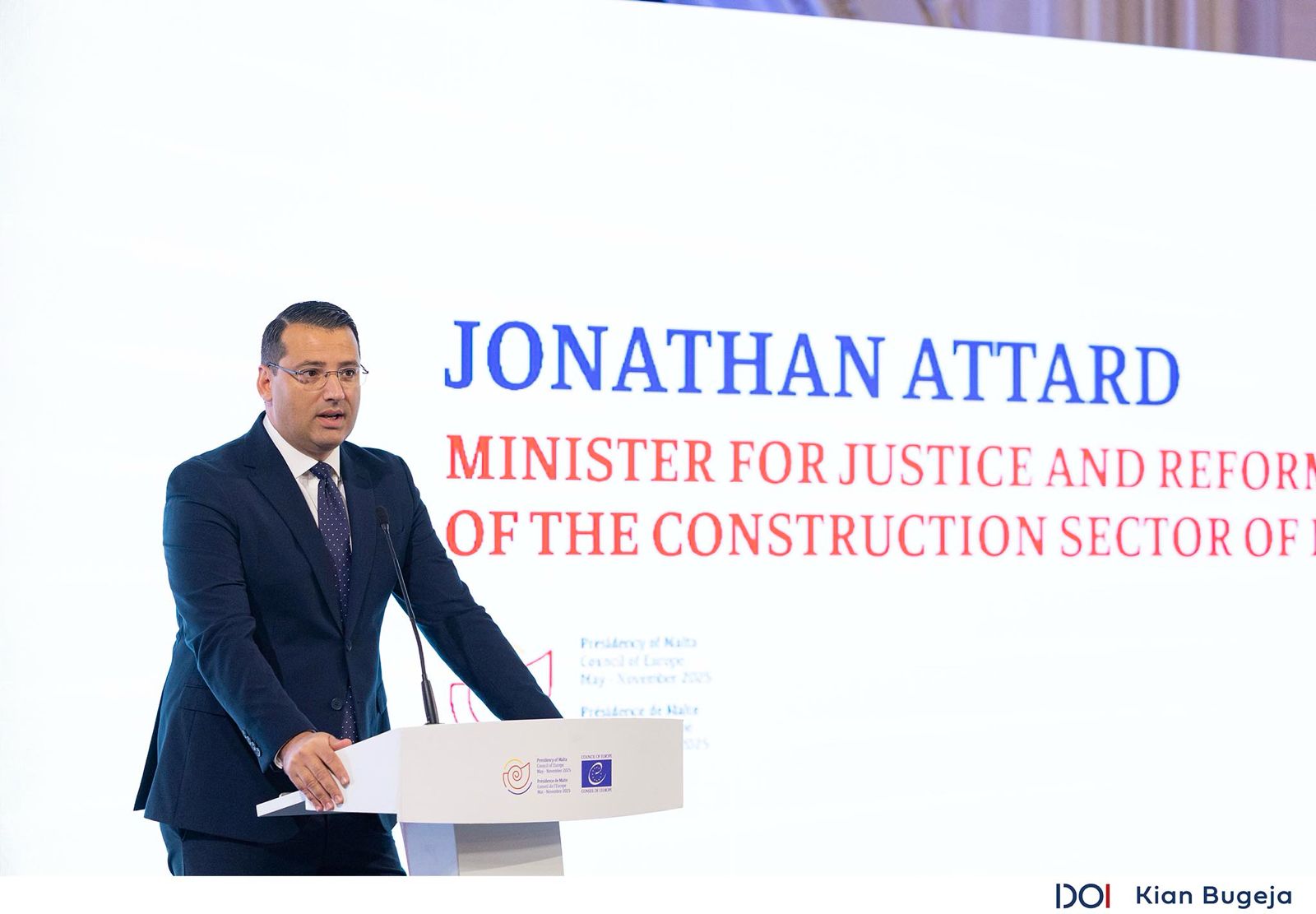
Mr Jonathan ATTARD, Minister for Justice and reform of the construction sector of Malta, opened the conference recalling “in full alignment with the objectives of the forthcoming CEPEJ Action Plan, Malta reaffirms its steadfast belief in the rule of law as the cornerstone of democratic governance and social cohesion. Our justice reforms — whether digital, procedural, or institutional — are all rooted in the principle that the rule of law must be preserved, strengthened, and made accessible to all.”
While current Action Plan emphasizes the need to support the transition of national judicial systems from paper-based to digital justice in accordance with fundamental principles, the CEPEJ should include respect for the rule of law and user confidence among its priorities for the coming years. Recent public criticism of court decisions, the uncontrolled use of artificial intelligence tools by legal professionals, difficulties in accessing justice for certain categories of the population, even beyond the risks of the digital divide, and the lack of confidence of certain users in their justice system, oblige the CEPEJ to take these challenges into account while continuing its general mission to ensure high-quality and more effective justice.
The discussion on the challenges facing the justice system and on the future work of the CEPEJ will continue during an exchange of views with the President of the ECHR, Mattias Guyomar, on 22 October, during which the possibilities for more effective cooperation between the Court and the CEPEJ will be discussed, in particular the possible use of national judicial statistics in the preparation of the Court's decisions.






 Collaborative workspaces: