Support the implementation of the Barnahus project in Ireland (Phases I and II)
Phase I: August 2022 - April 2025
Phase II: September 2025 - February 2028
What is the project?
The European Union – Council of Europe Joint Project “Support the implementation of the Barnahus project in Ireland (Phase II)” aims to strengthen the country’s response mechanism to child sexual abuse, and to ensure that undue delays in the treatment of such cases are diminished and all children who are victims of sexual violence benefit from a child-friendly access to justice.
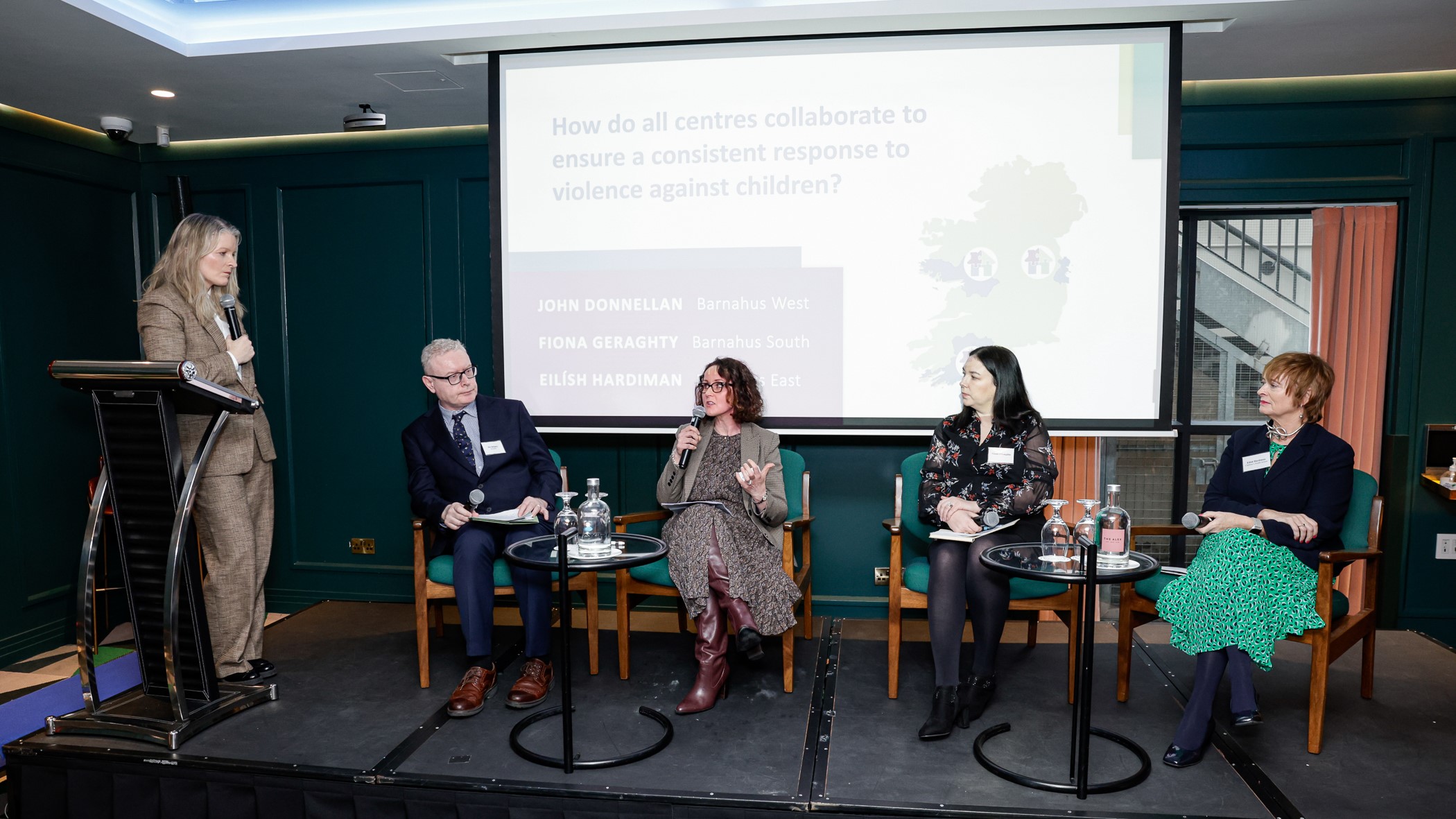
In 2015, Ireland successfully enacted the Children First Act, which introduced mandatory reporting for suspected cases of child abuse. It was followed by the development of a pilot Barnahus project in Galway in 2019, which became operational in January 2022 with the name of “Barnahus West”. Over 2022-2025, Phase I of the Project focused on expanding the Barnahus model by supporting the Irish government to open two additional centers: Barnahus South in Cork and Barnahus East in Dublin.
Building on the success of Phase I, Phase II seeks to scale up the implementation of the Barnahus model nationwide, address identified challenges and consolidate sustainable governance structures amongst the four main agencies involved in Barnahus. It also aims at providing tailored training for staff working with and for children in the context of Barnahus and amplifying awareness around the Barnahus model in Ireland.
The Project is co-funded by the European Union via the Technical Support Instrument, and implemented by the Council of Europe, in cooperation with the European Commission. It is implemented by the Council of Europe’s Children's Rights Division in close co-operation with the Irish Department of Children, Disability and Equality (DCDE). Phase II will be implemented over 30 months, from 1 September 2025 to 28 February 2028.
Barnahus (Children’s House) is a child-friendly, multidisciplinary and interagency response model for the coordination of criminal and child welfare investigations in cases of violence against children, including child sexual abuse.
It brings under one roof all relevant professionals (the judge, the prosecutor, the police, social workers and medical professionals such as psychologists, forensic doctors) in a safe environment for children, with the purpose of providing a coordinated and effective response and for preventing re-traumatisation during investigation and court proceedings. The Barnahus model puts the best interest of the child at the heart of investigative procedures, while taking into account that the child’s disclosure is key to identify and investigate violence against children both for criminal and for protective and therapeutic purposes.
Developed by the National Children’s Advocacy Centre in the United States, the model was introduced and adapted to the European context by Iceland in 1998. The model was recognised in 2015 as a promising practice by the Committee of the Parties to the Council of Europe Convention on the Protection of Children against Sexual Exploitation and Sexual Abuse (Lanzarote Committee). It has been already replicated in Sweden and Norway and is in the process of being adapted in more than a dozen of other European countries. Apart from this project in Ireland, the Council of Europe Children’s Rights Division has supported the Republic of Slovenia in establishing and operating their first Barnahus and is currently implementing projects in Finland and Spain.
What do we aim to achieve?
Strengthening the legal and policy framework for addressing child sexual abuse
Building on the “Analysis of the legal, regulatory, and policy framework concerning child sexual abuse in Ireland” developed during Phase I, the project aims to consolidate Ireland’s legal and policy framework for the implementation and scaling-up of the Barnahus model, ensuring improved interagency coordination, full compliance with data protection regulations, and evidence-based decision-making. Among others, the 2003 Good Practice Guidelines for forensic interviewing will be updated, and the data-sharing framework in the context of Barnahus will be strengthened.
Equipping professionals working with child victims of sexual violence
During Phase I, a Training Needs Analysis identified the need to strengthen the knowledge, skills, and consistency of professionals involved in child protection, investigation, and care under the Barnahus model. Under Phase II, both basic and advanced training materials will be developed and rolled out at national level, including on trauma-informed care and on forensic interviewing. A report on comparative therapeutic best practices for child victims of sexual abuse in Ireland and across Europe will be produced.
Enhancing awareness and understanding of Barnahus and child sexual abuse at national level
Awareness-raising aims to deepen understanding, engagement, and ownership of the Barnahus model among professionals, the judiciary, and the general public. Several awareness-raising activities will be implemented, based on the Communication Strategy and Action Plan developed during Phase I. Moreover, a dedicated capacity-building initiative for the judiciary and legal professionals will be developed.
The participation of representatives of the relevant bodies and institutions is foreseen. Civil society organisations, Ombudspersons and academia will also be involved in the work carried out to implement and strengthen the Barnahus model in Ireland in light of existing needs to formulate concrete potential solutions.
Barnahus National Agency Steering Committee (BNASC)
The project targets Irish national, regional, and local authorities, as well as professionals in contact with children and/or dealing with cases of violence against children, including child sexual abuse (police officers, social workers, child interviewers, and health or therapeutic professionals). They will benefit directly from the project through training and capacity building measures provided.
The final beneficiaries of the project are children at risk of or victims and/or witnesses of any type of violence, including sexual abuse. Children will eventually benefit from improved access to justice, more effective state response and more child-centered and child-friendly practices during the processing and management of cases of violence against children.
The Irish society as a whole will ultimately benefit from the project with the wider public reached through awareness raising and promotional activities. The project will contribute towards a more aware society that is capable of identifying, preventing, and responding to violence against children.



 What is the project?

 Noticias
 What is Barnahus?
 What do we aim to achieve?


 What are the project's main deliverables?
 Who do we work with?
 Who will benefit from the project?
 Calls for Tenders
 Vídeo sobre el modelo islandés Barnahus
 Enlaces útiles
 Síguenos
