
Session 5 - Democratic Participation in the Digital Age: What Tools for Strengthening Civic Engagement ?
Pillar 1- LEARNING AND PRACTISING DEMOCRACY
3 November 2026 - 15.40-17.00 / Room 9 - Palais de l'Europe
Interpretation FR/EN
Le Lab Citoyen
 MOROCCO
The Citizen Lab is a structured participatory mechanism that transforms dynamics of confrontation into processes of co-construction of public solutions, while integrating a dimension of democratic foresight. Developed by the association Les Citoyens in Morocco, it is built around a five-step architecture: free expression of criticisms and disagreements, collective prioritisation of issues, co-construction of solutions in mixed groups, testing of proposals against future scenarios, and formalisation into recommendations addressed to institutions. In 2026, the Lab was implemented across more than 10 editions covering 10 regions of Morocco, mobilising over 350 participants — 86% of whom were young people and women — alongside 50 public decision-makers and institutional representatives. Half of the editions were organised in rural areas. Following each Lab, direct dialogue sessions between young people and institutions enabled citizen priorities to be integrated into the agendas of municipal councils, which are currently in a follow-up phase. The Lab demonstrates that it is possible to rebuild democratic trust by starting from conflict rather than bypassing it — and that citizens, including the most marginalised, are ready to engage when spaces are structured, purposeful, and oriented towards concrete outcomes.
Presenter(s)
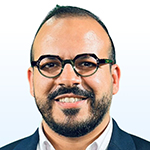
Anace HEDDAN
Chief Executive Officer, Les Citoyens
Morocco
Zhytomyr Citizens' Assembly
 UKRAINE
In October–November 2025, the third citizens’ assembly — and the first in a major regional city in Ukraine — took place in Zhytomyr (260,000 inhabitants). The assembly worked with 64 randomly selected participants on “Sustainable Urban Mobility and Transport Infrastructure” and produced 14 recommendations for the city council. The objectives of the initiative were to: Test and implement a deliberative democratic format in Ukraine under wartime conditions Explore whether low institutional trust makes it necessary to adjust the standard procedure. Measure the effects of citizens’ trust in political actors, institutions, and democratic processes The four-day on-site discussions were preceded by a small digital participation process via the open-source AI-powered platform Pol.is. To strengthen public awareness and legitimacy, the project invested in citywide communication measures, including information displayed on city light screens, public announcements in buses, and local media outreach. Recommendations were handed over to the city council of Zhytomyr in February 2026. Local news media reported. One of the recommendations immediately influenced a city council decision regarding Zhytomyr’s infrastructure. The initiative was guided by members of the Center for Democratic Resilience at the Kyiv School of Economics and advisors from TU Berlin, funded within the framework of the EU Horizon Project BRIDGE (Building Resilient Innovations in Democracy, Governance and Excellence).
Presenter(s)

Oleksandra KEUDEL
Founding Director of the Center for Democratic Resilience, Kyiv School of Economics (KSE)
Ukraine
Children's Voices
 CHILE
CHILE
Children's Voices as a Democratic Cornerstone is an initiative by Momento Ciudadano that builds lasting participatory spaces where children's voices genuinely shape democratic life. Grounded in a rights-based approach and the Lundy Model of participation, it challenges adultcentrism by ensuring children co-design the participatory processes through which their voices reach and influence democratic decision-making, rather than merely receiving decisions made on their behalf. In its first stage (2025), a Committee of 15 children and teenagers co-designed the "draw-and-talk" participatory methodology, which was then applied in 152 sessions reaching over 1,300 children aged 6 to 12 across all 16 Chilean regions. Results were systematized and delivered to presidential and parliamentary candidates during the 2025 national elections, generating 113 media appearances across 51 outlets nationwide. Built on cross-sector partnerships united by the conviction that child participation strengthens democracy, the initiative is now expanding along four lines: scaling participatory spaces into Chilean public schools; adapting the methodology with a gender lens; transferring the model to Argentina in partnership with that country's National Children's Ombudsman ahead of the 2027 elections; and strengthening institutional capacity through hands-on training and open-access methodological tools, so organizations can implement genuine child participation autonomously and sustainably.
Presenter(s)

Rodrigo MAYORGA
Chief Executive Officer, Momento Ciudadano
Chile

Wojciech FIREK
Founder and president of the Polish Democracy in Practice Association
Poland
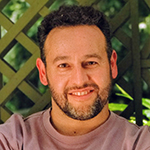
David MEKKAOUI
CEO of ALL Digital
Belgium
...
Youth Representative


 Follow us on Facebook

