
Session 4 – Strengthening inclusive democracy free from hate speech
Pillar 3 - INNOVATING DEMOCRACY
3 November 2026 - 14.00-15.20 / Room 2 - Palais de l'Europe
Interpretation FR/EN
The Sentinel Project
 KENYA,
  SOUTH SOUDAN
The goal of Una Hakika (Kenya) and Hagiga Wahid (South Sudan) is to prevent violence by increasing citizens' access to accurate information. Both projects are mobile phone-based information services that monitor and counter the spread of incendiary rumours and misinformation across project areas. The team crowdsources reports from citizens through SMS, voice calls, and social media. Reports are then verified so that accurate, neutral information can be provided back to the community through the same channels and through a network of volunteers (community ambassadors) who help to dispel misinformation before it can create hostility and lead to violence. Participants engage with this information system that operates according to the following basic three-stage process. (1) Rumour reporting - Participants anonymously report rumours through a variety of channels, including SMS, voice calls, social media, a project website, and a network of community ambassadors. (2) Verification - Rumour reports are prioritized and investigated by project staff together with the community ambassador network and trusted key stakeholders (e.g. community leaders, other NGOs, and government officials). (3) Countermessaging - Once a given rumour has been verified as true or false, the facts are then reported back to the affected communities in a targeted manner, which is designed to reduce tensions.
Presenter(s)

Christopher TUCKWOOD
Founder and Executive Director, The Sentinel Project
Ribologija
 LITHUANIA
The initiative presents an integrated model developed by Ribologija to prevent and respond to online gender-based violence, combining public awareness, professional training, survivor support, and policy advocacy. It addresses a critical but often overlooked threat to democracy: the exclusion of individuals—especially women and young people—from public and civic participation due to online violence and harassment. The model includes national awareness campaigns challenging harmful norms, capacity-building for professionals working with victims, and the development of specialised support services, including Lithuania’s first online rape crisis platform. It also contributes to improving institutional responses through cross-sector collaboration and policy recommendations. By anticipating emerging risks linked to digitalisation, including technology-facilitated abuse, the initiative strengthens safer and more inclusive democratic participation. It involves civil society actors, public institutions, and experts, and offers a scalable approach adaptable to other contexts.
Presenter(s)
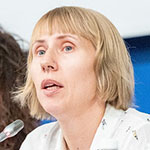
Reda JUTELIAVICIUTE
Co-founder, Ribologija
Lithuania
Anti-rumours Strategy
 SPAIN / INTERNATIONAL
The Anti-rumours Strategy is an internationally recognised participatory methodology that aims to prevent discrimination, polarisation and hate speech by addressing stereotypes, prejudices and misinformation that affect social coexistence and democratic values. Originally developed in Barcelona and currently implemented in more than 100 cities and organisations across Europe and beyond, the initiative promotes critical thinking, empathy and inclusive narratives through community-based action. The strategy combines research, training, communication campaigns, participatory processes and awareness-raising activities to identify and counter harmful narratives affecting different social groups, including migrants, racialised communities, LGTBIQ+ people and other vulnerable populations. A key element of the initiative is the activation of “Anti-rumour Agents”: trained citizens, professionals and young people who become multipliers of inclusive narratives and social transformation within their communities. The initiative involves municipalities, schools, universities, NGOs, youth organisations, cultural actors and public institutions, fostering multi-stakeholder collaboration and long-term structural impact. Through innovative methodologies and creative formats, the Antirumours Strategy strengthens democratic participation, social cohesion and resilience against disinformation and extremism.
Presenter(s)
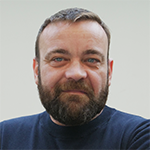
Gerardo GÓMEZ CRESPO
Project Manager, Diversit
Spain

Georgios STAMATIS
General Rapporteur on Roma and Travellers, Parliamentary Assembly of the Council of Europe
Greece

Massimiliano TARANTINO
Director of Fondazione Giangiacomo Feltrinelli and Corporate Communications and Sustainability Director of the Feltrinelli Group
Italy
...
Youth Representative


 Follow us on Facebook

