
Session 3 – Social justice and public services
Pillar 2 - PROTECTING DEMOCRACY
3 November 2026 - 14.00-15.20 / Room 6 - Palais de l'Europe
Interpretation FR/EN
ENRMSC
 POLAND
The ENRMSC initiative is a European digital hub designed to connect migrants, refugees and stateless communities with opportunities, resources and support systems. Its goal is to improve access to education, employment, civic participation and essential services by identifying community needs and bridging gaps through technology and partnerships. The initiative combines data-driven needs assessment, capacity-building activities and cross-sector collaboration. Key actions include mapping opportunities, providing targeted information and referrals, and supporting community-led engagement and skills development. Operating across multiple European countries, the initiative engages migrants, refugees and stateless individuals as primary participants, while collaborating with civil society organisations, public institutions and private sector partners. By strengthening coordination and amplifying community voices, ENRMSC aims to foster inclusion, participation and equal access to opportunities across Europe.
Presenter(s)

Adam LABARAN
Founder and Director, European Network of Refugee, Migrant and Stateless Changemakers (ENRMSC)
Poland
Creating Change
 UNITED KINGDOM
Creating Change: Building Community Power is a community-led health and wellbeing hub founded after the 2017 Grenfell Tower fire to support community recovery, rebuild local capacity, and build long-term resilience in a neighbourhood where 72 residents were killed and institutional failure was profound. The model is built on a single insight: that when institutions have failed a community, leadership must be restored at community level so the community itself identifies its needs, shapes its services, and drives systemic change. This is not participation supplementing a service. It is an ecosystem in which people are the change-makers; the model absorbs all emerging needs and generates the wrap-around response from within. Work is structured around a sequenced five-stage pathway: Access, Connection, Participation, Leadership, Influence a sustained transfer of standing from beneficiary to democratic actor. Across eight years and four overlapping crises (Grenfell, COVID, cost of living, Tower demolition), the ecosystem has held and grown. It has supported 30,000+ residents, federates elected residents' associations, runs a youth-led national mental health campaign (Hear Their Healing) and builds the capacity of SPACE Youth adopted a similar people centred model of growth and empowerment Partners include: Social Housing Providers, NHS, 2 Local Authorities.
Presenter(s)
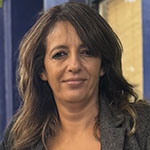
Samia BADANI
Co-Founder and Chief Executive, Supporting People And Community Empowerment (The SPACE)
United Kingdom
Rural Ireland’s Democratic Future: Democratic Social Infrastructure for the Bioeconomy Transition
 IRELAND
Our initiative applied Democratic Society’s Democratic Social Infrastructure (DSI) framework to Ireland’s bioeconomy transition in 2025–2026. Ireland is moving towards a climate-stressed farming future: temperatures rising by over 2°C, wetter winters and springs, drier summers, flooding, stressed grass growth, and pressure on livestock, crops, feed, water, soils and infrastructure. Farmers and rural communities will be asked to change land use, cut emissions, adapt to regulation, diversify income and join new bioeconomy value chains. This is not only a technical transition, but a democratic one. If choices are designed mainly by government, researchers, markets or EU policy without rural co-ownership, they risk feeling imposed — deepening distrust and resistance. Our core question was: how can Ireland make the transition with farmers and rural communities, not simply to them? Ireland has 133,174 farms and almost 300,000 farm workers; agriculture accounted for 37.8% of national greenhouse gas emissions in 2023. The initiative was tested through a policy and learning workshop with Climate-KIC and Irish bioeconomy stakeholders. Using DSI as a diagnostic and foresight tool, the workshop explored what democratic and community infrastructures are needed for Ireland’s bioeconomy to deliver real impact. It identified strengths, weaknesses and leverage points across five dimensions: shared mandate; governance; civic ecosystems; long-term resourcing; and systemic embedding.
Presenter(s)

Jonathan REYES GONZALEZ
Head of Design, Democratic Society
Ireland
Ambassador Katri VIINIKKA
Finland’s Ambassador for Democracy and Rule of Law
Finland
Svetlana STEFANOVIC
Executive Director at Foundation BFPE for a Responsible Society


 Follow us on Facebook

