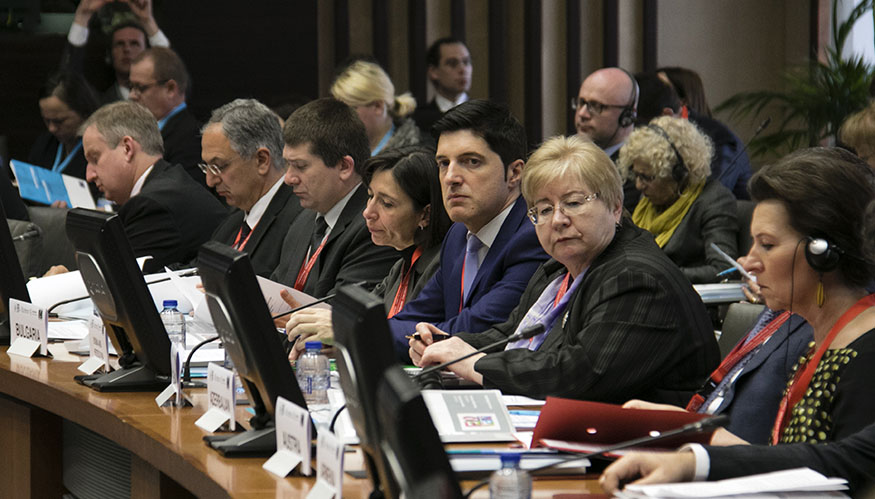
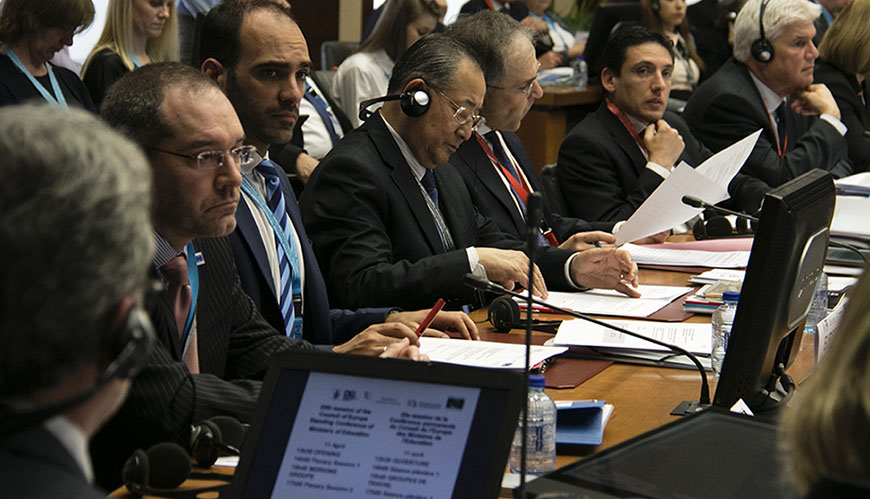
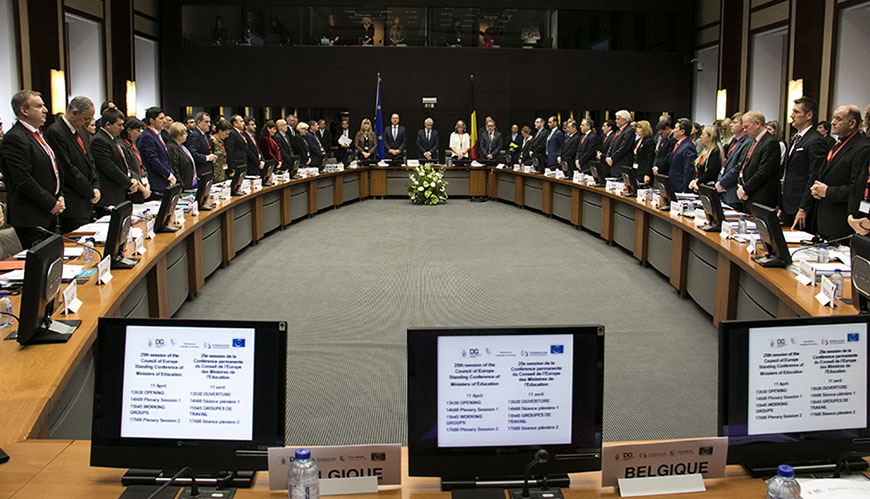
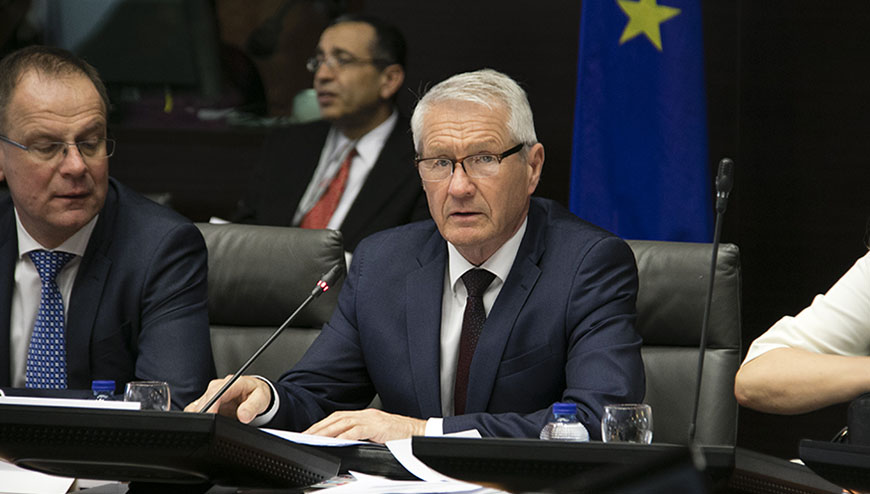
25e session de la Conférence permanente du Conseil de l’Europe des ministres de l'éducation
« L’éducation : une option sûre pour la démocratie »
Le développement d’un cadre de référence des compétences nécessaires à une culture de la démocratie
Bruxelles, 11-12 avril 2016

A propos de la conférence :
Conformément au Plan d’action adopté par le Comité des Ministres le 19 mai 2015, il est proposé que le thème de la conférence ministérielle soit « L’éducation : une option sûre pour la démocratie » - Le développement d’un cadre de référence des compétences nécessaires à une culture de la démocratie.
Dans le cadre de la mission du Conseil de l’Europe, des pistes pour résoudre les difficultés rencontrées dans la mise en pratique de l’éducation à la citoyenneté au niveau national, européen et mondial devront être formulées.
Trois sous-thèmes seront proposés aux ministres :
- le développement de compétences pour le renforcement de la culture de la démocratie ;
- l’efficacité des politiques éducatives, curriculums et programmes de formation actuels portant sur la culture de la démocratie et la citoyenneté, en particulier en ce qui concerne la lutte contre l’extrémisme violent et la radicalisation conduisant au terrorisme ;
- les défis européens et mondiaux dans le domaine de l’éducation à la citoyenneté - la mise en œuvre de l'Agenda des Nations Unies pour l'éducation 2030 « Assurer une éducation inclusive de qualité et équitable et promouvoir des possibilités d'apprentissage pour tous».
 En savoir plus sur la conference des ministers de l'éducation 2016


Video

Message de la Ministre de l'Education nationale française, Najat Vallaud-Belkacem
Pour la presse
 Communiqué de presse
 Contact presse
 Suivez le hastag: #learningdemocracy
Ressources
Liens utiles
Contact