News
Pestalozzi trainer courses in 2012-2013
Education for the prevention of discrimination, Education for the prevention of violence in schools and The use of social media for democratic participation.
The first two training courses are coming to an end with Modules B – in Namur (Belgium) from May 2 to 4 for the first and in Madrid (Spain) for the second from 20 to 22 June. The next training course focusing on the use social media for democratic participation will start with Module A from 25 to 28 September 2012 in Strasbourg.
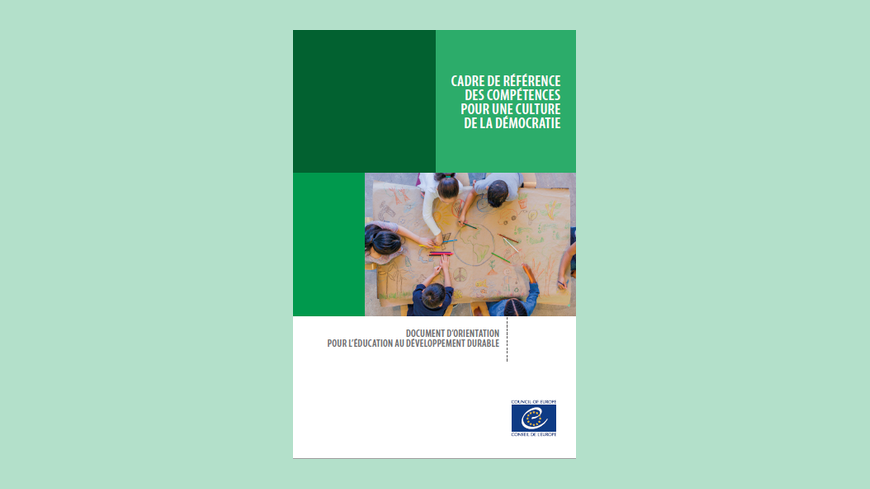
What competences and attitudes do our education systems need to develop in order to educate citizens with the will and ability to live together?.
  More
Translating Policy into Practice: Summer Academies on Democracy and Human Rights”
Democratic society can only be built by democratic citizens, and education has a lot to contribute in terms of equipping young people with relevant knowledge, skills, values and attitudes. Summer Academies on democracy and human rights aim to support and promote the methods and approaches that proved to be effective in this respect..
The concept of the Summer Academies was developed by the European Wergeland Centre (EWC), the Council of Europe and national institutions, based on the shared values and principles of these institutions.
  More
Democratic Citizenship and Human Rights Education in Turkey
1 June 2011: The joint EU/CoE project ‘Democratic Citizenship and Human Rights Education in Turkey’ officially started. The project team is now in place in Ankara and a launching event is foreseen for early autumn. This is a three year project (6.1 million Euros) being implemented in partnership with the Ministry of National Education and the Board of Education.
  More
Steering Committee for Educational Policy and Practice (CDPPE)
The first plenary session of the Steering Committee for Educational Policy and Practice (CDPPE) was held at the Council of Europe in Strasbourg, from 27 to 29 March with Mr Jorma KAUPPINEN (Finland) in the chair. 10 different items were discussed during those 3 days and 2 draft recommendations were approved by the committee.
• Draft Recommendation of the Committee of Ministers to member states on the responsibility of public authorities for academic freedom and institutional autonomy and its Explanatory Memorandum
• Draft Recommendation of the Committee of Ministers to member states on quality education and its Explanatory Memorandum
Those 2 documents will be submitted to the Committee of Ministers with a view to their final adoption.
Features
School-community-university partnerships for a sustainable democracy: Education for democratic citizenship in Europe and the United States of America
The purpose of this tool is to highlight the potential of school–community–university partnerships to contribute to the solution of social problems and foster democratic values and practices in local communities in Europe and the United States. It sets out to support such partnerships, to explain how they might be built and nurtured, the challenges they can encounter and how these may be met. The publication is aimed at policy makers and practitioners in schools and universities, civil society organisations and community groups, and representatives of public authorities and government bodies on both sides of the Atlantic with an interest in the promotion of democratic citizenship and civic engagement
More
The Autobiography of Intercultural Encounters
The Autobiography of Intercultural Encounters is a tool designed to encourage people to think about and learn from intercultural encounters that have made a strong impression or had a long-lasting effect on them. In discovering what underlies these encounters users become more aware of their experience and their reactions, thereby developing their intercultural competences.
More

Teaching history in a changing world - 132e European Seminar
This seminar for history teachers from European and Arab countries is organised in cooperation with ALECSO (Arab League educational, cultural and scientific organisation). It will focus on the challenges of teaching history in a world which is going through an period of fundamental changes. Teaching history in the context where countries are constructed and deconstructed calls for a review of the aim and expected results of history teaching. -century Europe
- Recommendation Rec(2001)15 of the Committee of Ministers to member states on history teaching in twenty-first-century Europe
- Recommendation CM/Rec(2011)6 of the Committee of Ministers to member states on intercultural dialogue and the image of the other in history teaching
-The Council of Europe and the Arab Spring
More
Who are we?
The Council of Europe presents an Education programme centred on the overarching principles and priorities of the Council of Europe which draws on a variety of traditional as well as newer mechanisms and working methods in making our vision of education an operational reality.

  More
What do we do?
Education for Democratic Citizenship and Human Rights (EDC/HRE)
EDC/HRE is a set of practices and activities for equipping young people and adults to play an active part in democratic life and exercise their rights and responsibilities in society.
More

Explore and Act for Human Rights
This project initially intended to enable European secondary school students to become familiar with the key principles of European law relating to human rights and to understand how the European Court of Human Rights and other important CoE monitoring bodies.
More

Higher Education and Research
The work of the Council of Europe in the field of higher education and research focuses on issues related to the recognition of qualifications, public responsibility for higher education and research, higher education governance and other fields relevant for the establishment of the European Higher Education.
More

Training of Education Professionals (Pestalozzi Programme)
The PESTALOZZI Programme is the Council of Europe training programme for the professional development of teachers and education actors.
More

Language Policy
The aim of the various projects in this programme is to develop language education policies (including reference instruments) for a plurilingual and intercultural education not only in the field of teaching/learning foreign languages and the languages of schooling, but also for the language education of adult migrants.
More
History Teaching
Work in the field of history teaching, both in intergovernmental projects or through bilateral and regional cooperation focuses on issues:
- related to the content of history textbooks to eliminate prejudice;
- on the modernisation of teaching programmes and curricula;
- and on teacher training.
More

Education of Roma Children in Europe
The key to a better future lies in the education of Roma children.
This Council of Europe Project aims at the implementation of the Recommendations 2000(4) and 2009(4) on the education of Roma children in Europe.
More
Council of Europe Standing Conference of Ministers of Education
The Council of Europe Standing Conference of Ministers of Education is framed by two Committee of Ministers Resolutions, namely Resolution (71) 44 on Conferences of specialised ministers and Resolution (89) 40 on the future role of the Council of Europe in European construction.
More
Resources
Education Newsletter
    Subscription

Websites
Contacts
Publications