Risk Assessment (1.4): Weaknesses in the income and asset declaration system of Armenia
(Yerevan, Armenia, 21 -23 November 2012)
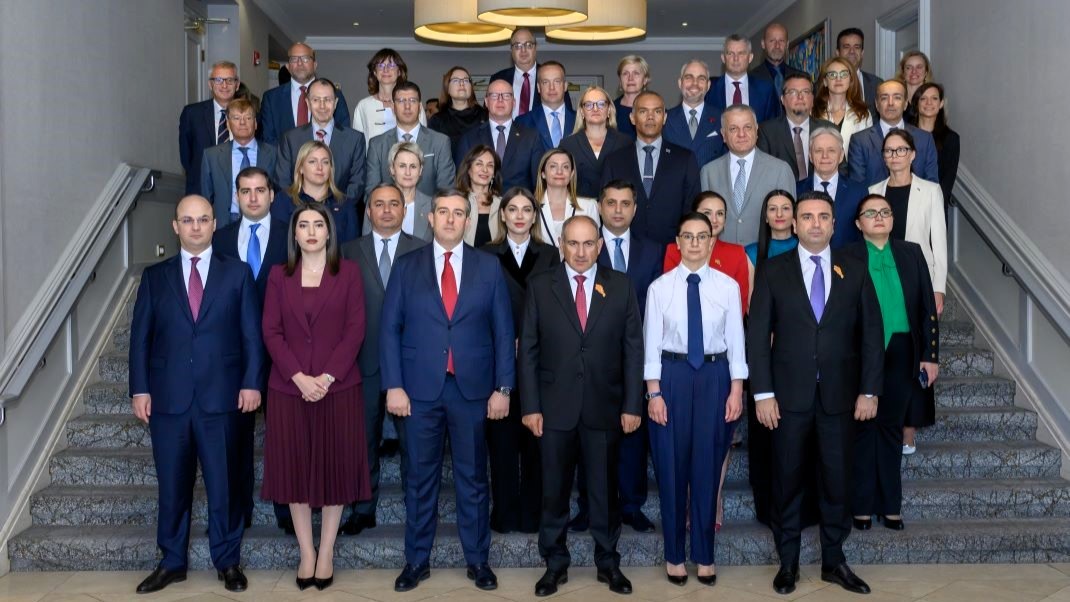
This activity was a part of the regional activity on risk
assessment through which underlying causes of corruption
will be identified in a particular sector of the each Eastern
Partnership country. The aim of this activity was to assess
corruption risks and potential weaknesses in the income and
asset declaration system of Armenia and to identify needs for
action (regulatory, organisational, training, etc.). To this
end, the Project
held meetings with various stakeholders in Yerevan on 21-23 November 2012, including representatives of civil society and international organisations. As a result of this exercise, an assessment report will be prepared containing an analysis of the system and recommendations for its further improvement. It will contribute to a regional study on typologies of underlying causes of corruption to be presented at a Regional Conference on Risk Assessment in Chisinau at the beginning of 2013.
Risk assessment
Pilot Activity in Azerbaijan (3.2): Training of Trainers on ethics
in public service (Baku, Azerbaijan, 16-17 October 2012)
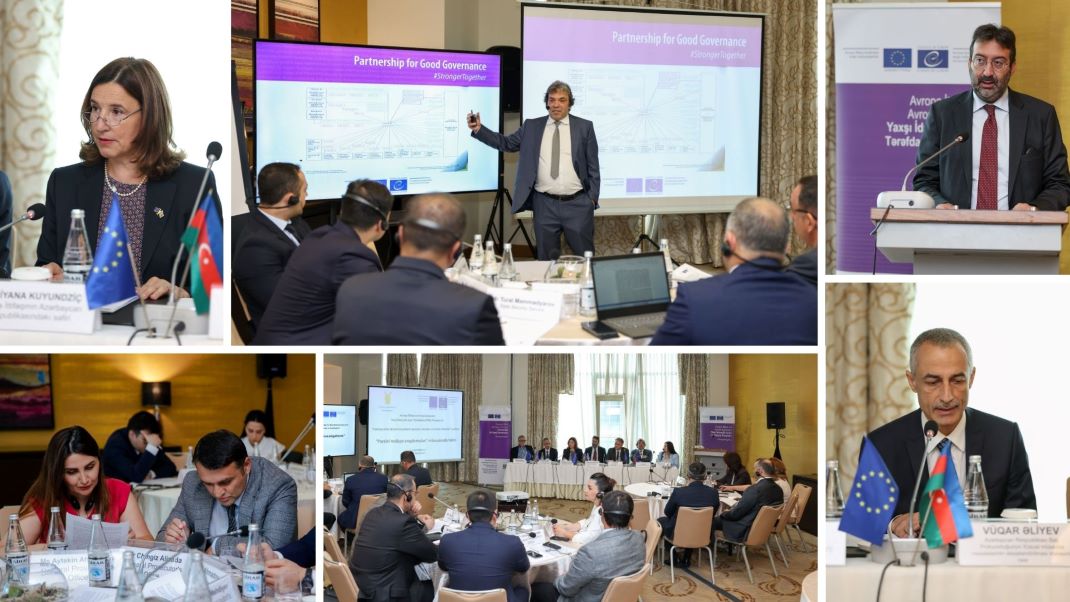
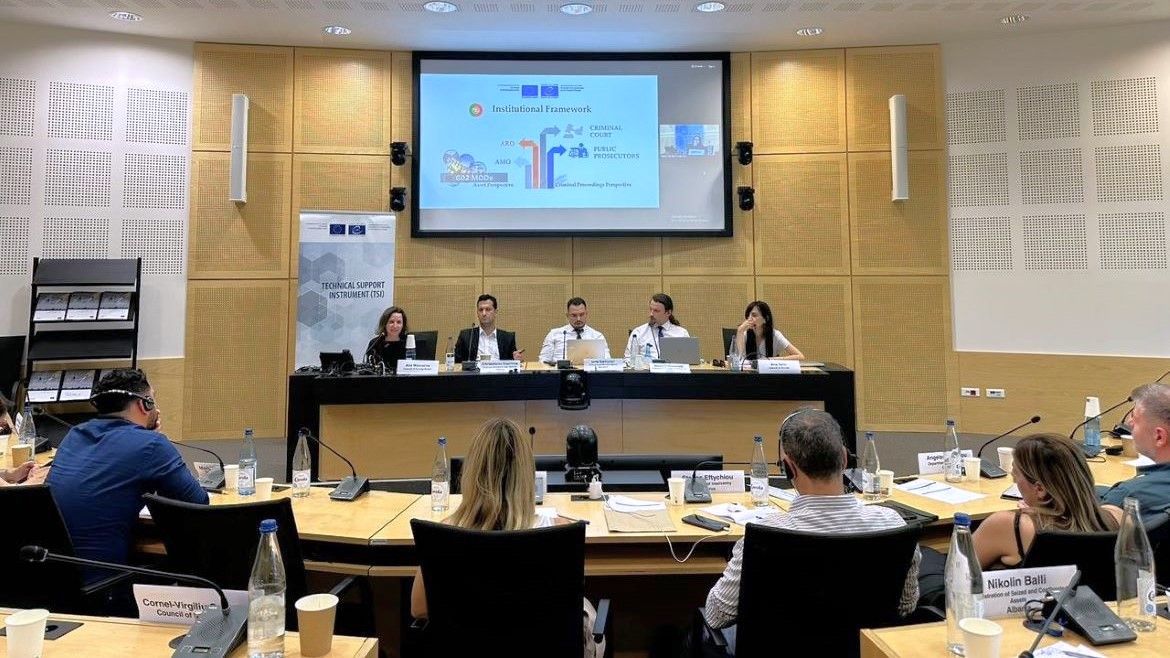
On 16-17 October 2012, the Project organised two one-day interactive trainings of trainers on ethics in public service in co-operation with the Civil Service Commission under the President of the Republic of Azerbaijan (CSC). The trainings consisted of presentations, group work and discussion of ethical case scenarios. Approximately 50 participants, namely ethics commissioners, representatives of the CSC and staff of human resources departments of central and local government agencies took part in active group work and particularly appreciated the discussions of ethical dilemmas faced by public officials. The Project used training materials developed by another EU/CoE Joint Project on Ethics for the Prevention of Corruption in Turkey (TYEC) which was adjusted and tailored to specific needs of Azerbaijan identified during the recent risk assessment visit to Baku (23-25 April 2012) on ethical weaknesses in the delivery of public service.
Agenda
Picture
Pilot Activity in Moldova (3.5): Anti-corruption strategies for
local governments (Căușeni and Telenești, Republic of Moldova,
4 and 5 October 2012)
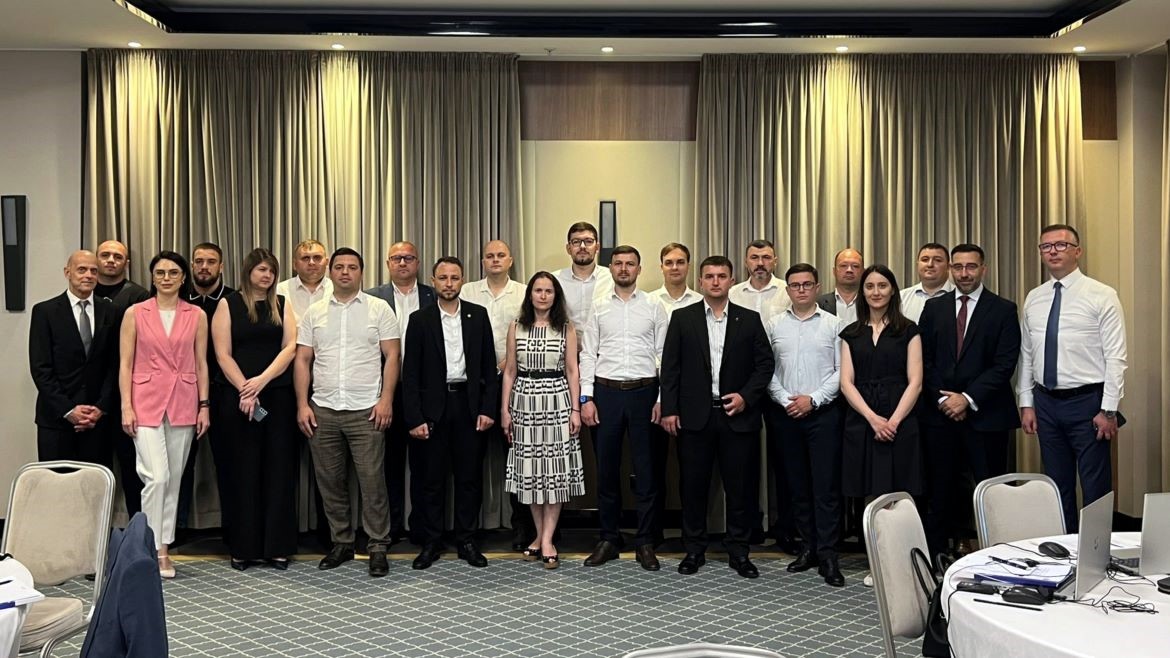
Two one-day participatory workshops were held in Căușeni and Telenești District Councils on 4 and 5 October 2012 as a follow up to the risk assessment carried out in these districts through participatory workshops (Telenești, 19 September and Căușeni, 24 September 2012). The workshops each brought together approximately 30 representatives of the District Councils, civil society and the Centre for Combating Economic Crime and Corruption to discuss and develop local strategies to address corruption risks identified in each District Council during the risk assessment exercise. Based on the two strategies, a Model Integrity Plan for Moldovan local governments will be drafted as an Annex to the current National Decentralization Strategy allowing other local authorities to adopt and implement it in their districts. The local anti-corruption strategies and the Model Integrity Plan will be developed through a participatory approach in cooperation with two local NGOs – Institute for Urban Development (IDU) and Resource Centre for Human Rights (CReDO).
Agenda
Căușeni
Agenda
Telenești
Presentation
Activity
Report
Risk Assessment (1.4): Weaknesses in the income and asset declaration
system of Ukraine (Kyiv, Ukraine, 25-27 September 2012)
The aim of this activity was to assess corruption risks and
potential weaknesses in the income and asset declaration system
of Ukraine and to identify needs for action (regulatory,
organisational, training, etc.). To this end, the Project held meetings with various stakeholders in Kyiv
on 25-27 September 2012, including representatives of civil society
and international organisations. As a result of this exercise, an
assessment report will be prepared containing an analysis of the
system and recommendations for its further improvement. It will
contribute to a regional study on typologies of underlying causes
of corruption to be presented at a Regional Conference on Risk Assessment
in Chisinau at the beginning of 2013.
Risk
assessment report
Risk assessment (1.4): Integrity of local governments (Telenești
and Causeni, Republic of Moldova, 19 and 24 September 2012)
This
activity is part of the regional risk assessment aimed at
identifying underlying causes of corruption in a
particular sector of the each Eastern Partnership country. The Project conducted
two one-day workshops in the selected District Councils of Telenești
and Causeni on 19 and 24 September 2012 respectively in co-operation
with a local NGO (Institute for Urban Development – IDU). The objective
was to improve participants’ knowledge on strategic approach of
diagnosing, treating and preventing corruption in local governments,
and to assess corruption risks through a participatory approach.
As a result of these workshops, areas most vulnerable to corruption
were identified in each District Council. The risk assessment will
be followed by a Pilot Activity (3.5) under which local strategies
addressing the identified corruption risks will be developed for
each District. Furthermore, based on these two strategies a Model
Integrity Plan for Moldovan local governments will be drafted as
an Annex to the current National Decentralization Strategy allowing
other local authorities to adopt and implement it in their districts.
Telenești:
Agenda
Diagnostic analysis of activities vulnerable to corruption
Causeni:
Agenda
Diagnostic analysis of activities vulnerable to corruption
General:
Presentation on
concepts, definitions, approaches
Presentation
of the general diagnostic
Presentation
of the detailed diagnostic
Activity
Report
Regional Workshop (2.1): Analysis and typologies on laundering the
proceeds of corruption in transition economies (Strasbourg, France,
3 July 2012)
The aim of this activity is to research and identify typical patterns
of laundering the proceeds of corruption in the Eastern Partnership
region and to prepare a regional typology study on this subject.
As a result of this activity, staff of Financial Intelligence Units
(FIUs) of the six Eastern Partnership countries will have increased
capacity of analysing data on patterns of money laundering by having
been involved in collecting and assessing the data for drafting
country studies.
This activity consists of three parts:
1st Regional Workshop with representatives from all Eastern Partnership
FIUs (Strasbourg, 3 July, 2012); Country missions to each FIU, to
conduct research, collect data and draft country studies/a regional
study (October 2012 – April 2013; 2nd Regional Workshop with representatives
from all Eastern Partnership FIUs to review and adopt the regional
study (May 2013). The regional study will be presented to a wider
public at a Regional Conference in June/July 2013. The 1st Regional
Workshop took place in Strasbourg on 3 July 2012 in the margins
of the 39th plenary meeting of MONEYVAL and brought together representatives
of the FIUs from all six Eastern Partnership countries. The Head
of the FIU/Operations of Lichtenstein provided input on the rationale
and methodology of the activity, and a representative of the Financial
Action Task Force (FATF) presented related work and research carried
out by his organisation. The draft methodology and the questionnaire
for collecting and analysing information were presented and reviewed
with the participants. The FIUs will complete the questionnaire
until end of September 2012 in order to allow for the country missions
to start in October 2012.
Agenda
Workshop on Risk Assessment (1.4): Typologies of underlying causes
of corruption (Strasbourg, France, 19 June 2012)
The Workshop reviewed the assumptions and methods of measuring corruption,
assessing weaknesses in integrity systems, and ways of translating
the results of assessments into policies. It was attended by national
experts from corruption prevention units in several Eastern Partnership
countries. The Workshop consisted of presentations and discussions
of theoretical methods and concepts of risk assessment and group
work on practical exercises. In relation to this Workshop, the Project
is carrying out a risk assessment exercise that includes field missions
in each of the six Eastern Partnership countries, each addressing
a specific sector: Armenia: Asset declarations (11-12/2012)
Azerbaijan: Ethics in the civil service (04/2012) Belarus: Compliance
with Council of Europe Criminal and Civil Law Conventions on Corruption
(06-11/2012) – tbc Georgia: Health sector (02/2013) Republic
of Moldova: Local governments (05-12/2012) Ukraine: Asset declarations
(09/2012)
Agenda
English /
Russian
Presentations
of Council of Europe experts
English
/
Russian
Workshop
materials
English /
Russian
Risk
Assessment Methodology Guide
English /
Russian
Pilot Activity in the Republic of Moldova (3.5) – Presentation of
draft amendments to political finance legislation of the Republic
of Moldova (Chisinau, Republic of Moldova, 7 May 2012)
Following the discussions and results of the previous two Roundtables
(1 November 2011 and 27 February 2012), the Working Group fine-tuned
the draft amendments to political finance legislation. The final
draft was presented and explained to the public at the Centre for
Combating Economic Crimes and Corruption (CCECC) on 7 May 2012 in
a joint event with the International Foundation for Electoral Systems
(IFES), and is now ready for adoption by the Moldovan Government
and for subsequent submission to Parliament. The Republic of Moldova
is invited to report to the Council of Europe’s Group of States
against Corruption (GRECO) on this legislative reform until 31 October
2012.
Agenda
Pilot Activity in Azerbaijan (3.2): Workshop on Good Practices of
E-government (Baku, Azerbaijan, 26 April 2012)
Under
a new presidential decree, all line ministries have to introduce
e-government tools for government-to-citizen applications. E-government
has not only the potential for facilitating administrative procedures,
but can also be an effective tool for preventing corruption, as
it reduces contacts between public officials and citizens and thus
reduces opportunities for bribe asking or giving. On 26 April 2012,
the Project organised a workshop on good practices of e-government
which was attended by approximately 35 representatives from all
central state bodies. A variety of international examples of current
and future interfaces between the state and citizens were presented
and reviewed at the workshop.
Agenda
Presentation
of Mr J. Millard, Council of Europe expert
Presentation
of Mr G. Jokhadze, Council of Europe expert
Presentation
of Mr T. Urjumelashvili, Council of Europe expert
Risk assessment (1.4): Ethical weaknesses in service delivery
(Baku,
Azerbaijan, 23-25 April 2012)
The aim of this activity was to identify typical ethical dilemmas
and weaknesses in the delivery of public services in Azerbaijan.
To this end, the Project’s Long-Term Adviser interviewed various
stakeholders in Baku from 23 to 25 April 2012, including representatives
of NGOs and international organisations. The draft assessment report
containing an analysis of the situation and recommendations will
be presented and reviewed at the Regional Workshop on Risk Assessment
in Strasbourg, France (June 2012) and will allow for a training
of trainers planned to take place in Baku in October 2012 to be
tailored to specific needs of Azerbaijan.
Risk
assessment report
Good practices of designing, implementing and monitoring anti-corruption
policies" (Kyiv, Ukraine, 29 March 2012)
On 29 March 2012, the Project held the 1st Regional Conference on
“Good practices of designing, implementing and monitoring anti-corruption
polices”. The activity was hosted by the Ministry of Justice of
Ukraine in its premises and was a combined event with the Eastern
Partnership Panel on the Fight against Corruption. It was a follow-up
to the two Regional Workshops on “Designing of national anti-corruption
policies” and on “Mechanisms of implementing and monitoring of anti-corruption
strategies, including education and public awareness” held in Strasbourg
on 3-4 November 2011 and in Warsaw on 15-16 December 2011 respectively.
The results of the both workshops were presented to and reviewed
by a larger public of more than 60 participants, mainly representatives
of government bodies responsible for policy design and advice of
the six Eastern Partnership countries, as well as representatives
of EU member states and civil society. Active participation of representatives
of various Ukrainian NGOs an Eastern Partnership Civil Society Forum
contributed to lively and fruitful discussions. Furthermore, the
first draft of the “Handbook on Designing and Implementing Anti-corruption
Policies” compiling good practices that will serve as a resource
for drafting policies not only in Eastern Partnership, but also
in other countries, was made public. Once finalised it will be translated
from English into Russian and distributed to project beneficiaries
and international stakeholders.
Agenda
Photos
Welcome speeches:
Ms Maria Jukova, Deputy Head to EU Delegation to Ukraine
Mr Vladimir Ristovski, Head of the Council of Europe Office in Kyiv
Presentation of Azerbaijan
Presentation of Georgia
Presentation of the Republic of Moldova
Presentation of Ukraine
Presentation of Mr Quentin Reed, Council of Europe expert
First Regional Specialised Training on “Implementing standards on
detection, investigation and criminalisation of economic and financial
crimes” (Syracuse, Italy, 12-16 March 2012)
The Project organised the Regional Specialised Training: “Implementing
standards on detection, investigation and criminalisation of economic
and financial crimes” at the International Institute of Higher Studies
in Criminal Sciences (ISISC) in Syracuse, Italy, from 12 to 16 March
2012. It was conducted by the International Centre for Asset Recovery
of the Basel Institute on Governance (ICAR-BIG) and was focused
on capacity building of 26 law enforcement and judicial officials
in investigating and prosecuting large scale international money
laundering and corruption cases. The training combined presentations,
discussions, practical exercises, and group work on one complex
financial investigation and asset tracing case. As a follow up,
a training manual will be prepared by ICAR-BIG that will allow participants
to refresh and deepen their newly acquired skills, and will support
further vocational trainings in the six Eastern Partnership countries
on this subject.
Agenda
English /
Russian
Photos
Pilot Activity in Azerbaijan – Expertise and Roundtable on the draft
“National Action Plan on Increasing Transparency and Combating Corruption
of the Republic of Azerbaijan” (Baku, Azerbaijan, 2 March 2012)
On 2 March 2012, the Project held a Roundtable on the
draft “National Action Plan on Increasing Transparency and Combating
Corruption of the Republic of Azerbaijan” organised in cooperation
with the Commission for Combating Corruption and its Secretariat
at the Administration of the President of the Republic of Azerbaijan.
The aim of the Roundtable was to have a public discussion and review
of the draft Action Plan with the representatives of civil society
and international organisations. It was attended by more than 50
participants from several state bodies, including 15 different NGOs
and representatives of international bodies (EU, GIZ, OSCE, UNDP,
USAID, US-Embassy). In addition, several journalists and TV networks
were there to report on the event. The English translation of the
draft Action Plan provided by the Project allowed international
observers to comment on the the document and to submit further observations
following the Roundtable. The Project’s Long-Term Adviser presented
preliminary observations on the draft at the Roundtable, and will
continue working with the Secretariat of the Commission for Combating
Corruption on its further improvement. This activity is a follow-up
to the Project’s two regional workshops on designing and implementing
anti-corruption policies (3-4 November 2011, Strasbourg, and 15-16
December 2011, Warsaw.
Agenda
English
Pilot Activity in the Republic of Moldova - Roundtable on “Political
Finance in the Republic of Moldova” (Chisinau, Republic of Moldova,
27 February 2012)
The
second Roundtable on "Political finance in the Republic of
Moldova," jointly organised by the Project, the Centre for
Combating Economic Crimes and Corruption (CCECC) and the International
Foundation for Electoral Systems (IFES), took place at the CCECC
on 27 February 2012. It was attended by representatives of state
institutions, civil society and international organisations, as
well as national and international experts on the subject matter.
It was a follow-up to the first Roundtable held on 1 November 2011
under the Project's one of the two Pilot Activities tailored to
specific needs of the Republic of Moldova. The legislative proposal
on reforming Moldovan political financing elaborated by the Working
Group since November 2011 was presented and reviewed during this
Roundtable. It was acknowledged by national and international stakeholders
that the draft law is a major step forward in bringing Moldovan
political finance legislation in line with GRECO recommendations.
Following the input of this Roundtable, the Project will fine-tune
the draft in cooperation with IFES with the aim to present and explain
the final document to the public, and have it ready for adoption
by the Moldovan Government by April 2012 and subsequent submission
to Parliament.
Agenda
English
Presentation
CoE expert
Presentation
IFES
Pilot Activity in Ukraine - Working Meeting on the Assessment of
the State Anti-corruption Programme of Ukraine for 2011-2015 (Kyiv,
Ukraine, 1 February 2012)
A
working meeting to present and discuss the assessment of the
State Programme of Ukraine for Preventing and Combating Corruption
for the period of 2011-2015 with representatives of the Ministry
of Justice took place in Kyiv on 1 February 2012. The assessment
has been prepared under the Project’s Pilot activity with the aim
to assist Ukraine to comply with GRECO recommendation and to report
on the development of a detailed plan of action for the implementation
of the new Anti-corruption Strategy adopted by the end of 2011.
It is expected to be incorporated in the additional information
which Ukraine has to submit to GRECO concerning the Addendum to
the Compliance Report of 27 May 2011 (Joint First and Second Evaluation
Round). The meeting helped to clarify all open points and finalise
the assessment. (more...)
BACK
|