


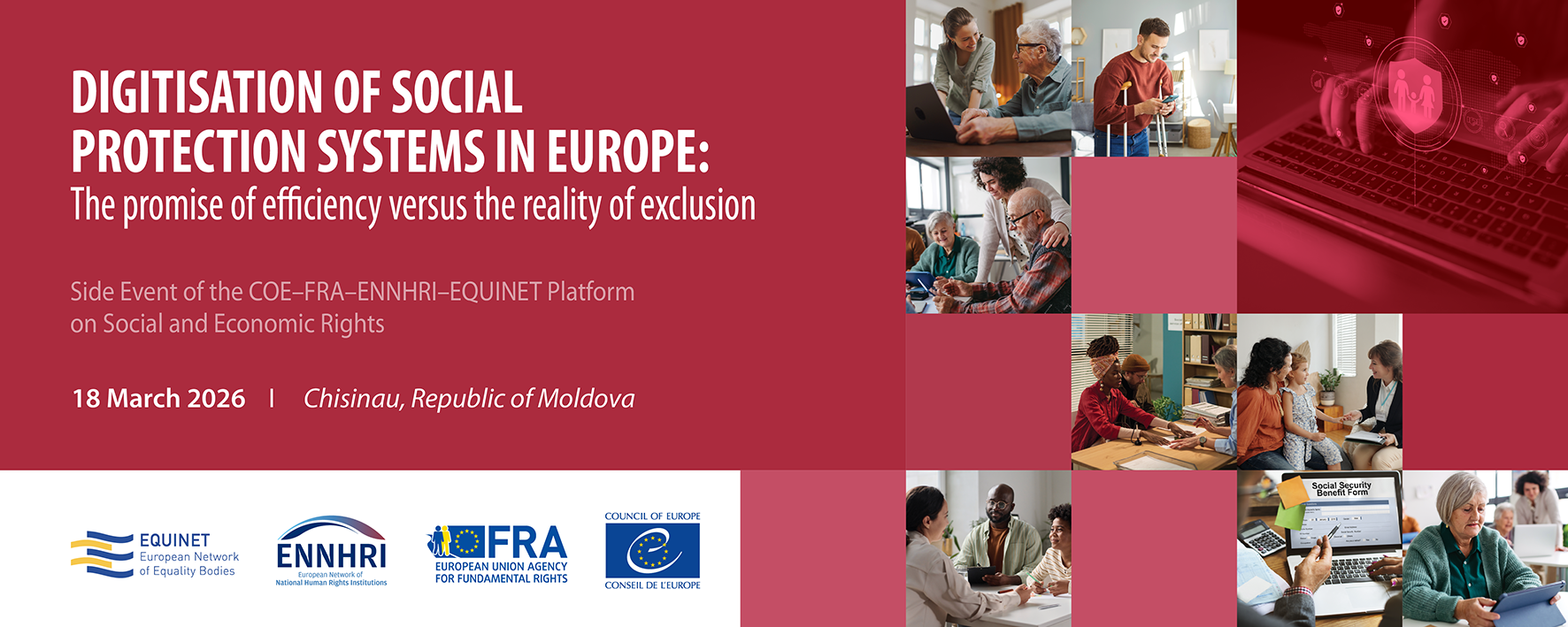

Side event organised by the COE-FRA-ENNHRI-EQUINET Collaborative Platform on Social and Economic Rights
The side event examines the growing digitalisation of social protection systems across Europe and its implications for the effective enjoyment of social rights. While digital tools promise efficiency, transparency and improved access to benefits, experience shows that they can also create new forms of exclusion. Digital-only procedures, opaque algorithmic decision-making and reduced human contact risk preventing vulnerable individuals from accessing social assistance and social security.
Framed by the European Social Charter, the discussion emphasises that social rights are binding human rights and that technological innovation must strengthen — not undermine — equal access, dignity and effective remedies. The event will explore how States can reconcile administrative efficiency with their human-rights obligations.
It also highlights the role of National Human Rights Institutions and Equality Bodies in monitoring impacts, detecting discrimination, scrutinising automated systems, supporting complaints and advising governments. The aim is to identify practical, rights-based principles for inclusive digital welfare systems in Europe.
Venue : Mimi Hotel (Jolly Alon), Maria Cebotari str. room Diva 37
Registration here
|
|
DRAFT PROGRAMME
09:00 – 09:30 | Welcome coffee and registration
09:30 – 09:35 | Opening and introduction by the Moderator
Angela O'HAGAN, Chair of the Scottish Human Rights Commission
09:35 – 09:45 | Keynote address
Michael O'FLAHERTY, Commissioner for Human Rights of the Council of Europe
09:40 – 10:40 | Panel Discussion
Panellists:
- Tatevik STEPANYAN, Deputy Minister of Labour and Social Affairs of Armenia
- Miriam KULLMANN, Member of the European Committee of Social Rights
- Ceslav PANICO, People’s Advocate of the Republic of Moldova
- Danilo ĆURČIĆ, Human Rights Lawyer, A11 Initiative for Economic & Social Rights, Serbia
10:40 – 10:50 | Interactive Exchange with the Audience
Open floor for questions from the audience
10:50 – 11:00 | Conclusions
Ian FELDMAN, President of the Equality Council of the Republic of Moldova